Shop & Support the Mission

    Fresh nectar in a minute.

    Every bag of NectarBloom™ funds the guides, the Hummingbird Trail, the lab testing, and the free care resources on this site. When you buy our nectar, you help us keep hummingbird education open, honest, and growing — for every bird lover, everywhere.

    NectarBloom 2 lb bag — pure cane sugar hummingbird nectar

    NectarBloom™ — 2 lb Bag

    Fresh nectar in a minute.

    No boiling, no dye. The same sugar hummingbird flowers make. One ingredient, nothing else. Makes up to 160 oz of fresh feeder nectar per bag.

    • Fresh nectar in a minute: measure, stir until clear, and pour
    • No boiling, no dye
    • The same sugar hummingbird flowers make
    • One ingredient, nothing else: 100% pure cane sugar
    • Lab tested. Resealable 2 lb bag, sourced and packed in the USA

    1 Bag · 2 lb

    $21.99

    Free shipping included

    Best Value

    2 Bags · Season Supply

    $39.88

    Free shipping included

    Direct orders are temporarily sold out. NectarBloom™ is still available on Amazon.

    Buy on Amazon

    Ships fast via Amazon Prime

    See full product details

    Direct orders temporarily unavailable

    “Your purchase isn’t just nectar — it’s how we keep this hummingbird care library free, accurate, and growing.”

    Thank you for flying with us

    Why Plants Matter More Than Feeders: The Science of Hummingbird-Flower Relationships

    Hummingbirds and flowering plants have evolved a deeply mutualistic relationship over millions of years — a partnership so precise that biologists call it ornithophily, or bird-mediated pollination. While a sugar-water feeder provides quick calories, native garden plants provide something feeders cannot: complete hummingbird habitat that supports nesting, insect foraging, and complex foraging behavior that keeps birds in your garden for weeks rather than minutes.

    Research published in PNAS (Grant, 1992) demonstrated that hummingbirds forage with optimal efficiency from moderately broad floral tubes with lengths that do not exceed bill length plus approximately 5mm of tongue extension. For the Rufous Hummingbird (Selasphorus rufus), maximum nectar extraction depth is approximately 31.5mm in tubes 1.6mm wide — meaning the ideal hummingbird flower is precisely engineered to match the bird's anatomy. This coevolution is not coincidence; it is millions of years of mutual selection pressure.

    Hummingbird-pollinated plants predominantly produce sucrose-rich nectars, which hummingbirds strongly prefer over glucose- or fructose-dominated nectars. Chicago Botanic Garden research confirmed that hummingbirds make energetically profitable choices visiting a wide variety of flower types — the reward must justify the hover-feeding energy cost. This is why native plants consistently outperform ornamental cultivars: they have been selected by hummingbirds themselves over evolutionary time for maximum nectar reward.

    The widely repeated "hummingbirds only like red flowers" is a simplification. Hummingbirds have acute color vision extending into the ultraviolet range. They show no innate exclusive preference for red, but red and orange tubular flowers are consistently most visited in gardens because they are highly visible to hummingbirds and less attractive to competing bees, which cannot see red well. Cornell Lab of Ornithology notes that hummingbirds readily visit pink, purple, blue, and white flowers when nectar reward is high — especially at elevations where few red flowers bloom before June.

    Perhaps most importantly: hummingbirds get approximately 50% of their sustenance from insects — spiders, gnats, aphids, and mosquitoes provide the protein critical for nestlings and feather production. Native plants support the insect communities that hummingbirds depend on. A garden with diverse native plantings, zero pesticide use, and layered bloom succession from early spring through late fall will attract and retain hummingbirds more effectively than any combination of feeders alone.

    Quick Reference: Ideal Hummingbird Flower Traits

    Trait Ideal Specification
    Flower shapeTubular, trumpet, or funnel-shaped — accommodates hovering bill insertion
    Tube length10–30 mm (accessible to bill + tongue extension)
    Tube widthModerately broad (allows head insertion; excludes short-tongued bees)
    ColorRed, orange preferred; pink, purple, blue acceptable with high nectar reward
    ScentLittle to none (heavily scented flowers signal insect, not bird, pollination)
    Nectar productionAbundant; sucrose-dominated chemistry preferred
    Flower positionPendant, horizontal, or angled — no landing platform required
    Pollination mechanismAnthers positioned to contact forehead or bill base during feeding
    Double flowersAvoid — modified petals block nectar access; bred for visual appeal, not pollinators

    "Cultivated varieties of impatiens and rhododendrons may look promising, but have little value to hummingbirds. Many plants selected for larger or double flowers have reduced nectar production. In all regions, prefer straight native species over named cultivars whenever possible."

    — Brooklyn Botanic Garden: Designing a Hummingbird Garden

    Which Hummingbirds Visit Your Region?

    North America hosts 17 regularly occurring hummingbird species in the continental US. Understanding which species visit your region helps you choose the right plants, time your garden for their arrival, and recognize the behaviors you'll witness.

    Ruby-throated Hummingbird
    Archilochus colubris
    Northeast · Midwest · Southeast
    The only hummingbird breeding east of the Mississippi River. Males have the iconic iridescent ruby-red gorget. Primary pollinator of cardinal flower, bee balm, and columbine throughout the East.
    📅 Arrives late April–May · Departs September–October
    Anna's Hummingbird
    Calypte anna
    Pacific Coast · Year-Round
    The only hummingbird common on the West Coast in winter. Males have rose-red throat AND crown. Non-migratory; expanded range due to suburban plantings and winter-blooming natives.
    📅 Year-round resident in CA/OR/WA
    Rufous Hummingbird
    Selasphorus rufus
    Pacific Coast · Mountain West · All West
    Longest migration route of any North American hummingbird — breeds as far north as Alaska. Extremely aggressive; will drive away larger species. Orange-red back and gorget on males.
    📅 Spring north migration · July–Sept south
    Black-chinned Hummingbird
    Archilochus alexandri
    Mountain West · Southwest · Pacific Coast
    Closely related to Ruby-throated; occupies comparable niche in the West. Males have black chin with iridescent purple lower gorget. Extremely adaptable: desert arroyos to mountain meadows.
    📅 Arrives late April · Departs September
    Broad-tailed Hummingbird
    Selasphorus platycercus
    Mountain West · Primary Breeding
    Primary breeding hummingbird of the Rockies at 5,000–10,500 ft elevation. Males produce distinctive metallic wing trill in flight — you hear them before you see them. Rose-red gorget on males.
    📅 Arrives April–May · Departs September
    Costa's Hummingbird
    Calypte costae
    Southwest · Sonoran & Mojave Deserts
    Males have stunning purple cap AND gorget with extended side feathers. Breeds February–June, leaving desert by mid-June when heat peaks. Two most important plants: chuparosa and ocotillo.
    📅 Desert resident Feb–June · Winter in CA coast
    Pacific Coast hummingbird garden with California fuchsia and coastal redwoods at golden hour
    Pacific Coast Hummingbird Region

    Pacific Coast Hummingbird Garden Plants: The Complete 2025 Guide

    Best Plants to Attract Hummingbirds in California, Oregon & Washington

    The Pacific Coast enjoys one of the most favorable hummingbird gardening climates in North America. Its Mediterranean character — mild wet winters and long dry summers — means hummingbirds are present year-round in California and much of Oregon, thanks to the non-migratory Anna's Hummingbird. This creates a unique gardening opportunity and responsibility: unlike eastern gardens that shut down after October, Pacific Coast hummingbird gardens must provide continuous bloom across all four seasons.

    The garden strategy here is built around drought-tolerant California natives, which evolved alongside these birds across millions of years. Many bloom in late summer and fall, precisely when other nectar sources fail and when Anna's Hummingbirds most need reliable fuel. A succession of early-winter manzanitas, spring currants and columbine, summer monkeyflowers, and fall California fuchsia creates a year-round hummingbird haven unmatched anywhere in the country.

    Rufous Hummingbirds passing northward in spring (February–May) and Anna's year-round residents both benefit from a layered native planting. Allen's Hummingbirds along the California coast and Calliope Hummingbirds in the Pacific Northwest mountains add to this region's remarkable hummingbird diversity. The California Native Plant Society, USDA Forest Service, and OSU Extension Service all consistently recommend the native species listed below as the most reliably effective hummingbird plants for this region.

    Avoid the temptation to supplement with non-native ornamentals at the expense of natives. Many common garden plants — including non-native salvias, tree tobacco (Nicotiana glauca), and invasive species — may attract hummingbirds opportunistically but crowd out the diverse insect communities that hummingbirds depend on for protein. Native plants support both the nectar and insect ecology that makes hummingbird habitat complete.

    Zones 7–11 California · Oregon · Washington Anna's · Rufous · Allen's · Calliope · Black-chinned
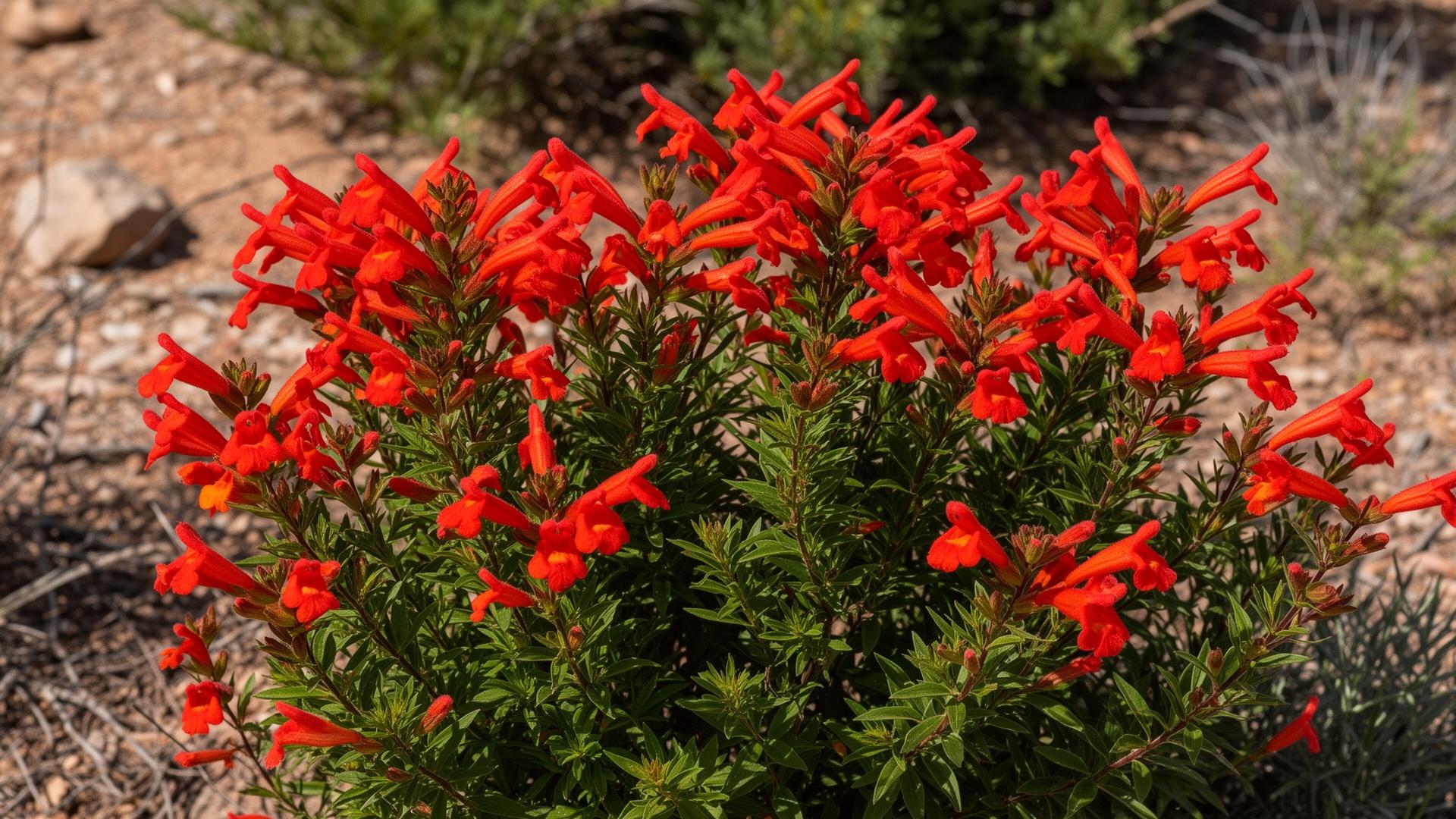
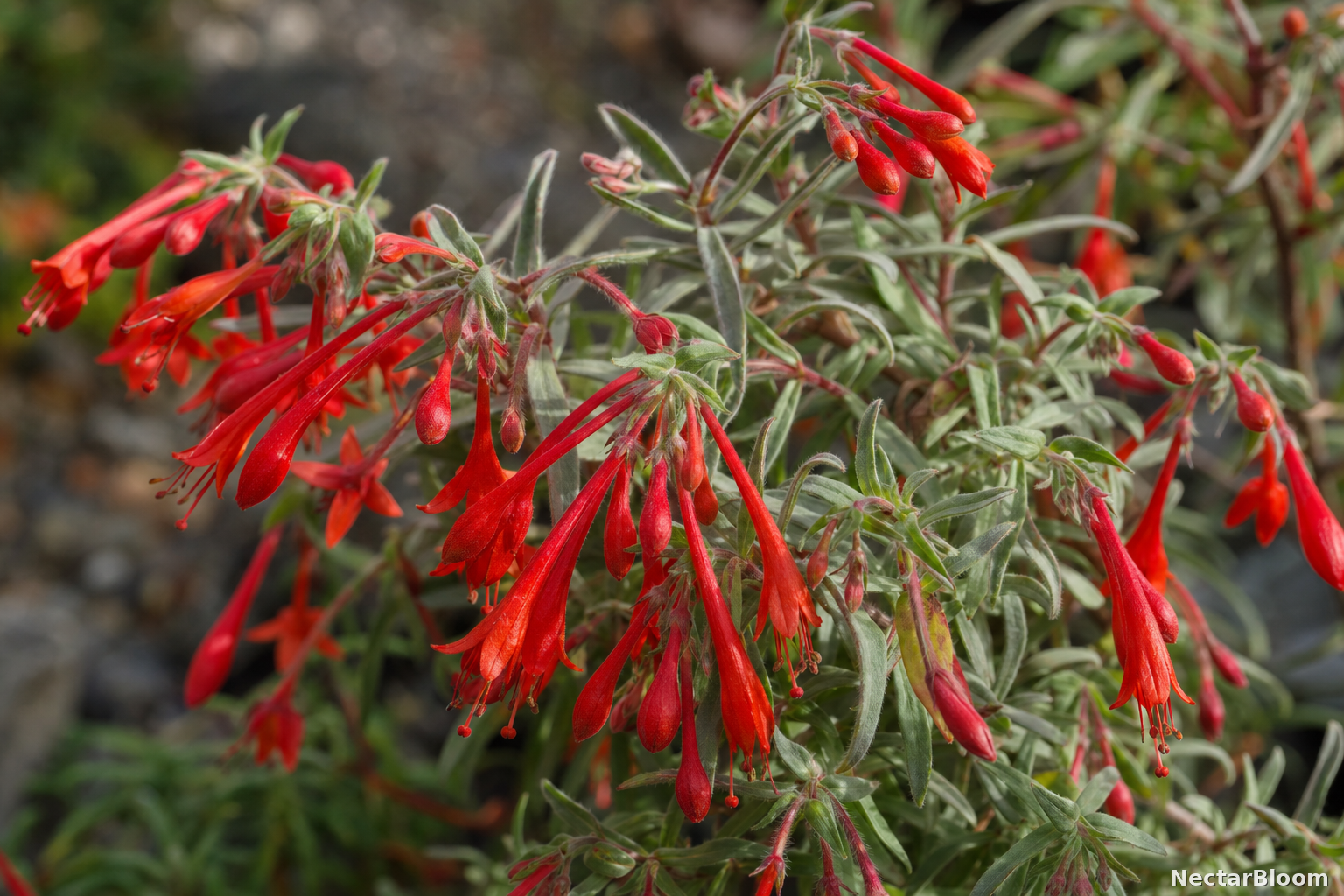
    California Fuchsia (Epilobium canum) with scarlet-red tubular flowers
    Late Summer–Fall Zones 7–10

    California Fuchsia

    Epilobium canum (syn. Zauschneria californica)
    ★★★★★ Hummingbird Attraction

    California Fuchsia is arguably the single most important late-season hummingbird plant in the American West. This perennial subshrub blooms prolifically from late July through October and November — when most other native nectar plants have gone dormant in summer's heat. Scarlet-red to orange-red tubular flowers cover the plant in a brilliant display that no hummingbird can resist. Native to California, Oregon, Nevada, Idaho, Utah, New Mexico, Arizona, and Wyoming, it thrives in full sun and extremely low water once established. Native

    California Fuchsia (Epilobium canum), also known as Zauschneria, is a pivotal nectar source for hummingbirds, particularly due to its tubular, bright red-orange flowers that are perfectly adapted for their long, slender bills. Its vibrant coloration acts as a strong visual cue, while the floral tube's architecture guides the hummingbird to a rich supply of nectar, high in sucrose, which provides essential energy. The plant's extended bloom period from summer through fall aligns critically with the late breeding season and southward migration of many hummingbird species in the Pacific Coast region, making it an indispensable resource when other floral sources may be waning.

    In the Pacific Coast region, Anna's Hummingbird (Calypte anna) and Rufous Hummingbird (Selasphorus rufus) are significant beneficiaries of California Fuchsia. Anna's Hummingbirds are year-round residents in many parts of this region, relying on the plant's sustained bloom for consistent sustenance, especially during their extended breeding season. Rufous Hummingbirds, known for their arduous migratory journeys, utilize the nectar to fuel their movements both north in spring and south in late summer, finding Epilobium canum a critical stopover and refueling point before crossing ecological barriers. These species' acrobatic feeding styles are well-suited to accessing the flower's deep nectar reserves.

    Sources: Audubon Native Plants Database, Cornell Lab of Ornithology, Lady Bird Johnson Wildflower Center
    When to plant: Plant California Fuchsia from fall to early spring in USDA Zones 7-10 for best establishment before summer heat.
    Where to plant (sun/shade): Provide at least 6 hours of full sun daily for abundant blooms; it tolerates partial shade but flowers less profusely.
    Soil & drainage: Requires well-drained soil, preferably sandy or rocky loam with a neutral to slightly acidic pH (6.0-7.5), as it dislikes heavy clay.
    Watering: Water regularly during establishment; once mature, it is drought-tolerant, needing infrequent deep watering (e.g., 0.5-1 inch every 2-4 weeks) during prolonged dry spells.
    Spacing & planting depth: Space plants 1.5 to 3 feet apart to allow for its spreading habit, planting the crown at the same level as the nursery container.
    Fertilizer & mulch: Avoid rich fertilizers; a light application of compost in fall or spring is sufficient, and apply a thin layer of gravel or sand mulch to improve drainage.
    Pruning & seasonal care: Cut back dead or leggy stems to about 2-4 inches from the ground in late winter or early spring to encourage vigorous new growth and flowering.
    Companion plants & design: Pair with other drought-tolerant natives like California Buckwheat (Eriogonum fasciculatum), Yarrow (Achillea millefolium), or Goldenrod (Solidago californica) for extended nectar availability.
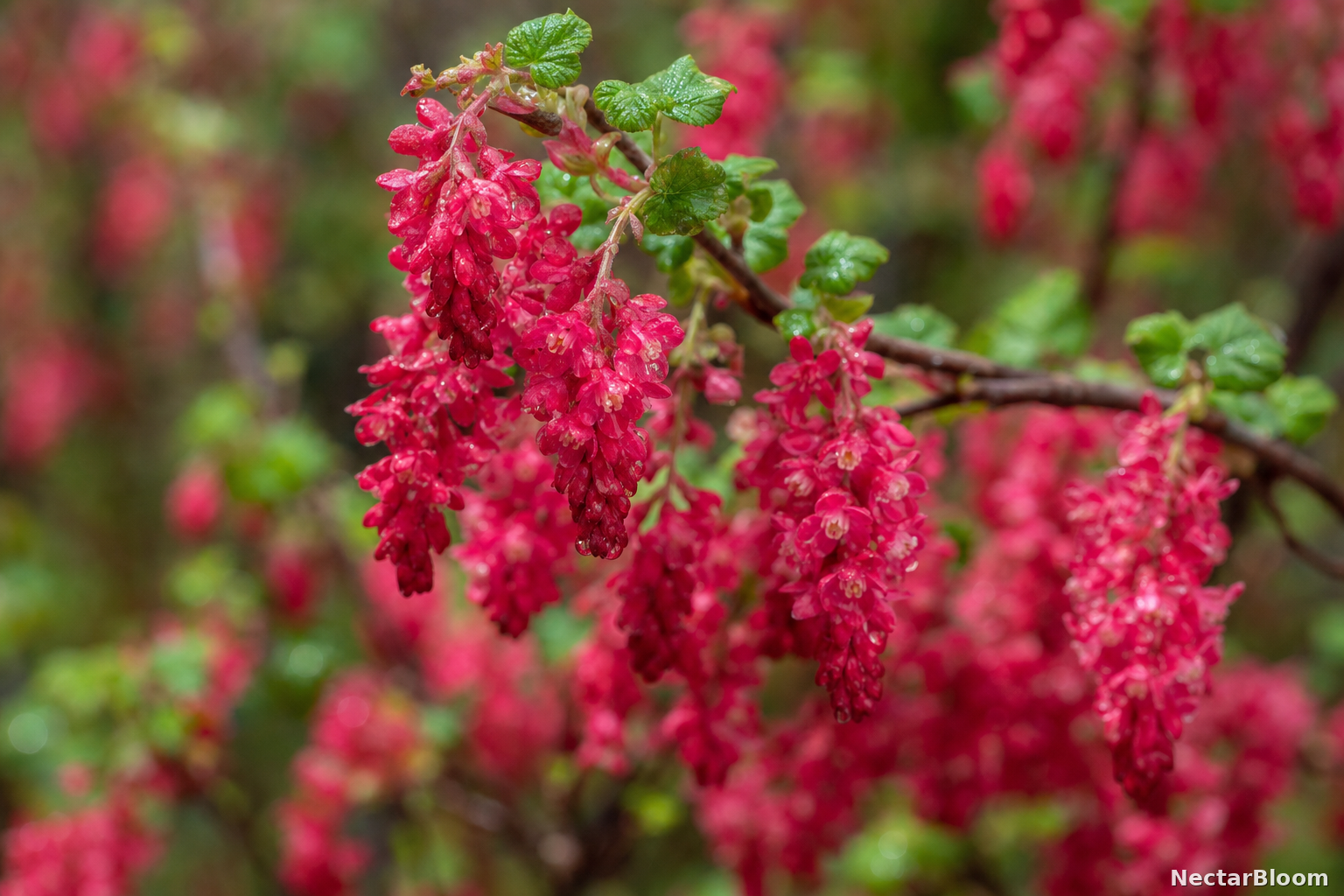
    Red Flowering Currant (Ribes sanguineum) with deep pink-red flower clusters
    Feb–April Zones 6–8

    Red Flowering Currant

    Ribes sanguineum
    ★★★★★ Hummingbird Attraction

    Red Flowering Currant is the quintessential "welcome back" shrub for Rufous Hummingbirds arriving in the Pacific Northwest each spring. This deciduous shrub from southern British Columbia to central California blooms remarkably early — February through April — producing pendulous clusters of deep pink to red flowers that appear before most competitors. Native

    Red Flowering Currant (Ribes sanguineum) is a critical early-season nectar source for hummingbirds in the Pacific Coast region. Its pendulous clusters of tubular, typically red to pink flowers are perfectly adapted for hummingbird pollination, providing easy access to nectar located at the base of the long corolla tubes. The sucrose-rich nectar, combined with the vibrant color, signals a high-energy reward, attracting hummingbirds during a period when other floral resources may be scarce. The bloom time, typically March to early May depending on elevation and specific location, coincides with the arrival of migratory hummingbirds and the peak breeding activity of resident species.

    Specifically, migratory Rufous Hummingbirds (Selasphorus rufus) and Anna's Hummingbirds (Calypte anna), a widespread resident, heavily utilize Red Flowering Currant. Rufous Hummingbirds, migrating north through the Pacific Coast, rely on these early blooms to refuel their arduous journey. Anna's Hummingbirds, which breed early in the year, depend on its abundant nectar to meet the high energy demands of courtship, nesting, and chick-rearing. The shrub's dense growth also provides potential perching and nesting sites, further increasing its value to these agile birds.

    Sources: Audubon Native Plants Database, Cornell Lab of Ornithology, Lady Bird Johnson Wildflower Center
    When to plant: Plant bare-root or container-grown plants during fall or early spring when soils are workable and temperatures are mild.
    Where to plant (sun/shade): Thrives in full sun to partial shade, preferring at least 4-6 hours of direct sunlight, especially in coastal areas.
    Soil & drainage: Adaptable to various soil types, but prefers well-drained loams to sandy soils with a pH of 6.0-8.0; avoid waterlogged conditions.
    Watering: Establish with regular watering for the first year; once established, it is drought-tolerant, requiring infrequent supplemental water during dry summers.
    Spacing & planting depth: Space plants 4-8 feet apart, depending on desired mature size, and plant at the same depth as in the nursery container.
    Fertilizer & mulch: Generally does not require fertilizer; apply a 2-4 inch layer of organic mulch like wood chips to conserve moisture and suppress weeds.
    Pruning & seasonal care: Prune after flowering (late spring) to remove dead or crossing branches and to maintain shape; avoid heavy pruning in late winter if early blooms are desired.
    Companion plants & design: Pair with other Pacific Northwest natives like Sword Fern (Polystichum munitum), Oregon Grape (Mahonia aquifolium), and Salal (Gaultheria shallon) for a layered wildlife garden.
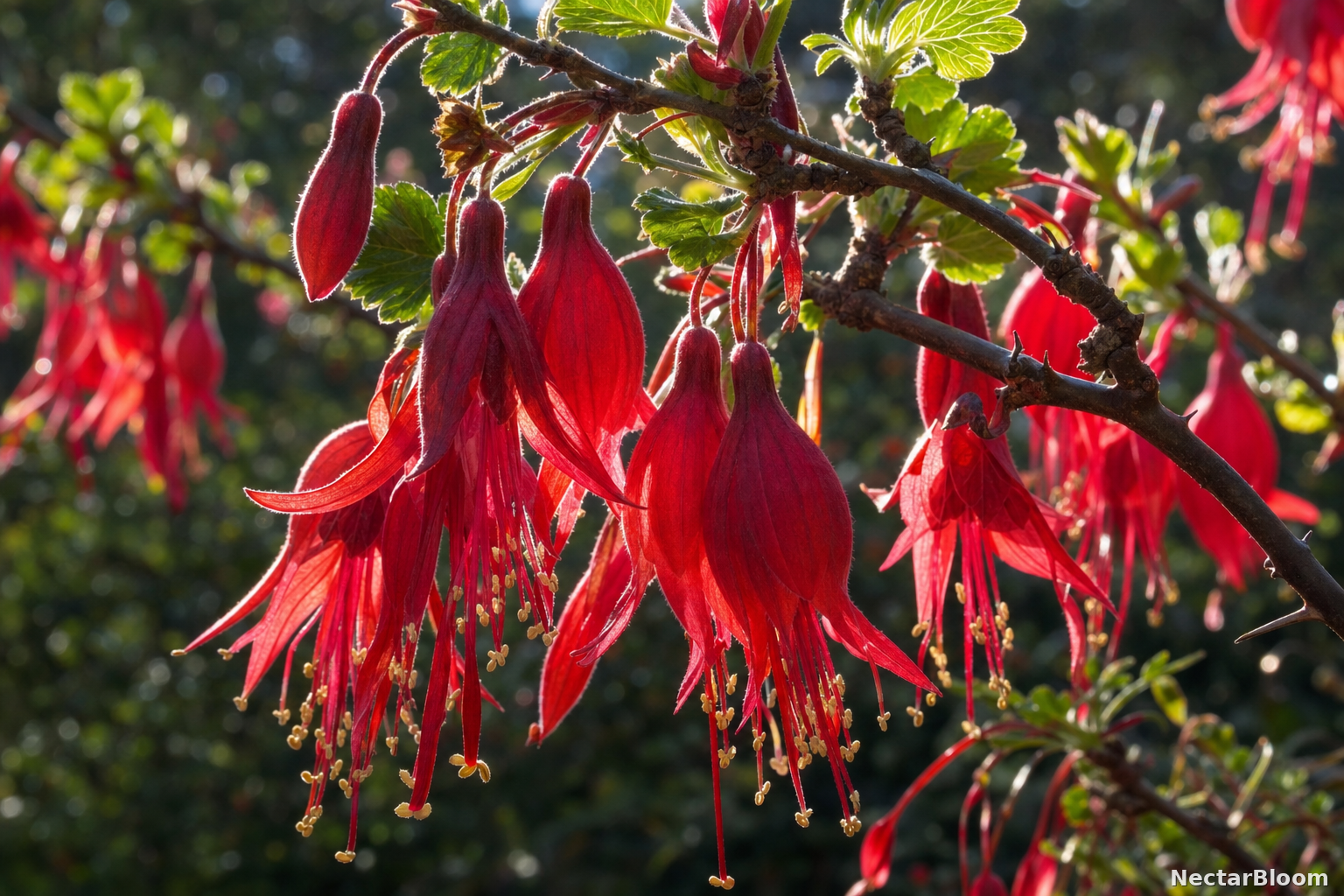
    Fuchsia-Flowered Gooseberry (Ribes speciosum) with brilliant hanging red flowers
    Jan–April Zones 8–10

    Fuchsia-Flowered Gooseberry

    Ribes speciosum
    ★★★★★ Hummingbird Attraction

    The CNPS rates this coastal California native as one of the top hummingbird plants in the state. Blooming January through April with brilliant hanging red flowers featuring long exserted stamens, it's spectacular in the winter-spring garden and provides critical fuel for Anna's Hummingbirds precisely when they need it most. Native to coastal California from Santa Barbara County to Baja California. Native

    Fuchsia-flowered Gooseberry (Ribes speciosum) is a premier hummingbird magnet in the Pacific Coast region, primarily due to its striking floral architecture and abundant nectar. The pendulous, fuchsia-red flowers, resembling miniature fuchsias, are perfectly adapted for hummingbird pollination. Their tubular shape and vibrant color, readily perceived by hummingbirds, guide their long bills directly to the nectaries at the base, ensuring efficient nectar consumption and pollen transfer. This species typically blooms from late winter to early spring, a crucial period when migrating Anna's Hummingbirds (Calypte anna) and Allen's Hummingbirds (Selasphorus sasin) are establishing territories and beginning nesting, providing a vital early-season energy source.

    Anna's Hummingbirds, resident throughout much of the Pacific Coast, and Allen's Hummingbirds, which migrate through or breed in coastal California and Oregon, heavily utilize Ribes speciosum. The rich nectar volume and concentration offer immediate energy, essential for their high metabolic rates, especially during colder months or breeding stress. These hummingbirds actively defend patches of fuchsia-flowered gooseberry, indicating its high value as a food resource. The arrangement of stamens and pistils ensures that pollen adheres to the birds' heads and bills, facilitating cross-pollination as they move between flowers and plants.

    Sources: Audubon Native Plants Database, Lady Bird Johnson Wildflower Center, Cornell Lab of Ornithology

    When to plant: Plant bare-root or potted specimens in fall or early spring, typically October through March, to allow root establishment before summer heat.
    Where to plant (sun/shade): Thrives in full sun along the coast to partial shade inland, requiring at least 4-6 hours of direct sun for best flowering.
    Soil & drainage: Adaptable to most well-drained soils, preferring loamy or sandy loam with a pH range of 6.0-7.5; avoid heavy, waterlogged clay.
    Watering: Water deeply once a week during dry season establishment; once mature, it is drought-tolerant, needing infrequent watering in summer.
    Spacing & planting depth: Space plants 4-6 feet apart to allow for mature spread; plant at the same depth as in the nursery container, ensuring the root crown is level with the soil.
    Fertilizer & mulch: Generally no fertilizer needed in good soil; apply 2-4 inches of wood chip mulch annually to conserve moisture and suppress weeds.
    Pruning & seasonal care: Prune after flowering in late spring to remove dead or crossing branches and to shape, maintaining vigor and encouraging new growth.
    Companion plants & design: Combine with other drought-tolerant natives like California Fuschia (Epilobium canum), Toyon (Heteromeles arbutifolia), and Salvia species for extended wildlife benefit.
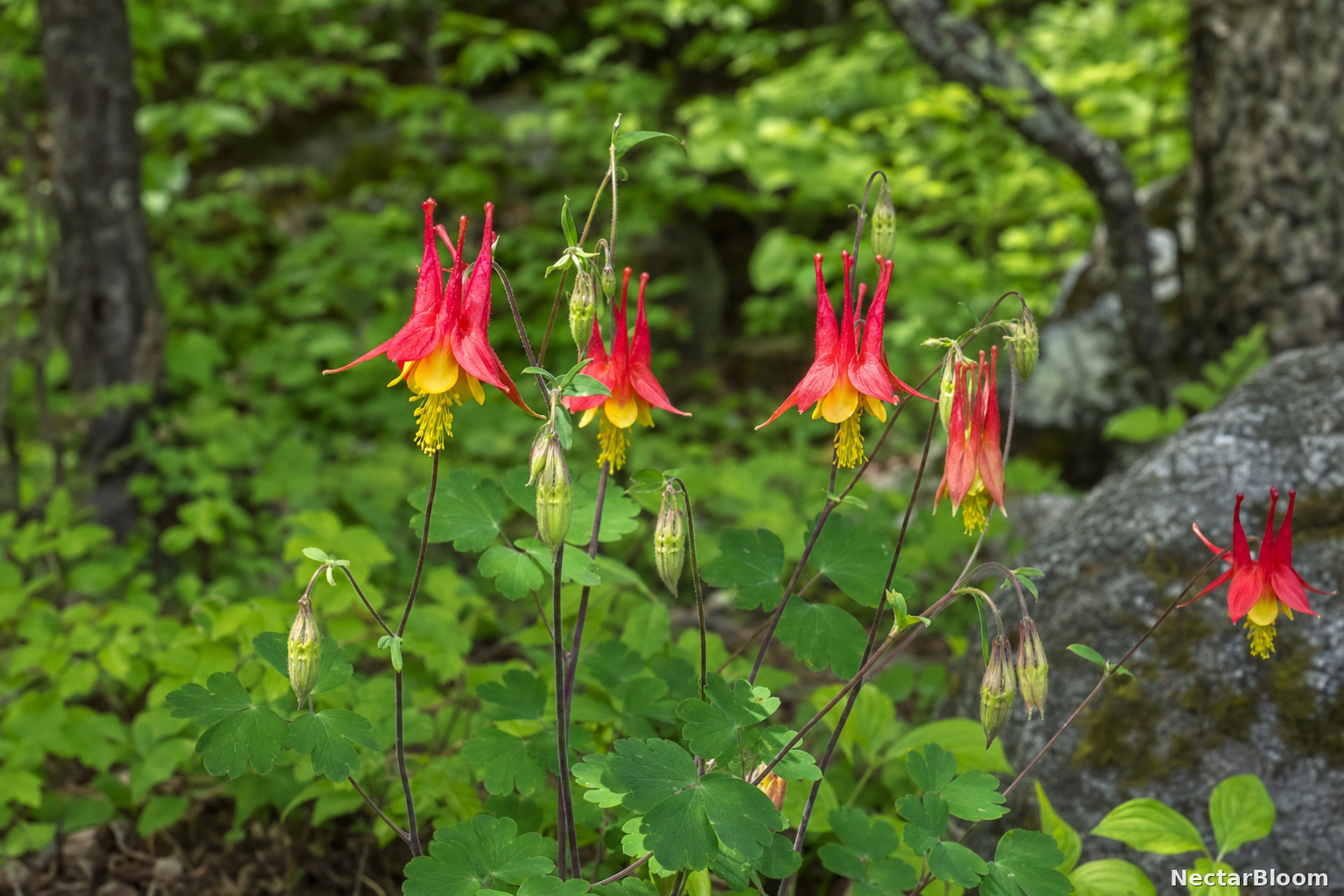
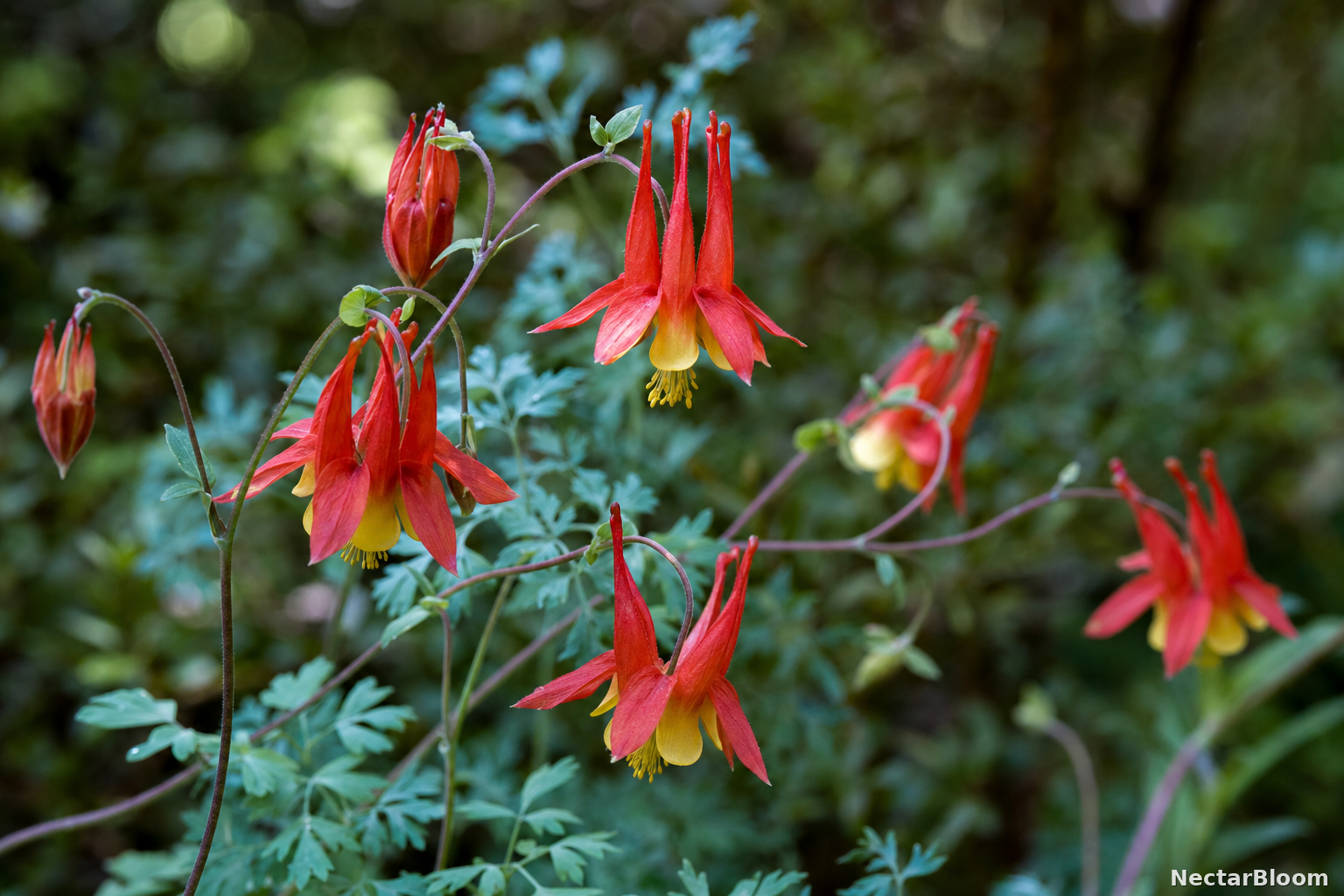
    Western Columbine (Aquilegia formosa) with red and yellow nodding flowers
    April–June Zones 3–9

    Western Columbine

    Aquilegia formosa
    ★★★★★ Hummingbird Attraction

    One of the most elegant spring hummingbird plants in the West. The nodding red-and-yellow flowers with long nectar spurs are a co-evolved product of millions of years of hummingbird selection. Native from Pacific Northwest south through California and east to the Rocky Mountains, Western Columbine blooms April through June, perfectly timed with spring Rufous migration and the active season of Calliope Hummingbirds in montane areas. Native

    Western Columbine (Aquilegia formosa) is a crucial nectar source for hummingbirds, particularly due to its unique floral structure. The spurred petals form long tubes, perfectly adapted for the slender bills and tongues of hummingbirds to access the abundant nectar held within. Its bright red and yellow coloration is highly attractive to hummingbirds, which have excellent color vision in this spectrum. Blooming from late spring to mid-summer, this timing coincides with the breeding season and post-breeding movements of many hummingbird species along the Pacific Coast, providing sustained energy during critical life stages.

    Specifically, Rufous Hummingbirds (Selasphorus rufus) and Anna's Hummingbirds (Calypte anna) are significant beneficiaries of Western Columbine, especially during their spring migration northward and summer residency, respectively. Rufous Hummingbirds, known for their long migratory journeys, rely on high-energy nectar sources like columbine to fuel their travels. Anna's Hummingbirds, increasingly year-round residents in many parts of the Pacific Coast, utilize these flowers for breeding and overwintering sustenance. The flower's architecture ensures efficient pollen transfer as hummingbirds forage, creating a mutualistic relationship between plant and pollinator.
    Sources: Audubon Native Plants Database, Cornell Lab of Ornithology, Lady Bird Johnson Wildflower Center.

    When to plant: Plant seeds in fall for spring germination, or container plants in spring after the last frost (USDA Zones 5-9).
    Where to plant (sun/shade): Prefers partial shade (3-5 hours of direct sun) in hotter inland areas, but tolerates full sun along the coast.
    Soil & drainage: Thrives in moist, well-draining soil with a neutral to slightly acidic pH (6.0-7.0), rich in organic matter.
    Watering: Requires consistent moisture, especially during dry periods; aim for 1 inch of water per week through irrigation or rainfall.
    Spacing & planting depth: Space plants 1 to 2 feet apart to allow for mature spread; plant crowns even with the soil surface.
    Fertilizer & mulch: A light layer of organic compost in spring provides nutrients; 2 inches of woody mulch conserves moisture and suppresses weeds.
    Pruning & seasonal care: Deadhead spent flowers to encourage reblooming; cut back foliage in late fall to tidy the plant and prevent disease.
    Companion plants & design: Pair with Pacific Coast Iris, Monkeyflower (Erythranthe guttata), and native ferns in woodland garden settings.
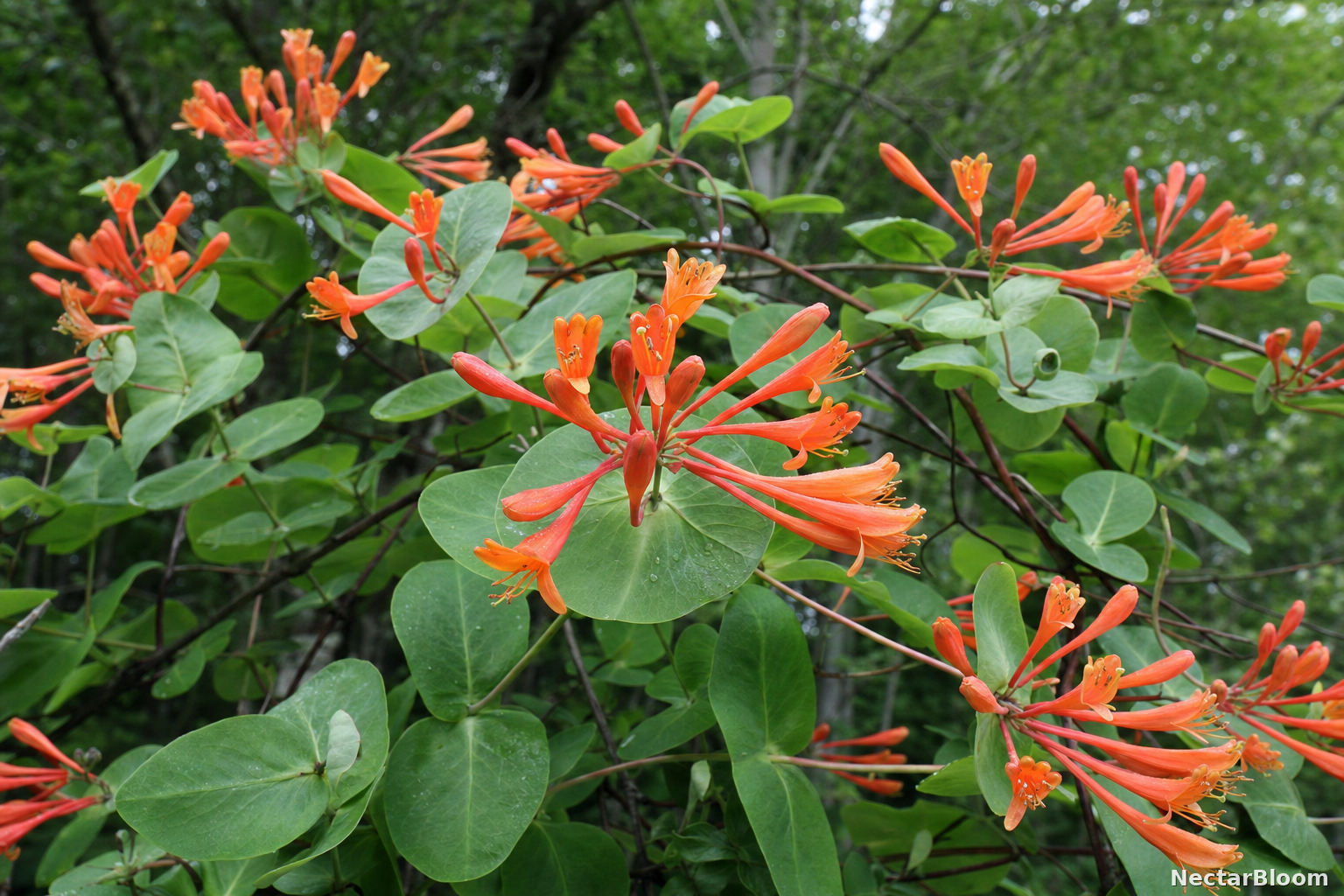
    Orange Honeysuckle vine (Lonicera ciliosa) with orange-red trumpet flowers
    April–July Zones 5–9

    Orange Honeysuckle

    Lonicera ciliosa
    ★★★★★ Hummingbird Attraction

    The Western Trumpet Honeysuckle is the Pacific Northwest's native hummingbird vine — a milder-growing, non-invasive alternative to the aggressive trumpet creeper of the East. This deciduous vine blooms April through July, covering its support with clusters of long, orange-to-orange-red trumpet flowers. Native to Pacific Northwest and Rocky Mountain foothills. Produces red berries in fall enjoyed by many bird species. Native

    Orange Honeysuckle (Lonicera ciliosa) is a vital nectar source for hummingbirds, particularly adapted to their feeding style. Its tubular bright orange to red flowers are perfectly shaped for hummingbirds' long bills and tongues, guiding them to rich nectar reserves. The vibrant color is highly attractive to hummingbirds, which see colors in the red-orange spectrum especially well, signaling a high-energy reward. Blooming from late spring to summer, these flowers provide crucial sustenance during the breeding season when energy demands are highest for nesting and raising young.

    In the Pacific Coast region, species like the Rufous Hummingbird (Selasphorus rufus), Anna's Hummingbird (Calypte anna), and Allen's Hummingbird (Selasphorus sasin) heavily rely on Lonicera ciliosa. Rufous Hummingbirds particularly benefit from its abundant nectar during their strenuous migration through the Pacific Northwest. Anna's Hummingbirds, now year-round residents in many coastal areas, find it an important food source during their extended breeding season. Its high sugar content supports the metabolic needs of these active birds, making it a critical component of their foraging habitat.

    Sources: Audubon Native Plants Database, Cornell Lab of Ornithology Birds of the World, Lady Bird Johnson Wildflower Center

    When to plant: Plant container-grown honeysuckle in fall or early spring to establish roots before seasonal extremes.
    Where to plant (sun/shade): Prefers partial shade (3-6 hours of direct sun) in hotter inland areas or full sun along the cooler coast.
    Soil & drainage: Thrives in moist, well-drained, humus-rich soils with a neutral to slightly acidic pH (6.0-7.0).
    Watering: Requires consistent moisture, especially during dry spells; provide 1 inch of water per week in summer, less in winter.
    Spacing & planting depth: Space vines 5-10 feet apart, planting the root ball at the same depth as it was in the nursery pot.
    Fertilizer & mulch: Generally needs no fertilizer; apply 2-4 inches of organic mulch to conserve moisture and suppress weeds.
    Pruning & seasonal care: Prune after flowering in late summer to shape or control growth, removing dead or tangled stems.
    Companion plants & design: Pair with Pacific Rhododendron (Rhododendron macrophyllum) or Western Bleeding Heart (Dicentra formosa) for a woodland edge.
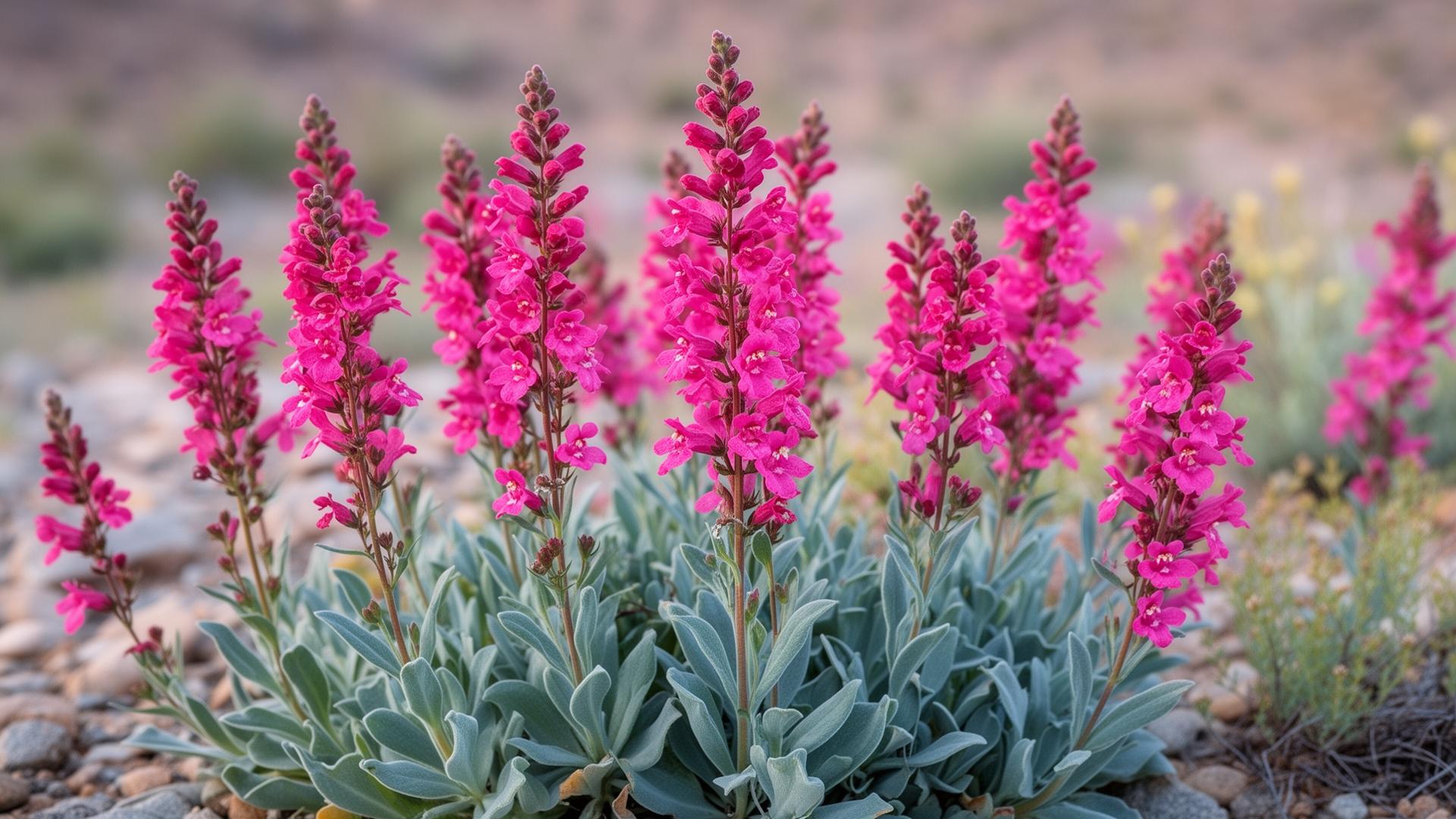
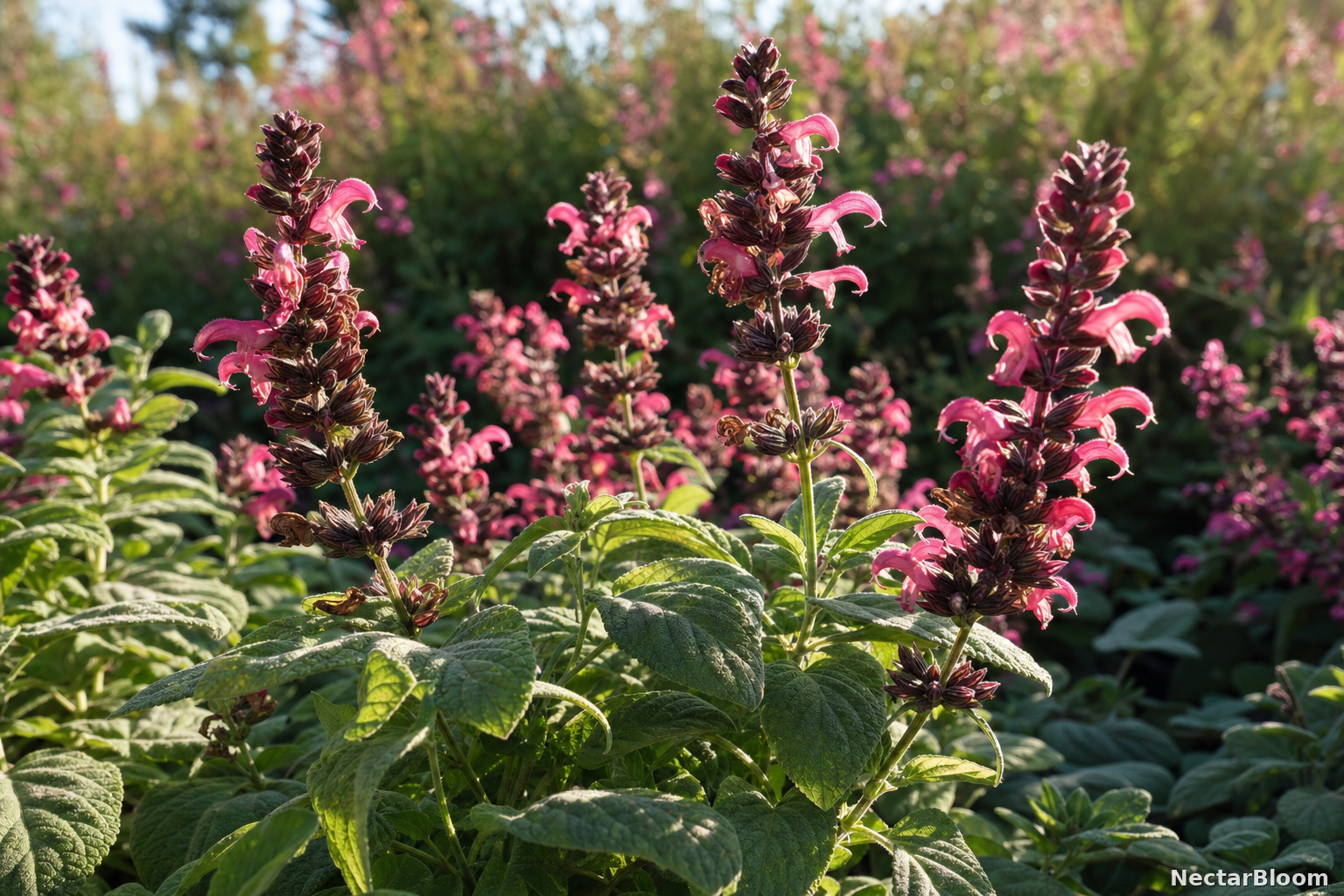
    Hummingbird Sage (Salvia spathacea) with rose-pink flower spikes
    March–June Zones 8–11

    Hummingbird Sage

    Salvia spathacea
    ★★★★★ Hummingbird Attraction

    Named directly for its most devoted visitor, Hummingbird Sage is a spreading rhizomatous perennial native to central and southern California coastal ranges. It produces tall spikes of rose-pink flowers with dark maroon calyces from March through June, and often reblooms in fall. Spreads by underground rhizomes to form dense, aromatic colonies. One of the best native groundcovers for dry shade in California. Native

    Hummingbird Sage (Salvia spathacea) is perfectly adapted for attracting hummingbirds through its floral morphology, nectar properties, and bloom time. Its tubular, magenta to rose-pink flowers are an ideal shape for hummingbird beaks, allowing access to the nectar at the base while ensuring pollen transfer. The vibrant color is highly visible to hummingbirds and signals a rich food source. Nectar in Salvia species generally has a sugar concentration favored by hummingbirds, providing essential energy during metabolically demanding periods like breeding and migration.

    In the Pacific Coast region, this plant primarily supports the Anna's Hummingbird (Calypte anna), a year-round resident, and provides critical resources for Allen's Hummingbird (Selasphorus sasin) during its breeding season and migration. The extended bloom period from late winter through spring and into summer aligns with the high energy demands for nesting females, growing chicks, and the migratory paths along the coast. The abundant and consistent nectar supply makes it a reliable food source, particularly when other native nectar plants may be scarce. Sources: Cornell Lab of Ornithology Birds of the World, Audubon Native Plants Database, Lady Bird Johnson Wildflower Center.

    When to plant: Plant container-grown specimens in fall or spring in USDA Zones 8-10, allowing roots to establish before summer heat or winter dormancy.
    Where to plant (sun/shade): Provide partial shade (2-4 hours of direct sun) in hotter inland areas, or full sun (6+ hours) in cooler coastal climates.
    Soil & drainage: Requires well-draining soil; tolerates sandy, loamy, or clay soils as long as drainage is adequate, with a pH of 6.0-8.0.
    Watering: Water deeply once or twice a month during dry summer periods after establishment; requires little to no summer water in coastal fog belts.
    Spacing & planting depth: Space plants 2-3 feet apart to allow for spreading via rhizomes; plant crowns at the same level as they were in the nursery pot.
    Fertilizer & mulch: Avoid fertilizer; apply a 2-inch layer of organic mulch like shredded redwood or bark to conserve moisture and suppress weeds.
    Pruning & seasonal care: Remove spent flower stalks after blooming to tidy the plant, or allow seeds to ripen for natural reseeding.
    Companion plants & design: Pair with other drought-tolerant natives like California Fuchsia (Epilobium canum) or various species of Dudleya.
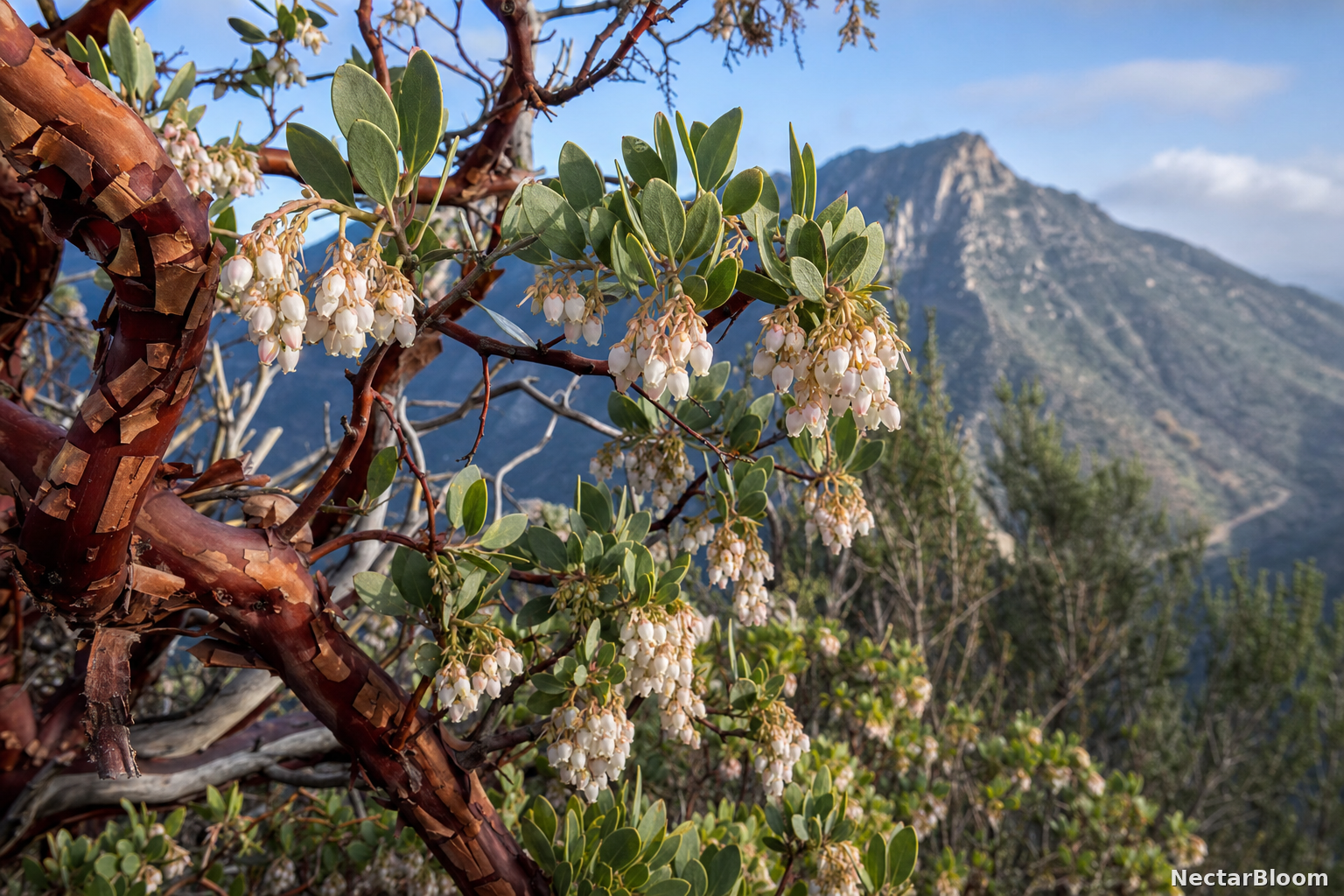
    Manzanita (Arctostaphylos) with urn-shaped white to pink flowers and distinctive red bark
    December–March Zones 6–10

    Manzanita

    Arctostaphylos spp.
    ★★★★★ Hummingbird Attraction

    Manzanitas are irreplaceable for winter hummingbird gardening in California. Multiple species of these iconic evergreen shrubs — recognized by their distinctive smooth red bark — bloom from December through March, providing nectar when almost nothing else is flowering. Range from 1-foot groundcovers (A. franciscana) to 20-foot specimens (A. glauca). Full sun and excellent drainage are essential. Native

    Manzanitas (Arctostaphylos spp.), particularly those with urn-shaped or tubular flowers, are crucial nectar sources for hummingbirds, especially along the Pacific Coast. Their flower structure effectively guides hummingbirds to the nectar at the base, and their typical colors—white, pink, or red—are highly attractive to these pollinators. Many species bloom from late winter through early spring, providing vital sustenance when other nectar sources are scarce, which is critical for hummingbirds preparing for breeding season or undertaking early migration within the region.

    Along the Pacific Coast, Rufous Hummingbirds (Selasphorus rufus) heavily utilize manzanitas during their spring northward migration and fall southward migration, as the abundant nectar fuels their long journeys. Anna's Hummingbirds (Calypte anna), which are year-round residents in many parts of this region, also depend on manzanita blooms, especially during their extended breeding season from late fall through early summer. The consistent, high-energy nectar helps support their high metabolic rates and reproductive success. Sources: Audubon Native Plants Database, Cornell Lab of Ornithology, Lady Bird Johnson Wildflower Center.

    When to plant: Plant manzanitas in late fall to early spring in USDA Zones 7-10, allowing root establishment before typical dry summers.
    Where to plant (sun/shade): Provide full sun (6+ hours daily) to partial shade (3-6 hours daily), especially for inland or southern California species.
    Soil & drainage: Require well-drained, acidic to neutral soil (pH 5.0-7.0); avoid heavy clays that retain excessive moisture.
    Watering: Water deeply during the first growing season for establishment, then only very sparingly or not at all in summer for mature plants.
    Spacing & planting depth: Space plants 4-8 feet apart depending on mature size, planting at the same depth as in the nursery pot.
    Fertilizer & mulch: Avoid fertilizer; apply a 2-4 inch layer of coarse, woody mulch annually to suppress weeds and conserve moisture.
    Pruning & seasonal care: Prune dead or crossing branches in late spring after flowering; avoid heavy summer pruning to prevent stress.
    Companion plants & design: Pair with drought-tolerant natives like Ceanothus, California Lilac, or Western Redbud for a cohesive landscape.
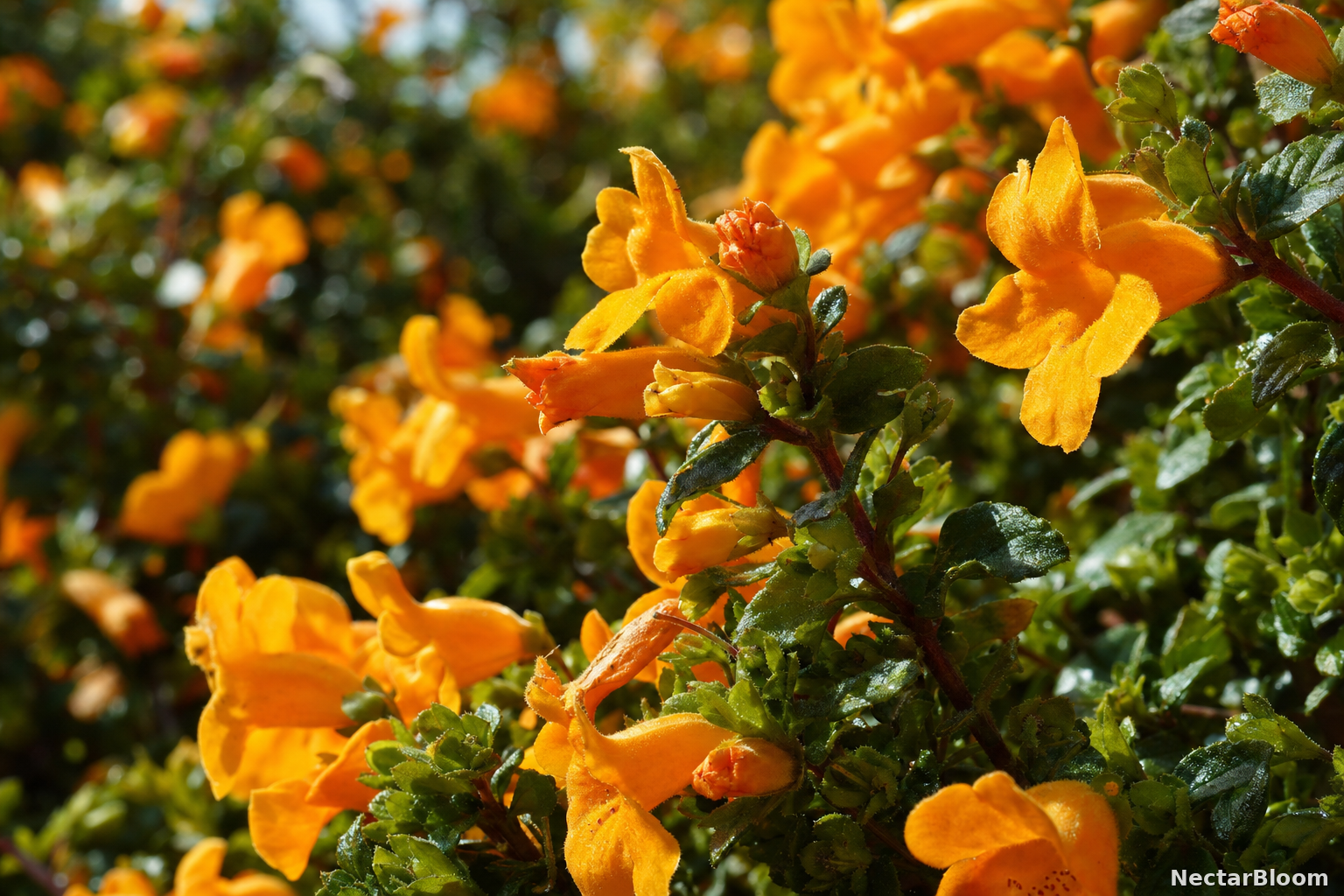
    Sticky Monkeyflower (Mimulus aurantiacus) with orange-yellow tubular flowers
    March–October Zones 8–10

    Sticky Monkeyflower

    Mimulus aurantiacus (now Diplacus aurantiacus)
    ★★★★★ Hummingbird Attraction

    One of the longest-blooming native shrubs in California, Sticky Monkeyflower provides nectar across multiple hummingbird generations and migration pulses from March through October. The evergreen shrub produces yellow-orange to orange tubular flowers continuously for seven months. Sticky leaves give the plant its common name and help repel insects. Native to California and southern Oregon. Native

    Sticky monkeyflower's tubular, bright orange to yellow-orange blossoms are precisely adapted for hummingbird pollination, offering a rich nectar source at their base. The elongated floral tube accommodates the hummingbird's long bill and tongue, ensuring pollen is deposited on its head during feeding while discouraging less effective pollinators. Its prolonged blooming period, typically from spring through fall, aligns with the breeding season and migratory patterns of hummingbirds along the Pacific Coast, providing a critical, consistent food supply when other nectar sources may be scarcer. The high sugar concentration in its nectar provides the energy needed for these highly active birds.

    Specifically, the Anna's hummingbird (Calypte anna), a year-round resident throughout much of California and parts of Oregon and Washington, heavily relies on sticky monkeyflower's nectar, especially during its extended breeding season. Rufous hummingbirds (Selasphorus rufus) also utilize this plant as they migrate through the region in spring and fall, fueling their demanding journeys. Broad-tailed hummingbirds (Selasphorus platycercus) and Allen's hummingbirds (Selasphorus sasin), depending on their specific range within the Pacific Coast, will similarly visit these vibrant flowers. These species are attracted by both the flower's vivid coloration and its abundant, high-energy nectar rewards.

    Sources: USDA NRCS Plant Guide, Audubon Native Plants Database, Cornell Lab of Ornithology

    When to plant: Plant container-grown sticky monkeyflower in fall or early spring to establish roots before extreme temperatures.
    Where to plant (sun/shade): Provide full sun (6+ hours daily) to partial shade (3-6 hours) for optimal flowering and compact growth.
    Soil & drainage: Requires well-drained, average to poor rocky or sandy loam soils; avoid heavy, wet clays.
    Watering: Water regularly during establishment; once mature, it is drought-tolerant, needing infrequent summer irrigation.
    Spacing & planting depth: Space plants 2-3 feet apart to allow for mature spread; plant at the same depth as the nursery container.
    Fertilizer & mulch: Generally needs no fertilizer; a light layer of wood chip mulch can help suppress weeds and retain moisture.
    Pruning & seasonal care: Prune back by one-third after flowering in late summer or fall to maintain shape and encourage new blooms.
    Companion plants & design: Pair with other drought-tolerant natives like California fuchsia, sages (Salvia spp.), and yarrow (Achillea millefolium).
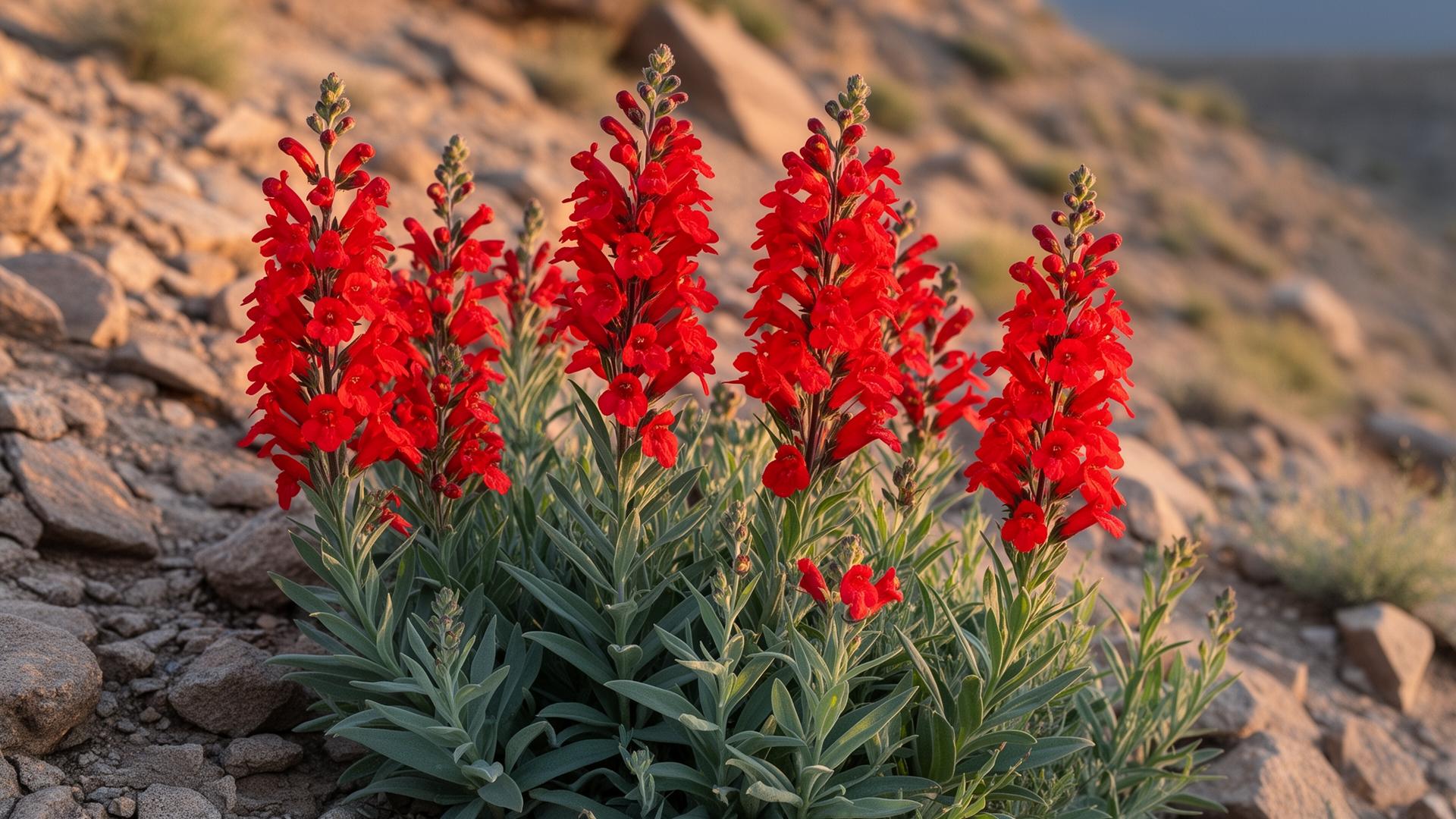
    Scarlet Bugler Penstemon (Penstemon centranthifolius) with scarlet red tubular flowers on tall stalks
    April–June Zones 7–10

    Scarlet Bugler Penstemon

    Penstemon centranthifolius
    ★★★★★ Hummingbird Attraction

    One of the most intensely red and hummingbird-specialized penstemons in California. Dramatic upright flower stalks rise 2–4 feet from fleshy gray basal leaves, covered in narrow scarlet-red tubular flowers from April through June. Native to southern California and Baja California, thriving in full sun with excellent drainage. The ornamental gray foliage remains attractive year-round even when not in bloom. Native

    Scarlet Bugler Penstemon (Penstemon centranthifolius) is a premier hummingbird magnet due to its specialized floral structure and rich nectar rewards. Its vibrant scarlet, tubular flowers, typically 1 to 1.5 inches long, are perfectly adapted for hummingbird bills, guiding them directly to the nectar at the base of the flower. The conspicuous red coloration is highly attractive to hummingbirds, which detect red wavelengths more readily than insects do. Additionally, this species offers a high volume of relatively concentrated nectar, providing crucial energy for these metabolically demanding birds, especially during critical periods such as spring migration and breeding season in the Pacific Coast region.

    Key hummingbird species in the Pacific Coast, such as Anna's Hummingbird (Calypte anna), Allen's Hummingbird (Selasphorus sasin), and Rufous Hummingbird (Selasphorus rufus), heavily utilize Penstemon centranthifolius. Anna's Hummingbirds, being year-round residents in many parts of this region, rely on its blooms for sustained resources. Allen's Hummingbirds and Rufous Hummingbirds, migratory species, find its nectar a vital fuel source during their arduous northward journeys and while establishing breeding territories. The flower's sturdy structure also provides a stable perch for hummingbirds as they feed, making it an efficient and frequently visited food source.

    Sources: Audubon Native Plants Database, Cornell Lab of Ornithology, Lady Bird Johnson Wildflower Center
    When to plant: Plant container-grown plants in fall or early spring; sow seeds in fall for spring germination after cold stratification.
    Where to plant (sun/shade): Site in full sun (6+ hours direct sun daily) to ensure prolific flowering and robust growth.
    Soil & drainage: Requires sharply drained soil; tolerates various soil types including sandy or rocky, pH 6.0-8.0.
    Watering: Water deeply once a week during dry periods in first year; established plants are drought-tolerant and need minimal supplemental water.
    Spacing & planting depth: Space plants 2-3 feet apart to allow for mature spread; plant at the same depth as in the nursery pot.
    Fertilizer & mulch: Avoid fertilizer, as it can promote leggy growth; apply a thin layer of fine gravel mulch for weed suppression and drainage.
    Pruning & seasonal care: Deadhead spent flower stalks to encourage rebloom; cut back to basal foliage after flowering or in early spring.
    Companion plants & design: Pair with other drought-tolerant natives like California Poppy, Sticky Monkeyflower, or California Buckwheat for continuous bloom.
    Scarlet Monkeyflower (Mimulus cardinalis) with brilliant scarlet red flowers near water
    June–October Zones 7–10

    Scarlet Monkeyflower

    Mimulus cardinalis (now Erythranthe cardinalis)
    ★★★★★ Hummingbird Attraction

    Where water is available, Scarlet Monkeyflower is a "summer hummingbird magnet" (Missouri Botanical Garden). This brilliant scarlet-red perennial blooms June through October along stream banks, in bog gardens, and wherever consistent moisture is provided. Reflexed petals and protruding stamens create a textbook hummingbird flower structure. Native from Washington south through California and into Arizona. Native

    Scarlet Monkeyflower (Mimulus cardinalis) exhibits classic hummingbird-pollination syndrome with its bright red, tubular flowers. The elongated corolla tube, typically 1 to 2 inches long, is perfectly adapted for the long, slender bills and tongues of hummingbirds, preventing other insects from accessing the nectar. The vibrant red coloration, highly attractive to hummingbirds but often invisible to bees, signals a rich reward. Nectar volume and concentration in Scarlet Monkeyflower are optimized to meet the high energy demands of these avian pollinators, providing a crucial food source during their breeding and migratory periods along the Pacific Coast.

    Along the Pacific Coast, Rufous Hummingbirds (Selasphorus rufus), Allen's Hummingbirds (Selasphorus sasin), and Anna's Hummingbirds (Calypte anna) are primary visitors and pollinators of Scarlet Monkeyflower. Its prolonged bloom period, typically from spring through fall, aligns well with the breeding season of Anna's Hummingbirds, which can be active year-round in some coastal California areas, and provides essential fuel for the spring and fall migrations of Rufous and Allen's Hummingbirds. The plant's consistent nectar production supports the rapid metabolism of these active birds, making it a vital component of their foraging habitats.

    Sources: Audubon Native Plants Database, Cornell Lab of Ornithology, Lady Bird Johnson Wildflower Center
    When to plant: Plant seeds or divisions in spring after the last frost, typically March to May, or in early fall in milder climates (USDA Zones 7-10).
    Where to plant (sun/shade): Prefers partial shade, especially in hotter inland areas, but can tolerate full sun along the immediate coast with consistent moisture.
    Soil & drainage: Thrives in moist, well-draining, rich soil with a slightly acidic to neutral pH (6.0-7.5), often found along stream banks.
    Watering: Requires consistently moist to wet soil; provide 1-2 inches of water per week, especially during dry spells or if not near a water source.
    Spacing & planting depth: Space plants 1-2 feet apart to allow for spread; plant at the same depth as their nursery container or sow seeds lightly pressed into the soil surface.
    Fertilizer & mulch: Generally does not require fertilizer in rich soil; apply a 2-3 inch layer of organic mulch to retain moisture and keep roots cool.
    Pruning & seasonal care: Deadhead spent flowers to encourage continuous blooming; cut back vigorously in late fall or early spring to refresh growth.
    Companion plants & design: Pair with other moisture-loving natives like Western Columbine (Aquilegia formosa), Five-finger Fern (Adiantum aleuticum), and Tall Oregon Grape (Berberis aquifolium).

    Succession Planting Calendar for the Pacific Coast

    Keep something in bloom from December through November for year-round Anna's Hummingbirds and spring/fall Rufous migrants.

    Season Key Plants in Bloom Primary Species Served Notes
    Winter Dec–Feb Arctostaphylos spp. (manzanita) · Ribes malvaceum (chaparral currant) · Mahonia aquifolium (Oregon grape) Anna's Hummingbird (year-round resident) Critical winter nectar when few other plants bloom; do not skip manzanita
    Early Spring Feb–Apr Ribes speciosum (fuchsia-flowered gooseberry) · Ribes sanguineum (red flowering currant) · Mahonia spp. Anna's (resident) · Rufous (spring migrants arriving) Time feeder setup with first currant bloom to welcome arriving Rufous migrants
    Spring Apr–Jun Aquilegia formosa (Western columbine) · Lonicera ciliosa (orange honeysuckle) · Salvia spathacea (hummingbird sage) · Penstemon centranthifolius Anna's (resident) · Rufous & Allen's (active migrants) Rufous nesting season in Pacific Northwest; peak garden activity
    Summer Jun–Aug Mimulus cardinalis (scarlet monkeyflower) · Mimulus aurantiacus (sticky monkeyflower) · Galvezia speciosa Anna's (resident) · Allen's (California coast) · Black-chinned (interior valleys) Maintain regular deep irrigation for moisture-loving species like scarlet monkeyflower
    Late Summer–Fall Aug–Nov Epilobium canum (California fuchsia — MOST IMPORTANT) · Salvia spathacea (rebloom) Anna's (resident) · Rufous (south migration, July–October) California fuchsia is irreplaceable at this season; plant in mass for maximum effect

    Which Hummingbirds Will Visit Your Pacific Coast Garden?

    The Pacific Coast is North America's most hummingbird-rich coastline. Anna's Hummingbird (Calypte anna) is the year-round backbone of Pacific Coast hummingbird gardens — the only hummingbird species that is reliably present in California through winter. Males have rose-red throat AND crown, and sing from prominent perches year-round. Anna's have dramatically expanded their range northward into Oregon and Washington in response to urban plantings and winter-blooming ornamentals.

    Rufous Hummingbirds (Selasphorus rufus) are spectacular spring visitors: they pass northward through California and Oregon from February through May, then return southward July through October. Their arrival is one of the great wildlife events of the Pacific Coast — aggressive, persistent feeders that will challenge Anna's for territory. Allen's Hummingbirds (Selasphorus sasin) breed along the California and southern Oregon coast and are nearly identical to Rufous in appearance. A non-migratory subspecies (S. s. sedentarius) is resident on Southern California's Channel Islands and suburban areas.

    🐦 Anna's Hummingbird (year-round) 🐦 Rufous Hummingbird (spring/fall migrant) 🐦 Allen's Hummingbird (California coast) 🐦 Calliope Hummingbird (montane areas) 🐦 Black-chinned Hummingbird (interior valleys)

    Plants to Avoid in Your Pacific Coast Garden

    Protect your hummingbird habitat by avoiding plants that harm native ecosystems or fail to deliver meaningful nectar rewards.

    • Japanese Honeysuckle (Lonicera japonica) — Highly invasive vine that smothers native plants; can grow 80–120 ft. Use native Lonicera ciliosa (orange honeysuckle) instead.
    • Tree Tobacco (Nicotiana glauca) — While hummingbirds use this non-native plant for winter nectar in California, it is highly invasive and displaces native species. Avoid planting.
    • Butterfly Bush (Buddleja davidii) — Banned in Washington and Oregon due to invasiveness. Despite nectar production, it displaces native plants without supporting caterpillar communities.
    • Double-flowered cultivars — Any rose, camellia, or ornamental with doubled or densely petaled flowers will not provide accessible nectar. The extra petals replace nectar-producing structures.
    Rocky Mountain wildflower meadow with red columbine and snow-capped peaks at sunrise
    Mountain West Hummingbird Region

    Mountain West Hummingbird Garden Plants: The Complete 2025 Guide

    Best Plants to Attract Hummingbirds in Colorado, Montana, Wyoming, Idaho, Utah & Nevada

    Hummingbird gardening in the Mountain West requires a deep understanding of elevation-driven phenology — the timing of biological events in relation to altitude and seasons. Broad-tailed Hummingbird males arrive in mountain gardens in April and May; Black-chinned Hummingbirds appear at lower elevations in late April. At higher elevations (above 8,000 feet), few native red flowers bloom before June, so early-season plants in other colors — particularly yellow currants, pink wax currants, and multi-colored columbine — are critical spring fuel sources.

    The Rocky Mountain region supports five regular hummingbird species: the Broad-tailed (primary breeding species at high elevations), Black-chinned (lower valleys), Rufous (aggressive late-summer migrants appearing as early as the first week of July according to Wild Ones Front Range Chapter), Calliope (smallest bird in North America; breeds at high elevations), and occasional Costa's at lower-elevation desert margins in southern Utah and Nevada.

    Succession planting is especially critical here. A spring garden anchored by golden currant and columbine, transitioning to scarlet gilia and penstemon through midsummer, and closing with agastache and California fuchsia for southbound Rufous migration, creates a garden that hummingbirds will actively seek out and defend. The USDA Forest Service identifies this region as having particularly high value for migrating Rufous Hummingbirds that depend on native mountain plants as refueling stations.

    Indian Paintbrush (Castilleja spp.) is an iconic Mountain West hummingbird plant, but requires special consideration as a hemiparasite — it must grow alongside host plants (native grasses, penstemon, gaillardia) to thrive. Plant it in naturalistic settings and be patient, as it may take two or more growing seasons to establish. Once established, it is remarkably rewarding and long-lived.

    Zones 3–7 Colorado · Montana · Wyoming · Idaho · Utah · Nevada (interior) Broad-tailed · Black-chinned · Rufous · Calliope · Costa's
    Golden Currant (Ribes aureum) with bright yellow fragrant flower clusters
    March–May Zones 3–8

    Golden Currant

    Ribes aureum
    ★★★★★ Hummingbird Attraction

    Golden Currant is the spring cornerstone of Mountain West hummingbird gardens. Called "one of the first plants to flower in the spring in the Rockies" by the USDA Forest Service, this spice-scented deciduous shrub blooms March through May with bright yellow flower clusters just as Broad-tailed and Black-chinned Hummingbirds arrive from their southern wintering grounds. Native throughout the Rocky Mountains and Great Plains. Native

    Golden Currant (Ribes aureum) possesses floral characteristics ideally suited for hummingbird pollination. Its bright yellow, tubular flowers are perfectly shaped for hummingbirds' long beaks and tongues, allowing them to access the ample nectar reserves deep within the corolla. The flowers offer a high-energy reward, crucial for metabolic demands of ruby-throated and broad-tailed hummingbirds, which are common migrants and breeders in the Rocky Mountain West. The bloom period, typically April through June, aligns well with the arrival and breeding season of these species in Colorado, Utah, Wyoming, Idaho, and Montana, providing an essential early-season food source.

    Specifically, broad-tailed hummingbirds (Selasphorus platycercus) and Rufous hummingbirds (Selasphorus rufus), two common species in the Rocky Mountain West, are significant beneficiaries of Golden Currant nectar. These hummingbirds actively seek out the sucrose-rich nectar to fuel their high metabolic rates, especially during spring migration and nesting. The plant's consistent and abundant floral display makes it a reliable food source, supporting hummingbird populations when other nectar sources may be scarce. Additionally, the plant provides structure for perching and cover in native landscapes.

    Sources: Audubon Native Plants Database, Cornell Lab of Ornithology, Lady Bird Johnson Wildflower Center
    When to plant: Plant bare-root or potted Golden Currant in late fall after leaf drop or early spring, before bud break, for best establishment in zones 3-8.
    Where to plant (sun/shade): Site in full sun (6+ hours direct sun) to part shade (4-6 hours direct sun) for optimal flowering and fruit production.
    Soil & drainage: Adaptable to most well-drained soils, thriving in loamy, sandy, or clay soils with a pH range of 6.0-8.0.
    Watering: Water regularly during the first year of establishment; mature plants are drought tolerant but benefit from occasional summer irrigation.
    Spacing & planting depth: Space plants 4-6 feet apart for hedges or mass plantings, planting at the same depth as in the nursery container.
    Fertilizer & mulch: Generally requires no fertilizer in fertile soils; apply 2-4 inches of organic mulch to retain moisture and suppress weeds.
    Pruning & seasonal care: Prune in late winter or early spring to remove dead, diseased, or crossing branches and to maintain an open structure.
    Companion plants & design: Pair with chokecherry, serviceberry, wild rose, and penstemons to create a polycultural, wildlife-friendly native shrub border.
    Rocky Mountain Penstemon (Penstemon strictus) with blue-purple tubular flowers
    May–July Zones 3–9

    Rocky Mountain Penstemon

    Penstemon strictus
    ★★★★★ Hummingbird Attraction

    One of the most reliable and widely available native penstemons for Mountain West gardens. This perennial produces blue-purple to violet tubular flowers on upright stems from May through July — right in the heart of Broad-tailed and Black-chinned nesting season. Native to the Rocky Mountains of Colorado, Wyoming, Utah, and New Mexico. The USDA states unequivocally: "all penstemon species attract hummingbirds." Native

    Rocky Mountain Penstemon (Penstemon strictus) is a vital nectar source for hummingbirds in the Rocky Mountain West due to its specialized floral architecture. The tubular, deep purple-blue flowers are perfectly adapted for hummingbird bills, guiding them directly to the nectar at the base of the corolla. This species produces a high volume of energy-rich nectar, essential for fueling hummingbirds' rapid metabolism during migration, breeding, and territorial defense. Its bloom period, typically from late spring through mid-summer, aligns critically with the arrival and nesting activities of hummingbirds in the region, providing a sustained food supply.

    Key hummingbird species in the Rocky Mountain West, such as Broad-tailed Hummingbirds (Selasphorus platycercus) and Rufous Hummingbirds (Selasphorus rufus), heavily rely on Penstemon strictus. Broad-tailed Hummingbirds are year-round residents or summer breeders across much of this region and utilize the early-season blooms for establishing territories and nesting. Rufous Hummingbirds, known for their lengthy migrations, frequently stop to refuel on its nectar during their northbound and southbound journeys. The vibrant color and abundant nectar of P. strictus make it an indispensable component of their foraging diet in these mountainous and high-desert environments.

    Sources: Audubon Native Plants Database, Cornell Lab of Ornithology, USDA NRCS Plant Guide

    When to plant: Plant seeds in fall for spring germination, or plant container-grown plants in spring after the last frost (late April-early June) in USDA Zones 4-8.
    Where to plant (sun/shade): Site in full sun receiving at least 6 hours of direct sunlight daily for optimal flowering and plant vigor.
    Soil & drainage: Requires well-drained, sandy, or gravelly soils; tolerates poor fertility and a pH range of 6.0-8.0, but absolutely no wet feet.
    Watering: Water regularly until established, then it is drought-tolerant, needing infrequent deep watering (perhaps 0.5-1 inch every 2-4 weeks) during prolonged dry periods.
    Spacing & planting depth: Space plants 1-2 feet apart. Plant seeds shallowly (1/8 inch deep); plant container stock with the crown level with the soil surface.
    Fertilizer & mulch: Avoid rich fertilizers; established plants thrive in lean soil. A thin layer of coarse gravel mulch can improve drainage and suppress weeds.
    Pruning & seasonal care: Deadhead spent flower stalks to encourage rebloom or tidy appearance; cut back in late fall or early spring to basal foliage.
    Companion plants & design: Pair with other regional natives like Colorado Columbine, Pasqueflower, Hairy Goldenaster, and various native grasses for a robust meadow aesthetic.
    Scarlet Gilia (Ipomopsis aggregata) with scarlet red star-shaped tubular flowers
    June–September Zones 4–8

    Scarlet Gilia (Skyrocket)

    Ipomopsis aggregata
    ★★★★★ Hummingbird Attraction

    Scarlet Gilia is the iconic summer hummingbird wildflower of the Rocky Mountains, found wild on hillsides and slopes from 3,600 to 10,800 feet elevation. The narrow scarlet-red tubular flowers bloom June through September and can bloom into mid-September, supporting young Broad-tailed fledglings as they prepare for their first migration. A landmark scientific study on the evolution of hummingbird pollination was conducted on this species. Native

    Scarlet Gilia (Ipomopsis aggregata) is a quintessential hummingbird magnet due to its specialized floral structure. Its vibrant red, tubular flowers, typically 1 to 2 inches long, are perfectly adapted for long-billed pollinators. The tube shape guides hummingbirds directly to the nectar-rich base, preventing access by less efficient insects. The high nectar volume and sugar concentration provide a critical energy source for these active birds, especially during the breeding season and fall migration in the Rocky Mountain West (May-September), when Scarlet Gilia is actively blooming. Its striking color is highly attractive to hummingbirds, which detect red wavelengths invisible or less appealing to many insects.

    In the Rocky Mountain West, Rufous, Broad-tailed, and Calliope Hummingbirds are significant beneficiaries of Scarlet Gilia. Broad-tailed Hummingbirds, common breeders in the region, rely on its nectar for fueling their territorial displays and feeding young. Migrating Rufous and Calliope Hummingbirds also heavily utilize these floral resources for energy during their strenuous journeys. The plant's ability to thrive in dry, rocky soils found throughout the intermountain west makes it a reliable food source in many habitats where these hummingbird species reside and migrate. It plays a vital role in their diet throughout summer months.

    Sources: Audubon Native Plants Database, Cornell Lab of Ornithology, Lady Bird Johnson Wildflower Center.

    When to plant: Sow seeds in fall for spring germination, after the last frost in USDA Zones 4-8, or plant nursery plugs in spring.
    Where to plant (sun/shade): Plant in full sun, requiring at least 6-8 hours of direct sunlight daily for optimal flowering.
    Soil & drainage: Requires well-drained, sandy, or rocky soils; tolerates poor fertility with a neutral to slightly acidic pH (6.0-7.5).
    Watering: Water sparingly once established; typically requires less than 1 inch of supplemental water per week in arid climates.
    Spacing & planting depth: Space individual plants 8-12 inches apart to allow for mature growth, planting seeds 1/8 inch deep.
    Fertilizer & mulch: Avoid fertilizers; apply a light layer of gravel or shredded bark mulch to suppress weeds and retain some moisture.
    Pruning & seasonal care: Deadhead spent blooms to encourage reblooming, and allow some seeds to drop for natural reseeding.
    Companion plants & design: Pair with other native dryland species like Penstemon, Yucca, and native grasses for a resilient xeriscape.
    Hummingbird Mint (Agastache rupestris) with orange-salmon tubular flower spikes
    July–October Zones 5–8

    Hummingbird Mint (Sunset Hyssop)

    Agastache rupestris
    ★★★★★ Hummingbird Attraction

    Since its introduction to the horticulture trade in 1996, Sunset Hyssop has become a garden staple in the Rocky Mountain region — and rightly so. Long blooming spikes of orange-salmon tubular flowers appear July through October, providing a critical late-season nectar source during the entire Rufous Hummingbird migration period. Native to the mountains of New Mexico, Colorado, and Texas. Aromatic foliage smells of anise and mint. Native

    Sunset Hyssop (Agastache rupestris) is a premier attraction for hummingbirds, featuring slender, tubular, orange-pink flowers perfectly adapted for their long beaks and tongues. These tubular blooms, typically 1.0–1.5 inches long, hold nectar at their base, requiring a specialized feeder to access, which hummingbirds possess. The nectar is known for its high sugar concentration, providing a critical energy source that fuels the birds' high metabolism. Blooming from mid-summer through early fall, its flowering period coincides with the peak breeding and fledging activity of resident hummingbirds and the southward migration of various species, ensuring a consistent food supply when energy demands are highest.

    In the Rocky Mountain West, this plant is a magnet for several key hummingbird species. The Broad-tailed Hummingbird (Selasphorus platycercus), a common breeder in the region, frequently visits Agastache rupestris for its nectar. Rufous Hummingbirds (Selasphorus rufus), known for their aggressive foraging during migration through the Rockies, also heavily utilize this plant as a critical refueling stop. Black-chinned Hummingbirds (Archilochus alexandri) are another frequent visitor, drawn by the plentiful nectar and suitable flower morphology. The bright coloration and abundant, easily accessible nectar reward these species for their efficient pollination services.

    Sources: Audubon Native Plants Database, Cornell Lab of Ornithology, Lady Bird Johnson Wildflower Center
    When to plant: Plant container-grown specimens in spring after the last frost or in early fall well before hard freezes for best establishment in zones 5-9.
    Where to plant (sun/shade): Site in full sun, requiring at least 6-8 hours of direct sunlight daily for optimal flowering and robust growth.
    Soil & drainage: Requires well-drained, lean to moderately fertile soil with a neutral to slightly alkaline pH; avoid heavy clay or waterlogged conditions.
    Watering: Water regularly during establishment; once mature, it is drought-tolerant, needing infrequent deep watering (every 2-4 weeks) during prolonged dry spells.
    Spacing & planting depth: Space plants 1.5-2 feet apart to allow for mature spread; plant at the same depth as their nursery container.
    Fertilizer & mulch: Avoid rich fertilizers; a light layer of gravel or pine needle mulch can improve drainage and suppress weeds in winter.
    Pruning & seasonal care: Cut back old flower stalks in early spring to encourage new growth; deadhead spent blooms during the season for tidiness.
    Companion plants & design: Pair with other regional natives such as Penstemon species (e.g., Pineleaf Penstemon), native Salvias, and Liatris for diverse habitat.
    Autumn Sage (Salvia greggii) with red tubular flowers
    Spring–Fall Zones 6–9

    Autumn Sage

    Salvia greggii
    ★★★★★ Hummingbird Attraction

    Autumn Sage is one of the most reliably hummingbird-attracting salvias available, with an extremely long blooming season from spring through fall and a peak in both spring and autumn. The two-lipped tubular flowers in red, orange-red, or pink are ideally shaped for hummingbird bills. Native to south-central and west Texas and northern Mexico; best for lower-elevation Mountain West gardens in Colorado, Utah, and Wyoming. Native

    Autumn Sage (Salvia greggii) is highly attractive to hummingbirds due to its tubular flowers, typically red, pink, or magenta, which are perfectly adapted for avian pollination. These elongated corollas protect nectar from insects with shorter proboscises, while the rich nectar volume and concentration provide essential energy for these metabolically demanding birds. Blooming from late spring through fall, Salvia greggii offers a critical food source during breeding seasons and migration periods across the Rocky Mountain West, when other nectar sources may be less abundant.

    In the Rocky Mountain West, species like Broad-tailed Hummingbird (Selasphorus platycercus), Rufous Hummingbird (Selasphorus rufus), and Black-chinned Hummingbird (Archilochus alexandri) frequently visit Autumn Sage. Broad-tailed and Black-chinned Hummingbirds are common breeders in much of the region, relying on such floral resources for sustenance. Rufous Hummingbirds, known for their lengthy migrations, benefit significantly from late-season blooms as they pass through, refueling for their journey south. The vibrant colors and consistent nectar reward make Salvia greggii a reliable and favored foraging plant for these species.

    Sources: Audubon Native Plants Database, Cornell Lab of Ornithology, Lady Bird Johnson Wildflower Center.

    When to plant: Plant in spring after the last frost (late April-June) in USDA Zones 5-9 for best establishment before winter.
    Where to plant (sun/shade): Provide full sun, meaning six or more hours of direct sunlight daily, for optimal flowering and plant vigor.
    Soil & drainage: Requires well-draining soil; tolerates rocky or sandy soils and pH 6.0-8.0, avoid heavy clay which leads to root rot.
    Watering: Water regularly until established (first year), then once every 2-4 weeks during dry periods; it is drought-tolerant once mature.
    Spacing & planting depth: Space plants 2-3 feet apart to allow for mature spread; plant at the same depth as in the nursery pot.
    Fertilizer & mulch: Generally needs no fertilizer; apply 1-2 inches of inorganic mulch (e.g., gravel) to suppress weeds and conserve moisture.
    Pruning & seasonal care: Prune in late winter or early spring by one-third to one-half to encourage new growth and denser flowering.
    Companion plants & design: Pair with other regional natives like Penstemon species, Agastache, and Zuni fleabane for continuous nectar.
    Indian Paintbrush (Castilleja spp.) with brilliant red-orange bracts in mountain meadow
    May–September Zones 4–8

    Indian Paintbrush

    Castilleja spp. (including C. miniata, C. linariaefolia)
    ★★★★★ Hummingbird Attraction

    The quintessential western mountain wildflower and an irreplaceable hummingbird plant. Indian Paintbrush species paint alpine meadows with brilliant red, orange, yellow, and pink bracts from May through September. The actual flowers are small tubular structures nestled within the colorful bracts, producing nectar specifically accessible to hummingbirds. Hemiparasitic — roots attach to host plants for water and nutrients. Native

    Indian Paintbrush (Castilleja spp.) species in the Rocky Mountain West are crucial for hummingbirds, particularly rufous (Selasphorus rufus), broad-tailed (Selasphorus platycercus), and black-chinned (Archilochus alexandri) hummingbirds during their migratory and breeding seasons from late spring through summer. The tubular structure of the flowers, often masked by vivid, brightly colored (reds, oranges, yellows) leafy bracts, perfectly accommodates their long beaks, guiding them to the nectaries deep within. These plants produce nectar with a high sugar concentration, providing an energy-rich food source vital for hummingbirds' high metabolic rates during arduous migrations and the demanding breeding season for egg-laying and chick rearing.

    Hummingbirds are primary pollinators for many Castilleja species; their hovering flight and specialized tongues allow them to access nectar otherwise unavailable to insects. The timing of paintbrush blooms often coincides with the peak presence of these hummingbird species in the region, ensuring a consistent food supply when energy demands are highest. For instance, broad-tailed hummingbirds are resident breeders throughout much of the Rocky Mountain West, relying on these flowers from late May through August, while rufous hummingbirds utilize them extensively during their northward migration in spring and southward migration in late summer. The vibrant floral displays act as visual cues, attracting these specific hummingbird species to reliable nectar sources within their territories.

    Sources: Cornell Lab of Ornithology Birds of the World, Audubon Native Plants Database, Lady Bird Johnson Wildflower Center.

    When to plant: Plant seeds in late fall to early winter (October-January) for spring germination, mimicking natural stratification in USDA Zones 3-8.
    Where to plant (sun/shade): Provide full sun (at least 6-8 hours daily) for optimal flowering, especially at higher elevations.
    Soil & drainage: Requires well-drained, lean soils; tolerates sandy, gravelly, or rocky loam with a pH of 6.0-7.5.
    Watering: Water sparingly once established; avoid overwatering, as it thrives in dry to mesic conditions, roughly 1 inch every 2-3 weeks during dry periods.
    Spacing & planting depth: Space plants 1-2 feet apart. Plant seeds shallowly, covering with a thin layer of soil (1/8 inch or less).
    Fertilizer & mulch: Avoid synthetic fertilizers; an annual top-dressing of compost is sufficient. Use light, coarse mulch if any, to prevent crown rot.
    Pruning & seasonal care: Deadhead spent blooms if desired to prolong flowering, but allow some to go to seed for natural reseeding.
    Companion plants & design: Plant near native grasses like Little Bluestem or Western Wheatgrass, or forbs such as Sulphur Flower, as it is hemiparasitic.
    Wild Bergamot (Monarda fistulosa) with lavender-pink round flower heads
    June–September Zones 3–9

    Wild Bergamot

    Monarda fistulosa
    ★★★★★ Hummingbird Attraction

    Wild Bergamot is one of the most adaptable and drought-tolerant of all the bee balm species, making it ideal for the dry summers of the Mountain West. Round lavender-pink flower heads bloom June through September — right in the heart of Broad-tailed and Black-chinned nesting season. Widespread native throughout eastern and central North America, extending into the Mountain West. Native

    Wild Bergamot (Monarda fistulosa) is highly attractive to hummingbirds due to its tubular, often purple to pink flowers, which are perfectly adapted for these birds' long bills and tongues. Each flower offers a rich nectar reward, typically produced in quantities and concentrations suitable for hummingbirds' high metabolic rates. Its blooming period, generally from mid-summer through early fall in the Rocky Mountain West, aligns well with the breeding season and pre-migratory fueling needs of resident and migratory hummingbird species in the region.

    Specific hummingbird species in the Rocky Mountain West, such as the Broad-tailed Hummingbird (Selasphorus platycercus), Rufous Hummingbird (Selasphorus rufus), and Black-chinned Hummingbird (Archilochus alexandri), frequently visit Wild Bergamot. The plant's clustered inflorescences provide multiple foraging opportunities at a single stop, making it an efficient nectar source. The visual appeal of its bright flowers and its robust nectar production help ensure it is a consistently utilized food source during critical periods of their life cycles.

    Sources: Audubon Native Plants Database, Cornell Lab of Ornithology Birds of the World, Lady Bird Johnson Wildflower Center.

    When to plant: Plant seeds outdoors in late fall for spring germination or sow bare-root divisions in early spring after the last hard frost in USDA Zones 4-9.
    Where to plant (sun/shade): Wild Bergamot thrives in full sun (6+ hours of direct sunlight daily) but tolerates partial shade (3-6 hours) in hotter, drier parts of the region.
    Soil & drainage: Prefers well-drained, average to poor soils, including sandy, rocky, or loamy types, tolerating a pH range from 6.0 to 7.0.
    Watering: Once established, it is drought-tolerant, requiring minimal supplemental irrigation; average regional rainfall is usually sufficient.
    Spacing & planting depth: Space plants 1-2 feet apart to allow for its spreading habit; plant roots at the same depth as they were in the nursery pot.
    Fertilizer & mulch: Avoid fertilization; a thin layer of organic mulch can help retain moisture in arid areas but is generally not necessary.
    Pruning & seasonal care: Deadhead spent flowers to encourage rebloom and prevent excessive self-seeding; cut back entire plants to 6 inches in late fall or early spring.
    Companion plants & design: Plant with other tough native perennials like Gaillardia pulchella, Penstemon strictus, and Aquilegia caerulea for a vibrant, low-maintenance garden.
    Golden Columbine (Aquilegia chrysantha) with golden yellow long-spurred flowers
    April–August Zones 4–9

    Golden Columbine

    Aquilegia chrysantha
    ★★★★★ Hummingbird Attraction

    One of the longest-blooming native columbines in North America, blooming April through August — an unusually extended season. Golden yellow flowers on long spurs are immediately adapted for hummingbird feeding. More heat-tolerant than most columbines and native to the southern Rockies of Colorado, New Mexico, and Arizona. Audubon Rockies recommends this species for lower-elevation Mountain West gardens. Native

    Golden Columbine (Aquilegia chrysantha) is a vital nectar source for hummingbirds, particularly in the Rocky Mountain West. Its elongated, spurred flowers, typically 2-3 inches long, act as a natural "soda straw" perfectly suited for the long bills and tongues of hummingbirds. The bright yellow color of the flowers is highly attractive to hummingbirds, which have excellent color vision and are particularly drawn to red and yellow hues. These floral characteristics, combined with a high volume of concentrated nectar (typically 25-50% sugar content), provide a significant energy reward for these active birds. The nectar is strategically located at the end of the spurs, ensuring that hummingbirds must fully insert their bills, often facilitating pollen transfer.

    In the Rocky Mountain West, Aquilegia chrysantha primarily attracts Broad-tailed Hummingbirds (Selasphorus platycercus), Rufous Hummingbirds (Selasphorus rufus) during their migration, and occasionally Black-chinned Hummingbirds (Archilochus alexandri) and Calliope Hummingbirds (Selasphorus calliope). Broad-tailed Hummingbirds, a common breeder in the region, rely on the continuous bloom period from late spring through summer (May to August) which aligns perfectly with their breeding season and the demanding energy needs of raising young. The robust nectar production supports their high metabolism and provides essential fuel for migratory species passing through the region. This plant serves as an important component of a hummingbird's diet, offering a consistent and high-quality energy source.

    Sources: Cornell Lab of Ornithology Birds of the World, Audubon Native Plants Database, Lady Bird Johnson Wildflower Center

    When to plant: Plant container-grown plants in spring after last frost or in fall; sow seeds outdoors in autumn for natural stratification.
    Where to plant (sun/shade): Prefers partial shade, especially afternoon shade in hotter areas; tolerates full sun in high-altitude, cooler climates.
    Soil & drainage: Requires well-drained, average to rich soil; tolerates various soil types from sandy to clay with a pH of 6.0-8.0.
    Watering: Needs consistent moisture, especially during dry periods; water deeply once a week, providing about 1 inch of water.
    Spacing & planting depth: Space plants 1-2 feet apart; plant at the same depth as they were in their nursery container.
    Fertilizer & mulch: Generally does not require fertilizer in good soil; apply a 1-2 inch layer of organic mulch to retain moisture and suppress weeds.
    Pruning & seasonal care: Deadhead spent flowers to encourage more blooms and prevent excessive self-seeding; cut back foliage after frost in fall.
    Companion plants & design: Pair with Rocky Mountain Penstemon, Blue Flax, Ostrich Fern, and other woodland or meadow edge natives in USDA Zones 3-8.
    Great Basin California Fuchsia (Epilobium canum subsp. garrettii) with scarlet-orange flowers
    August–October Zones 4–8

    California Fuchsia (Great Basin)

    Epilobium canum subsp. garrettii
    ★★★★★ Hummingbird Attraction

    The Great Basin subspecies of California Fuchsia is hardier than the Pacific Coast form, tolerating Zone 4 winters with ease. Masses of scarlet-orange tubular flowers appear August through October — precisely when southbound Rufous Hummingbirds are passing through the Mountain West on their migration to Mexico. Native to Utah, Wyoming, and Idaho. An indispensable late-season anchor plant for this region. Native

    California fuchsia (Epilobium canum) possesses floral adaptations perfectly suited for hummingbird pollination. Its distinctive tubular, trumpet-shaped flowers, typically brilliant red to orange-red, are designed to accommodate long hummingbird bills and tongues, excluding most other pollinators. These vibrant colors are highly visible to hummingbirds. The flowers offer a high volume of diluted nectar, providing a crucial energy source during peak hummingbird activity, especially coinciding with migration and breeding seasons in the Rocky Mountain West.

    In the Rocky Mountain West, species like Broad-tailed Hummingbirds (Selasphorus platycercus), Rufous Hummingbirds (Selasphorus rufus), and Black-chinned Hummingbirds (Archilochus alexandri) are principal visitors to California fuchsia. The plant's late-season bloom, from mid-summer into fall, is particularly vital for Rufous and Broad-tailed hummingbirds during their southward migration, offering a continuous and reliable food source as other nectar supplies dwindle. This ensures their energetic needs are met before or during their long journeys. Sources: Cornell Lab of Ornithology, Audubon Native Plants Database, Lady Bird Johnson Wildflower Center.

    When to plant: Plant Epilobium canum in spring after the last frost or in early fall to allow root establishment before winter.
    Where to plant (sun/shade): Site in full sun, requiring at least 6-8 hours of direct sunlight daily for optimal flowering.
    Soil & drainage: Requires well-drained soil; tolerates rocky, sandy, or loamy soil with a pH range of 6.0-8.0.
    Watering: Water regularly until established, then reduce to infrequent deep watering (e.g., 1 inch every 2-4 weeks) during dry periods.
    Spacing & planting depth: Space plants 1.5-2 feet apart. Plant at the same depth as in the nursery container, ensuring crown is level with soil.
    Fertilizer & mulch: Generally does not require fertilizer; apply a thin layer of gravel or shredded bark mulch for weed suppression and moisture retention.
    Pruning & seasonal care: Prune in late winter or early spring by cutting back old stems to 4-6 inches from the ground to encourage new growth.
    Companion plants & design: Pair with native penstemons (e.g., Penstemon strictus), asters (e.g., Symphyotrichum ericoides), and native salvias for continuousnectar.
    Native Coral Bells (Heuchera pulchella) with coral-red bell-shaped flowers on tall stalks
    May–July Zones 3–9

    Coral Bells (Native)

    Heuchera pulchella, H. rubescens (native spp.)
    ★★★★★ Hummingbird Attraction

    Native coral bells — particularly the Sandia Coral Bells (H. pulchella) — are exceptional for high-elevation Mountain West gardens, thriving at 8,000 feet and above where many other hummingbird plants struggle. Tiny bell-shaped flowers on tall wiry stalks bloom May through July in shades of coral, red, and pink. Ornamental foliage provides year-round interest. Native

    Heuchera pulchella, a native coral bells species, exhibits floral adaptations specifically appealing to hummingbirds in the Rocky Mountain West. Its small, bell-shaped flowers are typically red or pink, colors highly attractive to hummingbirds. The tubular corolla effectively guides the hummingbird's long beak to nectaries at the base of the flower, ensuring efficient nectar extraction. Its bloom period, typically from late spring through summer, coincides with key periods of hummingbird activity, including breeding and migratory stopovers in the region, providing a crucial and consistent energy source.

    Anna's Hummingbirds (Calypte anna), Broad-tailed Hummingbirds (Selasphorus platycercus), and Rufous Hummingbirds (Selasphorus rufus) are among the species that frequently utilize Heuchera pulchella in the Rocky Mountain West. These birds rely on high-energy nectar to fuel their rapid metabolism. The consistent nectar production of Heuchera pulchella provides essential sustenance, particularly during the demanding breeding season for resident species like the Broad-tailed Hummingbird, and for migratory species passing through. Its presence in native plant gardens contributes significantly to supporting these vital pollinators. Sources: Audubon Native Plants Database, Cornell Lab of Ornithology, Lady Bird Johnson Wildflower Center.

    When to plant: Plant in spring after the last frost or in early fall, allowing roots to establish before winter dormancy in USDA Zones 4-8.
    Where to plant (sun/shade): Provide partial shade (2-4 hours of direct sun) to full shade, especially in hotter, drier parts of the region.
    Soil & drainage: Requires well-drained, organically rich soil with a slightly acidic to neutral pH (6.0-7.0) to prevent root rot.
    Watering: Water regularly to maintain consistently moist soil, about 1 inch per week, particularly during dry periods in summer.
    Spacing & planting depth: Space plants 1-1.5 feet apart, with the crown of the plant set at or just above the soil surface.
    Fertilizer & mulch: Apply a light layer of compost annually in spring; a 1-2 inch layer of organic mulch conserves moisture.
    Pruning & seasonal care: Deadhead spent flower stalks for tidiness, and remove any tattered or dead leaves in late winter or early spring.
    Companion plants & design: Pair with other shade-loving natives like Aquilegia coerulea, Penstemon angustifolius, and various ferns for a naturalistic look.

    Succession Planting Calendar for the Mountain West

    Season Key Plants in Bloom Primary Species Served Notes
    Early Spring Mar–May Ribes aureum (golden currant) · Ribes cereum (wax currant) · Aquilegia chrysantha Broad-tailed (arriving Apr–May) · Black-chinned (arriving late Apr) Few red flowers bloom at this elevation yet; yellow and pink flowers are critical spring fuel
    Late Spring May–Jun Penstemon strictus (rocky mtn. penstemon) · Castilleja spp. (paintbrush) · Aquilegia formosa Broad-tailed (nesting) · Black-chinned (nesting) Peak nesting season for resident hummingbirds; consistent nectar is critical
    Summer Jun–Aug Ipomopsis aggregata (scarlet gilia) · Monarda fistulosa (wild bergamot) · Heuchera spp. Broad-tailed (fledglings) · Black-chinned · Calliope Scarlet gilia is the signature midsummer hummingbird wildflower of the Rockies
    Late Summer–Fall Aug–Oct Epilobium canum subsp. garrettii · Agastache rupestris · Salvia greggii Rufous (south migration, July–September) Rufous migrants arrive as early as first week of July; late-season nectar is critical fueling

    Which Hummingbirds Will Visit Your Mountain West Garden?

    The Mountain West supports the highest hummingbird species diversity of any US region east of the Pacific Coast. The Broad-tailed Hummingbird (Selasphorus platycercus) is the primary breeding species at elevations from 5,000–10,500 feet, identifiable by the distinctive metallic trill produced by the male's wing feathers in flight. Males arrive in April and May; females arrive 2–3 weeks later to begin nesting in willows and aspens. The Black-chinned Hummingbird (Archilochus alexandri) occupies lower-elevation valleys and desert canyons, thriving in a remarkably wide range of habitats. Perhaps most dramatically, the Rufous Hummingbird (Selasphorus rufus) arrives southbound in July — the earliest of any hummingbird migrant — and passes through the Mountain West in large numbers through September, fueling intensively on agastache, California fuchsia, and penstemon. The tiny Calliope Hummingbird (Selasphorus calliope), the smallest bird in North America, breeds at high elevations in the Rocky Mountains.

    🐦 Broad-tailed (primary breeding species) 🐦 Black-chinned (lower elevations) 🐦 Rufous (July–Sept migrant) 🐦 Calliope (high-elevation breeding) 🐦 Costa's (southern UT/NV, occasional)

    Plants to Avoid in Your Mountain West Garden

    • Butterfly Bush (Buddleja davidii) — Invasive in parts of the Mountain West; displaces native plants that support caterpillar communities essential to hummingbird protein intake.
    • Double-flowered cultivars of any plant — Double petals replace nectar-producing structures. Always choose straight native species over showy cultivars.
    • Modern Heuchera cultivars for foliage color — Many fancy-foliage coral bells have been bred at the expense of nectar production. Use native species (H. pulchella, H. rubescens) for hummingbird value.
    • Non-native ornamental salvias without verification — Choose verified high-nectar native agastache and salvia species native to the Mountain West (A. rupestris, A. cana, S. greggii) over untested hybrids.
    • Deer-resistant "hummingbird" plants without nectar verification — Some plants marketed as deer-resistant and hummingbird-friendly produce minimal nectar. Always verify hummingbird attraction with regional native plant societies.
    Sonoran desert garden with blooming ocotillo, saguaro cactus and red mesa at sunset
    Southwest Hummingbird Region

    Southwest Hummingbird Garden Plants: The Complete 2025 Guide

    Best Plants to Attract Hummingbirds in Arizona, New Mexico, West Texas & Southern Nevada

    The American Southwest is North America's hummingbird paradise. Arizona alone hosts more hummingbird species than any other US state, and the unique desert ecology has produced plants of extraordinary specialization — Ocotillo, Chuparosa, and Desert Willow evolved directly alongside hummingbirds over millions of years. The result is a garden palette unlike anywhere else in the world: drought-adapted, heat-tolerant, often architecturally dramatic plants that produce prodigious quantities of nectar calibrated precisely for hummingbird bills.

    Gardening strategy in the Southwest must account for two distinct bloom periods: the spring bloom (February–May) triggered by winter rains, and the monsoon bloom (July–October) triggered by summer rains. Providing nectar through both cycles — and bridging the gap between them — is the key to keeping multiple hummingbird species in your garden year-round. Costa's Hummingbirds breed in the Sonoran Desert in spring; Black-chinned and Broad-tailed nest in summer; Rufous arrive from the north in late July, and many species overwinter in the warmest parts of the region.

    The plant list for the Southwest is intentionally diverse, spanning true desert specialists (Ocotillo, Agave, Chuparosa), desert-adapted shrubs (Desert Willow, Desert Honeysuckle, Red Yucca), and long-season perennials and salvias (Autumn Sage, Pineapple Sage, Penstemon species). Together they provide nectar for 12+ months of the year in Zones 9–11, or 9–10 months in Zone 7–8 gardens. Native plants are strongly preferred — they require no supplemental irrigation once established, support the native insect communities that provide hummingbirds 50% of their food, and are evolved for the local climate.

    Southeast Arizona in particular — the sky island mountains of the Chiricahuas, Huachucas, and Santa Ritas — represents one of the greatest hummingbird watching destinations in the world. Gardeners in Tucson, Sierra Vista, and Patagonia are positioned to attract specialty species including Broad-billed, Violet-crowned, White-eared, and Magnificent (Rivoli's) Hummingbirds in addition to the common species. Planting native regional plants dramatically increases the odds of hosting these spectacular visitors.

    🌡 Zones 7–11 🐦 15+ hummingbird species 📍 Arizona · New Mexico · West Texas · Southern Nevada

    Verified Hummingbird Plants

    Chuparosa (Hummingbird Bush) - hummingbird plant
    Year-Round Zones 8–11

    Chuparosa (Hummingbird Bush)

    Justicia californica · Evergreen shrub · Native

    ★★★★★ Hummingbird Rating

    Chuparosa — Spanish for 'rose sucker' or 'hummingbird' — is the iconic desert hummingbird shrub of the Sonoran Desert. This 3–5 ft evergreen produces lipstick-red tubular flowers nearly year-round, triggered by rain events, with peak bloom in winter and spring. Native to Arizona and Baja California, it thrives in full sun, extreme heat, poor rocky soils, and extended drought. When lightly frosted, it dies back but regrows from roots once temperatures warm. A cornerstone species for Costa's, Black-chinned, and Anna's Hummingbirds.

    Chuparosa (Justicia californica) is a vital nectar source for hummingbirds in the Desert Southwest due to its tubular, bright red to orange-red flowers, which are perfectly adapted for hummingbird pollination. The long floral tubes protect nectar from other pollinators while allowing hummingbirds' specialized bills and tongues to access the rich, energy-dense nectar. This plant blooms profusely from late winter through spring, and often intermittently into fall and even mild winters, providing crucial sustenance during spring migration, nesting season, and preparatory feeding for fall migration, aligning perfectly with the region's hummingbird activity peaks.

    Anna's Hummingbird (Calypte anna), Costa's Hummingbird (Calypte costae), and Broad-billed Hummingbird (Cynanthus latirostris) are frequent visitors to chuparosa in the Desert Southwest, utilizing it extensively for nectar. These species, resident or common migrants in the region, rely on chuparosa's continuous bloom period as a consistent food source, especially during the lean, dry periods. The plant also offers protective cover, and its dense branching can provide potential perching sites, contributing to a holistic hummingbird habitat.

    Sources: Audubon Native Plants Database, Cornell Lab of Ornithology, Lady Bird Johnson Wildflower Center.

    When to plant: Plant chuparosa in fall (September to November) or early spring (March to April) in USDA Zones 8-10, avoiding extreme summer heat.
    Where to plant (sun/shade): Site in full sun (6+ hours) for best flowering, tolerating partial shade in scorching desert environments, especially with reflected light.
    Soil & drainage: Requires well-drained, sandy or rocky soils, tolerating alkaline conditions (pH 7.0-8.5); avoid heavy, compacted clays.
    Watering: Water deeply once every 2-4 weeks during dry periods after establishment; reduce frequency in winter and during monsoon season.
    Spacing & planting depth: Space plants 3-5 feet apart to allow for mature spread; plant at the same depth as in the nursery container.
    Fertilizer & mulch: Generally no fertilizer needed; apply a light layer of inorganic mulch (e.g., gravel) to conserve moisture and suppress weeds.
    Pruning & seasonal care: Prune in late winter or early spring by one-third to re-shape and encourage new growth and more abundant flowers.
    Companion plants & design: Pair with desert marigold, brittlebush, penstemons, and salvias to create a diverse, continuous bloom for desert wildlife.
    Ocotillo - hummingbird plant
    February–May Zones 8–11

    Ocotillo

    Fouquieria splendens · Desert succulent shrub · Native

    ★★★★★ Hummingbird Rating

    Ocotillo is one of the most dramatic and ecologically important plants of the Sonoran and Chihuahuan Deserts. Its tall thorny canes — sometimes reaching 20 feet — erupt with clusters of scarlet-red tubular flowers at the tips each spring, even in the driest of years. The Arizona-Sonora Desert Museum calls ocotillo flowers 'a crucial energy source for hummingbird spring migration' because it reliably blooms when almost nothing else does in the desert. It leafs out only during wet periods but flowers regardless of leaf status.

    Ocotillo (Fouquieria splendens) produces vibrant red, tubular flowers from March to June, peaking just before and during the spring migration and breeding season of many hummingbird species in the Desert Southwest. The flowers are perfectly adapted for hummingbirds, featuring a deep, narrow corolla that excludes most insects while accommodating a hummingbird's long bill and tongue. These blooms offer a rich supply of nectar, high in sucrose, providing essential energy for these active birds. Its distinctive flowering structure and timing make it a critical early-season food source.

    Several hummingbird species in the Desert Southwest, including Anna's (Calypte anna), Costa's (Calypte costae), Black-chinned (Archilochus alexandri), and Broad-billed (Cynanthus latirostris), heavily utilize ocotillo for nectar. The striking red color (a preferred hue for hummingbirds), coupled with its abundant and easily accessible nectar, makes it a favored plant. As a prominent native shrub in arid landscapes, ocotillo provides a reliable food source when other floral options may be scarce, supporting these birds during their most energy-intensive periods of migration, courtship, and nesting. The plant's architecture also offers perching opportunities for territorial males.

    Sources: Audubon Native Plants Database, Cornell Lab of Ornithology, Lady Bird Johnson Wildflower Center
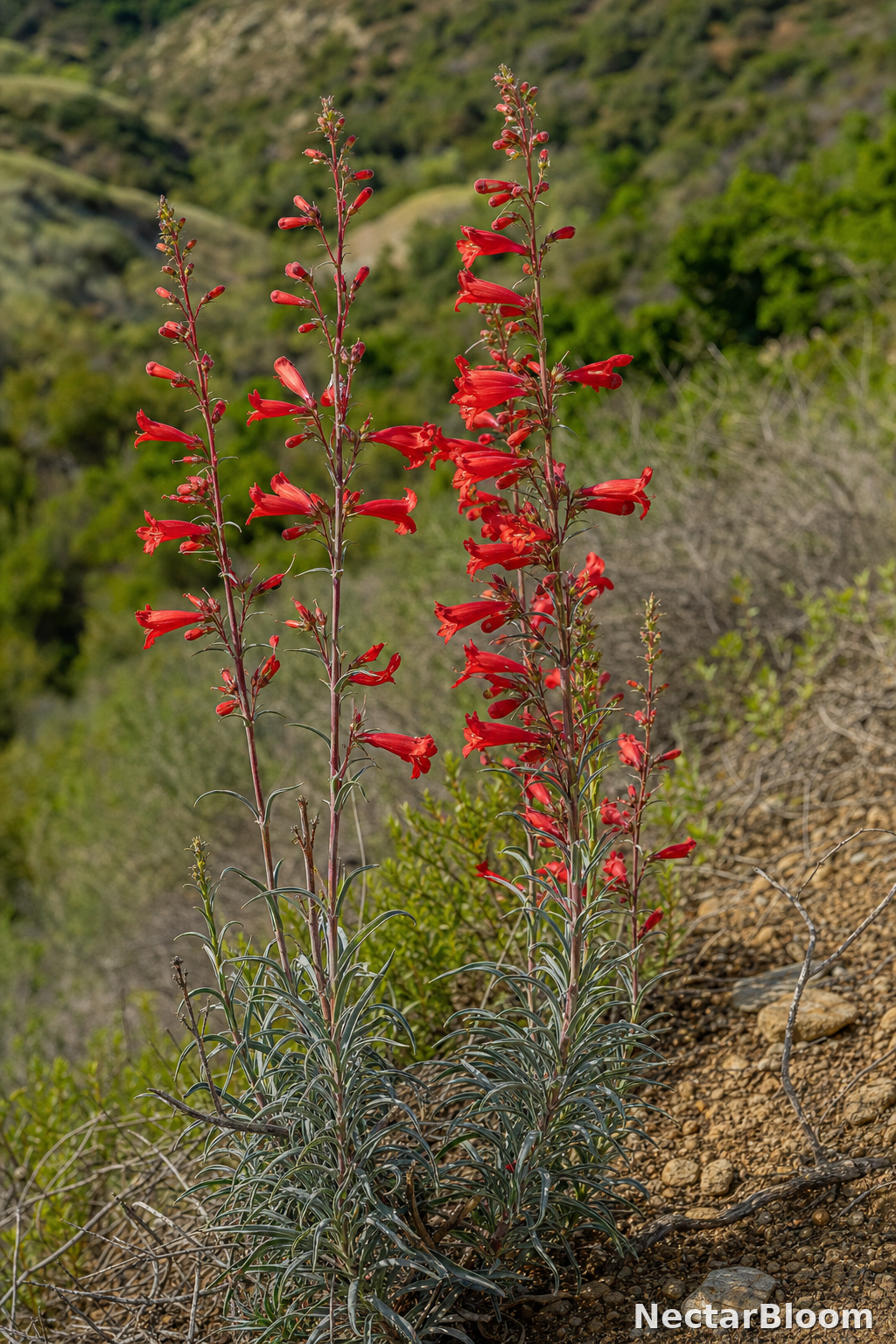
    When to plant: Plant ocotillo from October to April in USDA Zones 8-11, avoiding extreme summer heat or winter cold for establishment.
    Where to plant (sun/shade): Install in full sun, requiring at least 6-8 hours of direct sunlight daily for optimal growth and flowering.
    Soil & drainage: Requires extremely well-draining, rocky or sandy desert soil with a neutral to slightly alkaline pH (7.0-8.0).
    Watering: Water deeply once a month during dry periods in summer for the first two years; established plants are drought-tolerant.
    Spacing & planting depth: Space individual plants 8-12 feet apart to allow for mature size; plant at the same depth as in the nursery container.
    Fertilizer & mulch: Avoid fertilizer; a light layer of gravel or decomposed granite mulch can help conserve moisture and deter weeds.
    Pruning & seasonal care: Prune only to remove dead or damaged canes at the base in late winter to early spring, encouraging new growth.
    Companion plants & design: Pair with other desert natives like creosote bush, brittlebush, and various cacti for a cohesive, low-water landscape.
    Desert Willow - hummingbird plant
    May–September Zones 7–11

    Desert Willow

    Chilopsis linearis · Deciduous tree · Native

    ★★★★★ Hummingbird Rating

    Desert Willow is one of the finest small trees for hummingbird gardens in the arid Southwest, producing orchid-like trumpet-shaped flowers throughout summer in colors ranging from white to deep burgundy depending on cultivar. Native to desert arroyos and washes of the Chihuahuan Desert, it is extremely heat- and drought-tolerant, and far more cold-hardy than originally rated — established plants can survive Zone 5–6 cold. Its long blooming season (May–September) covers the entire resident hummingbird nesting period and overlaps with fall migration.

    Desert Willow (Chilopsis linearis) is a crucial nectar source for hummingbirds in the Desert Southwest, particularly due to its tubular, trumpet-shaped flowers perfectly adapted for long slender beaks. Its blooms, typically in shades of pink, lavender, and white, signal high-energy nectar rewards, attracting hummingbirds with both visual cues and a sweet scent. These floral mechanics ensure that pollen is deposited on the hummingbird's head as it sips, facilitating effective pollination while providing vital sustenance for these active birds. The plant's extended bloom period from spring through fall provides a consistent food supply during critical breeding and migration seasons.

    Specific hummingbird species in the Desert Southwest, such as the Broad-billed Hummingbird (Cynanthus latirostris), Anna's Hummingbird (Calypte anna), and Black-chinned Hummingbird (Archilochus alexandri), heavily utilize Desert Willow. Its flowers offer abundant nectar, essential for fueling their high metabolic rates, especially during nesting when energy demands are highest. The availability of Desert Willow directly supports their survival by supplying required sugars, particularly important during late spring and summer when many species are raising young or preparing for fall migration. Its prevalence in arid and semi-arid landscapes makes it a reliable resource in an often resource-scarce environment.

    Sources: Audubon Native Plants Database, Cornell Lab of Ornithology, Lady Bird Johnson Wildflower Center
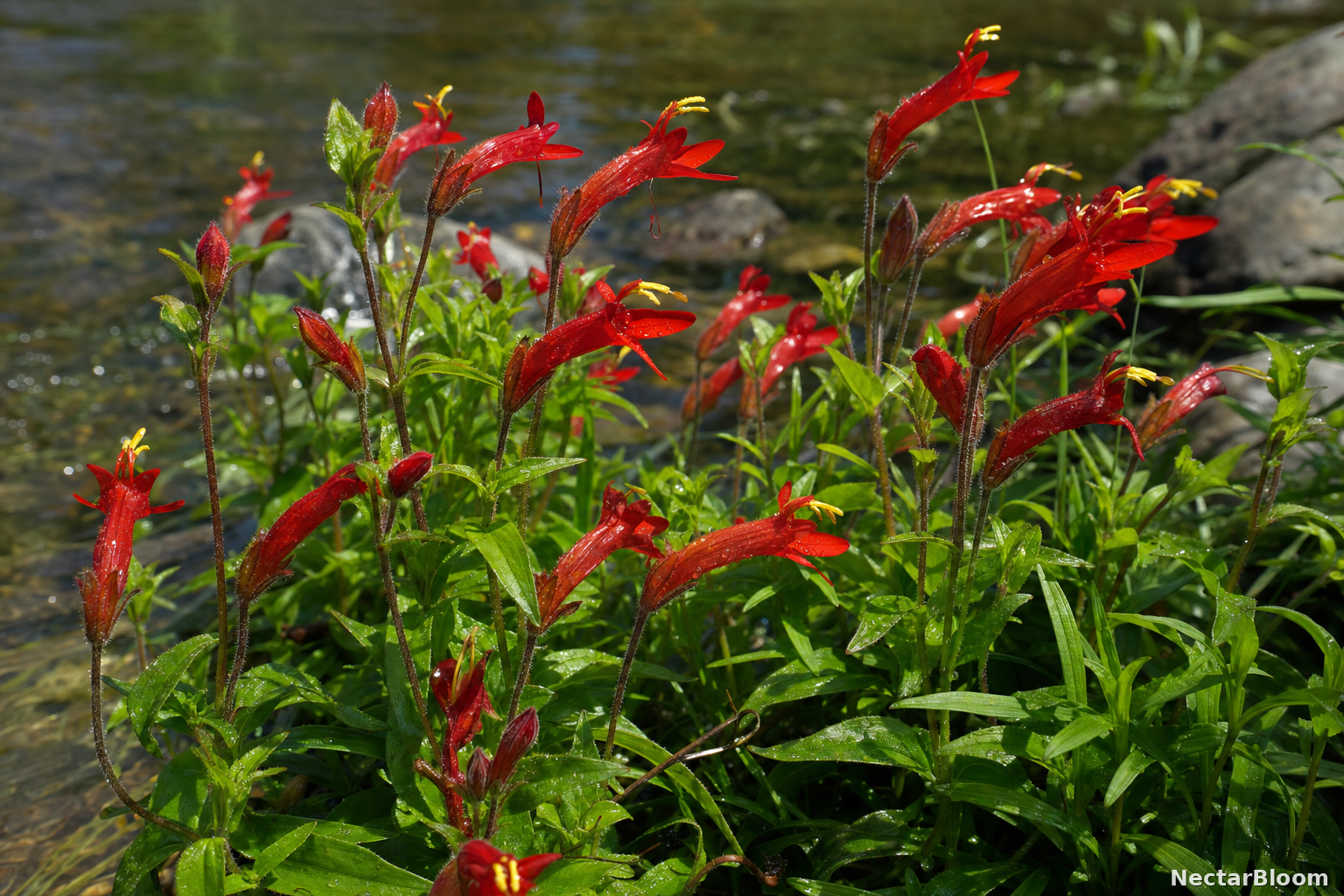
    When to plant: Plant Desert Willow from containers in fall or early spring in USDA Zones 7-9, avoiding extreme summer heat or late winter frosts.
    Where to plant (sun/shade): Choose a site receiving full sun; at least 6-8 hours daily is ideal for robust flowering and growth in arid climates.
    Soil & drainage: Provide well-drained, sandy or gravelly soil with a neutral to slightly alkaline pH (6.5-8.0); it tolerates poor soils.
    Watering: Water deeply once every 2-4 weeks after establishment; supplemental irrigation during extended dry periods promotes better blooms.
    Spacing & planting depth: Space plants 10-15 feet apart to allow for mature spread; plant at the same depth as in the nursery container.
    Fertilizer & mulch: Avoid fertilizer in average soils; apply a thin layer of inorganic mulch like gravel to conserve moisture and suppress weeds.
    Pruning & seasonal care: Prune in late winter or early spring to remove dead wood, shape, or reduce height; light deadheading can encourage more blooms.
    Companion plants & design: Pair with Southwestern natives like Penstemon, Desert Marigold, Agave, or Globe Mallow for a resilient, pollinator-friendly landscape.
    Red Yucca (Hummingbird Yucca) - hummingbird plant
    May–July Zones 6–11

    Red Yucca (Hummingbird Yucca)

    Hesperaloe parviflora · Evergreen succulent perennial · Native

    ★★★★★ Hummingbird Rating

    Red Yucca — despite its name, not a true yucca but a member of the Agavaceae family — produces spectacular 5–6 ft flower spikes lined with coral-red bell-shaped flowers in late spring and early summer. A grasslike rosette of narrow, fiber-edged leaves forms the base, remaining ornamental year-round. Incredibly drought- and heat-tolerant, Red Yucca thrives with no supplemental water once established in the Southwest, making it the ultimate low-maintenance hummingbird plant. Cold-hardier than expected, performing well even in Zone 5 in protected spots.

    Hesperaloe parviflora, commonly known as Red Yucca, is a critical nectar source for hummingbirds in the Desert Southwest due to its specialized floral morphology and abundant nectar production. The long, tubular, and often coral-red to pink flowers are perfectly adapted for hummingbird pollination, as their long bills can easily access the rich nectar deep within the corolla. The consistent bloom period, typically from spring through fall in this region, provides a sustained food source during crucial hummingbird nesting and migratory seasons, offering high-energy sugar critical for their metabolic demands.

    Specifically, species such as Anna's Hummingbird (Calypte anna), Black-chinned Hummingbird (Archilochus alexandri), and Rufous Hummingbird (Selasphorus rufus) frequently visit Red Yucca in the Desert Southwest. Black-chinned Hummingbirds, a common breeder in the region, rely on such tubular flowers for nectar to fuel their breeding activities. Migratory Rufous Hummingbirds also utilize the plant's nectar during their spring and fall passages, replenishing energy reserves along their arduous journeys. The vibrant color and high nectar volume make it an irresistible target for these avian pollinators.

    Sources: Audubon Native Plants Database, Cornell Lab of Ornithology, Lady Bird Johnson Wildflower Center.

    When to plant: Plant Red Yucca in spring or fall when soil temperatures are moderate, ideally between March-May or September-November in USDA Zones 7-10.
    Where to plant (sun/shade): Provide full sun exposure, meaning 6 or more hours of direct sunlight daily, for optimal flowering and robust growth.
    Soil & drainage: Requires well-draining soil; tolerates sandy, rocky, or loamy soil with a pH range of 6.0-8.0, avoiding heavy clay.
    Watering: Water deeply once every 2-4 weeks after establishment; supplemental irrigation is beneficial during prolonged dry periods, aiming for about 1 inch per application.
    Spacing & planting depth: Space plants 3-5 feet apart to allow for mature spread; plant at the same depth as they were in the nursery container.
    Fertilizer & mulch: Fertilization is generally unnecessary in arid soils; apply a thin layer of gravel or decomposed granite mulch for weed suppression and moisture retention.
    Pruning & seasonal care: Remove spent flower stalks at their base to encourage new blooms and maintain a tidy appearance, preferably in late fall or early spring.
    Companion plants & design: Pair with other desert-adapted natives like Desert Marigold (Baileya multiradiata), brittlebush (Encelia farinosa), or agave species for a resilient landscape.
    Autumn Sage - hummingbird plant
    Spring–Fall Zones 6–9

    Autumn Sage

    Salvia greggii · Woody perennial · Native

    ★★★★★ Hummingbird Rating

    Autumn Sage is one of the most versatile and reliably hummingbird-attracting salvias available for the Southwest, blooming from spring through fall with particularly strong flushes in spring and autumn when temperatures moderate. Native to south-central and west Texas into northern Mexico, it forms a compact, attractive woody perennial 1–3 ft tall with tubular two-lipped flowers in red, orange-red, pink, or white depending on cultivar. The red-flowered forms are the most hummingbird-attractive. Extremely drought-tolerant in well-drained soils.

    Autumn Sage (Salvia greggii) is a vital nectar source for hummingbirds in the Desert Southwest due to its tubular, often red, pink, or fuchsia flowers, which are perfectly adapted for avian pollination. The elongated corolla limits access for most insects, reserving the energy-rich nectar for hummingbirds that possess long beaks and tongues. Its high-volume, concentrated nectar provides the necessary fuel for these metabolically demanding birds, and its extended bloom period from spring through fall aligns well with both breeding and migratory seasons in the region, offering a continuous food supply.

    Specific hummingbird species that heavily rely on Salvia greggii in this region include the Broad-billed Hummingbird (Cynanthus latirostris), Anna's Hummingbird (Calypte anna), Black-chinned Hummingbird (Archilochus alexandri), and Rufous Hummingbird (Selasphorus rufus). Broad-billed Hummingbirds are year-round residents in parts of the Sonoran Desert, while Anna's and Black-chinned hummingbirds are common breeders. Rufous Hummingbirds are prominent migrants, all benefiting from the consistent, high-energy floral resource provided by Autumn Sage during their presence in the Desert Southwest. Its vibrant colors serve as strong visual cues, efficiently guiding hummingbirds to the nectar rewards.

    Sources: Audubon Native Plants Database, Cornell Lab of Ornithology, Lady Bird Johnson Wildflower Center
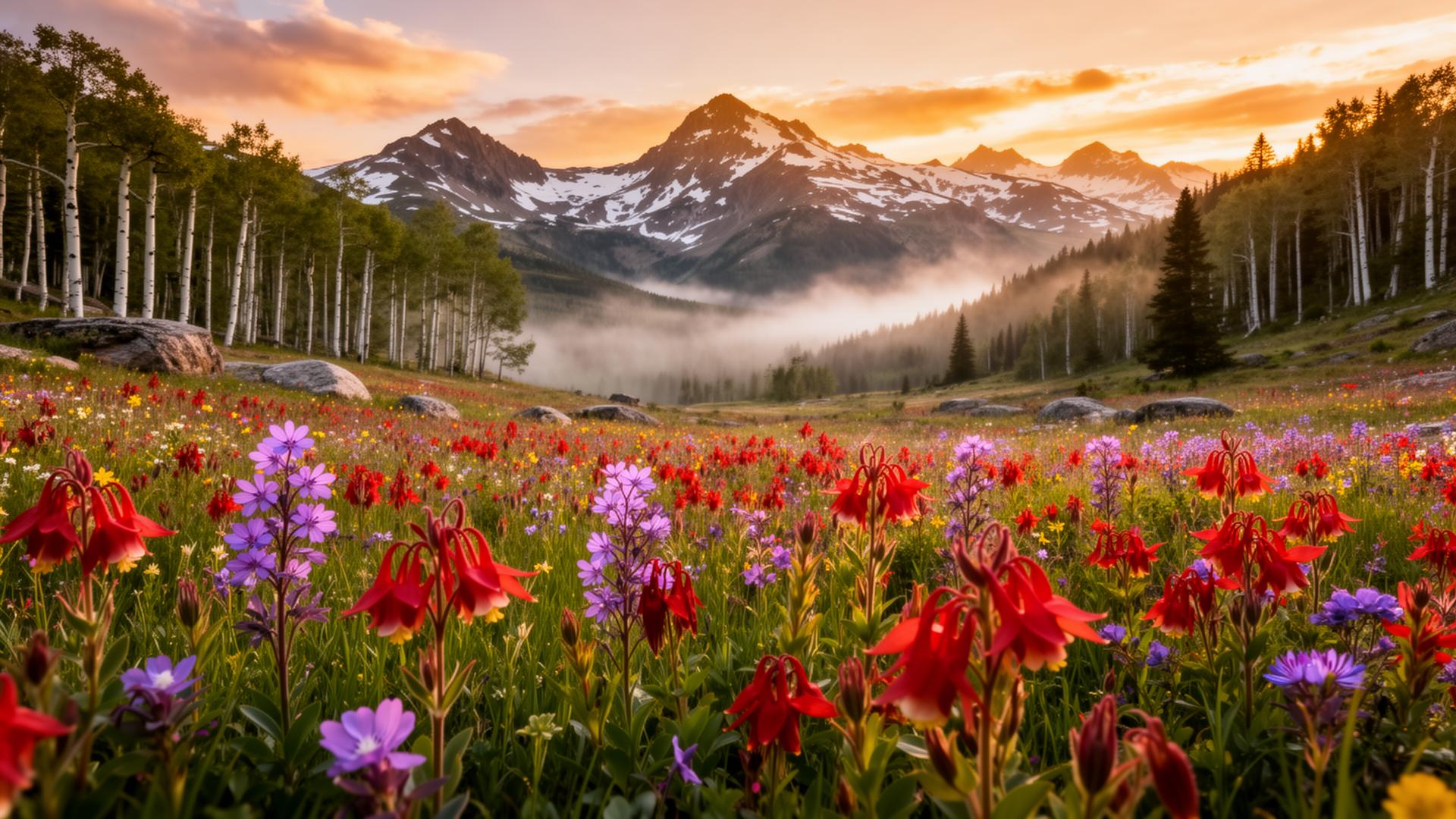
    When to plant: Plant in early spring after the last frost, typically March to April, or in fall from September to November in USDA Zones 7-10.
    Where to plant (sun/shade): Thrives in full sun, requiring at least 6-8 hours of direct sunlight daily for optimal flowering; tolerates light afternoon shade in hottest desert areas.
    Soil & drainage: Requires well-drained soil, ranging from sandy to rocky loam, with a slightly acidic to neutral pH (6.0-7.5); avoid heavy clay soils that retain excessive moisture.
    Watering: Water deeply just after planting, then establish a low-water regime, providing water every 2-4 weeks once established, especially during dry periods.
    Spacing & planting depth: Space plants 2-3 feet apart to allow for mature growth, planting at the same depth as they were in their nursery container.
    Fertilizer & mulch: Fertilization is rarely needed in desert soils; apply a thin layer of gravel or decomposed granite mulch for weed suppression and soil temperature regulation, not organic mulches.
    Pruning & seasonal care: Prune in late winter or early spring by cutting back one-third to one-half of the plant to encourage bushiness and prolific blooming.
    Companion plants & design: Pair with other desert natives like Baja Fairy Duster (Calliandra californica), Brittlebush (Encelia farinosa), and Desert Willow (Chilopsis linearis) for a drought-tolerant garden.
    Pineapple Sage - hummingbird plant
    Late Summer–November Zones 8–10

    Pineapple Sage

    Salvia elegans · Tender perennial · Native (Mexico)

    ★★★★★ Hummingbird Rating

    Pineapple Sage is one of the last salvias to bloom in the Southwest's hummingbird gardening calendar, producing brilliant red tubular flowers from late summer through November — precisely when southbound Rufous migrants are fueling for their long journey. The leaves have a distinctive pineapple fragrance when crushed. A tender perennial that overwinters to Zone 8 with mulching, it can grow 3–6 ft tall by fall bloom. The combination of late-season timing and bright red color makes it irreplaceable for fall migration fueling.

    Pineapple Sage (Salvia elegans) is an invaluable nectar source for hummingbirds, particularly in the Desert Southwest, due to its specialized floral structure. Its bright red, tubular flowers are perfectly adapted for hummingbird pollination, offering a rich reward of concentrated nectar. The extended bloom period, often from late summer into fall, is crucial as it coincides with the southbound migration of many hummingbird species, providing critical energy reserves for their journey.

    In the Desert Southwest, species such as Broad-billed (Cynanthus latirostris), Rufous (Selasphorus rufus), and Anna's (Calypte anna) hummingbirds are frequent visitors. The floral tube length and the high sugar concentration of the nectar in Salvia elegans align well with the metabolic demands and bill morphology of these regional hummingbirds, making it a highly efficient and vital food source during breeding, pre-migratory fattening, and overwintering periods in milder areas. The vibrant red color also acts as a strong visual cue, signaling a high-quality nectar reward. Sources: Audubon Native Plants Database, Cornell Lab of Ornithology, Lady Bird Johnson Wildflower Center.

    When to plant: Plant pineapple sage in spring after the last frost, typically March to April in USDA Zones 8-10 of the Desert Southwest.
    Where to plant (sun/shade): Provide full sun, at least 6-8 hours daily, to maximize flowering, though partial afternoon shade is beneficial in extreme desert heat.
    Soil & drainage: Requires well-draining, sandy or loamy soil with a neutral to slightly acidic pH (6.0-7.0); avoid heavy, waterlogged clays.
    Watering: Water deeply and regularly initially, then reduce to moderate watering (about 1 inch per week) once established, allowing soil to dry slightly between waterings.
    Spacing & planting depth: Space plants 2-3 feet apart to allow for mature spread; plant at the same depth as they were in the nursery container.
    Fertilizer & mulch: Fertilize sparingly with a balanced organic amendment in spring; apply 2-3 inches of organic mulch to conserve moisture and regulate soil temperature.
    Pruning & seasonal care: Prune in late winter or early spring to shape and promote bushier growth; deadhead spent flowers to encourage continuous blooming.
    Companion plants & design: Pair with desert marigold (Baileya multiradiata), desert penstemon (Penstemon parryi), and chuparosa (Justicia californica) for extended hummingbird forage.
    Desert Honeysuckle - hummingbird plant
    March–October Zones 8–11

    Desert Honeysuckle

    Anisacanthus thurberi · Deciduous shrub · Native

    ★★★★★ Hummingbird Rating

    Desert Honeysuckle (not to be confused with invasive Lonicera species) is a true Sonoran Desert native producing long orange tubular flowers across an exceptionally long season — March through October, with the heaviest bloom after summer monsoon rains. Growing 3–6 ft tall in full sun with very low water needs, this deciduous shrub tolerates reflected heat from walls and paving, making it ideal for urban desert gardens. It provides an important nectar bridge during the monsoon season when hummingbirds are most active and numerous.

    Desert Honeysuckle, with its tubular, typically orange-red flowers, is perfectly adapted for hummingbird pollination. The elongated floral tube restricts access to nectar for most insects, reserving this high-energy reward for hummingbirds whose long beaks and tongues can reach it. Its vibrant coloration is highly attractive to hummingbirds, and the plant often blooms from spring through fall, providing crucial nectar resources during early nesting, summer breeding, and fall migration windows in the Desert Southwest.

    Anna's, Broad-billed, Black-chinned, and Rufous Hummingbirds in the Desert Southwest frequently visit Desert Honeysuckle for its reliable nectar production. The ample and consistently produced nectar fuels these species, supporting their high metabolic rates. This plant is particularly valuable during seasonal dry periods when other nectar sources may be scarce, offering a vital food supply for resident and migratory hummingbird populations navigating the arid landscape.

    Sources: Audubon Native Plants Database, Lady Bird Johnson Wildflower Center, Cornell Lab of Ornithology

    When to plant: Plant container-grown specimens in early spring or fall when temperatures are mild, ensuring establishment before extreme summer heat or winter cold.
    Where to plant (sun/shade): Thrives in full sun (6+ hours daily) to partial shade (4-6 hours daily), tolerating more afternoon shade in the hottest desert areas.
    Soil & drainage: Requires well-drained, sandy or rocky soils; adapts to a wide pH range but prefers slightly alkaline conditions.
    Watering: Water deeply every 2-4 weeks after establishment; drought-tolerant but benefits from supplemental water during prolonged dry spells.
    Spacing & planting depth: Space plants 3-5 feet apart to allow for mature spread, planting at the same depth as in the nursery container.
    Fertilizer & mulch: Avoid heavy fertilization; a light application of compost can improve soil, and a thin layer of gravel mulch helps retain moisture.
    Pruning & seasonal care: Prune in late winter or early spring to shape and remove dead wood, encouraging denser growth and more prolific blooming.
    Companion plants & design: Pair with other desert natives like Baja Fairy Duster (Calliandra californica) or Desert Globemallow (Sphaeralcea ambigua).
    Firecracker Plant - hummingbird plant
    June–November Zones 7–11

    Firecracker Plant

    Anisacanthus quadrifidus var. wrightii · Deciduous shrub · Native

    ★★★★★ Hummingbird Rating

    Firecracker Plant is a Texas Hill Country native producing clusters of narrow orange-red tubular flowers from early summer through November — one of the longest bloom seasons of any Southwest hummingbird shrub. Growing 3–5 ft tall with a mounding habit, it thrives in full sun with low water requirements and tolerates the intense summer heat that defeats many other plants. The late-season bloom is particularly valuable for fueling southbound migrating hummingbirds in September–November.

    Firecracker Plant (Anisacanthus quadrifidus var. wrightii) is a premier hummingbird magnet in the Desert Southwest due to its tubular, bright red-orange flowers, which are perfectly adapted for avian pollination. Its long corolla tubes (1.5-2 inches) contain copious, high-sugar nectar, a critical energy source for hummingbirds. The vibrant coloration readily signals to visual foragers, while the flower structure provides an ideal landing platform for their long, slender beaks and tongues. Blooming profusely from spring through fall, and often year-round in frost-free areas, it aligns perfectly with the energetic demands of breeding, nesting, and migration seasons for these agile birds.

    Multiple hummingbird species in the Desert Southwest heavily rely on Firecracker Plant. Rufous (Selasphorus rufus), Black-chinned (Archilochus alexandri), Broad-billed (Cynanthus latirostris), and Costa's Hummingbirds (Calypte costae) are frequent visitors, drawn by its consistent nectar supply. For migrating species like the Rufous Hummingbird, this plant provides essential fuel during their arduous journeys. Resident species like the Black-chinned and Broad-billed hummingbirds utilize its nectar to support breeding activities and overwintering, highlighting its critical role in sustaining regional hummingbird populations. Its continuous bloom duration makes it a reliable food source across many months, benefiting both resident and migratory hummingbird populations in the arid landscape.

    Sources: Audubon Native Plants Database, Cornell Lab of Ornithology, Lady Bird Johnson Wildflower Center
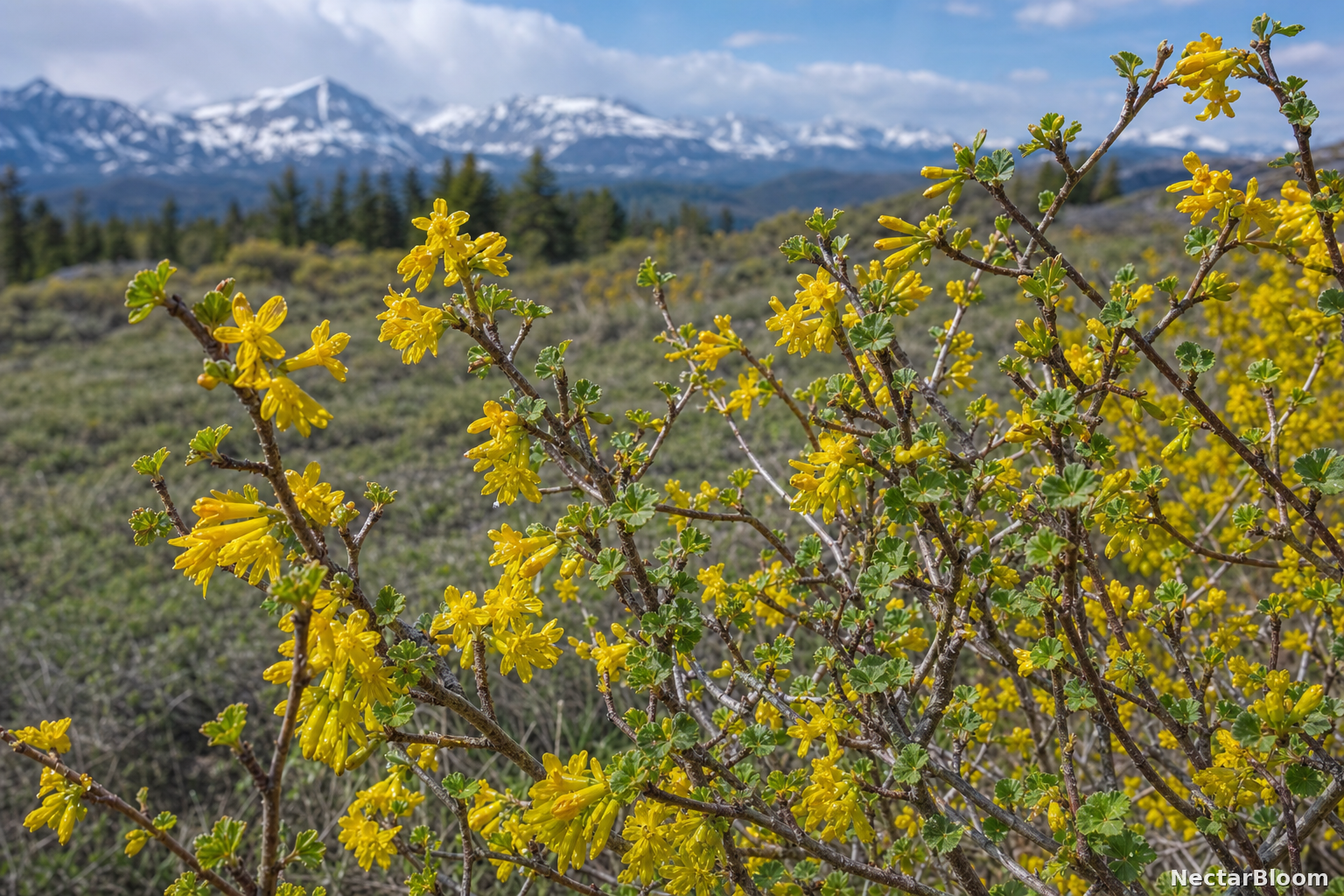
    When to plant: Plant in spring after the last frost or in early fall while soil temperatures are still warm, typically March-May or September-November in USDA Zones 8-11.
    Where to plant (sun/shade): Requires full sun to partial shade (at least 6 hours of direct sun) in all but the hottest desert locations, where afternoon shade is beneficial.
    Soil & drainage: Thrives in well-drained loamy, sandy, or gravelly soils with a pH range of 6.0-8.0; avoid heavy, poorly draining clay.
    Watering: Water deeply once every 1-2 weeks during dry periods after establishment; it is drought-tolerant but performs best with supplemental irrigation.
    Spacing & planting depth: Space plants 3-5 feet apart to allow for mature spread; plant at the same depth as they were in the nursery container.
    Fertilizer & mulch: Generally does not require fertilizer; apply a 2-3 inch layer of organic mulch to conserve moisture and suppress weeds.
    Pruning & seasonal care: Prune in late winter or early spring (February-March) to shape the plant and encourage new growth, removing dead or leggy stems.
    Companion plants & design: Pair with other hummingbird attractors like Desert Honeysuckle (Anisacanthus thurberi), Baja Fairy Duster (Calliandra californica), and Chuparosa (Justicia californica).
    Parry's Penstemon - hummingbird plant
    February–April Zones 7–10

    Parry's Penstemon

    Penstemon parryi · Perennial · Native

    ★★★★★ Hummingbird Rating

    Parry's Penstemon is one of the showiest early-spring bloomers in the Sonoran Desert, sending up dramatic 3–5 ft flower stalks of rose-pink to magenta tubular flowers as early as February — often before most other plants have awakened. The glaucous blue-green basal rosette remains attractive year-round. Native to Arizona and Sonora, Mexico, it is a critical early-season nectar source for Costa's Hummingbirds and the first arriving Black-chinned Hummingbirds. Extremely drought-tolerant once established.

    Parry's Penstemon (Penstemon parryi) is a vital nectar source for hummingbirds in the Desert Southwest due to its specialized floral structure and bloom characteristics. Its tubular, bright rose-pink flowers, typically 1.5 to 2 inches long, are perfectly adapted to accommodate the long, slender beaks and tongues of hummingbirds. The flower's internal structure guides the pollinator to the nectar, ensuring efficient pollen transfer, while its high nectar volume and concentration provide essential energy for these metabolically demanding birds. Blooming from late winter through spring (February to May), this timing aligns critically with the early arrival of hummingbirds during spring migration and the subsequent breeding season in the region.

    Key hummingbird species in the Desert Southwest, such as the Anna's Hummingbird (Calypte anna), Costa's Hummingbird (Calypte costae), Broad-billed Hummingbird (Cynanthus latirostris), and Rufous Hummingbird (Selasphorus rufus) during migration, heavily rely on Penstemon parryi. The abundant nectar fuels their high metabolic rates, supports breeding activities, and provides energy for their extensive migratory journeys. This penstemon serves as a crucial early-season food source when many other wildflowers have not yet emerged, making it a critical component of a hummingbird-friendly landscape.

    Sources: Audubon Native Plants Database, Lady Bird Johnson Wildflower Center, Cornell Lab of Ornithology

    When to plant: Plant seeds in fall (Sept-Nov) for spring germination, or container plants in early spring (March-April) after the last frost in USDA Zones 7-9.
    Where to plant (sun/shade): Site in full sun, requiring at least 6-8 hours of direct sunlight daily for robust flowering and healthy growth.
    Soil & drainage: Requires extremely well-drained, sandy or gravelly soils; tolerates rocky, infertile conditions but not heavy clay.
    Watering: Water regularly during establishment; once mature, it is drought-tolerant, needing infrequent deep watering every 2-4 weeks during dry periods.
    Spacing & planting depth: Space plants 1-2 feet apart to allow for mature spread; plant seeds lightly covered or plant containers at the same depth as the nursery pot.
    Fertilizer & mulch: Avoid fertilization; a light layer of inorganic mulch like gravel can help retain moisture and suppress weeds while maintaining drainage.
    Pruning & seasonal care: Cut back spent flower stalks to the base after blooming to encourage basal growth, and remove dead foliage as needed.
    Companion plants & design: Pair with other desert natives like brittlebush (Encelia farinosa), desert marigold (Baileya multiradiata), or globemallow (Sphaeralcea ambigua) for a vibrant, low-water garden.
    Firecracker Penstemon - hummingbird plant
    March–June Zones 4–9

    Firecracker Penstemon

    Penstemon eatonii · Perennial · Native

    ★★★★★ Hummingbird Rating

    Firecracker Penstemon is a striking early-spring bloomer native to the Great Basin, Colorado Plateau, and Mojave Desert, producing brilliant scarlet-red tubular flowers with deep, narrow throats specifically adapted for hummingbird feeding. One of the most intensely red and hummingbird-specialized penstemons in the Southwest, it blooms before many other desert wildflowers, providing critical spring fuel for arriving Black-chinned and Broad-tailed Hummingbirds. Extremely drought-tolerant and heat-adapted.

    Firecracker penstemon (Penstemon eatonii) exhibits classic ornithophilous adaptations, making it highly attractive to hummingbirds. Its vibrant scarlet-red, tubular flowers, typically 1 to 1.5 inches long, are perfectly co-adapted for hummingbird bills, offering a rich nectar reward. The flower's internal structure guides the hummingbird's head, ensuring pollen is deposited on its forehead for efficient cross-pollination. Its blooming period, generally from March to July in the Desert Southwest, coincides with the intense breeding and migratory activity of resident and migratory hummingbird species, providing a critical and reliable energy source during these energetically demanding life stages.

    Several hummingbird species in the Desert Southwest, including the Broad-billed (Cynanthus latirostris), Anna's (Calypte anna), Black-chinned (Archilochus alexandri), and Rufous (Selasphorus rufus) hummingbirds, heavily utilize Firecracker penstemon. These species are drawn to its high-quality nectar, which provides the necessary caloric intake to sustain their rapid metabolisms. The plant's clustered inflorescences offer multiple feeding opportunities per visit, making it an efficient foraging target. For migratory species like the Rufous, P. eatonii serves as a vital refueling stop during their long journeys across the region.

    Sources: Audubon Native Plants Database, Cornell Lab of Ornithology, Lady Bird Johnson Wildflower Center
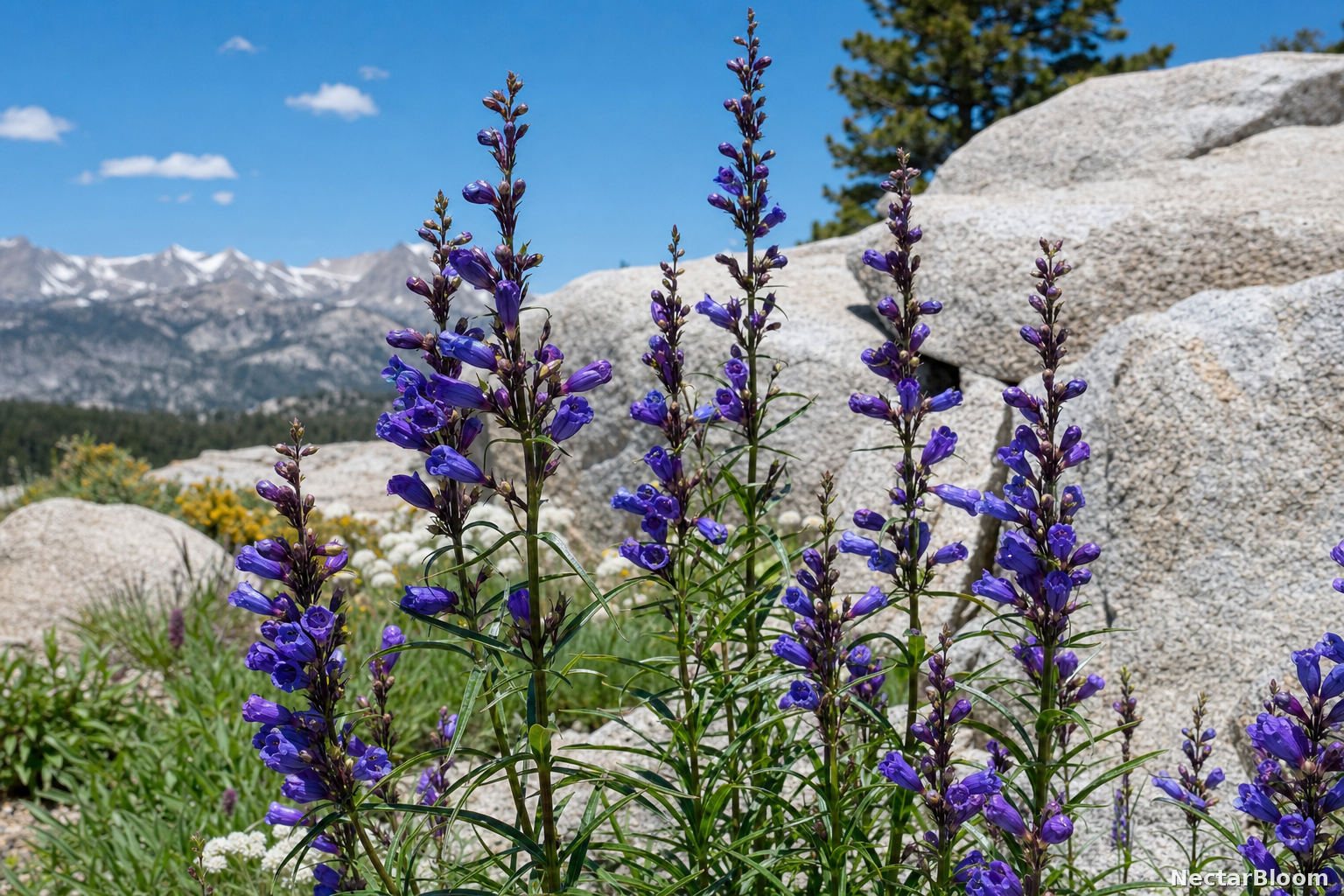
    When to plant: Plant seeds in fall or early spring, or containerized plants in fall or spring after the last frost, typically March to May or September to November in the Desert Southwest.
    Where to plant (sun/shade): Site in full sun, requiring at least six hours of direct sunlight daily for optimal flowering.
    Soil & drainage: Prefers well-drained, sandy or rocky soils with a neutral to slightly alkaline pH (6.5-8.0); avoid heavy clay.
    Watering: Water deeply once established, providing about 10-15 inches of water annually, primarily during dry periods or supplemental irrigation every 2-4 weeks.
    Spacing & planting depth: Space plants 1-2 feet apart, ensuring the crown is at soil level when planting from containers, or sow seeds 1/8 inch deep.
    Fertilizer & mulch: Avoid fertilizer; apply a light layer of gravel or small stones as mulch to deter rot and retain moisture in arid conditions.
    Pruning & seasonal care: Deadhead spent flower stalks after blooming to encourage potential rebloom and prevent excessive self-seeding; cut back foliage in late fall.
    Companion plants & design: Pair with other xeriscapic natives like Brittlebush (Encelia farinosa), Desert Marigold (Baileya multiradiata), and Ocotillo (Fouquieria splendens) for a vibrant, low-water garden.
    Agave (Century Plant) - hummingbird plant
    Spring–Summer (once) Zones 5–11

    Agave (Century Plant)

    Agave palmeri / A. parryi · Monocarpic succulent · Native

    ★★★★★ Hummingbird Rating

    Agave species are the desert's most dramatic flowering events — each rosette blooms only once in its lifetime (monocarpic), producing a 10–20 ft flower stalk laden with thousands of flowers that collectively produce extraordinary quantities of nectar. Audubon Southwest identifies agave as one of the most important plants for desert hummingbirds. The massive stalk remains standing after bloom, providing elevated perches for territorial hummingbirds. Plant multiple individuals staggered over time for successive bloom years.

    Agave species, such as Agave palmeri and A. parryi, are vital attractors for hummingbirds due to their tall, stout flower stalks that emerge in late summer to fall, a critical period when other nectar sources may be dwindling in the Desert Southwest. The tubular structure of the individual flowers is perfectly adapted for hummingbird bills, allowing deep access to the high-energy nectar within. These agaves produce copious amounts of nectar, often with a significant sugar concentration, providing essential fuel for migration and late-season breeding activities. The greenish-yellow to reddish flowers, though not typically brilliant red, are still highly attractive, especially when presented en masse on an emergent stalk.

    In the Desert Southwest, agave flowers are particularly important for several hummingbird species. Broad-billed Hummingbirds (Cynanthus latirostris), Magnificent Hummingbirds (Eugenes fulgens), and Anna's Hummingbirds (Calypte anna) are noted visitors, relying on these plants for sustenance. The robust growth and substantial nectar rewards of agaves support both resident populations and migratory individuals passing through the region. Their bloom timing often coincides with the southward migration of many hummingbird species, making them a crucial stopover resource in arid landscapes.

    Sources: USDA NRCS Plant Guide, Audubon Native Plants Database, Cornell Lab of Ornithology

    When to plant: Plant agave pups or container-grown plants in spring (March-May) or fall (September-November) in USDA Zones 7-10 for establishment before extreme temperatures.
    Where to plant (sun/shade): Choose a site receiving full sun (6+ hours direct sunlight daily) for optimal growth and flowering; partial shade can lead to leggy growth.
    Soil & drainage: Agaves require extremely well-draining soil; amend heavy clay soils with sand or gravel to prevent root rot; ideally, a sandy-loam with pH 6.0-8.0.
    Watering: Water newly planted agaves deeply every 1-2 weeks for the first year; mature plants are drought-tolerant and seldom need supplemental water after establishment.
    Spacing & planting depth: Space plants 3-6 feet apart, depending on species size, to allow for mature rosette development; plant at the same depth as in the nursery pot.
    Fertilizer & mulch: Agaves generally do not require fertilizer in good soil; apply a thin layer of gravel mulch to suppress weeds and enhance drainage, not organic mulch.
    Pruning & seasonal care: Remove dead lower leaves as needed; after flowering (which occurs once, then the plant dies), cut the spent flower stalk at the base, and remove pups if desired.
    Companion plants & design: Pair with other desert natives like Ocotillo (Fouquieria splendens), Penstemon species, Desert Marigold (Baileya multiradiata), and various native cacti for a resilient, low-water landscape.
    Fairy Duster - hummingbird plant
    Feb–May; Oct–Nov Zones 8–11

    Fairy Duster

    Calliandra eriophylla · Deciduous shrub · Native

    ★★★★★ Hummingbird Rating

    Fairy Duster is a delicate-looking but tough desert shrub producing puffball flowers with long pink stamens in late winter and early spring — one of the earliest desert bloomers — and again after fall rains. Growing just 2–4 ft tall, it fits into smaller desert gardens and combines beautifully with Chuparosa and Ocotillo in a winter-spring succession planting. Audubon Southwest lists it as a plant Costa's Hummingbirds frequently visit. Cold-hardy for a desert shrub and virtually maintenance-free.

    Fairy Duster (Calliandra eriophylla) produces abundant clusters of vibrant pink to red, powder-puff-like flowers, each composed of numerous long, showy stamens. While lacking a typical tubular corolla, the nectar is readily accessible at the base of these stamen bundles, making it easy for hummingbirds with various bill lengths to feed efficiently. Its extended bloom period, typically from late winter through spring and sporadically into summer, provides vital sustenance during critical periods like spring migration and early breeding season for resident hummingbirds across the Desert Southwest.

    Anna's Hummingbird (Calypte anna), Costa's Hummingbird (Calypte costae), and Black-chinned Hummingbird (Archilochus alexandri) are key beneficiaries of Fairy Duster in the region. These species are attracted by the bright coloration and high nectar reward, which fuels their intense metabolic demands. The plant's structure allows easy hovering access, and its drought-tolerance ensures nectar availability even during dry spells when other floral resources might be scarce, making it a reliable food source for these desert-adapted hummingbirds.

    Sources: Audubon Native Plants Database, Cornell Lab of Ornithology, Lady Bird Johnson Wildflower Center
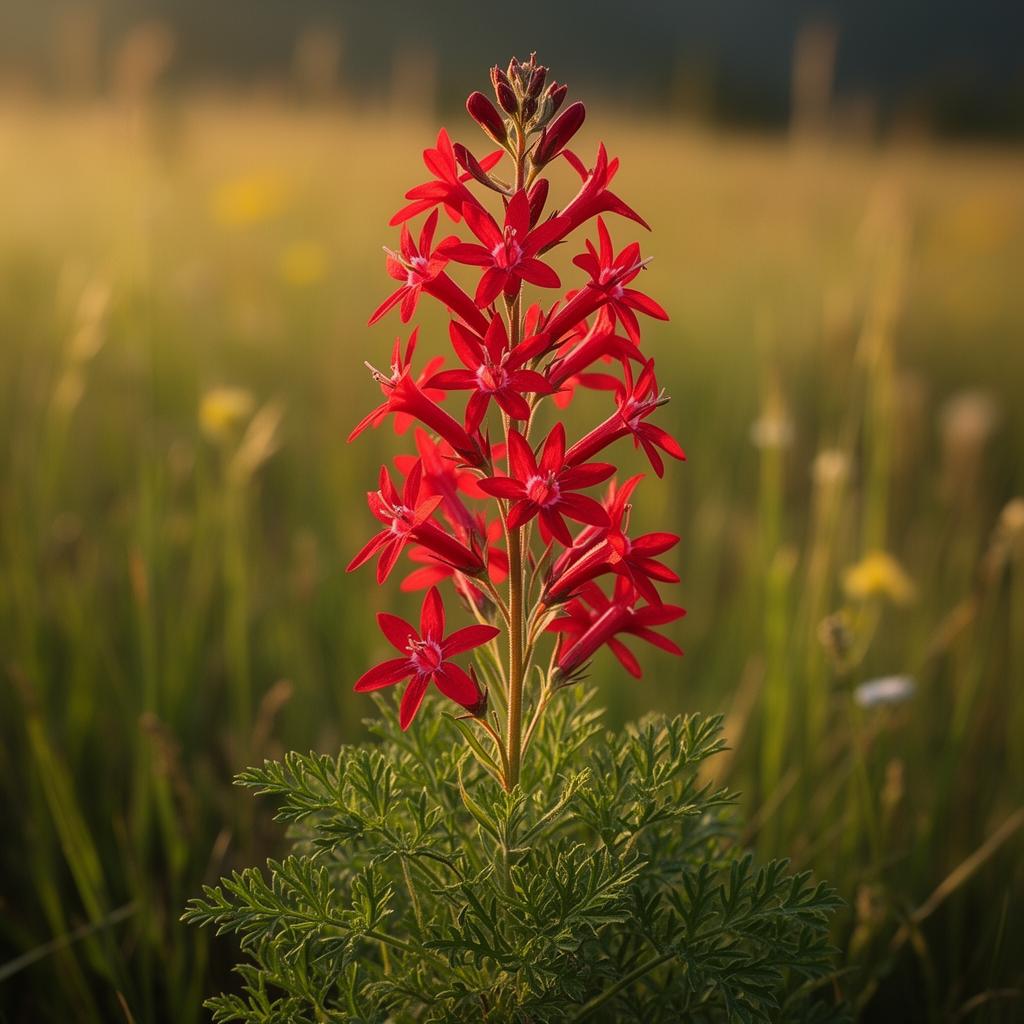
    When to plant: Plant Fairy Duster in fall or early spring to allow establishment before extreme summer heat or winter cold in USDA Zones 8-10.
    Where to plant (sun/shade): Site in full sun, requiring at least 6-8 hours of direct sunlight daily for optimal flowering and compact growth.
    Soil & drainage: Requires well-drained, sandy or gravelly soil, tolerating a wide pH range from slightly acidic to moderately alkaline (6.0-8.0).
    Watering: Water deeply every 2-4 weeks after establishment; during extended dry periods, supplement with 1 inch of water monthly.
    Spacing & planting depth: Space plants 3-5 feet apart; plant at the same depth as the nursery container, ensuring the root crown is level with the soil.
    Fertilizer & mulch: Generally needs no fertilizer; apply a 1-2 inch layer of gravel or decomposed granite mulch to conserve soil moisture and suppress weeds.
    Pruning & seasonal care: Prune after the main spring bloom to shape and remove dead or weak branches, promoting bushier growth and more flowers.
    Companion plants & design: Combine with other desert natives like brittlebush (Encelia farinosa), desert marigold (Baileya multiradiata), or penstemons for attractive xeriscape gardens.

    Succession Planting Calendar for the Southwest

    Season / Timing Key Plants Active Hummingbirds Garden Notes
    Winter Dec–Feb Justicia californica (chuparosa) · Calliandra eriophylla (fairy duster) Costa's (year-round resident) · Anna's (border areas) Year-round nectar critical for resident Costa's; chuparosa blooms after any rain event
    Early Spring Feb–Apr Fouquieria splendens (ocotillo) · Penstemon parryi · Penstemon eatonii Costa's · Black-chinned (arriving Mar–Apr) · Broad-tailed Ocotillo is irreplaceable spring migration fuel; blooms even in drought years
    Late Spring–Summer May–Aug Chilopsis linearis · Hesperaloe parviflora · Anisacanthus thurberi · Salvia greggii Black-chinned (nesting) · Broad-tailed · Broad-billed (SE AZ) Monsoon rains trigger bloom surge July–September; plan for greatest diversity in this window
    Late Summer–Fall Aug–Nov Agastache spp. · Salvia elegans (pineapple sage) · Anisacanthus quadrifidus Rufous (south migration) · Black-chinned · Costa's (departing) Rufous migrants arrive as early as late July; late-blooming salvias are critical fall fuel

    Which Hummingbirds Will Visit Your Southwest Garden?

    The Southwest supports the greatest hummingbird species diversity in North America, with 15+ species recorded in southeast Arizona alone. Costa's Hummingbird (Calypte costae), with its spectacular purple cap and gorget, is the desert specialist — breeding February–June in the Sonoran and Mojave Deserts, with Chuparosa and Ocotillo as its primary nectar plants. The Black-chinned Hummingbird (Archilochus alexandri) is the most widespread summer resident, found from desert arroyos to mountain foothills. Southeast Arizona is a hummingbird magnet: the Broad-billed, Violet-crowned, White-eared, and Magnificent (Rivoli's) Hummingbirds regularly visit the mountain canyons of the Chiricahua and Huachuca ranges. The Lucifer Hummingbird visits west Texas in late spring. Southbound Rufous Hummingbirds begin appearing in late July, making the Southwest one of the only US regions with truly continuous hummingbird activity year-round.

    🐦 Costa's (Sonoran Desert specialist)🐦 Black-chinned (widespread summer)🐦 Broad-tailed (mountain forests)🐦 Rufous (migration Jul–Sep)🐦 Anna's (CA border, year-round)🐦 Broad-billed (SE Arizona specialty)🐦 Magnificent/Rivoli's (SE AZ)🐦 Lucifer (west Texas)

    Plants to Avoid in Your Southwest Garden

    • Bougainvillea — Extremely popular desert plant but produces virtually no nectar accessible to hummingbirds. The showy 'flowers' are actually bracts (modified leaves). Plant Desert Willow or Chuparosa instead.
    • Tree Tobacco (Nicotiana glauca) — Used by Anna's Hummingbirds in winter but highly invasive in California and the Southwest — banned in some areas. Native alternatives provide equal or superior nectar value without the ecological risk.
    • Non-native ornamental salvias without verification — Many hybrid salvias (e.g., S. × jamensis cultivars) have been bred for appearance over nectar; choose straight native species or verified high-nectar cultivars.
    • Double-flowered rose cultivars and peony cultivars — Dense double petals replace the nectar-producing structures. Hummingbirds quickly learn to avoid them.
    Midwest prairie pollinator garden with scarlet bee balm and oak savanna at golden hour
    Midwest Hummingbird Region

    Midwest Hummingbird Garden Plants: The Complete 2025 Guide

    Best Plants to Attract Hummingbirds in Illinois, Indiana, Iowa, Kansas, Michigan, Minnesota, Missouri, Nebraska, Ohio & Wisconsin

    The Midwest is home to a single hummingbird species — the Ruby-throated Hummingbird — but what it lacks in species diversity it makes up in garden potential. A well-planted Midwest hummingbird garden can attract dozens of individual Ruby-throated Hummingbirds over the course of a season, supporting a species whose population depends directly on the availability of native nectar plants. Cornell Lab of Ornithology and Audubon Society both emphasize that native plant gardens in the Midwest are significantly more valuable to hummingbirds than gardens planted with non-native ornamentals.

    The classic Midwest hummingbird garden follows a simple succession: Eastern Columbine and Fire Pink in spring as the first Ruby-throated males arrive, Scarlet Beebalm and Coral Honeysuckle in June and July during peak nesting, and Cardinal Flower providing critical late-summer fuel as birds prepare for their remarkable 500-mile non-stop flight across the Gulf of Mexico. Between these anchors, Indian Pink, Blazing Star, Wild Bergamot, and Obedient Plant fill the gaps and provide nectar diversity across the season.

    Midwest gardeners should pay particular attention to moisture requirements: the most hummingbird-attractive plants in this region — Cardinal Flower, Scarlet Beebalm, and Coral Honeysuckle — require consistently moist soils. Rain gardens, pond edges, and areas that receive regular irrigation are ideal placements. For drier conditions, Wild Bergamot, Fire Pink, Blazing Star, and Foxglove Beardtongue provide excellent hummingbird value with lower water demands.

    Succession planting — ensuring blooms from May through October — is the single most important strategy for Midwest hummingbird gardening. Plant in masses of 3–7 plants of the same species: hummingbirds spot aggregations of bloom far more readily than scattered singletons. Avoid fragmented plantings and instead create dedicated hummingbird zones within the garden where nectar is continuously available.

    🌡 Zones 3–6 🐦 Ruby-throated Hummingbird (sole species) 📍 IL · IN · IA · KS · MI · MN · MO · NE · OH · WI

    Verified Hummingbird Plants

    Eastern Columbine - hummingbird plant
    April–June Zones 3–8

    Eastern Columbine

    Aquilegia canadensis · Perennial · Native

    ★★★★★ Hummingbird Rating

    Eastern Columbine is the essential spring hummingbird plant for the Midwest, blooming in April through June in precise synchrony with the arrival of Ruby-throated Hummingbirds from their wintering grounds in Mexico and Central America. The nodding red-and-yellow flowers with long nectar-filled spurs are so precisely adapted for hummingbird feeding that some ornithologists suggest the two species have coevolved their timing. Native across eastern and central North America, Eastern Columbine thrives in dappled shade, rocky soils, and woodland edges — exactly the conditions found in Midwest gardens.

    Eastern Columbine (Aquilegia canadensis) is a vital early-season nectar source for hummingbirds in the Midwest due to its unique floral structure. The downward-facing, spurred red and yellow flowers are perfectly adapted for hummingbird visitation, with the spurs containing large quantities of dilute nectar, a preference for these high-metabolism birds. Its bloom period, typically April through July, aligns critically with the spring migration and early breeding season of hummingbirds in the region, providing essential energy when other nectar sources may be scarce.

    The Ruby-throated Hummingbird (Archilochus colubris) is the primary beneficiary of Eastern Columbine across the Midwest, relying on its abundant nectar during its arduous spring migration and subsequent nesting period. The bright red and yellow coloration of the flowers acts as a strong visual cue, while the tubular spurs guide their long, narrow bills to the nectar reserves. This plant's availability directly supports the metabolic demands of these high-energy birds, contributing significantly to their reproductive success and survival in the region.

    Sources: Cornell Lab of Ornithology, Audubon Native Plants Database, Missouri Botanical Garden

    When to plant: Plant seeds in late fall for spring germination, or transplant nursery plants in early spring or fall in USDA Zones 3-8.
    Where to plant (sun/shade): Thrives in partial shade (3-6 hours of sun) but tolerates full sun with consistent moisture, especially in cooler regions.
    Soil & drainage: Prefers well-drained, organically rich soils; adapts to sandy, rocky, or clay loams with a pH of 6.0-7.0.
    Watering: Water regularly during dry periods, aiming for about 1 inch per week, especially when establishing or in full sun.
    Spacing & planting depth: Space plants 1-1.5 feet apart and plant at the same depth as in the nursery pot, or sow seeds thinly.
    Fertilizer & mulch: Generally does not require fertilization; apply a light layer of leaf mulch in fall to retain moisture and suppress weeds.
    Pruning & seasonal care: Deadhead spent flowers to encourage reblooming and prevent excessive self-seeding; cut back foliage in late fall for tidiness.
    Companion plants & design: Pair with other shade-loving natives like Wild Geranium, Virginia Bluebells, and Woodland Phlox for continuous blooms.
    Scarlet Beebalm - hummingbird plant
    June–September Zones 4–9

    Scarlet Beebalm

    Monarda didyma · Perennial · Native

    ★★★★★ Hummingbird Rating

    Scarlet Beebalm is the quintessential Midwest summer hummingbird plant, producing round heads of brilliant scarlet tubular flowers from June through September. Native to the Appalachians and eastern North America, it has naturalized widely across the Midwest, thriving in moist, fertile soils with adequate moisture. A spreading perennial that forms impressive colonies over time, Scarlet Beebalm blooms coincides precisely with peak Ruby-throated Hummingbird activity in the Midwest — July–August — when resident hummingbirds are actively nesting and building fat reserves.

    Scarlet Beebalm (Monarda didyma) is a premier hummingbird attractant due to its floral morphology and nectar properties. Its brilliant, tubular red flowers are perfectly adapted for hummingbird pollination, providing a readily accessible nectar reward. The long, slender corollas prevent access by insects with shorter tongues, funneling these crucial pollinators directly to the pollen. Nectar production is typically high in volume and sucrose concentration, providing an excellent energy source for active hummingbirds. Blooming typically occurs from late spring through summer (June-August) in the Midwest, coinciding with the Ruby-throated Hummingbird's breeding season and migratory stopovers in the region.

    Ruby-throated Hummingbirds (Archilochus colubris) are the primary hummingbird species found across the Midwest and are heavily reliant on nectar-rich plants like Scarlet Beebalm. Its vibrant red color is highly attractive to these birds, signaling a high-energy food source. The physical structure of the flower allows the hummingbird to insert its long beak and tongue deeply, efficiently extracting nectar while brushing against pollen. This consistent food availability during nesting and migration supports their high metabolic demands. Sources: Audubon Native Plants Database, Cornell Lab of Ornithology, Missouri Botanical Garden

    When to plant: Plant container-grown plants in spring after the last frost (April-May) or from seed in fall or early spring, as Monarda didyma is hardy in USDA Zones 4-9.
    Where to plant (sun/shade): Site in full sun to partial shade, providing at least 6 hours of direct sunlight daily for optimum flowering and to minimize powdery mildew.
    Soil & drainage: Thrives in moist, rich, well-draining soils with a neutral to slightly acidic pH (6.0-7.0), but tolerates clay if drainage is adequate.
    Watering: Requires consistent moisture, particularly in drier Midwestern summers; aim for 1 inch of water per week through rainfall or irrigation.
    Spacing & planting depth: Space plants 18-24 inches apart to allow for good air circulation and prevent overcrowding, planting at the same depth as in the container.
    Fertilizer & mulch: A thin layer of compost annually in spring is sufficient for nutrients; apply 2-3 inches of organic mulch to retain moisture and suppress weeds.
    Pruning & seasonal care: Deadhead spent blooms to encourage reblooming and cut back to basal foliage in late fall to promote vigorous spring growth and deter mildew.
    Companion plants & design: Pair with other native moisture-lovers like Great Blue Lobelia (Lobelia siphilitica), Cardinal Flower (Lobelia cardinalis), and Goldenrod (Solidago spp.).
    Cardinal Flower - hummingbird plant
    July–September Zones 3–9

    Cardinal Flower

    Lobelia cardinalis · Short-lived perennial · Native

    ★★★★★ Hummingbird Rating

    Cardinal Flower is perhaps the single most important late-summer hummingbird plant in the eastern and central United States. The brilliant scarlet-red flower spikes — visible from remarkable distances — open bottom-to-top over several weeks in July–September, providing a steady nectar supply during the critical period when Ruby-throated Hummingbirds are building fat reserves for fall migration. Native to moist stream banks and wetland edges across eastern and central North America, it thrives in any consistently moist garden location and self-seeds prolifically.

    Cardinal flower (Lobelia cardinalis) is a premier plant for attracting hummingbirds due to its specialized floral structure and nectar production. Its brilliant red, tubular flowers are perfectly adapted for hummingbird pollination, providing a landing platform and guiding the bird's long beak directly to the nectar at the base of the corolla. The plant's high-sugar nectar content and bloom period from mid to late summer (July-September) coincide with the southward migration of Ruby-throated Hummingbirds (Archilochus colubris) through the Midwest, offering a crucial energy source for their journey, as well as for nesting and fledging birds.

    Ruby-throated Hummingbirds, the primary hummingbird species found across the Midwest, heavily rely on Cardinal Flower for sustenance. Its striking red color is highly attractive to these birds, as hummingbirds have a visual sensitivity to red and orange wavelengths. The plant's deep, narrow floral tubes discourage insect pollinators that cannot effectively access the nectar, ensuring that hummingbirds are the primary and most efficient vectors for pollen transfer. This co-evolutionary relationship makes Lobelia cardinalis an essential part of the hummingbird's diet during critical times of the year in the Midwest.

    Sources: Cornell Lab of Ornithology, Audubon Native Plants Database, Missouri Botanical Garden

    When to plant: Plant Cardinal Flower in spring after the last frost or in early fall, ensuring adequate time for root establishment before winter.
    Where to plant (sun/shade): Site in full sun (6+ hours direct) to partial shade (3-6 hours direct) for best flowering, tolerating more sun with consistent moisture.
    Soil & drainage: Requires consistently moist, fertile soil with good drainage, preferring loamy or mucky conditions and a slightly acidic to neutral pH (6.0-7.0).
    Watering: Provide 1-2 inches of water per week, especially during dry spells, or grow in rain gardens and consistently damp areas.
    Spacing & planting depth: Space plants 1-2 feet apart to allow for mature growth, planting at the same depth as they were in their nursery container.
    Fertilizer & mulch: A thin layer of compost or leaf mulch in spring can enrich the soil; avoid heavy chemical fertilizers which can harm sensitive wetland plants.
    Pruning & seasonal care: Cut back spent flower stalks after blooming to encourage basal growth, and leave stems over winter to protect crowns before spring cleanup.
    Companion plants & design: Pair with Michigan lily (Lilium michiganense), Great Blue Lobelia (Lobelia siphilitica), and sedges (Carex spp.) in moist garden settings.
    Trumpet Creeper - hummingbird plant
    June–September Zones 4–10

    Trumpet Creeper

    Campsis radicans · Deciduous vine · Native

    ★★★★★ Hummingbird Rating

    Trumpet Creeper is the undisputed king of hummingbird vines in the Midwest, producing enormous clusters of 3-inch orange-scarlet funnel-shaped flowers throughout summer on a vigorous vine that can reach 30–40 feet. Despite its aggressive nature — it spreads by suckers and seeds and must be managed — its nectar production and visual impact are unmatched. The University of Arkansas Extension confirms hummingbirds 'favor this flower when it blooms,' and it remains one of the most reliably-used hummingbird plants in any eastern garden where it is given appropriate space.

    Trumpet Creeper (Campsis radicans) is an exceptional native plant for attracting hummingbirds due to its specialized floral structure. Its characteristic long, tubular, reddish-orange flowers are perfectly adapted to accommodate the long beaks and tongues of hummingbirds, making nectar readily accessible. The flowers produce a high volume of sugary nectar, a crucial energy source for these active birds, and bloom from late spring through summer, coinciding with hummingbird breeding and migration periods across the Midwest. The conspicuous color acts as a strong visual cue, drawing hummingbirds to the abundant food source.

    Across the Midwest region, the Ruby-throated Hummingbird (Archilochus colubris) is the primary species that extensively utilizes Trumpet Creeper. These hummingbirds arrive in the Midwest in spring, establish breeding territories, and rely on nectar-rich flowers like Campsis radicans to fuel their high metabolic rates for nesting, feeding young, and eventually migrating south in late summer and fall. The plant's architecture, including its sturdy vines, can also offer perching sites, further integrating it into the hummingbird's habitat.

    Sources: Audubon Native Plants Database, Cornell Lab of Ornithology, Missouri Botanical Garden

    When to plant: Plant bare-root or potted plants in spring after the last frost, typically April to May, for establishment before summer heat.
    Where to plant (sun/shade): Site in full sun for best flowering, requiring at least 6 hours of direct sunlight daily; tolerates partial shade with reduced blooms.
    Soil & drainage: Adaptable to various well-drained soils, including clay, loam, or sandy types; prefers a pH range of 6.0 to 7.0.
    Watering: Water regularly during the first growing season until established, typically 1 inch of water per week, then it is drought-tolerant.
    Spacing & planting depth: Space plants 5 to 10 feet apart; plant at the same depth as in the container or with crown just below soil surface for bare-root.
    Fertilizer & mulch: Avoid excessive fertilization; a thin layer of compost in spring can suffice; mulch to retain moisture and suppress weeds.
    Pruning & seasonal care: Prune heavily in late winter or early spring to control spread and encourage robust flowering on new wood.
    Companion plants & design: Pair with native perennials like Bee Balm (Monarda fistulosa) or Cardinal Flower (Lobelia cardinalis) on sturdy trellises or arbors.
    Coral Honeysuckle - hummingbird plant
    March–July Zones 4–9

    Coral Honeysuckle

    Lonicera sempervirens · Semi-evergreen vine · Native

    ★★★★★ Hummingbird Rating

    Coral Honeysuckle is the well-behaved, native alternative to invasive Japanese Honeysuckle, providing superior hummingbird value without the ecological damage. A semi-evergreen vine climbing 10–20 feet, it produces clusters of scarlet-orange trumpets with yellow interiors from early spring through summer, with sporadic rebloom into fall. Non-fragrant (unlike the invasive species, which invests energy in scent rather than nectar), Coral Honeysuckle focuses its resources on nectar production. The Ruby-throated Hummingbird is its primary pollinator.

    Coral Honeysuckle's tubular, bright red to orange flowers are perfectly adapted for hummingbird pollination. The elongated, narrow corolla prevents access by many insects, while its vibrant color and lack of a landing platform signal a nectar reward for hummingbirds. Nectar volume and concentration in Lonicera sempervirens tend to be high, providing a crucial energy source for these active birds. Its extended bloom period from spring through fall often coincides with major hummingbird migration patterns and nesting seasons throughout the Midwest, offering continuous foraging opportunities when other floral resources might be scarce.

    Specifically, the Ruby-throated Hummingbird (Archilochus colubris) is the primary resident hummingbird species throughout the specified Midwestern states and heavily relies on Coral Honeysuckle. These birds, arriving in spring and departing in fall, seek plants with high-energy nectar to fuel their metabolism and support breeding. The flower's structure allows their long bills and tongues to efficiently access the nectar deep within the corolla, making it a preferred food source that contributes significantly to their survival and reproductive success in the region.

    Sources: Cornell Lab of Ornithology, Audubon Native Plants Database, Missouri Botanical Garden

    When to plant: Plant container-grown Coral Honeysuckle in early spring or fall in USDA Zones 4-9, after the last frost or before the first hard frost.
    Where to plant (sun/shade): Provide full sun (at least 6 hours direct sunlight daily) for best flowering, though it tolerates part shade.
    Soil & drainage: It thrives in well-drained, average to rich soil; adaptable to sandy, loamy, or clay soils, preferring a pH of 6.0-7.0.
    Watering: Water regularly during the first growing season to establish, then it is moderately drought-tolerant, needing about 1 inch of water weekly during dry periods.
    Spacing & planting depth: Space plants 3-6 feet apart, planting the root ball even with the soil surface for optimal growth and spread.
    Fertilizer & mulch: Fertilize infrequently; a light application of compost in spring is sufficient; use a 2-3 inch layer of organic mulch to conserve moisture.
    Pruning & seasonal care: Prune after flowering to control size, remove dead/damaged wood, or rejuvenate, avoiding heavy pruning in late fall in colder Midwest areas.
    Companion plants & design: Pair with native perennials like coneflower (Echinacea spp.), bluestar (Amsonia tabernaemontana), and cardinal flower (Lobelia cardinalis) on a trellis or arbor.
    Indian Pink - hummingbird plant
    May–July Zones 5–9

    Indian Pink

    Spigelia marilandica · Perennial · Native

    ★★★★★ Hummingbird Rating

    Indian Pink is a gem for shade-tolerant hummingbird gardening — one of the few native plants that performs beautifully in partial to full shade while still attracting hummingbirds reliably. The bicolored tubular flowers — scarlet red on the outside, vivid yellow-green inside when open — are positioned horizontally, perfectly suited for hummingbird hovering and feeding. Native to southeastern North America, it extends into the Midwest and performs well in Missouri, southern Illinois, and Indiana in humus-rich, moist woodland soils.

    Indian Pink (Spigelia marilandica) is a perennial herb whose tubular, crimson-red flowers with yellow interiors are highly attractive to hummingbirds. The flower's elongated, trumpet-like shape is perfectly adapted for the long, slender beaks of hummingbirds, allowing them to access the abundant nectar stored deep within the corolla. Blooming from late spring to early summer (typically May to July in the Midwest), its flowering period coincides with the critical breeding and migration seasons of these avian pollinators, providing a vital high-energy food source.

    Ruby-throated Hummingbirds (Archilochus colubris) are the primary species that utilize Indian Pink in the Midwest, as they are the most common and widespread hummingbird in this region. The vibrant red color acts as a strong visual cue, while the high sugar concentration of the nectar provides necessary fuel for their energetic lifestyle, hovering flight, and metabolic demands. The plant's consistent nectar production throughout its bloom cycle ensures a reliable food source during a busy time for these birds, supporting successful nesting and rearing of young. Sources: Audubon Native Plants Database, Cornell Lab of Ornithology, Missouri Botanical Garden.

    When to plant: Plant containerized Indian Pink in spring after the last frost, typically April or May in USDA Zones 5-7, for best establishment.
    Where to plant (sun/shade): Provide partial to full shade, receiving 3-6 hours of morning sun, to prevent leaf scorch in the Midwest's summer heat.
    Soil & drainage: Requires consistently moist, well-drained soil rich in organic matter, with a slightly acidic to neutral pH (6.0-7.0).
    Watering: Water regularly, aiming for about 1 inch of water per week, especially during dry periods, to maintain consistent soil moisture.
    Spacing & planting depth: Space plants 1-2 feet apart to allow for mature spread; plant at the same depth as they were in the nursery container.
    Fertilizer & mulch: Apply a 2-3 inch layer of organic mulch, such as shredded leaves, annually in spring to conserve moisture and suppress weeds.
    Pruning & seasonal care: Deadhead spent flowers to encourage reblooming, and cut back foliage in late fall to promote new spring growth.
    Companion plants & design: Pair with other shade-loving natives like Wild Ginger (Asarum canadense) or Foamflower (Tiarella cordifolia) for a woodland garden.
    Wild Bergamot - hummingbird plant
    June–September Zones 3–9

    Wild Bergamot

    Monarda fistulosa · Perennial · Native

    ★★★★★ Hummingbird Rating

    Wild Bergamot is the more drought-tolerant cousin of Scarlet Beebalm, producing lavender to pale pink round flower heads from June through September. Native across most of North America, it is better adapted to the drier prairie-influenced soils of the western Midwest than Scarlet Beebalm. While the lavender color is less strongly associated with hummingbirds than red, Wild Bergamot is regularly visited by Ruby-throated Hummingbirds and contributes significantly to mid-summer nectar supply. It spreads moderately and is highly attractive to native bees as well.

    Wild Bergamot (Monarda fistulosa) is a significant nectar source for hummingbirds, particularly Ruby-throated Hummingbirds (Archilochus colubris) in the Midwest. Its tubular, often magenta to pink-purple flowers are perfectly shaped for hummingbird bills, allowing deep access to nectar. The flowers produce a high volume of accessible nectar with a sugar concentration appealing to hummingbirds. Blooming typically from July through September in the Midwest, this timing coincides with the latter part of ruby-throated hummingbird breeding and pre-migratory fattening periods, providing crucial energy when other nectar sources may be diminishing. This makes it an invaluable late-summer food supply for the region's primary hummingbird species.

    Ruby-throated Hummingbirds, being obligate nectar feeders, rely heavily on such floral resources for fuel. The vibrant color, especially the purple and pink hues of Monarda fistulosa, acts as a strong visual cue for these agile pollinators. Its clustered flower heads present multiple feeding opportunities within a small area, allowing hummingbirds to efficiently forage. The robust floral structure also withstands repeated visits, ensuring consistent nectar availability throughout its bloom period, supporting the caloric demands of both adult birds and fledglings preparing for migration.

    Sources: Cornell Lab of Ornithology, Audubon Native Plants Database, Missouri Botanical Garden.

    When to plant: Plant Monarda fistulosa in spring after the last frost or in early fall so roots can establish before winter.
    Where to plant (sun/shade): Choose a full sun location receiving at least 6-8 hours of direct sunlight daily for optimal flowering.
    Soil & drainage: It thrives in well-drained, average to rich loamy soils, tolerating clayey or sandy conditions with a pH of 6.0-7.0.
    Watering: Provide average moisture by watering deeply once a week during dry periods; it tolerates some drought once established.
    Spacing & planting depth: Space plants 1.5-2.5 feet apart, planting crowns at the same level as they were in the nursery pot.
    Fertilizer & mulch: Avoid fertilizer; apply a 2-3 inch layer of natural mulch to conserve moisture and suppress weeds.
    Pruning & seasonal care: Deadhead spent flowers to encourage rebloom; cut back to ground in late fall or early spring to manage spread and vigor.
    Companion plants & design: Pair with Little Bluestem, Purple Coneflower, Wild Lupine, and Canada Anemone in meadows or perennial borders.
    Royal Catchfly - hummingbird plant
    June–August Zones 5–8

    Royal Catchfly

    Silene regia · Perennial · Native

    ★★★★★ Hummingbird Rating

    Royal Catchfly is a rare prairie gem — one of the most brilliantly scarlet native wildflowers in the Midwest, found naturally only in prairie remnants. Its vivid red flowers, produced on glaucous sticky-stemmed plants 2–4 ft tall, are highly attractive to Ruby-throated Hummingbirds despite their non-tubular shape. Listed by Grow Native! Missouri as one of the most important Midwest native hummingbird plants, it is increasingly available from native plant nurseries dedicated to prairie restoration.

    Royal Catchfly (Silene regia) is an exceptionally valuable species for hummingbirds due to its vibrant true-red color and trumpet-shaped flowers, which are perfectly adapted for these avian pollinators. These floral characteristics effectively signal the presence of high-energy nectar, a crucial food source for hummingbirds. The flower's tubular structure ensures that only long-tongued visitors, such as hummingbirds, can access the nectar at its base, thereby increasing pollination efficiency. Its bloom period, primarily from June to September, aligns well with the breeding and migratory seasons of hummingbirds in the Midwest, providing a consistent and essential food source when other floral options may be scarce.

    Specifically, Ruby-throated Hummingbirds (Archilochus colubris), the most common hummingbird species throughout the Midwest region (Illinois, Iowa, Missouri, Ohio, Kansas, Minnesota, Wisconsin), heavily rely on Royal Catchfly. The high sugar concentration in the nectar of red, tubular flowers like Silene regia is particularly attractive to Ruby-throated Hummingbirds, providing the rapid energy necessary for their hovering flight and high metabolic rates. This plant serves as a critical native nectar source, supporting their foraging needs during nesting, raising young, and their strenuous annual migrations through these states. It is a preferred native option over non-native alternatives, contributing to healthier local ecosystems.

    Sources: Audubon Native Plants Database, Cornell Lab of Ornithology, Missouri Botanical Garden

    When to plant: Plant seeds in fall for spring germination, or plant bare-root or potted plants in spring (April-May) after the last frost, typically USDA Zones 4-8.
    Where to plant (sun/shade): Requires full sun (6+ hours of direct sunlight daily) for optimal flowering and robust growth in Midwestern climates.
    Soil & drainage: Prefers well-drained, average to poor loamy or sandy soils; avoid heavy clay, though it tolerates a range of soil pH from 6.0 to 7.5.
    Watering: Once established, it is highly drought-tolerant; provide about 1 inch of water per week during extended dry periods, especially in its first year.
    Spacing & planting depth: Space plants 12-18 inches apart to allow for mature spread; plant crowns level with the soil surface or seeds 1/8 inch deep.
    Fertilizer & mulch: Does not require fertilizer in average garden soils; a light layer of organic mulch in fall helps regulate soil temperature and conserve moisture.
    Pruning & seasonal care: Deadhead spent flowers to encourage rebloom and prevent unwanted self-seeding; cut back dormant stems in late winter or early spring.
    Companion plants & design: Pair with other sun-loving natives like Wild Bergamot (Monarda fistulosa), Purple Coneflower (Echinacea purpurea), or Butterfly Milkweed (Asclepias tuberosa) for continuous bloom.
    Fire Pink - hummingbird plant
    April–June Zones 4–8

    Fire Pink

    Silene virginica · Short-lived perennial · Native

    ★★★★★ Hummingbird Rating

    Fire Pink is a stunning spring wildflower found on rocky ledges and cliff faces throughout the Appalachians and Midwest, producing vivid scarlet flowers with deeply notched petals that catch the eye of passing Ruby-throated Hummingbirds during spring migration. Short-lived (2–3 years) but self-seeding, it provides valuable spring nectar during the gap between columbine fading and beebalm beginning. The brilliant red color is among the most saturated of any native Midwest wildflower.

    Fire Pink (Silene virginica) is a critical early-to-mid-season nectar source for hummingbirds in the Midwest due to its bright red, tubular flowers. The vibrant color and elongated corolla tube, typically 1.5 to 2 inches long, are specifically adapted for hummingbird pollination, as they provide an ideal landing and probing structure. These floral mechanics ensure that pollen is deposited on the hummingbird's head as it seeks the high-sugar-concentration nectar deep within the flower, facilitating efficient cross-pollination. This coincides with the peak migration and breeding season of Ruby-throated Hummingbirds (Archilochus colubris) across the Midwest, providing vital energy for their journey and nesting activities.

    Ruby-throated Hummingbirds, the primary species found in the Midwest, heavily rely on Fire Pink. Its prolonged bloom period, typically from April to July, offers a consistent nectar supply when other tubular red flowers might be less abundant. The high caloric content of the nectar, often more concentrated than that of insect-pollinated flowers, makes it an attractive and energy-rich food source crucial for the fast metabolism of these birds. The plant's presence in woodland edges and open deciduous forests across Illinois, Iowa, Missouri, Ohio, Kansas, Minnesota, and Wisconsin creates essential foraging habitats for this widespread hummingbird species.

    Sources: Cornell Lab of Ornithology, Lady Bird Johnson Wildflower Center, Missouri Botanical Garden

    When to plant: Sow seeds in fall for spring germination, or plant nursery plugs in early spring after the last frost, typically April to May.
    Where to plant (sun/shade): Thrives in partial shade, receiving 4-6 hours of morning sun, but tolerates full sun in northern parts of the region.
    Soil & drainage: Requires well-drained, average to rocky soils with a neutral to slightly acidic pH of 6.0-7.0; dislikes heavy clay.
    Watering: Water regularly during establishment; mature plants are drought-tolerant but benefit from 0.5-1 inch of water weekly during dry periods.
    Spacing & planting depth: Space plants 1-1.5 feet apart; plant plugs at the same depth as their container, covering seeds very lightly.
    Fertilizer & mulch: Avoid synthetic fertilizers; an annual top-dressing of compost in spring provides sufficient nutrients; use light mulch to retain moisture.
    Pruning & seasonal care: Deadhead spent flowers to encourage reblooming; cut back foliage after frost in late fall for a tidy appearance.
    Companion plants & design: Pair with woodland natives like Wild Columbine, Blue Bells, Wild Geranium, and Solomon's Seal for a continuous bloom.
    Obedient Plant - hummingbird plant
    June–September Zones 3–9

    Obedient Plant

    Physostegia virginiana · Perennial · Native

    ★★★★★ Hummingbird Rating

    Obedient Plant, also called False Dragonhead, produces upright spikes of snapdragon-like pink to lavender flowers from June through September — extending the hummingbird bloom season into fall. The plant gets its unusual name from the property of individual flowers staying wherever they are positioned on the spike. Native to eastern and central North America, it spreads by underground runners in moist, fertile soils, eventually forming large colonies that are highly attractive to both hummingbirds and butterflies.

    Obedient Plant (Physostegia virginiana) is particularly attractive to hummingbirds due to its tubular flower shape, which perfectly accommodates their long beaks, allowing access to ample nectar stores. The typically pink to lavender flowers bloom from mid-to-late summer into fall, a critical period during hummingbird breeding season and before their southbound migration in the Midwest. The nectar concentration and volume are well-suited to the high metabolic demands of hummingbirds, providing essential energy for daily activities and long-distance travel.

    Specifically, the Ruby-throated Hummingbird (Archilochus colubris), the most common species in the Midwest, heavily relies on Obedient Plant as a late-season food source, especially in Illinois, Iowa, and Missouri where it is native. Its sustained bloom period ensures a nectar supply when other floral resources may be declining, supporting adult hummingbirds and their fledglings. The plant's structure also allows for easy perching, a desirable trait for foraging hummingbirds.

    Sources: Audubon Native Plants Database, Cornell Lab of Ornithology, Lady Bird Johnson Wildflower Center
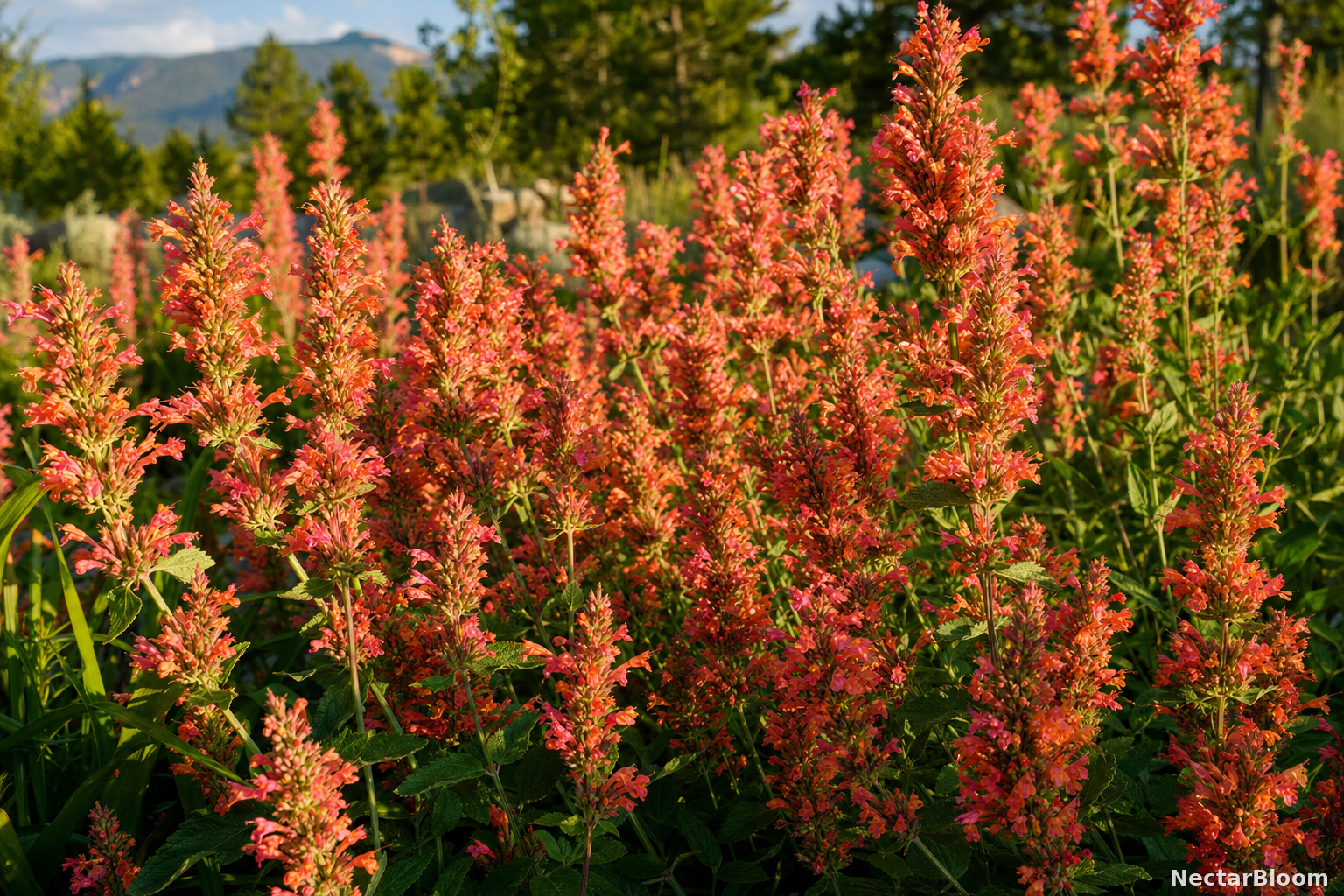
    When to plant: Plant bare roots or potted plants in spring after the last frost, typically April to May in USDA Zones 4-8.
    Where to plant (sun/shade): Thrives in full sun (6+ hours direct sunlight) to partial shade (4-6 hours direct sunlight daily).
    Soil & drainage: Adaptable to most soils but prefers moist, well-draining loam or clay with a pH of 6.0-7.0.
    Watering: Requires consistently moist soil; provide 1 inch of water per week through rain or irrigation, especially in dry periods.
    Spacing & planting depth: Space plants 1-2 feet apart; plant crowns at soil level, covering roots fully.
    Fertilizer & mulch: Generally does not require fertilizer; apply 2-3 inches of organic mulch in spring to retain moisture and suppress weeds.
    Pruning & seasonal care: Deadhead spent flowers to encourage reblooming; cut back aggressive spreaders in early spring to manage growth.
    Companion plants & design: Plant with other moisture lovers like Great Blue Lobelia, Cardinal Flower, or Joe Pye Weed for complementary visuals.
    Blazing Star - hummingbird plant
    July–September Zones 3–9

    Blazing Star

    Liatris spicata / L. pycnostachya · Perennial · Native

    ★★★★★ Hummingbird Rating

    Blazing Star is one of the most striking native prairie wildflowers, producing tall spikes of vivid magenta-purple florets that open from the top downward — unusual among wildflowers. Native to eastern and central North America, it grows from a corm and is extremely drought-tolerant once established. Multiple Nuts for Natives sources list Liatris as a mid-summer hummingbird attractor in the Midwest, and the tall colorful spikes are visible from considerable distances to approaching hummingbirds.

    Hummimgbirds are highly attracted to the vibrant magenta-purple flowers of Blazing Star (Liatris spicata and L. pycnostachya), which present a crucial nectar source due to their tubular florets packed into dense, upward-opening spikes. The bright coloration and high nectar volume and sugar concentration (typically 20-30%) provide efficient energy for their high metabolic rates. The bloom period, usually from mid-summer (July) through early autumn (September), coincides perfectly with the breeding and post-breeding periods for resident hummingbirds and the critical southward migration of Ruby-throated Hummingbirds (Archilochus colubris) through the Midwest, offering vital refueling stops.

    Specifically, the Ruby-throated Hummingbird (Archilochus colubris), the only breeding hummingbird species across much of the Midwest, heavily relies on Liatris species. The plant's flower structure allows these hummingbirds to easily access nectar with their long bills and tongues, and its sequential blooming from top to bottom on the spike ensures a prolonged food supply over several weeks. This extended resource is essential for adult birds feeding young, preparing for migration, and for the young birds undertaking their first migratory journeys, making Blazing Star a cornerstone plant for hummingbird conservation in the region.

    Sources: Cornell Lab of Ornithology, Audubon Native Plants Database, USDA NRCS Plant Guide

    When to plant: Plant corms or bare roots in early spring after the last frost, or container plants from spring to early fall in USDA Zones 3-9.
    Where to plant (sun/shade): Site in full sun, requiring at least 6-8 hours of direct sunlight daily for optimal flowering and sturdy growth.
    Soil & drainage: Thrives in well-drained, sandy loam to clay soils with a pH of 6.0-7.0; avoid consistently wet conditions to prevent rot.
    Watering: Water regularly during establishment; mature plants are drought-tolerant but benefit from occasional watering during prolonged dry spells.
    Spacing & planting depth: Space individual plants 12-18 inches apart, planting corms 2-4 inches deep with pointed end up.
    Fertilizer & mulch: Generally requires no fertilizer in average soils; apply a 2-inch layer of organic mulch in fall for winter protection and moisture retention.
    Pruning & seasonal care: Cut back spent flower stalks in late fall or early spring to 4-6 inches above ground to encourage dense growth and prevent self-seeding.
    Companion plants & design: Pair with other full-sun natives like Purple Coneflower, Wild Bergamot, Rattlesnake Master, or Little Bluestem for a vibrant, tiered pollinator garden.
    Foxglove Beardtongue - hummingbird plant
    April–June Zones 3–8

    Foxglove Beardtongue

    Penstemon digitalis · Perennial · Native

    ★★★★★ Hummingbird Rating

    Foxglove Beardtongue is one of the most adaptable Midwest penstemons, producing tall spikes of white to pinkish-white tubular flowers in spring. Missouri Botanical Garden confirms the flowers attract hummingbirds, butterflies, and other pollinators. While not red, the white tubular flowers contain abundant nectar highly accessible to hummingbirds. The spring bloom timing — April through June — fills the gap between Eastern Columbine ending and Scarlet Beebalm beginning, making it an important succession planting choice.

    Foxglove Beardtongue (Penstemon digitalis) is particularly attractive to hummingbirds due to its tubular flower shape, evolved to accommodate their long bills and tongues. The white to pale pink flowers are often speckled with purple, guiding pollinators to the nectar rewards located deep within the corolla. This species blooms prominently from late spring to early summer (May-July) across the Midwest, aligning well with the breeding and early nesting periods of migratory hummingbirds, providing a crucial and consistent nectar source during this energetically demanding time. Nectar composition and volume are optimized to provide the high energy needed by these avian visitors.

    In the Midwest, the primary hummingbird species relying on Foxglove Beardtongue is the Ruby-throated Hummingbird (Archilochus colubris), which migrates through and breeds extensively across this region. The flower's structure perfectly suits their feeding morphology, allowing efficient access to nectar while minimizing competition from insects with shorter proboscises. The plant's clustered inflorescences offer multiple feeding opportunities at a single stop, making it an efficient foraging choice for these dynamic pollinators. Its widespread native range across the region ensures its availability as an important early-season food source.

    Sources: Audubon Native Plants Database, Cornell Lab of Ornithology, Missouri Botanical Garden

    When to plant: Plant bare roots in early spring or container-grown plants can be placed in spring or fall, thriving as a perennial in USDA Zones 3-8.
    Where to plant (sun/shade): Prefers full sun (6+ hours direct sunlight daily) to partial sun (4-6 hours), blooming best with more light.
    Soil & drainage: Adaptable to various soil types but thrives in well-drained, average to poor soil; avoid consistently wet conditions especially in winter.
    Watering: Requires moderate water when establishing, about 1 inch per week, then becomes drought-tolerant once mature.
    Spacing & planting depth: Plant crowns at soil level, spacing individual plants 1 to 2 feet apart to allow for mature spread.
    Fertilizer & mulch: Generally does not require fertilizer; apply a thin layer of organic mulch in fall to suppress weeds and retain moisture.
    Pruning & seasonal care: Deadhead spent flower stalks after blooming to encourage rebloom and prevent excessive self-seeding; cut back foliage in late fall or early spring.
    Companion plants & design: Pairs well with other native sun-loving perennials like Little Bluestem, Prairie Dropseed, Wild Lupine, and Butterfly Milkweed for a diverse habitat.

    Succession Planting Calendar for the Midwest

    Season / Timing Key Plants Active Hummingbirds Garden Notes
    Spring Apr–Jun Aquilegia canadensis (columbine) · Silene virginica (fire pink) · Spigelia marilandica (Indian pink) · Penstemon digitalis Ruby-throated (arriving late Apr–May; nesting begins May–Jun) Columbine bloom and hummingbird arrival are precisely synchronized; plant in early April for best impact
    Early Summer Jun–Jul Monarda didyma (scarlet beebalm) · Monarda fistulosa · Campsis radicans (trumpet creeper) · Lonicera sempervirens Ruby-throated (peak nesting; maximum territorial activity) Peak hummingbird activity in July–August; multiple hummingbirds visible simultaneously in well-planted gardens
    Late Summer Jul–Sep Lobelia cardinalis (cardinal flower) · Physostegia virginiana · Liatris spp. Ruby-throated (nesting fledglings; building migration fat reserves) Cardinal flower is the single most critical late-summer plant; plant in masses near water
    Fall Sep–Oct Physostegia virginiana (rebloom) · Lobelia siphilitica (great blue lobelia) Ruby-throated (migrating south by late September–October) Late-blooming plants provide critical fuel for southbound migration; maintain nectar until first frost

    Which Hummingbirds Will Visit Your Midwest Garden?

    The Midwest is exclusively Ruby-throated Hummingbird (Archilochus colubris) territory — it is the only hummingbird species that breeds regularly east of the Great Plains. This makes plant selection in the Midwest relatively focused: everything should be calibrated to the Ruby-throated's preferences and migration schedule. Males arrive in late April to early May, establishing territories and feeding heavily at columbine and coral honeysuckle. Females arrive 1–2 weeks later to begin nesting. July and August are the peak activity months, when both resident birds and first-year juveniles are active and multiple hummingbirds may be visible simultaneously. By late September to early October, the Ruby-throated has departed for its wintering grounds in Mexico and Central America. The eastern garden strategy — columbine in May, beebalm and creeper in July, cardinal flower in August — is perfectly calibrated to this species' needs.

    🐦 Ruby-throated (sole regular species)🐦 Arrives late April–May🐦 Peak activity July–August🐦 Departs September–October

    Plants to Avoid in Your Midwest Garden

    • Japanese Honeysuckle (Lonicera japonica) — Highly invasive across the eastern US. While it does attract hummingbirds, it smothers native plants and is ecologically destructive. Use native Coral Honeysuckle (L. sempervirens) instead — superior hummingbird value without the damage.
    • Butterfly Bush (Buddleja davidii) — Invasive in much of the eastern US; displaces native host plants for caterpillars, which hummingbirds eat for protein. Use Buttonbush (Cephalanthus occidentalis) or American Elderberry as native alternatives.
    • Double-flowered cultivars of Monarda — Pink and lavender beebalm cultivars have reduced nectar compared to the straight red species. Always plant straight Monarda didyma for reliable hummingbird attraction, not fancy cultivars.
    • Cultivated garden impatiens (Impatiens walleriana) — Brooklyn Botanic Garden notes these 'have little value to hummingbirds' — bred for flower size, not nectar. Use native Jewelweed (I. capensis) instead, which hummingbirds actively seek.
    Southeastern garden with coral honeysuckle trellis under Spanish moss live oaks
    Southeast Hummingbird Region

    Southeast Hummingbird Garden Plants: The Complete 2025 Guide

    Best Plants to Attract Hummingbirds in Alabama, Arkansas, Florida, Georgia, Louisiana, Mississippi, North Carolina, South Carolina, Tennessee & Virginia

    The Southeast offers a longer hummingbird gardening season than any other eastern region, with Ruby-throated Hummingbirds arriving in Florida as early as February and departing as late as November in the upper Southeast. Florida and the Gulf Coast have the added bonus of overwintering Rufous Hummingbirds, making well-planted gardens in these areas potentially active with hummingbirds year-round. This extended season demands a more comprehensive succession planting strategy than the Midwest or Northeast.

    The Southeast's humid subtropical and maritime climate supports an extraordinary diversity of native plants with genuine hummingbird value. Red Buckeye dominates the spring garden, timed precisely for Ruby-throated arrival. Crossvine and Coral Honeysuckle extend the spring bloom. Firebush, Scarlet Sage, and Trumpet Creeper carry the summer. Cardinal Flower and Scarlet Hibiscus provide the critical late-summer fuel. And in the coastal Deep South and Florida, Firespike and Firebush can carry the garden through winter for overwintering Rufous Hummingbirds.

    Shade tolerance is an important consideration in Southeast gardens, where large deciduous trees create extensive partial-shade conditions. Indian Pink and Cardinal Flower both thrive in dappled light and are among the best shade-tolerant hummingbird plants available anywhere. This makes Southeast woodland garden design — blending native understory plants under established trees — exceptionally productive for hummingbird habitat.

    Florida gardeners in Zones 9–11 have the most options of any US gardeners: Firebush, Chuparosa (in the driest southwestern areas), Coral Bean, Scarlet Sage, Firespike, and Scarlet Hibiscus can all be maintained as perennials, providing year-round nectar for both breeding and overwintering hummingbirds. Florida is also experiencing the early signs of Anna's Hummingbird range expansion — a trend that will make year-round nectar gardens even more valuable in coming decades.

    🌡 Zones 6–10 🐦 Ruby-throated + overwintering Rufous (FL/Gulf) 📍 AL · AR · FL · GA · LA · MS · NC · SC · TN · VA

    Verified Hummingbird Plants

    Red Buckeye - hummingbird plant
    April–May Zones 4–8

    Red Buckeye

    Aesculus pavia · Deciduous small tree · Native

    ★★★★★ Hummingbird Rating

    Red Buckeye is the premier spring hummingbird tree of the Southeast, producing spectacular panicles of 4–10 inch bright red tubular flowers in April and May — timed precisely with the arrival of Ruby-throated Hummingbirds from Mexico. Missouri Botanical Garden notes that it 'blooms in St. Louis at about the same time that the hummingbirds return to the area in spring migration.' A small deciduous tree (10–20 ft) native to southeastern North American wooded valleys, Red Buckeye provides an elevated, highly visible nectar source that dominates the spring hummingbird garden.

    Red Buckeye (Aesculus pavia) is a vital nectar source for hummingbirds, particularly in the Southeast. Its striking red, tubular flowers are perfectly adapted for hummingbird pollination, providing a rich supply of nectar. The blossoms, arranged in showy panicles, typically appear in early to mid-spring (March-May) before many other nectar sources are abundant, coinciding with the arrival of Ruby-throated Hummingbirds (Archilochus colubris) returning from their southern migrations. The bright red color, a known attractant for hummingbirds, signals a high-energy reward, while the tubular shape ensures that only long-tongued visitors, like hummingbirds, can access the deep-seated nectar, promoting efficient pollination.

    Ruby-throated Hummingbirds are the primary beneficiaries of Red Buckeye in the southeastern United States, relying on its early-season nectar to fuel their strenuous migration and the demanding breeding season. The high sugar concentration and copious nectar volume within the flowers provide the necessary energy for their rapid metabolism. While other pollinators like long-tongued bees may visit, the floral architecture and nectar presentation are specifically optimized for hummingbird feeding. This early bloom time is crucial for establishing breeding territories and providing energy for nesting females in the region.

    Sources: Audubon Native Plants Database, Lady Bird Johnson Wildflower Center, Cornell Lab of Ornithology

    When to plant: Plant bare-root or container-grown Red Buckeye in late fall to early spring (November-March) during dormancy in USDA Zones 6-9.
    Where to plant (sun/shade): Thrives in part shade (3-6 hours of direct sun daily) but tolerates full sun with consistent moisture, especially in cooler regions of the Southeast.
    Soil & drainage: Requires consistently moist, well-drained loamy or sandy soils with a slightly acidic to neutral pH (6.0-7.0); avoid heavy clay or excessively dry sites.
    Watering: Water regularly to maintain consistently moist soil, especially during dry periods and for the first 1-2 years after planting, aiming for 1 inch per week.
    Spacing & planting depth: Space trees 10-15 feet apart to allow for mature spread; plant at the same depth as in the container or with the root collar even with grade.
    Fertilizer & mulch: Generally unnecessary once established; apply 2-3 inches of organic mulch (pine straw/bark) to retain soil moisture and regulate temperature.
    Pruning & seasonal care: Prune in late winter or early spring (February-March) to remove dead, damaged, or crossing branches and to maintain an attractive shape.
    Companion plants & design: Pair with understory natives like Eastern Redbud, American Beautyberry, Coral Honeysuckle, and various ferns for a layered woodland effect.
    Crossvine - hummingbird plant
    April–June Zones 5–9

    Crossvine

    Bignonia capreolata · Semi-evergreen vine · Native

    ★★★★★ Hummingbird Rating

    Crossvine is the Southeast's finest native hummingbird vine — vigorous, beautiful, and without the management problems of Trumpet Creeper. A semi-evergreen vine reaching 30–50 feet, it produces large bicolored orange-red and yellow trumpet flowers in April through June in abundance. Named for the cross-shaped pith visible when stems are cut crosswise, it is native from the Southeast west to Texas and north to Illinois. More controllable than Trumpet Creeper and non-invasive, it thrives on trellises, arbors, and fences.

    Crossvine (Bignonia capreolata) is an excellent hummingbird attractant due to its tubular, trumpet-shaped flowers, typically reddish-orange to yellow, which are perfectly adapted to a hummingbird's long bill and tongue. These striking flowers, typically 2-3 inches long, produce copious nectar with high sugar concentrations, providing vital energy for these active birds. Crossvine blooms profusely from late winter to early spring (February-May in the Southeast), coinciding with the arrival of Ruby-throated Hummingbirds (Archilochus colubris) returning from their wintering grounds and their subsequent breeding season.

    Ruby-throated Hummingbirds, the most common species in the Southeast, rely heavily on early-season nectar sources like crossvine to fuel their arduous migration and to sustain females during nesting and chick-rearing. The vine's robust flowering provides a consistent food source through the critical spring months when many other nectar plants may not yet be in bloom. The vibrant coloration and unique floral structure serve as strong visual cues, guiding hummingbirds directly to the rich nectar reward, making it a critical component of a hummingbird-friendly garden.

    Sources: Audubon Native Plants Database, Cornell Lab of Ornithology, Lady Bird Johnson Wildflower Center.

    When to plant: Plant crossvine in fall or early spring (September-November or March-April) in USDA Zones 6-9 for optimal establishment before extreme heat or cold.
    Where to plant (sun/shade): Provide full sun (6+ hours direct daily) for best flowering, though it tolerates partial shade (3-5 hours direct sun) with reduced bloom.
    Soil & drainage: Adaptable to various well-drained soils, including sandy, loamy, or clay, with a pH range of 5.5-7.0.
    Watering: Water deeply once per week during dry periods for the first year; established plants are drought-tolerant but appreciate occasional summer watering.
    Spacing & planting depth: Space vines 5-10 feet apart and plant at the same depth as in the nursery pot, providing strong support for climbing.
    Fertilizer & mulch: Fertilize sparingly with a balanced, slow-release granular fertilizer in early spring; apply 2-3 inches of organic mulch to retain moisture and suppress weeds.
    Pruning & seasonal care: Prune after flowering to shape the vine, remove dead wood, and control vigorous growth; wear gloves as sap can be irritating.
    Companion plants & design: Pair with other native climbers like Trumpet Honeysuckle (Lonicera sempervirens) or Carolina Jessamine (Gelsemium sempervirens) on trellises or arbors.
    Coral Honeysuckle - hummingbird plant
    March–July Zones 4–9

    Coral Honeysuckle

    Lonicera sempervirens · Semi-evergreen vine · Native

    ★★★★★ Hummingbird Rating

    Coral Honeysuckle is the most consistently reliable hummingbird vine across the entire eastern US, with a particularly strong native presence in the Southeast. Blooming from early March through July (with sporadic rebloom through fall), its scarlet-orange tubular flowers are non-fragrant — unlike the invasive Japanese Honeysuckle — because all its resources go into nectar production rather than scent. A semi-evergreen vine growing 10–20 feet, it is widely used on trellises and fences throughout the Southeast.

    Coral Honeysuckle's tubular, red-orange flowers are perfectly adapted for hummingbird pollination, offering a high-energy nectar reward. The elongated corolla minimizes access for insects with shorter proboscises, while its bright coloration and lack of a strong fragrance signal visual cues preferred by hummingbirds. Peak bloom from spring through summer aligns with hummingbird migration and breeding seasons across the Southeast, providing a crucial and dependable food source during periods of high energetic demand, such as nest building and chick rearing.

    Ruby-throated Hummingbirds (Archilochus colubris), the primary hummingbird species in the Southeast, heavily rely on Coral Honeysuckle for nectar due to its abundant and consistently available floral resources. The birds' long, slender bills and tongues are ideally suited to access the deep nectar reserves within the honeysuckle's corollas. This vital plant supports their migratory journeys and resident populations, ensuring their nutritional needs are met throughout their active foraging periods in the region. Sources: Cornell Lab of Ornithology (All About Birds), Lady Bird Johnson Wildflower Center, Audubon Native Plants Database.

    When to plant: Plant container-grown Coral Honeysuckle in early spring (March-April) or fall (September-November) to allow root establishment before extreme summer heat or winter cold.
    Where to plant (sun/shade): Provide full sun to part shade (a minimum of 4-6 hours of direct sunlight daily) for optimal flowering and vigorous growth.
    Soil & drainage: Grows best in average, well-drained soils ranging from sandy to clay, tolerating a pH between 6.0 and 7.5.
    Watering: Water regularly during the first growing season (1 inch per week) to establish, then becomes drought-tolerant, needing supplemental water only during prolonged dry spells.
    Spacing & planting depth: Space plants 5-10 feet apart, depending on desired coverage, and plant at the same depth as they were in the nursery container.
    Fertilizer & mulch: Generally requires no fertilization in healthy soil; apply a 2-3 inch layer of organic mulch like pine straw or shredded bark to retain moisture and suppress weeds.
    Pruning & seasonal care: Prune in late winter or early spring to shape, control growth, or remove dead/damaged wood, encouraging a bushier habit and more blooms.
    Companion plants & design: Pair with other hummingbird attractors such as Trumpet Vine, Cardinal Flower, or Salvia coccinea, allowing it to climb a trellis, fence, or grow as a groundcover.
    Firebush - hummingbird plant
    Summer–Fall Zones 8–11

    Firebush

    Hamelia patens · Tropical shrub · Native (FL)

    ★★★★★ Hummingbird Rating

    Firebush (also called Hummingbird Bush) is one of the finest all-season hummingbird plants for the Deep South and Florida, producing continuous clusters of orange-red tubular flowers from summer through fall — near year-round in Zone 10–11. Native to Florida, the West Indies, and Central America, it grows 3–5 ft in cultivation (up to 15 ft in frost-free areas) in full sun to partial shade. The plant's foliage turns rich red-copper in fall, and small dark fruits eaten by songbirds follow the flowers. An extraordinary plant for the south Florida hummingbird garden.

    Firebush (Hamelia patens) flowers are tubular, typically 1.5-2 inches long, and range in color from orange to scarlet, a visual cue highly attractive to hummingbirds. This floral morphology is perfectly adapted for hummingbird pollination, providing a landing platform and guiding their long beaks to the abundant nectar reservoir deep within the corolla. The consistent, prolonged blooming period from spring through fall provides a critical, sustained energy source for hummingbirds, particularly vital during their demanding breeding seasons in the Southeast and during fall migration periods when other nectar sources may be diminishing. This reliable nectar supply helps fuel high metabolic rates required for their hovering flight and reproductive success.

    Specific hummingbird species in the Southeast, notably the Ruby-throated Hummingbird (Archilochus colubris), heavily rely on firebush due to its generous nectar production and accessible flower structure. These hummingbirds are abundant breeders throughout much of the region and also pass through during their extensive migrations. The high sugar content of Hamelia patens's nectar provides the immediate energy boost essential for these long-distance travelers and for adults feeding their young during peak nesting activity. Observations confirm consistent visitation by Ruby-throated Hummingbirds, making firebush a cornerstone plant for supporting their populations in managed landscapes.

    Sources: Audubon Native Plants Database, Cornell Lab of Ornithology, Lady Bird Johnson Wildflower Center
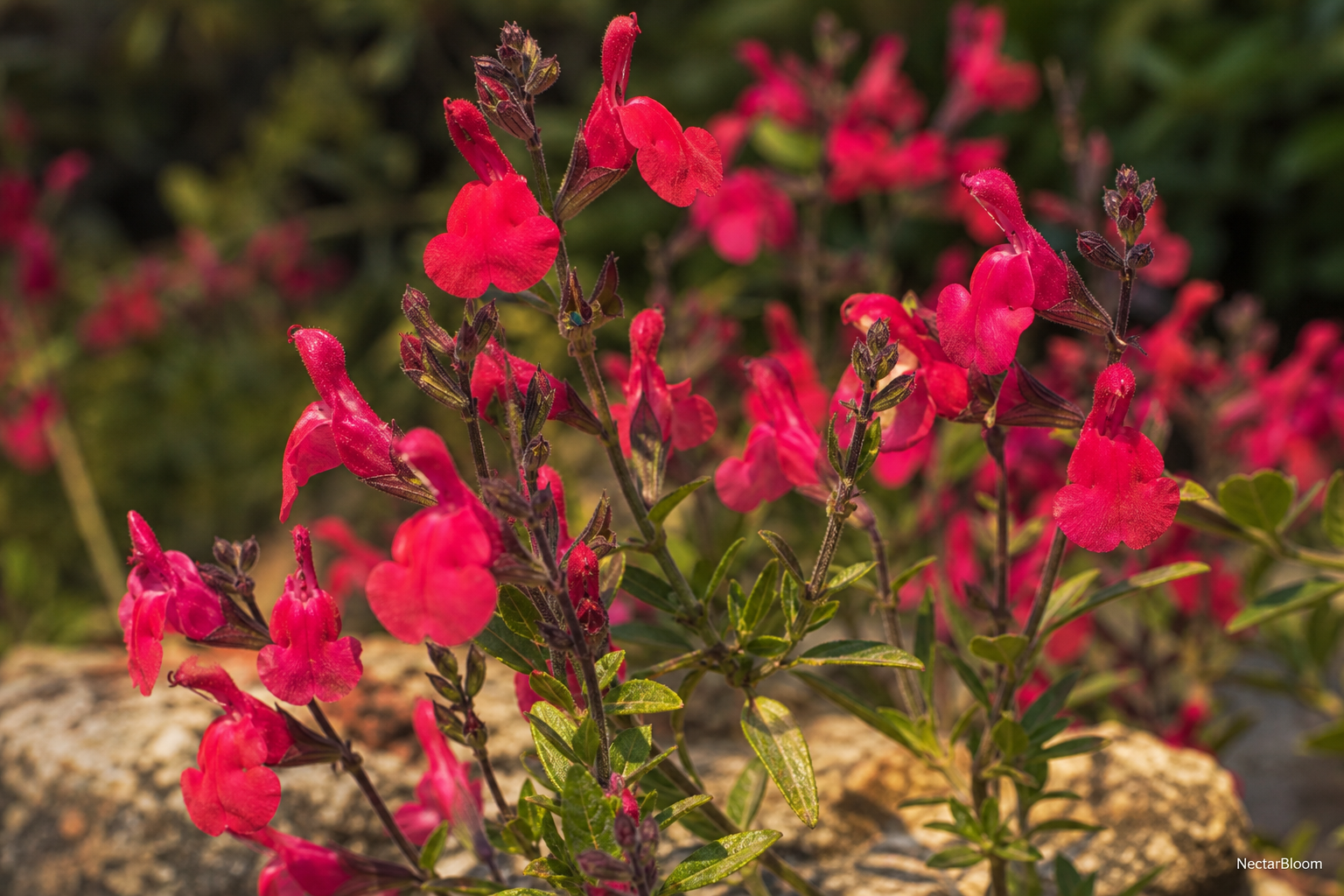
    When to plant: Plant firebush in spring after the last frost, typically March to May in USDA Zones 8-11, to allow establishment before summer heat.
    Where to plant (sun/shade): Provide full sun to partial shade (at least 6 hours of direct sun daily) for optimal flowering and compact growth in the Southeast.
    Soil & drainage: It thrives in well-drained, sandy to loamy soils with a pH range of 6.0-7.5, tolerating some alkalinity but not heavy, waterlogged conditions.
    Watering: Water regularly, about 1 inch per week, during dry periods for the first year; mature plants are moderately drought-tolerant but benefit from supplemental water.
    Spacing & planting depth: Space plants 3-5 feet apart to allow for mature spread, planting at the same depth as in the nursery container, ensuring the root flare is exposed.
    Fertilizer & mulch: Apply a balanced slow-release fertilizer in spring, and a 2-4 inch layer of organic mulch to retain moisture and suppress weeds.
    Pruning & seasonal care: Prune in late winter or early spring to shape and remove frost-damaged branches; in colder parts of the region (Zone 8), it may die back to the ground.
    Companion plants & design: Pair with other hummingbird attractors like Coral Honeysuckle (Lonicera sempervirens) or Trumpet Vine (Campsis radicans) for continuous nectar.
    Coral Bean - hummingbird plant
    March–May Zones 8–11

    Coral Bean

    Erythrina herbacea · Shrub-small tree · Native

    ★★★★★ Hummingbird Rating

    Coral Bean is a striking native of the southeastern coastal plain, producing upright spikes of brilliant scarlet tubular flowers so narrow that bees cannot access the nectar — it is exclusively reserved for hummingbird bills. A drought-tolerant shrub or small tree in the coastal South, it blooms in March–May precisely when Ruby-throated Hummingbirds are arriving from migration. IFAS Florida notes coral bean 'produces spikes of red flowers with plenty of floral resources for hummingbirds.'

    Coral Bean (Erythrina herbacea) possesses several floral adaptations that make it an exceptional hummingbird magnet. Its tubular, brilliant red flowers are perfectly shaped to accommodate a hummingbird's long bill and tongue, guiding the bird directly to the abundant, high-sugar-content nectar at the base of the corolla. Blooming from late winter through summer, this prolonged flowering period ensures a consistent nectar source, critically coinciding with hummingbird migration through the Southeast and their subsequent breeding activities, providing essential energy for these metabolically demanding birds.

    In the southeastern United States, Ruby-throated Hummingbirds (Archilochus colubris) are the primary beneficiaries of Coral Bean's nectar. As the only regularly breeding hummingbird in much of this region, their migratory routes often bring them through areas where Coral Bean is native, and its early blooms are a vital resource upon their spring arrival. The bright red inflorescences act as strong visual cues, allowing these agile birds to efficiently locate and access the high-energy fuel needed for egg-laying, chick rearing, and maintaining their incredibly fast metabolisms.

    Sources: Audubon Native Plants Database, Cornell Lab of Ornithology, Lady Bird Johnson Wildflower Center.

    When to plant: Plant seeds or transplanted container-grown plants in early spring after the last frost, typically March to April in USDA Zones 7-10.
    Where to plant (sun/shade): Provide full sun to partial shade, meaning at least 4-6 hours of direct sunlight daily for optimal flowering and growth.
    Soil & drainage: Thrives in sandy, well-draining soils with a slightly acidic to neutral pH (6.0-7.0), tolerating some clay if drainage is good.
    Watering: Water regularly until established, then it is drought-tolerant, requiring supplemental water only during prolonged dry spells.
    Spacing & planting depth: Space plants 4-6 feet apart to allow for mature spread; plant at the same depth as in the nursery container.
    Fertilizer & mulch: Generally does not require fertilizer in good soil; apply 2-3 inches of organic mulch to retain moisture and suppress weeds.
    Pruning & seasonal care: Prune back dead or damaged wood in late winter or early spring before new growth emerges, or cut to the ground in colder areas.
    Companion plants & design: Pair with other regional hummingbird favorites like Trumpet Honeysuckle, Crossvine, or Cardinal Flower for continuous blooms.
    Trumpet Creeper - hummingbird plant
    June–September Zones 4–10

    Trumpet Creeper

    Campsis radicans · Deciduous vine · Native

    ★★★★★ Hummingbird Rating

    Trumpet Creeper is native to the Southeast (naturalized farther north), making it the most appropriate region for its use. A vigorous deciduous vine reaching 30–40 feet, it produces large orange-scarlet funnel-shaped flowers throughout summer, providing exceptional nectar for Ruby-throated Hummingbirds during peak nesting season. While aggressive management is still required — it spreads via suckers and seeds — in its native Southeast range it is both ecologically appropriate and spectacularly effective.

    Trumpet Creeper (Campsis radicans) is a vital nectar source for hummingbirds in the Southeast, primarily due to its striking, tubular, orange-to-red flowers. These blossoms are perfectly adapted for hummingbird bills, offering a rich supply of high-sugar nectar (typically 20-30% sucrose, favored by hummingbirds), which is easily accessible deep within the floral tube. The vibrant color and trumpet shape act as strong visual cues, guiding hummingbirds to the energy reward. Its extended bloom period from late spring through early fall aligns perfectly with both the spring and fall migration windows of hummingbirds, as well as their breeding season, providing a consistent food source when energy demands are highest.

    In the Southeast, Campsis radicans is a critical food plant for the Ruby-throated Hummingbird (Archilochus colubris), the most common and widespread hummingbird species in the region, which relies on its nectar for sustenance during nesting, rearing young, and long-distance migrations. The plant's vigorous growth and abundant flowering ensure a reliable and easily locatable nectar supply, making it an indispensable part of a hummingbird-friendly landscape. While a few other hummingbird species may occasionally visit during migration, C. radicans is principally a cornerstone for supporting healthy Ruby-throated Hummingbird populations. Its consistent nectar flow contributes significantly to the energetic demands of these tiny, high-metabolism birds.

    Sources: Cornell Lab of Ornithology, Audubon Native Plants Database, Lady Bird Johnson Wildflower Center

    When to plant: Plant bare-root or potted specimens in late fall or early spring after the last frost (USDA Zones 6-9) for establishment before extreme heat.
    Where to plant (sun/shade): Thrives in full sun (6+ hours direct sunlight daily); tolerates partial shade but flowering will be reduced.
    Soil & drainage: Adaptable to most soil types, including clay, loam, or sand, preferring well-drained, average to consistently moist conditions; pH 6.0-8.0 is suitable.
    Watering: Water regularly, about 1 inch per week, during its first year, then it is drought-tolerant once established, especially in the Southeast's humid climate.
    Spacing & planting depth: Plant 5-10 feet apart if growing multiple, ensuring the crown is at soil level; provide sturdy support like a trellis or arbor immediately.
    Fertilizer & mulch: Generally requires no fertilizer in fertile soil; apply a 2-4 inch layer of organic mulch to conserve moisture and suppress weeds.
    Pruning & seasonal care: Prune heavily in late winter or early spring to control rampant growth, promote branching, and manage size; flowers bloom on new wood.
    Companion plants & design: Pair with other robust native plants like Eastern Redbud, American Beautyberry, and various asters to provide diverse habitat and food sources.
    Indian Pink - hummingbird plant
    May–July Zones 5–9

    Indian Pink

    Spigelia marilandica · Perennial · Native

    ★★★★★ Hummingbird Rating

    Indian Pink is perhaps the finest shade-tolerant hummingbird plant in the Southeast. Growing 1–2 ft tall in partial to full shade in moist woodland soils, it produces distinctive bicolored flowers — brilliant scarlet-red on the outside, vivid yellow-green inside when the petals spread to reveal the star-shaped opening. The horizontal flower position is perfectly suited for hummingbird hovering and feeding. Georgia Perennial Society calls it 'highly attractive to hummingbirds.' Native to the southeastern US, it is increasingly available from native plant nurseries.

    Indian Pink (Spigelia marilandica) is a premier plant for attracting hummingbirds due to its distinctive floral mechanics. Its vibrant, tubular red flowers with yellow interiors are perfectly adapted for avian pollinators. The tube shape guides hummingbirds directly to the copious nectar at the base, and the bright red color is highly visible to them, acting as a strong visual cue. This species typically blooms from late spring through early summer (May-July in the Southeast), coinciding with the peak breeding season for resident hummingbirds and the northward migration period of others, providing a crucial and reliable food source when nectar demands are high.

    Specifically, the Ruby-throated Hummingbird (Archilochus colubris), the most common and widespread hummingbird across the Southeast, heavily relies on Indian Pink for nectar. Its long, slender bill is ideally suited to access the nectar deep within the floral tubes of Spigelia marilandica. The plant's consistent bloom time makes it a vital part of the hummingbird's foraging repertoire during nesting and chick-rearing, providing the high energy content necessary for their rapid metabolism. Other occasional visitors, like the Rufous Hummingbird during migration, may also utilize this plant.

    Sources: Audubon Native Plants Database, Cornell Lab of Ornithology, Lady Bird Johnson Wildflower Center
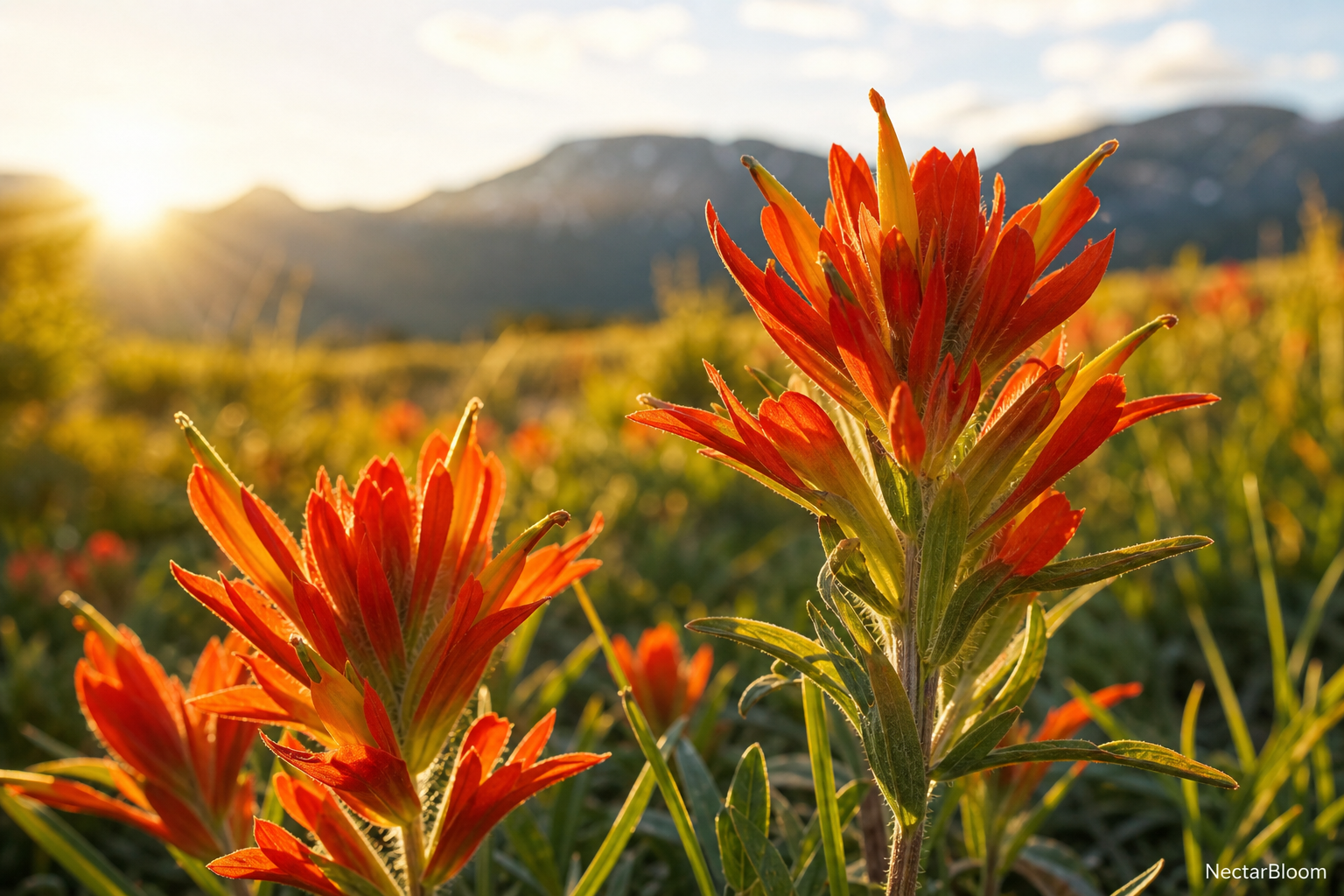
    When to plant: Plant Indian Pink in spring after the last frost or in early fall while soil is still warm.
    Where to plant (sun/shade): Provide partial to full shade (2-6 hours of direct sun), especially in hotter southern climates.
    Soil & drainage: Requires well-drained, fertile soil rich in organic matter; tolerates a pH range of 6.0-7.0.
    Watering: Maintain consistently moist soil; aim for about 1 inch of water per week through rainfall or irrigation.
    Spacing & planting depth: Space plants 12-18 inches apart, ensuring the crown is level with the soil surface.
    Fertilizer & mulch: Apply a light layer of organic compost or leaf mulch annually in spring; avoid synthetic fertilizers.
    Pruning & seasonal care: Deadhead spent flowers to encourage rebloom and cut back frost-damaged foliage in late winter.
    Companion plants & design: Pair with other shade-lovers like woodland phlox, ferns, foamflower, or coral bells for diverse appeal.
    Scarlet Sage - hummingbird plant
    Spring–Fall Zones 8–10

    Scarlet Sage

    Salvia coccinea · Annual-tender perennial · Native

    ★★★★★ Hummingbird Rating

    Scarlet Sage is a prolific self-seeding annual or tender perennial that blooms nearly year-round in Zones 9–10 and provides outstanding hummingbird value throughout the Southeast. Producing whorled spikes of brilliant scarlet-red tubular flowers from spring through fall, it is one of the top-rated Southeast hummingbird plants by Florida Native Plants Nursery and the National Wildlife Federation's Garden for Wildlife program. Once established, it self-seeds prolifically, naturalizing into large drifts that provide continuous nectar.

    Scarlet Sage (Salvia coccinea) is a premier native nectar source, particularly vital for hummingbirds due to its tubular, bright red corollas, which are perfectly adapted for their long, slender bills. The tubular shape forces hummingbirds to access nectar at the base of the flower, ensuring pollen transfer as their heads brush against the anthers and stigma. These flowers produce a suitable volume and concentration of nectar that provides essential energy for the high metabolic demands of these avian pollinators. Its prolonged blooming period, from late spring through fall across the Southeast, aligns critically with both the breeding season and the autumnal migration of several hummingbird species, offering a sustained food supply.

    Specifically, the Ruby-throated Hummingbird (Archilochus colubris), the most widespread species in the Southeast, heavily relies on Scarlet Sage for its energetic needs throughout its stay. The vibrant red color is a strong visual cue for these diurnal feeders, attracting them from a distance. The plant’s accessibility and continuous nectar production make it a cornerstone species for supporting successful nesting, raising young, and fueling the arduous migratory journeys of this species across the region, from the coastal plains of Florida to the Appalachian foothills of Tennessee.

    Sources: Audubon Native Plants Database, Cornell Lab of Ornithology, Lady Bird Johnson Wildflower Center
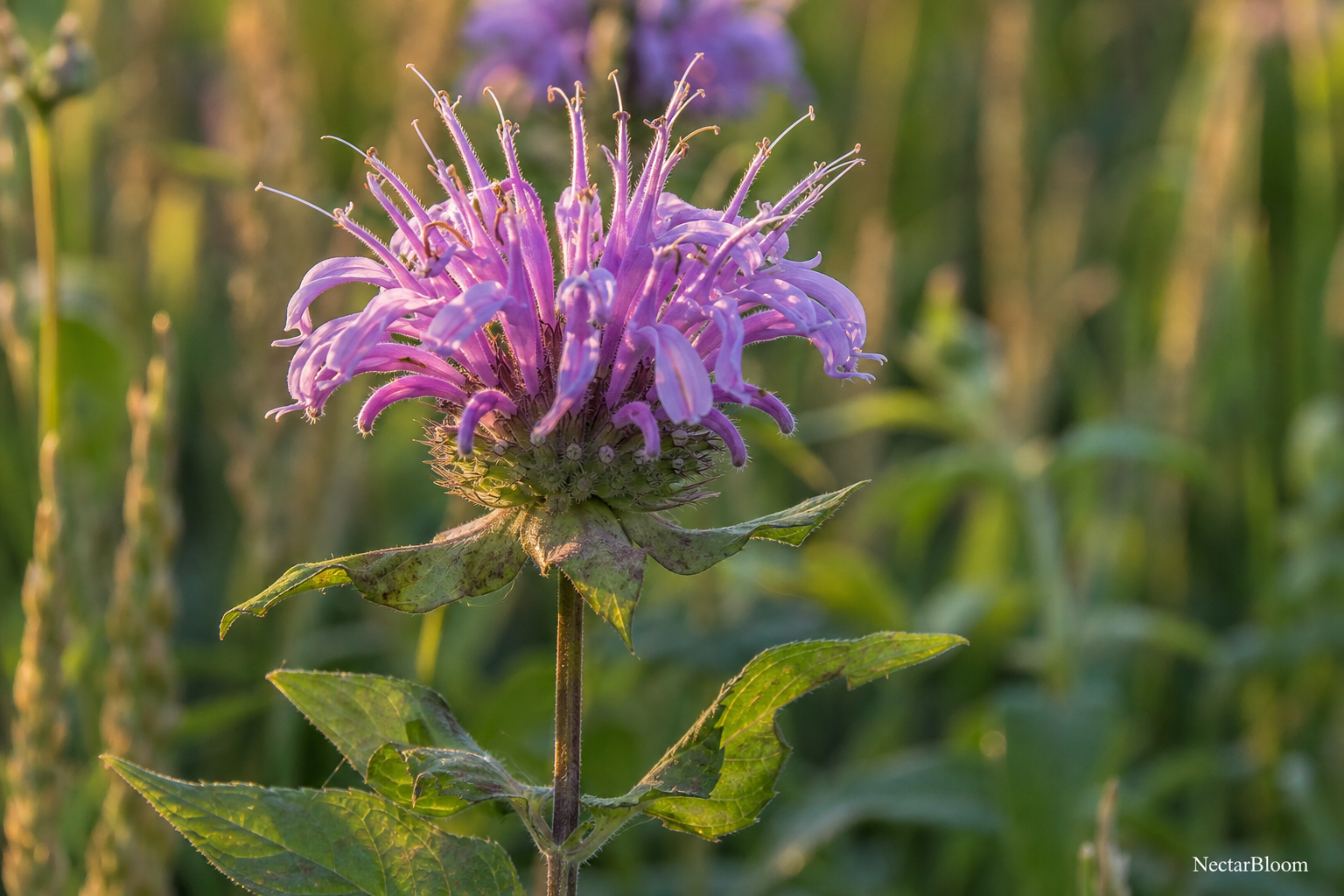
    When to plant: Sow seeds indoors 6-8 weeks before the last frost or directly outdoors after all danger of frost has passed, typically April-June in USDA Zones 8-10.
    Where to plant (sun/shade): Plant in full sun to partial shade, ideally receiving 6+ hours of direct sunlight daily for optimal flowering.
    Soil & drainage: Thrives in well-drained loamy or sandy soils with a neutral to slightly acidic pH (6.0-7.0); tolerates poor soil but not heavy clay.
    Watering: Water regularly to establish, then once a week during dry periods; aim for about 1 inch of water per week through rainfall or irrigation.
    Spacing & planting depth: Space plants 1-2 feet apart; plant at the same depth as they were in their nursery container or sow seeds 1/8 inch deep.
    Fertilizer & mulch: Generally does not require fertilizer in average soil; apply 1-2 inches of organic mulch to conserve moisture and suppress weeds.
    Pruning & seasonal care: Deadhead spent flowers to encourage continuous blooming; cut back hard in late winter or early spring to promote bushy growth.
    Companion plants & design: Pair with other native hummingbird attractors like Coral Honeysuckle (Lonicera sempervirens) or Trumpet Vine (Campsis radicans).
    Cardinal Flower - hummingbird plant
    July–September Zones 3–9

    Cardinal Flower

    Lobelia cardinalis · Short-lived perennial · Native

    ★★★★★ Hummingbird Rating

    Cardinal Flower is the premier late-summer hummingbird plant across the entire eastern US, and in the Southeast its longer season allows it to bloom from July through September — covering the entire Ruby-throated departure period. Native to moist stream banks and wetland edges, it produces brilliant scarlet-red flower spikes highly visible from great distances. Short-lived but self-seeding prolifically, a well-established Cardinal Flower colony sustains itself indefinitely and provides critical fuel for southbound hummingbirds.

    Cardinal Flower (Lobelia cardinalis) is a vital nectar source for hummingbirds in the Southeast due to its specialized floral structure. Its vibrant red, tubular flowers are perfectly adapted to attract and reward hummingbirds, specifically the Ruby-throated Hummingbird (Archilochus colubris). The long, slender corolla tube matches the length of the hummingbird's bill, ensuring efficient nectar extraction while transferring pollen onto the bird's head. The flowers typically bloom from mid-summer (July) through early fall (October) in the Southeast, providing essential energy during late breeding season, post-breeding foraging, and southward migration when other nectar sources may be dwindling.

    Ruby-throated Hummingbirds, the primary species found across the Southeast, are strongly attracted to the bright red color of L. cardinalis, which stands out against green foliage and signals a high-energy reward. The plant produces a substantial volume of relatively concentrated nectar, making it a valuable and reliable food source for these energetically demanding birds, particularly females during nesting and juveniles learning to forage. Its late summer and fall bloom time is crucial for fueling their long migratory journey, supporting their metabolic needs as they prepare to move south to their wintering grounds. In essence, the co-evolutionary relationship between Cardinal Flower and the Ruby-throated Hummingbird is a prime example of mutualistic pollination.

    Sources: Audubon Native Plants Database, Cornell Lab of Ornithology, Lady Bird Johnson Wildflower Center.

    When to plant: Plant container-grown Cardinal Flower in spring after the last frost or in early fall to allow root establishment before winter.
    Where to plant (sun/shade): Provide full sun (6+ hours direct daily) to partial shade (3-6 hours direct daily), with more shade beneficial in hotter Southern climates.
    Soil & drainage: Requires consistently moist to wet, fertile, humus-rich soil with a slightly acidic to neutral pH (6.0-7.0) and good drainage.
    Watering: Water regularly to maintain consistently moist soil; it tolerates wet conditions and can even grow in shallow standing water.
    Spacing & planting depth: Space plants 1-2 feet apart, planting crowns at the same depth as they were in the nursery container.
    Fertilizer & mulch: A light application of compost can improve soil fertility; apply 2-3 inches of organic mulch to retain moisture and regulate soil temperature.
    Pruning & seasonal care: Cut back spent flower stalks after blooming to encourage basal growth, and leave some stalks over winter for seed dispersal.
    Companion plants & design: Pair with other moisture-loving natives like Great Blue Lobelia, Swamp Sunflower, Pickerelweed, and various native ferns in a rain garden or boggy area.
    Scarlet Hibiscus - hummingbird plant
    June–October Zones 6–10

    Scarlet Hibiscus

    Hibiscus coccineus · Perennial · Native

    ★★★★★ Hummingbird Rating

    Scarlet Hibiscus, also called Swamp Rosemallow, is a spectacular Southeast native producing large (4–6 inch) flowers of pure crimson-scarlet on plants reaching 5–8 feet tall. Native to swamps and pond margins of Georgia, Florida, Alabama, and Louisiana, it thrives in wet conditions and full sun, producing blooms continuously from June through October — covering the entire Ruby-throated nesting and departing season. Dies back to roots in winter but re-emerges late in spring.

    Scarlet Hibiscus (Hibiscus coccineus) is a premier hummingbird attractor in the Southeast, primarily due to its striking red, trumpet-shaped flowers. These blossoms, typically 6-8 inches across, are perfectly adapted for hummingbird pollination, offering a readily accessible nectar reward at the base of their long floral tubes. The vibrant red color is highly visible to hummingbirds, which have a strong preference for red and orange hues, while being less attractive to bees. Furthermore, its bloom period from summer through fall aligns with key hummingbird activities, including the breeding season and crucial southward migration windows when energy reserves are vital.

    In the Southeast, Hibiscus coccineus is a critical nectar source for the Ruby-throated Hummingbird (Archilochus colubris), the most widespread species in the region. These hummingbirds rely on high-energy nectar during their breeding activities from spring to late summer, and then heavily during their arduous autumn migration through the Gulf Coast states. The plant's consistent nectar production over an extended period provides a reliable food source for these birds as they raise young and build fat reserves for their long journey to wintering grounds in Central America. Its tall, architectural form also provides perching opportunities near the nectar source.

    Sources: Audubon Native Plants Database, Cornell Lab of Ornithology, Lady Bird Johnson Wildflower Center
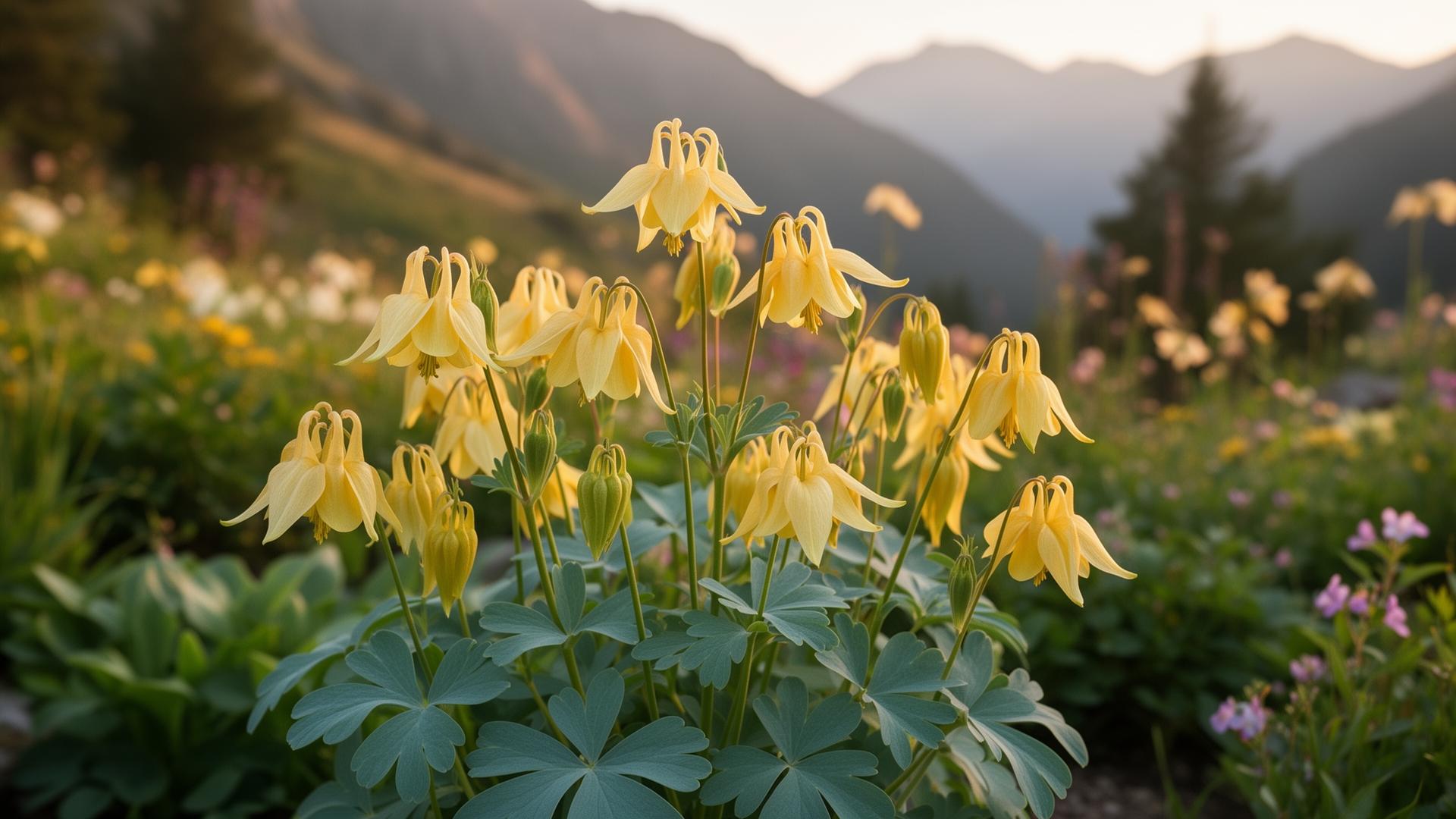
    When to plant: Plant container-grown Scarlet Hibiscus in spring after the last frost, typically April to May, or in early fall in USDA Zones 8-10.
    Where to plant (sun/shade): Site in full sun to partial shade, requiring at least 6 hours of direct sunlight daily for optimal flowering.
    Soil & drainage: Thrives in consistently moist to wet, fertile, well-draining to poorly draining soils, tolerating sandy, clay, or loamy types with a pH of 6.0-7.0.
    Watering: Water regularly to keep soil moist, especially during dry periods; supplemental irrigation of 1-2 inches per week may be needed in extended droughts.
    Spacing & planting depth: Space plants 3-5 feet apart to allow for mature spread; plant at the same depth as in the nursery container.
    Fertilizer & mulch: Apply a balanced slow-release fertilizer in spring; mulch with 2-3 inches of organic material to conserve moisture and suppress weeds.
    Pruning & seasonal care: Cut back dead or leggy stems in late winter or early spring to encourage bushy growth and robust flowering in the new season.
    Companion plants & design: Pair with other moisture-loving natives like Blue Mistflower (Conoclinium coelestinum) and Cardinal Flower (Lobelia cardinalis) for a vibrant hummingbird garden.
    Firespike - hummingbird plant
    October–December Zones 8–11

    Firespike

    Odontonema strictum · Tropical shrub · Introduced

    ★★★★★ Hummingbird Rating

    Firespike is a tropical shrub native to Central America that has become one of the most valuable fall and winter hummingbird plants in the Southeast, producing brilliant scarlet-red tubular flower spikes from October through December — precisely when few other hummingbird plants are blooming. Florida Native Plants Nursery lists it as a top Florida-friendly hummingbird plant despite its non-native origin, because it fills a critical fall/winter nectar gap for overwintering Rufous Hummingbirds and late-departing Ruby-throated in Zones 8–11.

    Firespike (Odontonema strictum) is a perennial shrub that offers a crucial nectar source for hummingbirds in the Southeast, particularly during late summer and fall when many other floral resources dwindle. Its brilliant, long, tubular scarlet flowers are perfectly adapted for hummingbird pollination: their vibrant color attracts attention, and the deep corolla necessitates a long proboscis to access the high-quality nectar within, ensuring effective pollen transfer. The timing of its prolific bloom coincides with the fall migration of Ruby-throated Hummingbirds (Archilochus colubris) through the region, providing vital energy for their arduous journey, and also supports resident and over-wintering hummingbirds in the warmer parts of the Southeast.

    Ruby-throated Hummingbirds are the primary beneficiaries of Firespike in the Southeast. Males often arrive in the region in early spring for breeding, and both sexes, along with juveniles, are present through the summer and into the fall migration. Firespike's consistent and abundant nectar supply makes it a reliable food source, supporting their high metabolic rates for feeding their young and building fat reserves for migration. The plant's architecture often allows hummingbirds to perch while feeding, conserving energy. Other occasional visitors might include Rufous Hummingbirds (Selasphorus rufus), though they are less common and typically winter visitors in the region.

    Sources: Audubon Native Plants Database, Cornell Lab of Ornithology, Lady Bird Johnson Wildflower Center.

    When to plant: Plant Firespike in spring after the last frost (March-May) in USDA Zones 8-11, ensuring establishment before summer heat.
    Where to plant (sun/shade): Provide partial shade (3-6 hours direct sun) in hotter lower South, or full sun (6+ hours direct) in cooler upper South.
    Soil & drainage: Thrives in well-drained, consistently moist loamy or sandy soils with a slightly acidic to neutral pH (6.0-7.0).
    Watering: Water regularly, about 1 inch per week, especially during dry periods; reduce frequency once established, but avoid drought stress.
    Spacing & planting depth: Space plants 3-5 feet apart to allow for mature spread; plant at the same depth as they were in their nursery container.
    Fertilizer & mulch: Apply a balanced slow-release fertilizer in spring, and mulch with 2-3 inches of organic material to conserve moisture.
    Pruning & seasonal care: Prune in late winter or early spring to shape and remove dead wood; it may die back to the ground in colder Zone 8 winters.
    Companion plants & design: Pair with similarly adapted natives like Coral Honeysuckle (Lonicera sempervirens) or Trumpet Creeper (Campsis radicans) for continuous hummingbird support.
    Virginia Bluebells - hummingbird plant
    March–May Zones 3–8

    Virginia Bluebells

    Mertensia virginica · Spring ephemeral · Native

    ★★★★★ Hummingbird Rating

    Virginia Bluebells is a spring ephemeral native to moist woodland areas of the Southeast, producing sky-blue tubular bell-shaped flowers from March through May, then disappearing entirely by June. While it dies back completely after bloom, its timing is superb — it blooms exactly when Ruby-throated Hummingbirds are arriving from migration, providing early-season nectar at a critical fueling moment. Cornell Lab notes hummingbird visits to Virginia Bluebells in spring, and the tubular blue flowers contain accessible nectar.

    Virginia Bluebells (Mertensia virginica) exhibit floral characteristics highly attractive to hummingbirds. Their tubular, bell-shaped flowers are typically blue but can range to pink or white, a color spectrum visible to hummingbirds. The flower's deep corolla houses a nectary producing a consistent volume of sweet nectar, providing essential energy for these metabolically demanding birds. Blooming from March to May in the Southeast, this timing coincides critically with the northward migration and early breeding season of hummingbirds, offering a vital early-season food source when other floral options may be scarce.

    In the Southeast, the Ruby-throated Hummingbird (Archilochus colubris) is the primary species that relies on Virginia Bluebells. Upon their return from wintering grounds, these hummingbirds actively seek out nectar-rich flowers like Mertensia virginica to refuel and prepare for nesting. The flower's structure allows hummingbirds to efficiently access the nectar with their long, slender beaks and brush-like tongues. Availability of Virginia Bluebells directly supports the early energetic needs of breeding adult Ruby-throated Hummingbirds, contributing to their reproductive success.

    Sources: Audubon Native Plants Database, Cornell Lab of Ornithology, Lady Bird Johnson Wildflower Center.

    When to plant: Plant bare-root dormant crowns or seeds in fall (September-November) or container plants in spring (February-April) after the last frost, throughout USDA Zones 6-8.
    Where to plant (sun/shade): Site in partial shade to full shade, receiving 2-4 hours of morning sun or dappled light daily, avoiding harsh afternoon sun in hot climates.
    Soil & drainage: Requires consistently moist, well-drained, rich organic soil with a neutral to slightly acidic pH (6.0-7.0); amend heavy clay with compost.
    Watering: Provide consistent moisture, especially during dry spells; aim for about 1 inch of water per week through rainfall or irrigation during active growth.
    Spacing & planting depth: Plant crowns 2-3 inches deep, 12-18 inches apart to allow for natural spread and clumping; seeds should be sown thinly and lightly covered.
    Fertilizer & mulch: A light annual application of compost or balanced organic slow-release fertilizer in early spring is beneficial; maintain a 2-3 inch layer of leaf mulch.
    Pruning & seasonal care: No pruning is needed as foliage naturally senesces by early summer; mark locations to avoid accidental disturbance during dormancy.
    Companion plants & design: Pair with other spring ephemerals like Trillium, Bloodroot, and native ferns such as Christmas Fern for a successive bloom and texture.

    Succession Planting Calendar for the Southeast

    Season / Timing Key Plants Active Hummingbirds Garden Notes
    Winter–Early Spring Jan–Mar (Zones 9–10) Hamelia patens (firebush) · Odontonema strictum (firespike) Rufous (overwintering in FL/Gulf Coast) · late-staying Ruby-throated Critical for overwintering Rufous; firespike blooms through December–January in frost-free zones
    Spring Mar–May Aesculus pavia (red buckeye) · Erythrina herbacea (coral bean) · Lonicera sempervirens · Mertensia virginica Ruby-throated (arriving March in FL; May in upper Southeast; nesting begins May) Red Buckeye is the iconic spring welcome plant — hummingbird arrival often tracked by its bloom
    Summer May–Aug Spigelia marilandica · Campsis radicans · Bignonia capreolata · Salvia coccinea Ruby-throated (peak nesting and fledgling activity) Peak hummingbird activity across the Southeast; maintain continuous bloom for nesting adults and fledglings
    Late Summer–Fall Aug–Nov Lobelia cardinalis · Hibiscus coccineus · Hamelia patens · Odontonema strictum Ruby-throated (migrating south) · Rufous (arriving for winter, Gulf Coast and FL) Cardinal flower is critical pre-migration fuel; firespike and firebush support early-arriving winter Rufous

    Which Hummingbirds Will Visit Your Southeast Garden?

    The Southeast is dominated by the Ruby-throated Hummingbird (Archilochus colubris) as the breeding and migrant species, but has one important bonus: increasing numbers of Rufous Hummingbirds (Selasphorus rufus) are wintering along the Gulf Coast and in Florida, making the Southeast one of the few eastern regions where a second species is regularly expected. Rufous arrive in October–November and remain through March, visiting feeders and late-blooming plants including Firespike, Autumn Sage, and Firebush. The Ruby-throated arrives as early as March in Florida and departs as late as November — a much longer season than in the Northeast. Southeast Florida and coastal areas also host occasional Black-chinned Hummingbirds (rare vagrant) and Broad-tailed Hummingbirds (very rare).

    🐦 Ruby-throated (dominant species, March–October)🐦 Rufous (overwintering, October–March, Gulf Coast/FL)🐦 Black-chinned (rare vagrant)🐦 Broad-tailed (very rare vagrant)

    Plants to Avoid in Your Southeast Garden

    • Japanese Honeysuckle (Lonicera japonica) — Invasive throughout the Southeast; smothers native plants, damages forest understory. Use Coral Honeysuckle (L. sempervirens) or Crossvine for equal hummingbird value without ecological damage.
    • Lantana camara (common lantana) — Highly invasive in Florida and the Gulf Coast; displaces native plants. Use native Scarlet Sage (Salvia coccinea) or Firebush instead.
    • Butterfly Bush (Buddleja davidii) — Invasive in NC and spreading southward; does not provide caterpillar habitat. Native alternatives: Buttonbush, American Beautyberry, or Firebush.
    • Non-native Impatiens cultivars (I. walleriana) — Brooklyn Botanic Garden notes these 'have little value to hummingbirds' — bred for flower size, not nectar. Use native Jewelweed (I. capensis) or Cardinal Flower for genuine hummingbird value.
    Northeast cottage garden with bee balm and cardinal flower beside a New England stone wall
    Northeast Hummingbird Region

    Northeast Hummingbird Garden Plants: The Complete 2025 Guide

    Best Plants to Attract Hummingbirds in Connecticut, Delaware, Maine, Maryland, Massachusetts, New Hampshire, New Jersey, New York, Pennsylvania, Rhode Island & Vermont

    The Northeast has the shortest hummingbird season in the contiguous United States — mid-May to October — and a single species. But these constraints also make the garden strategy elegantly simple: plant for continuous bloom from Eastern Columbine's first flowers in May through Cardinal Flower's last blooms in September, and you will have Ruby-throated Hummingbirds in your garden throughout the season. The short window makes every plant choice count.

    Cornell Lab of Ornithology has documented one of the most remarkable phenomena in plant-animal ecology in the Northeast: Ruby-throated Hummingbird fall migration timing is "nearly synchronous with peak flowering of Impatiens capensis" — suggesting that the birds' migration schedule may be ecologically entrained to native plant bloom. This makes Jewelweed not just a garden choice, but potentially a driver of hummingbird behavior. Growing Jewelweed in moist, shaded spots (where nothing else grows well) is among the highest-impact actions a Northeast hummingbird gardener can take.

    The classic Northeast succession — Columbine (May) → Coral Honeysuckle (May–July) → Scarlet Beebalm (June–September) → Cardinal Flower (July–September) → Jewelweed (July–October) — is supported by decades of observation and verified by Cornell Lab and Audubon Society. This succession ensures that a Ruby-throated Hummingbird arriving in May can find nectar continuously until it departs in October without ever needing to leave the garden.

    Northeast gardeners should plant in masses — clumps of 5–7 plants of the same species are spotted far more readily by hummingbirds than scattered singletons. The limited garden season means every bloom counts; avoid plants that bloom for only 2–3 weeks without self-seeding or reblooming. Cardinal Flower, Jewelweed, and Coral Honeysuckle are all self-sustaining once established — a one-time investment that pays dividends indefinitely.

    🌡 Zones 3–7 🐦 Ruby-throated (sole regular species) 📍 CT · DE · ME · MD · MA · NH · NJ · NY · PA · RI · VT

    Verified Hummingbird Plants

    Eastern Columbine - hummingbird plant
    April–June Zones 3–8

    Eastern Columbine

    Aquilegia canadensis · Perennial · Native

    ★★★★★ Hummingbird Rating

    Eastern Columbine is the single most important spring hummingbird plant for the Northeast, and the bloom-hummingbird synchronization here is legendary: in southern New York, Ruby-throated Hummingbird sightings typically begin precisely when columbine is in full flower in mid-May. NYBG researchers describe this as 'one of only a few eastern native wildflower species with red flowers' whose timing has coevolved with hummingbird migration. The long red nectar spurs are narrowed just below the tip, physically preventing short-tongued insects from accessing the reward — reserved exclusively for hummingbird bills and long-tongued moths.

    Eastern Columbine (Aquilegia canadensis) is a vital nectar source for hummingbirds, particularly the Ruby-throated Hummingbird (Archilochus colubris), the primary species nesting in the Northeast. Its unique tubular red and yellow flowers, adapted for hummingbird pollination, present nectar at the end of long spurs, requiring a long proboscis to access. The flower's nodding habit and bright coloration are visual cues for hummingbirds, attracting them during their critical spring migration and breeding season when other nectar sources may be scarce. This specialized floral architecture ensures efficient pollen transfer as hummingbirds forage.

    Ruby-throated Hummingbirds rely heavily on Eastern Columbine's high-sugar nectar to fuel their energetically demanding lifestyle, which includes extensive foraging for insects and territorial defense. The bloom period of Aquilegia canadensis, typically from April to July in the Northeast, aligns perfectly with the arrival and nesting activities of Ruby-throated Hummingbirds. Its consistent nectar production makes it a crucial early-season food plant, supporting both adult birds and the development of their young. A stand of columbine can provide a sustained food supply during this critical period.

    Sources: Cornell Lab of Ornithology, Audubon Native Plants Database, Lady Bird Johnson Wildflower Center

    When to plant: Plant bare-root or potted plants in early spring (April-May) or fall (September-October); sow seeds outdoors in fall for spring germination.
    Where to plant (sun/shade): Prefers partial shade (2-6 hours direct sun), but tolerates full sun in cooler northern parts of the region or full shade with reduced flowering.
    Soil & drainage: Thrives in well-drained, average to rich soil with a pH of 6.0-7.0; avoid heavy, waterlogged clay which can cause rot.
    Watering: Requires moderate water, especially during dry spells; provide about 1 inch of water per week through rainfall or irrigation.
    Spacing & planting depth: Space plants 1-2 feet apart; plant crowns at soil level, ensuring roots are spread out in the planting hole.
    Fertilizer & mulch: Generally requires no fertilizer in average soil; apply a thin layer of compost or leaf litter annually for nutrient enrichment and moisture retention.
    Pruning & seasonal care: Deadhead spent blooms to encourage reblooming and prevent prolific self-seeding; cut back foliage after dormancy in late fall or early spring.
    Companion plants & design: Pair with other woodland edge natives like wild geranium, foamflower, ferns, and native sedges for a robust habitat.
    Coral Honeysuckle - hummingbird plant
    March–July Zones 4–9

    Coral Honeysuckle

    Lonicera sempervirens · Semi-evergreen vine · Native

    ★★★★★ Hummingbird Rating

    Coral Honeysuckle is one of the Northeast's most reliably hummingbird-attractive vines, documented as 'a proven hummingbird magnet' by Heritage Conservancy in Pennsylvania and as 'a literal hummingbird magnet' by Nuts for Natives in DC. Primary in the southeastern US but native to Pennsylvania and growing throughout the East, it thrives along fences, trellises, and arbors throughout the Northeast. Non-invasive and well-behaved, it is the correct native choice in place of Japanese Honeysuckle.

    Coral Honeysuckle (Lonicera sempervirens) is a vital nectar source for hummingbirds in the Northeast due to its specialized floral structure and bloom timing. Its trumpet-shaped, red to orange flowers are perfectly adapted for hummingbird bills, providing readily accessible nectar deep within the corolla. These flowers produce a substantial volume of relatively concentrated sugar solution, supplying the high energy demands of these active birds, especially during critical periods. The extended bloom period from late spring to late summer (May to September) coincides with both spring migration and the entire breeding season of hummingbirds in the region.

    Ruby-throated Hummingbirds (Archilochus colubris) are the primary beneficiaries of Coral Honeysuckle in the Northeast, as it is the only breeding hummingbird species across this range. The plant's conspicuous red flowers are highly attractive to these territorial birds, serving as a reliable fuel source for males establishing territories, females provisioning young, and individuals preparing for fall migration. Its native status ensures co-evolutionary benefits, providing a more nutritious and bioavailable nectar profile compared to non-native alternatives, contributing significantly to successful reproduction and survival within their regional habitat. Unlike invasive honeysuckle species, Lonicera sempervirens supports, rather than degrades, native ecosystems.

    Sources: Audubon Native Plants Database, Cornell Lab of Ornithology, Lady Bird Johnson Wildflower Center
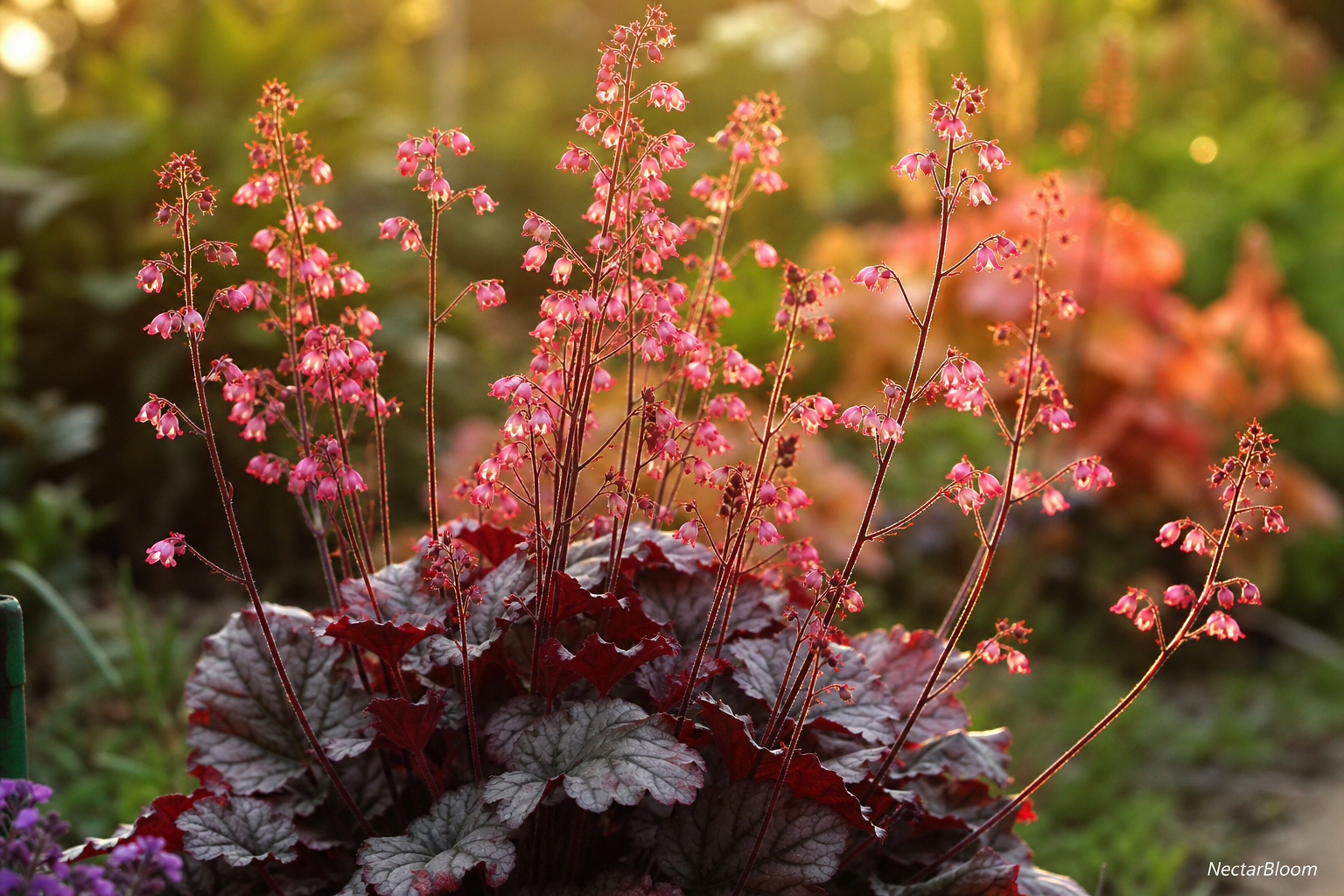
    When to plant: Plant bare-root plants in early spring before leaf-out, or container-grown plants from spring to early fall in USDA Zones 3-9.
    Where to plant (sun/shade): Site in full sun (6+ hours daily) for best flowering, or partial shade (3-5 hours daily), especially in hotter aspects.
    Soil & drainage: Adaptable to various well-drained soils, thriving in loamy or sandy conditions with a pH range of 6.0-7.0.
    Watering: Provide consistent moisture during establishment; mature plants are drought-tolerant but benefit from 1 inch of water weekly during dry spells.
    Spacing & planting depth: Space plants 5-10 feet apart, depending on desired coverage, and plant at the same depth as in the nursery pot.
    Fertilizer & mulch: A balanced, slow-release organic fertilizer in spring is optional; apply 2-3 inches of hardwood mulch to conserve moisture and suppress weeds.
    Pruning & seasonal care: Prune lightly in late winter or early spring to shape and remove dead or crossing stems, or after flowering to control size.
    Companion plants & design: Pair with other hummingbird attractors like Eastern Columbine, Trumpet Vine, and Scarlet Beebalm on a trellis or arbor.
    Scarlet Beebalm - hummingbird plant
    June–September Zones 4–9

    Scarlet Beebalm

    Monarda didyma · Perennial · Native

    ★★★★★ Hummingbird Rating

    Scarlet Beebalm, named after the Oswego area of New York, is the Northeast's signature summer hummingbird plant — native to the Appalachians and northeastern North America, it is perfectly at home in the Northeast's moist, humus-rich soils. Producing round heads of brilliant scarlet tubular flowers from June through September on spreading colonies, it blooms at the peak of Ruby-throated activity. Ruby-throated Hummingbirds are the primary pollinator, and a well-established stand of beebalm will attract multiple hummingbirds simultaneously during peak bloom.

    Scarlet Beebalm (Monarda didyma) is a quintessential hummingbird magnet due to its specialized floral structure and nectar offerings. The vibrant red, tubular corollas are perfectly adapted for long-billed pollinators; hummingbirds, particularly the Ruby-throated Hummingbird (Archilochus colubris), can efficiently access the nectar deep within while other insects cannot. This species provides a critical sugar source during its mid-summer bloom period (July-August) when Ruby-throated Hummingbirds are actively breeding and feeding their young across the Northeast, requiring high energy intake. Its striking color and upright architecture also make it visually conspicuous to hummingbirds navigating the landscape.

    Across the Northeast, the Ruby-throated Hummingbird is the primary species actively breeding and migrating through the region, making Monarda didyma an indispensable resource. These hummingbirds rely on a consistent supply of nectar-rich flowers throughout their breeding season, and Scarlet Beebalm's copious nectar production supports their high metabolic demands. The plant's bloom timing aligns well with the energetic needs of female hummingbirds, which are solely responsible for incubation and chick rearing, and for the rapid development of their offspring. Its presence in gardens and natural areas directly contributes to the survival and reproductive success of this charismatic pollinator species.

    Sources: Audubon Native Plants Database, Cornell Lab of Ornithology, Lady Bird Johnson Wildflower Center
    When to plant: Plant container-grown Monarda didyma from spring after the last frost (late May-early June in USDA Zones 5-7) through early fall.
    Where to plant (sun/shade): Scarlet Beebalm thrives in full sun (6+ hours direct sunlight daily) to partial shade (4-6 hours) in the Northeast, with best flowering in full sun.
    Soil & drainage: It prefers consistently moist, well-drained, organically rich loam or sandy loam with a pH of 6.0-7.0.
    Watering: Provide supplemental water during dry spells to maintain consistent moisture, aiming for about 1 inch of water per week through rainfall or irrigation.
    Spacing & planting depth: Space plants 1.5-2 feet (18-24 inches) apart to allow for air circulation and growth, planting at the same depth as in the nursery pot.
    Fertilizer & mulch: A light layer of compost in spring is generally sufficient; apply 2-3 inches of hardwood mulch to retain moisture and suppress weeds.
    Pruning & seasonal care: Deadhead spent flowers to encourage rebloom and cut back plants by one-third in late fall or early spring to prevent powdery mildew.
    Companion plants & design: Pair with other Northeast native hummingbird attractors like Liatris spicata, Lobelia cardinalis, Aquilegia canadensis, and Phlox paniculata.
    Cardinal Flower - hummingbird plant
    July–September Zones 3–9

    Cardinal Flower

    Lobelia cardinalis · Short-lived perennial · Native

    ★★★★★ Hummingbird Rating

    Cardinal Flower is the Northeast gardener's most important late-summer investment. Marked with an asterisk as 'especially favored' in Northeast hummingbird garden guides, the brilliant scarlet flower spikes are among the most intensely hummingbird-attractive plants in North America. The late July–September bloom coincides precisely with the period when Ruby-throated Hummingbirds are building fat reserves for their extraordinary fall migration — including the famous non-stop trans-Gulf crossing of 500+ miles. Plant in masses near consistent moisture for maximum impact.

    Cardinal flower (Lobelia cardinalis) exhibits specialized floral mechanics that are highly adapted for hummingbird pollination. Its striking red, tubular flowers are perfectly shaped to accommodate the long bills of hummingbirds, preventing other pollinators from accessing the nectar. The vibrant red coloration, rich in anthocyanins, is particularly attractive to hummingbirds, which have excellent color vision but are less sensitive to scents. These flowers produce a substantial volume of relatively concentrated nectar, providing a significant energy reward crucial for the high metabolic demands of hummingbirds. Blooming from July to October, Cardinal Flower provides a vital late-season food source, coinciding with the peak breeding and southward migration of hummingbirds in the Northeast region.

    In the Northeast, the Ruby-throated Hummingbird (Archilochus colubris) is the primary avian pollinator and heavily relies on Lobelia cardinalis. These hummingbirds actively seek out the concentrated nectar of cardinal flowers to fuel their energy-intensive daily activities, including foraging, territorial defense, and, critically, their long-distance migration. During late summer and early fall, as other nectar sources diminish, Cardinal Flower becomes a cornerstone of their diet, supporting adults and fledglings as they build up fat reserves necessary for their journey south. The flower's abundant nectar helps sustain these hummingbirds throughout their breeding season and during their arduous migration through states like New York, Pennsylvania, and Massachusetts.

    Sources: Cornell Lab of Ornithology, Audubon Native Plants Database, Missouri Botanical Garden

    When to plant: Plant bare roots or potted plants in spring after the last frost (late April-May) or in early fall (September) in USDA Zones 3-9.
    Where to plant (sun/shade): Thrives in partial shade (3-6 hours of morning sun) to full sun (6+ hours) in cooler climates, but benefits from afternoon shade in warmer areas.
    Soil & drainage: Prefers consistently moist to wet, rich, organic soils with a pH of 5.5-7.0; tolerates clay but requires good drainage to avoid root rot.
    Watering: Requires consistent moisture, especially during dry periods; aim for 1-2 inches of water per week, either from rain or irrigation.
    Spacing & planting depth: Space plants 12-18 inches apart to allow for spread; plant crowns at soil level, ensuring roots are covered.
    Fertilizer & mulch: Fertilize sparingly with a balanced organic compost in spring; apply a 2-3 inch layer of organic mulch to retain moisture and suppress weeds.
    Pruning & seasonal care: Deadhead spent flower stalks to encourage reblooming; cut back foliage after hard frost in late fall or early spring for tidy appearance.
    Companion plants & design: Pair with other moisture-loving natives like Great Blue Lobelia, Joe-Pye Weed, Marsh Marigold, and ferns in rain gardens or borders.
    Jewelweed - hummingbird plant
    July–October Zones Annual (Zone 3+)

    Jewelweed

    Impatiens capensis · Annual · Native

    ★★★★★ Hummingbird Rating

    Jewelweed may be the most ecologically important hummingbird plant in the Northeast, though it is rarely sold in garden centers. A native annual growing 2–5 feet tall in moist, shaded areas, it produces orange trumpet-shaped flowers with a nectar spur from July through October frost. Cornell Lab of Ornithology's Birds of North America (2004) reports that Ruby-throated Hummingbird fall migration is 'nearly synchronous with peak flowering of Impatiens capensis, suggesting this flower is an important nectar source during this time, and may influence the timing of migration.' The Ruby-throated literally follows jewelweed south.

    Jewelweed (Impatiens capensis) exhibits floral adaptations highly appealing to hummingbirds. Its pendulous, slipper-shaped flowers, typically brilliant orange with reddish-brown spots, are perfectly structured to accommodate hummingbird beaks for nectar access. The deep floral tube restricts access for most insects, ensuring hummingbirds are efficient pollinators. This species produces a high volume of sucrose-rich nectar, a vital energy source for their high metabolic rates, and blooms from mid-summer through fall, a critical period when many hummingbird species are fueling up for migration or supporting late broods.

    In the Northeast, Ruby-throated Hummingbirds (Archilochus colubris) are the primary beneficiaries and pollinators of Jewelweed. These opportunistic feeders rely on its abundant nectar during their breeding season and throughout their southward migration. The bright orange coloration is particularly attractive to Ruby-throats, and Jewelweed's prevalence in moist, semi-shaded woodlands and disturbed areas provides widespread foraging opportunities across their range. The timing of its bloom coincides precisely with their peak activity and energetic demands making it an indispensable native nectar source.

    Sources: Cornell Lab of Ornithology, Audubon Native Plants Database, Missouri Botanical Garden

    When to plant: Sow seeds outdoors in late fall to early spring for natural cold stratification and germination, as Jewelweed is an annual.
    Where to plant (sun/shade): Plant in partial to full shade (2-6 hours of direct sun) in constantly moist locations; it tolerates some sun if soil remains wet.
    Soil & drainage: Thrives in rich, organic, consistently moist to wet soils with a pH of 5.5-7.0, typically found along stream banks or damp woodlands.
    Watering: Requires consistent moisture; supplemental watering may be needed during dry spells to prevent wilting, especially in sunnier spots.
    Spacing & planting depth: Space plants 1-2 feet apart; surface sow seeds or gently press into the soil, as they need light to germinate.
    Fertilizer & mulch: Generally requires no fertilizer in rich soil; a thin layer of leaf mulch can help retain moisture in dry areas.
    Pruning & seasonal care: As an annual, no pruning is needed; allow plants to self-seed for continuation, as they readily disperse seeds when ripe.
    Companion plants & design: Pair with other moisture-loving natives like Cardinal Flower, Joe Pye Weed, ferns, and native sedges in rain gardens or woodland edges.
    Trumpet Creeper - hummingbird plant
    June–September Zones 4–10

    Trumpet Creeper

    Campsis radicans · Deciduous vine · Native (SE USA)

    ★★★★★ Hummingbird Rating

    Trumpet Creeper is native to the Southeast but has naturalized throughout the Northeast, making it widely available and highly functional as a hummingbird vine despite requiring careful management. The large orange-scarlet funnel-shaped flowers produced June through September are among the most heavily hummingbird-visited of any plant in the Northeast. Its aggressive spreading by suckers and seeds makes it inappropriate for small gardens or near buildings, but on a large arbor or fence with annual pruning, it is unmatched for summer nectar production.

    Trumpet Creeper (Campsis radicans) provides essential nectar for hummingbirds due to its vibrantly colored, trumpet-shaped flowers. The tubular corolla, typically orange to reddish-orange, is perfectly adapted for the long, slender bills and tongues of hummingbirds, allowing them to access the abundant nectar held deep within. This floral morphology prevents insects with shorter mouthparts from depleting the nectar, ensuring a rich energy source for the birds. Its prolific summer bloom, from June through September, coincides with the breeding season and peak activity of Ruby-throated Hummingbirds in the Northeast, making it a critical caloric resource.

    In the Northeast, the Ruby-throated Hummingbird (Archilochus colubris) is the primary avian pollinator and relies heavily on Campsis radicans for sustenance. The high sugar concentration in the nectar provides the rapid energy necessary for these active birds, which have incredibly high metabolic rates. The bright colors of the flowers also serve as visual cues, attracting hummingbirds to the plant. Because it provides a consistent and ample food source throughout the summer, Trumpet Creeper supports successful breeding and helps build fat reserves for the fall migration south.

    Sources: Audubon Native Plants Database, Cornell Lab of Ornithology, Lady Bird Johnson Wildflower Center
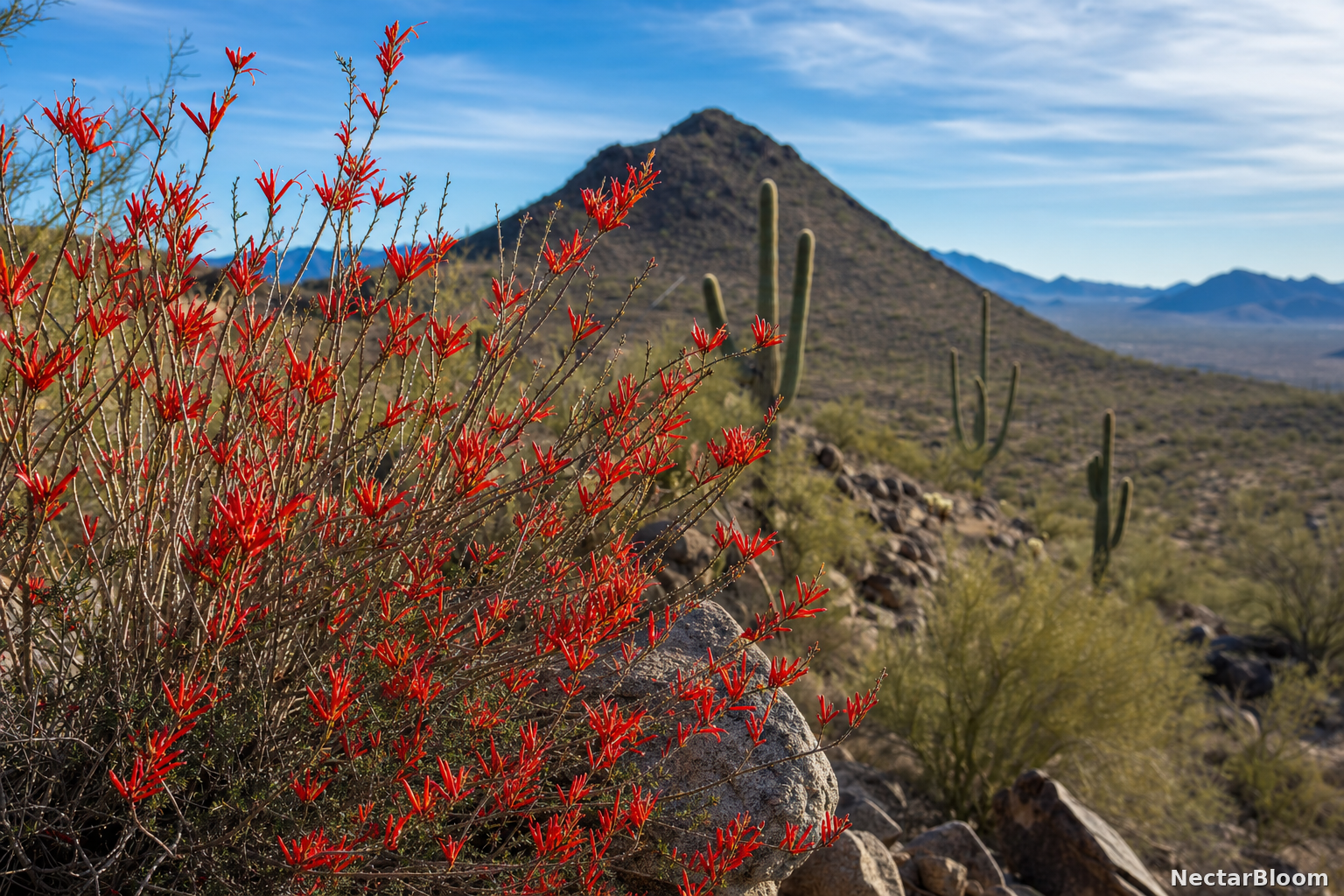
    When to plant: Plant bare-root plants in late fall or early spring; container-grown plants can be planted anytime from spring through early fall in USDA Zones 5-9.
    Where to plant (sun/shade): Thrives in full sun (6+ hours direct sunlight daily) for best flowering, tolerating partial shade but flowering less prolifically.
    Soil & drainage: Adaptable to various soil types, but prefers moist, well-draining loam with a pH of 6.0-7.0, avoiding overly wet conditions.
    Watering: Water regularly after planting to establish; mature plants are drought-tolerant but benefit from 1 inch of water per week during dry spells.
    Spacing & planting depth: Space plants 3-8 feet apart, planting at the same depth as in the nursery container, ensuring support is available for climbing.
    Fertilizer & mulch: Generally does not require fertilizer; apply a 2-3 inch layer of organic mulch to retain moisture and suppress weeds.
    Pruning & seasonal care: Prune heavily in late winter or early spring to control growth and promote more vigorous flowering on new wood.
    Companion plants & design: Pair with native perennials like Bee Balm (Monarda didyma) and Wild Columbine (Aquilegia canadensis) on strong trellises or arbors.
    Indian Pink - hummingbird plant
    May–July Zones 5–9

    Indian Pink

    Spigelia marilandica · Perennial · Native

    ★★★★★ Hummingbird Rating

    Indian Pink is a superb shade-tolerant hummingbird plant for Northeast woodland gardens, producing distinctive bicolored flowers — scarlet outside, yellow-green inside — from May through July. While native primarily to the Southeast, it performs beautifully in sheltered woodland spots throughout the mid-Atlantic and southern New England states (Zone 5+). Heritage Conservancy lists it among the most effective hummingbird plants for Pennsylvania and New Jersey woodland gardens.

    Indian Pink (Spigelia marilandica) is a premier native perennial for attracting hummingbirds in the Northeast due to its uniquely evolved floral structure and timing. The bright red, trumpet-shaped flowers, approximately 1-2 inches long, are perfectly adapted for hummingbird proboscises, guiding them directly to a substantial nectar reward. The tubular shape, combined with the contrasting yellow interior of the petals, signals a rich nectar source, and its high sugar concentration provides critical energy. Blooming typically occurs from late spring into early summer (May to July) in the Northeast, coinciding precisely with the arrival of Ruby-throated Hummingbirds (Archilochus colubris) from their migration and their subsequent breeding season, ensuring a vital food source when energy demands are highest for nesting females and growing chicks.

    Ruby-throated Hummingbirds, the only species regularly found in the Northeast, are the primary beneficiaries of Spigelia marilandica. These hummingbirds are strongly drawn to red, tubular flowers, which often contain the high-volume, high-concentration nectar they require to sustain their incredibly fast metabolisms. The plant's relatively long blooming period provides a consistent food source through the critical early to mid-summer months, supporting both adult birds and the emerging generation of fledglings. The accessibility of the nectar within the flower's tube ensures that hummingbirds are efficient pollinators while simultaneously receiving their necessary caloric intake, making Indian Pink an indispensable component of a hummingbird-friendly garden. This co-evolutionary relationship highlights the plant's ecological importance for regional hummingbird populations.

    Sources: Audubon Native Plants Database, Cornell Lab of Ornithology, Lady Bird Johnson Wildflower Center
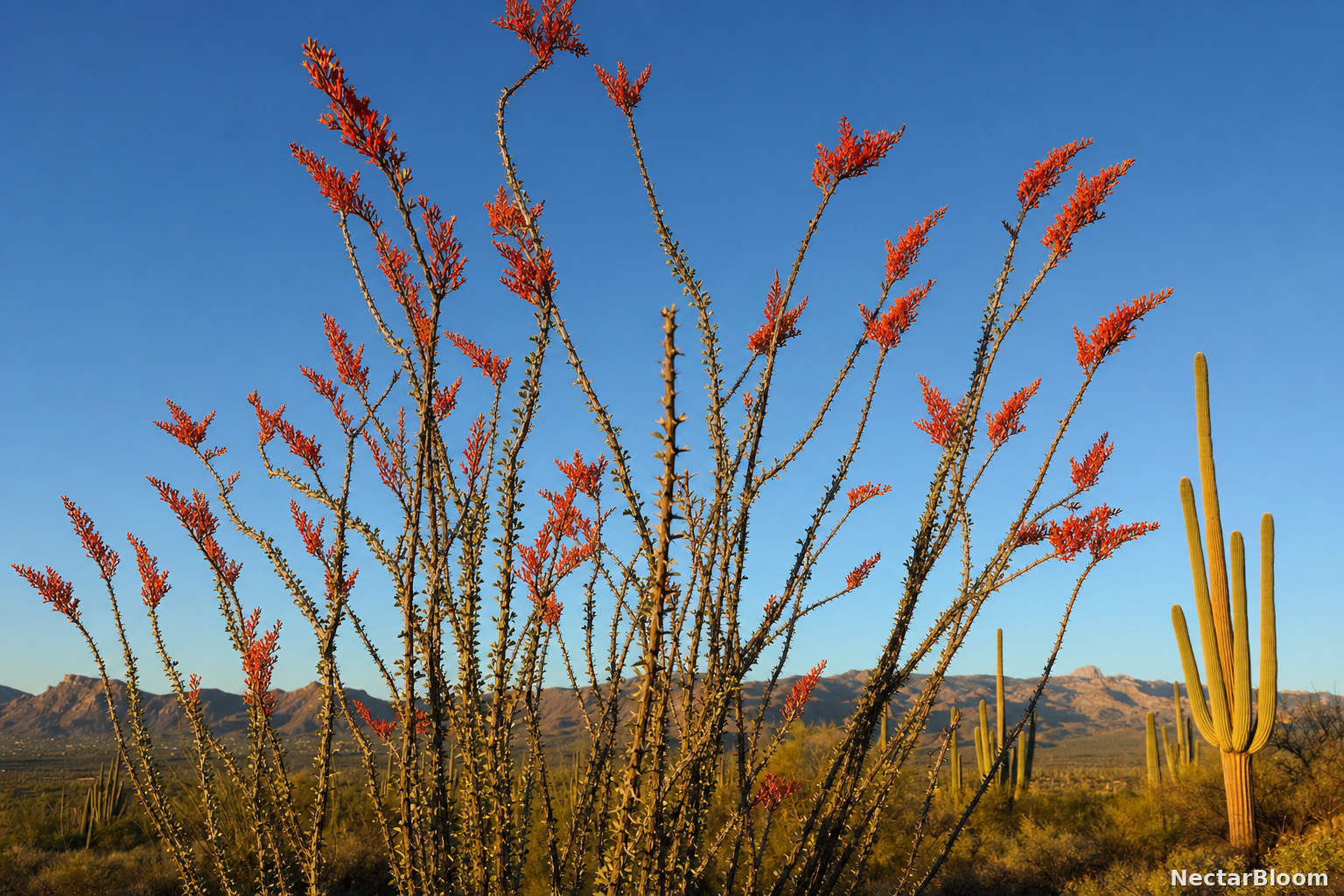
    When to plant: Plant container-grown Indian Pink in spring after the last frost, typically April to early June in USDA Zones 5-7.
    Where to plant (sun/shade): Provide part shade (2-6 hours of direct sun daily) in hotter Northeast areas, or full sun (6+ hours) where summer afternoons are cooler.
    Soil & drainage: Requires consistently moist, fertile, well-drained soil with a slightly acidic to neutral pH (6.0-7.0), rich in organic matter.
    Watering: Water regularly to maintain consistent moisture, especially during dry spells; about 1 inch of water per week is ideal.
    Spacing & planting depth: Space plants 12-18 inches apart, ensuring the crown is at soil level for healthy establishment.
    Fertilizer & mulch: Apply 2-3 inches of organic mulch annually in spring, like aged compost, but supplemental fertilizer is generally unnecessary in rich soil.
    Pruning & seasonal care: Deadhead spent blooms for tidiness and potential rebloom; cut back foliage in late fall after frost or in early spring.
    Companion plants & design: Pair with other woodland edge natives like Foamflower (Tiarella cordifolia), Wild Ginger (Asarum canadense), and native ferns.
    Wild Bergamot - hummingbird plant
    June–September Zones 3–9

    Wild Bergamot

    Monarda fistulosa · Perennial · Native

    ★★★★★ Hummingbird Rating

    Wild Bergamot provides lavender-to-pink beebalm flowers through summer and is more drought-tolerant than Scarlet Beebalm, making it suitable for drier Northeast gardens. Audubon and Cornell Lab's All About Birds both list Wild Bergamot as a Ruby-throated Hummingbird plant. While its lavender color is less strongly hummingbird-associated than red, the abundant nectar makes it regularly visited. An important companion plant to Scarlet Beebalm for extended summer bloom and ecological diversity.

    Wild Bergamot (Monarda fistulosa) attracts hummingbirds due to its tubular, often pink to lavender flowers, which are perfectly adapted for their long, slender bills. These flowers provide a consistent nectar source, with concentrations typically appealing to hummingbirds, and bloom from mid-summer into early fall, coinciding with the peak breeding season and southward migration of resident hummingbird species in the Northeast. The clustered inflorescences offer multiple feeding opportunities at a single stop, maximizing energy efficiency for these high-metabolism birds.

    Ruby-throated Hummingbirds (Archilochus colubris) are the primary species relying on Wild Bergamot in the Northeast. The plant's sustained bloom period provides crucial nectar during their demanding breeding cycle from late spring through summer, as well as for adults preparing for migration and newly fledged juveniles building energy reserves. The vibrant color serves as a visual cue, while the flower structure guides the hummingbird to the nectar at the base of the corolla, facilitating efficient pollination. Sources: Cornell Lab of Ornithology Birds of the World, Audubon Native Plants Database, Lady Bird Johnson Wildflower Center.

    When to plant: Plant seeds in fall (USDA Zones 3-9) for spring germination or transplant container-grown plants in spring after the last frost (April-May in the Northeast).
    Where to plant (sun/shade): Prefers full sun (6+ hours daily), but tolerates partial shade (3-6 hours daily), though flowering may be reduced.
    Soil & drainage: Thrives in well-drained, average to rich loam; adaptable to sandy or clay soils, with a pH range of 6.0-7.0.
    Watering: Establish with regular watering (1 inch per week), then becomes drought-tolerant, requiring supplemental water only during prolonged dry spells.
    Spacing & planting depth: Space plants 1.5 to 2 feet apart to allow for spread, planting crowns at the same depth as in the nursery pot.
    Fertilizer & mulch: Generally does not require fertilizer; an annual application of compost in spring can improve soil structure and fertility.
    Pruning & seasonal care: Deadhead spent flowers to encourage rebloom and prevent excessive self-seeding; cut back entirely in late fall or early spring.
    Companion plants & design: Pair with other native sun-lovers like Mountain Mint (Pycnanthemum tenuifolium), Common Milkweed (Asclepias syriaca), and various native asters.
    Redbud - hummingbird plant
    March–April Zones 4–8

    Redbud

    Cercis canadensis · Deciduous tree · Native

    ★★★★★ Hummingbird Rating

    Eastern Redbud is one of the most spectacular and ecologically valuable early-spring flowering trees in the Northeast, producing masses of magenta-pink flowers lining every branch before leaves emerge in March–April. Multiple Northeast hummingbird garden guides list Redbud as a spring hummingbird attractor, with the flower masses providing nectar at a critical moment just after hummingbird arrival. It also serves as a host plant for various native bee species and supports caterpillar communities that hummingbirds eat for protein.

    Eastern Redbud (Cercis canadensis) presents a critical early-season nectar source for hummingbirds, particularly the Ruby-throated Hummingbird (Archilochus colubris) returning to or migrating through the Northeast. Its small, pea-like flowers, typically appearing in clusters along branches before leaf-out in early spring (April-May in the Northeast), offer a vital carbohydrate boost when other floral resources are scarce. The flower morphology, while not a classic long tube, still allows hummingbirds to access the nectar efficiently, and the vibrant pink-to-magenta coloration is highly attractive to their visual spectrum, signaling a rich food reward.

    Ruby-throated Hummingbirds, the primary species in this region, rely on the early bloom of Eastern Redbud to fuel their demanding migration and subsequent nesting activities. As an early bloomer, Redbud bridges the gap from their arrival in late April/early May until later-season flowers become available, providing essential energy for egg-laying and territorial defense. The tree also hosts numerous insect larvae, offering a protein-rich food source for adult hummingbirds and their nestlings, thereby supporting both nectar and insect-foraging needs. Its widespread native range across the Northeast ensures broad availability for these essential pollinators.

    Sources: Audubon Native Plants Database, Cornell Lab of Ornithology, Lady Bird Johnson Wildflower Center
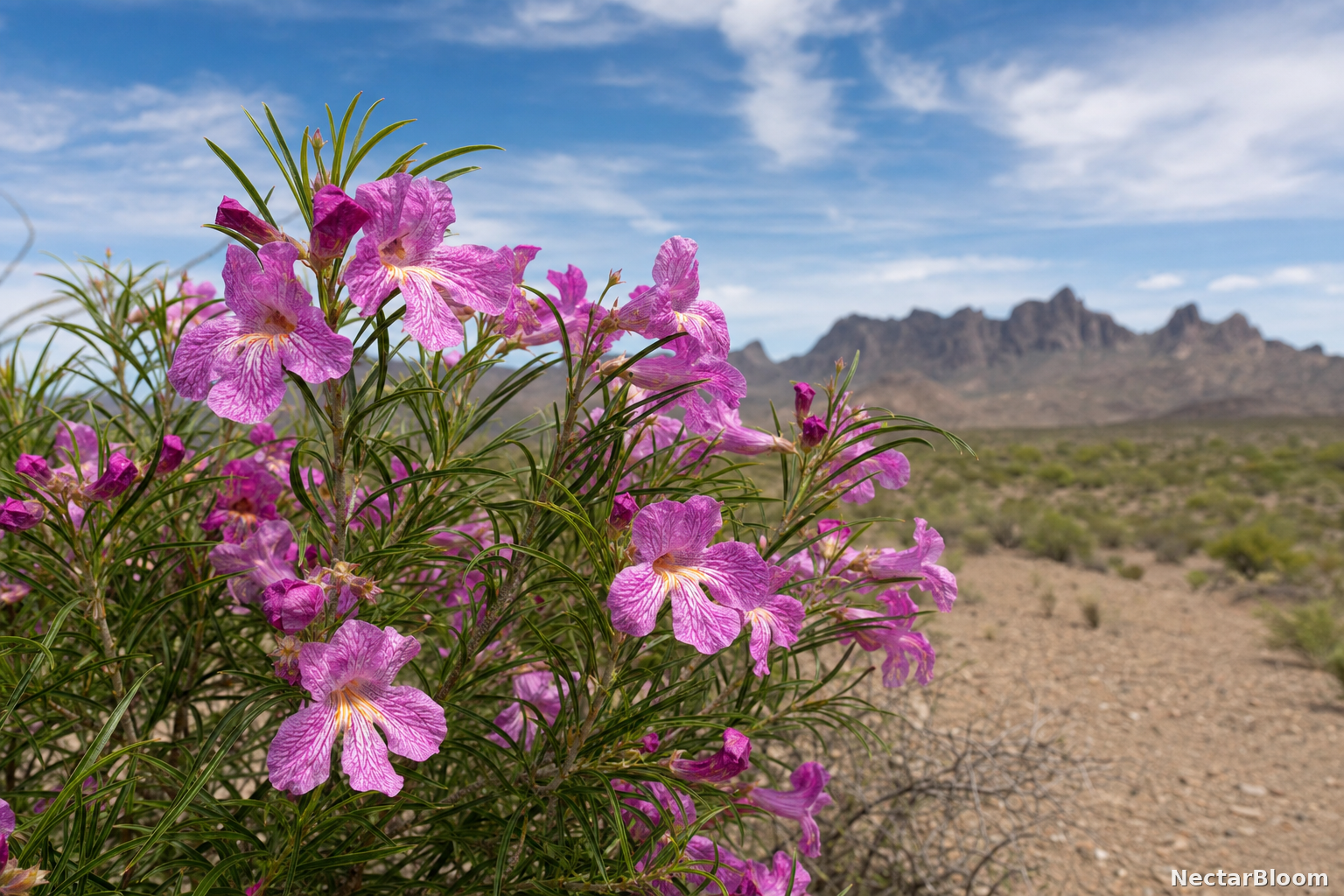
    When to plant: Plant bare-root Redbuds in early spring, or container-grown specimens in spring or fall, ensuring establishment before extreme temperatures.
    Where to plant (sun/shade): Thrives in full sun (6+ hours direct sun) to partial shade (4-6 hours sun), preferring morning sun and afternoon shade in hotter areas.
    Soil & drainage: Adaptable but prefers well-drained, moist loams; tolerates clay and sandy soils but not consistently wet conditions, with a pH range of 6.0-8.0.
    Watering: Water regularly during the first growing season to establish roots, then needs approximately 1 inch of water per week from rainfall or irrigation.
    Spacing & planting depth: Space trees 15-20 feet apart; plant at the same depth as in the nursery pot, ensuring the root flare is at or slightly above ground level.
    Fertilizer & mulch: Fertilize only if soil tests indicate deficiencies; apply a 2-4 inch layer of organic mulch around the base to conserve moisture and regulate soil temperature.
    Pruning & seasonal care: Prune in late winter or early spring to remove dead, diseased, or crossing branches, and to maintain desired shape, avoiding heavy pruning.
    Companion plants & design: Pair with understory native shrubs like 'Spicebush' or 'Serviceberry', and spring ephemerals such as 'Wild Geranium' for seasonal interest.
    Virginia Bluebells - hummingbird plant
    March–May Zones 3–8

    Virginia Bluebells

    Mertensia virginica · Spring ephemeral · Native

    ★★★★★ Hummingbird Rating

    Virginia Bluebells is a beloved spring ephemeral native to moist woodland areas throughout the Northeast, producing sky-blue tubular bell flowers from March through May before going completely dormant by June. Nuts for Natives confirms 'hummingbirds are also fans of the Virginia bluebell,' and spring migrants visit the tubular flowers upon first arrival. Despite the non-red color, the accessible nectar and spring timing make Virginia Bluebells a valuable component of the Northeast hummingbird garden.

    Virginia Bluebells (Mertensia virginica) are a critical early-season nectar source for hummingbirds in the Northeast due to their specialized floral structure and timing. The delicate, trumpet-shaped flowers are typically blue but can range to pink or white, and their tubular form perfectly accommodates the long bills and tongues of hummingbirds, directing them efficiently to the high-sugar nectar. These ephemeral spring wildflowers emerge and bloom intensely from April to May, coinciding precisely with the crucial northbound migration of Ruby-throated Hummingbirds (Archilochus colubris) through the region, providing vital energy for their arduous journey and subsequent breeding activities.

    Ruby-throated Hummingbirds, the primary species found in the Northeast, heavily rely on Virginia Bluebells during this period when many other nectar sources are not yet available. The plant's relatively high nectar volume and concentration offer a significant caloric reward for these metabolically demanding birds. By supporting these early-arriving migrants, Virginia Bluebells play a fundamental role in the reproductive success and population health of Ruby-throated Hummingbirds in states like New York, Pennsylvania, and Massachusetts as they establish territories and begin nesting.

    Sources: Cornell Lab of Ornithology, Audubon Native Plants Database, Missouri Botanical Garden

    When to plant: Plant dormant bare roots or potted plants in fall for spring emergence, or sow fresh seeds in late summer/early fall for cold stratification.
    Where to plant (sun/shade): Thrives in partial shade (2-4 hours of direct sun) to full shade, especially appreciating morning sun and afternoon protection.
    Soil & drainage: Requires consistently moist, well-drained loamy soil rich in organic matter, with a slightly acidic to neutral pH (6.0-7.0).
    Watering: Provide consistent moisture, especially during dry spells in spring; typically needs 1 inch of water per week through rainfall or irrigation.
    Spacing & planting depth: Space plants 12-18 inches apart to allow for natural spread; plant crowns at soil surface if potted, or roots just below if bare.
    Fertilizer & mulch: A light layer of compost or leaf litter in fall provides adequate nutrients; maintain a 2-3 inch layer of mulch to retain moisture.
    Pruning & seasonal care: After flowering by early summer, foliage naturally yellows and dies back; allow leaves to senesce for energy storage, then trim if desired.
    Companion plants & design: Combine with other spring ephemerals like Trillium, Bloodroot, and ferns, or under deciduous trees with later-leafing perennials such as foamflower.
    Garden Phlox - hummingbird plant
    July–September Zones 4–8

    Garden Phlox

    Phlox paniculata · Perennial · Native

    ★★★★★ Hummingbird Rating

    Garden Phlox is a native perennial producing large, fragrant clusters of tubular florets in shades of pink, red, and lavender from July through September. Grow Native! Missouri and multiple Northeast sources list Garden Phlox as a hummingbird-visited native. The individual tubular florets within each cluster offer accessible nectar to Ruby-throated Hummingbirds, and the extended bloom period covers the critical late-summer migration fueling period. Use straight native species for best nectar production.

    Garden Phlox (Phlox paniculata) is highly attractive to hummingbirds due to its deep, tubular florets that are perfectly suited for their long, slender bills. The vibrant pink, purple, and white colors are visually striking to hummingbirds, and the flowers produce a rich supply of nectar, an essential high-energy food source. Blooming from mid-summer into early fall, Garden Phlox provides critical sustenance during the hummingbird breeding season and before their southward migration, offering a reliable nectar flow when other early-season flowers have faded.

    In the Northeast, species such as the Ruby-throated Hummingbird (Archilochus colubris) heavily rely on Garden Phlox. These hummingbirds are drawn to its abundant nectar to power their high metabolic rates, especially during periods of chick rearing and fat accumulation for migration. The plant's dense flower clusters offer multiple feeding opportunities, making it an efficient and valuable stopover for these tiny pollinators throughout their most demanding life stages.

    Sources: Audubon Native Plants Database, Cornell Lab of Ornithology, Lady Bird Johnson Wildflower Center
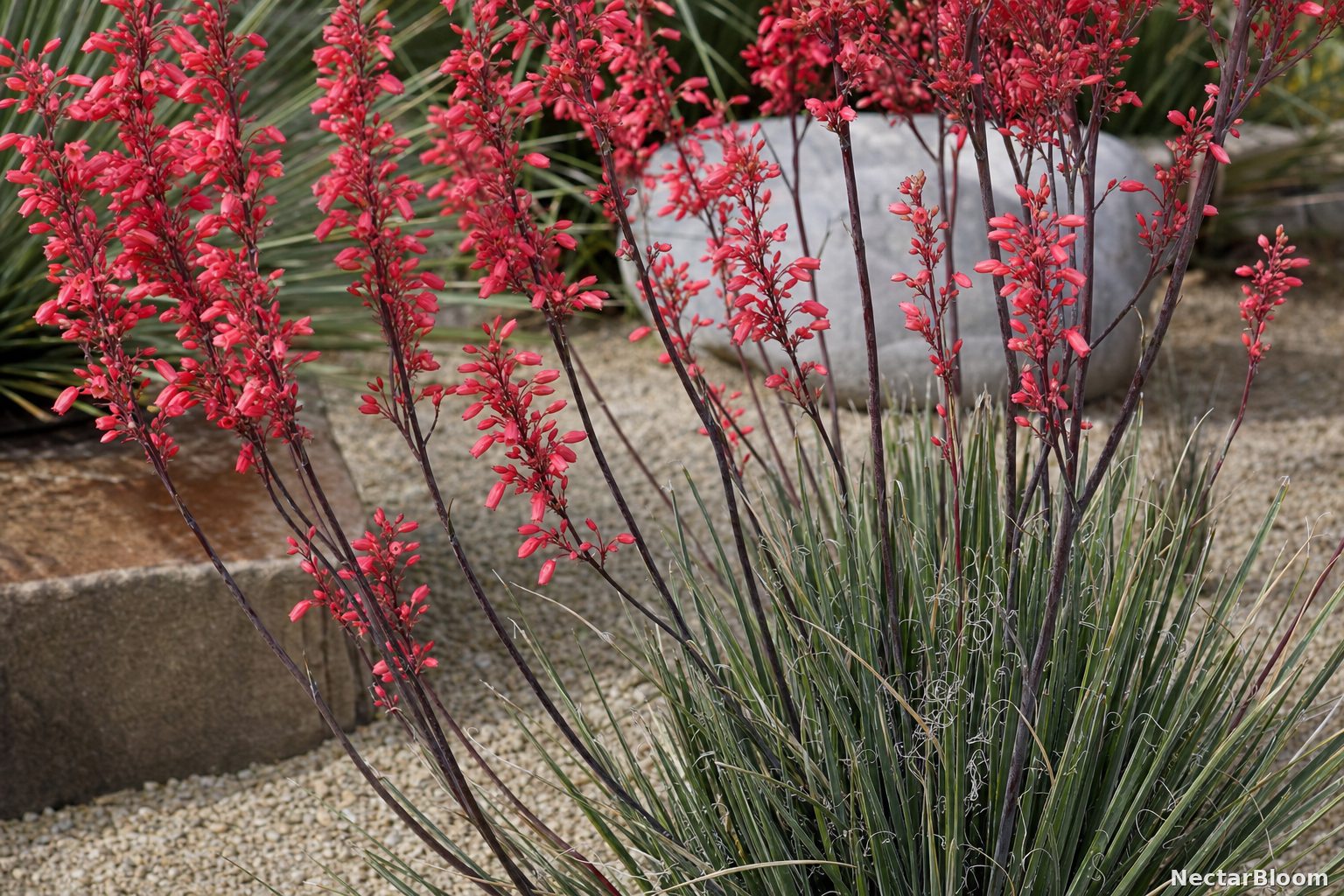
    When to plant: Plant container-grown Phlox paniculata in spring after the last frost, typically April to June in USDA Zones 4-8.
    Where to plant (sun/shade): Site in full sun (at least 6 hours direct sunlight daily) for best flowering and disease resistance; tolerates light afternoon shade.
    Soil & drainage: Requires consistently moist, fertile, well-draining soil with a neutral pH (6.0-7.0); amend heavy clay with organic matter.
    Watering: Provide 1 inch of water per week in the absence of rain, especially during dry periods and active flowering.
    Spacing & planting depth: Space plants 2-3 feet apart to ensure good air circulation, and plant the crown at soil level.
    Fertilizer & mulch: Apply a light layer of compost or balanced organic fertilizer in spring, and mulch with 2-3 inches of hardwood to retain moisture.
    Pruning & seasonal care: Deadhead spent flowers for rebloom and cut plants back to 6 inches in late fall to prevent powdery mildew spores from overwintering.
    Companion plants & design: Pair with other moisture-loving natives like Bee Balm (Monarda didyma), Cardinal Flower (Lobelia cardinalis), or coneflowers for continuous summer blooms.
    Blazing Star - hummingbird plant
    July–September Zones 3–8

    Blazing Star

    Liatris spicata / L. novae-angliae · Perennial · Native

    ★★★★★ Hummingbird Rating

    New England Blazing Star (Liatris novae-angliae) is marked with an asterisk as 'especially favored' in Northeast hummingbird garden guides. The tall magenta-purple spikes of this native prairie-edge perennial are highly visible to hummingbirds and butterflies from a distance. Blooming July through September, Blazing Star extends the mid-summer bloom season and provides accessible nectar through the migration fueling period. Drought-tolerant once established, it thrives in average to dry soils in full sun.

    Liatris species, particularly Liatris spicata, are highly attractive to hummingbirds due to their dense spikes of tubular, bright purple flowers which are excellent nectar sources. The individual florets create a brush-like inflorescence, offering numerous small, accessible wells of high-sugar nectar. Blooming late July through September, these plants provide critical sustenance for Ruby-throated Hummingbirds (Archilochus colubris) during their breeding season and southward migration in the Northeast, a period when many other nectar sources may be declining.

    Ruby-throated Hummingbirds, the primary species in the Northeast, are strongly drawn to the showy purple color of Blazing Star, a color known to signal high-quality nectar. The floral structure allows for easy probing by their long, slender bills and tongues, facilitating efficient nectar extraction. Providing these late-season nectar resources helps these energetic birds maintain their high metabolic rates and accumulate fat reserves necessary for their long migratory journeys.

    Sources: Audubon Native Plants Database, Cornell Lab of Ornithology, Lady Bird Johnson Wildflower Center
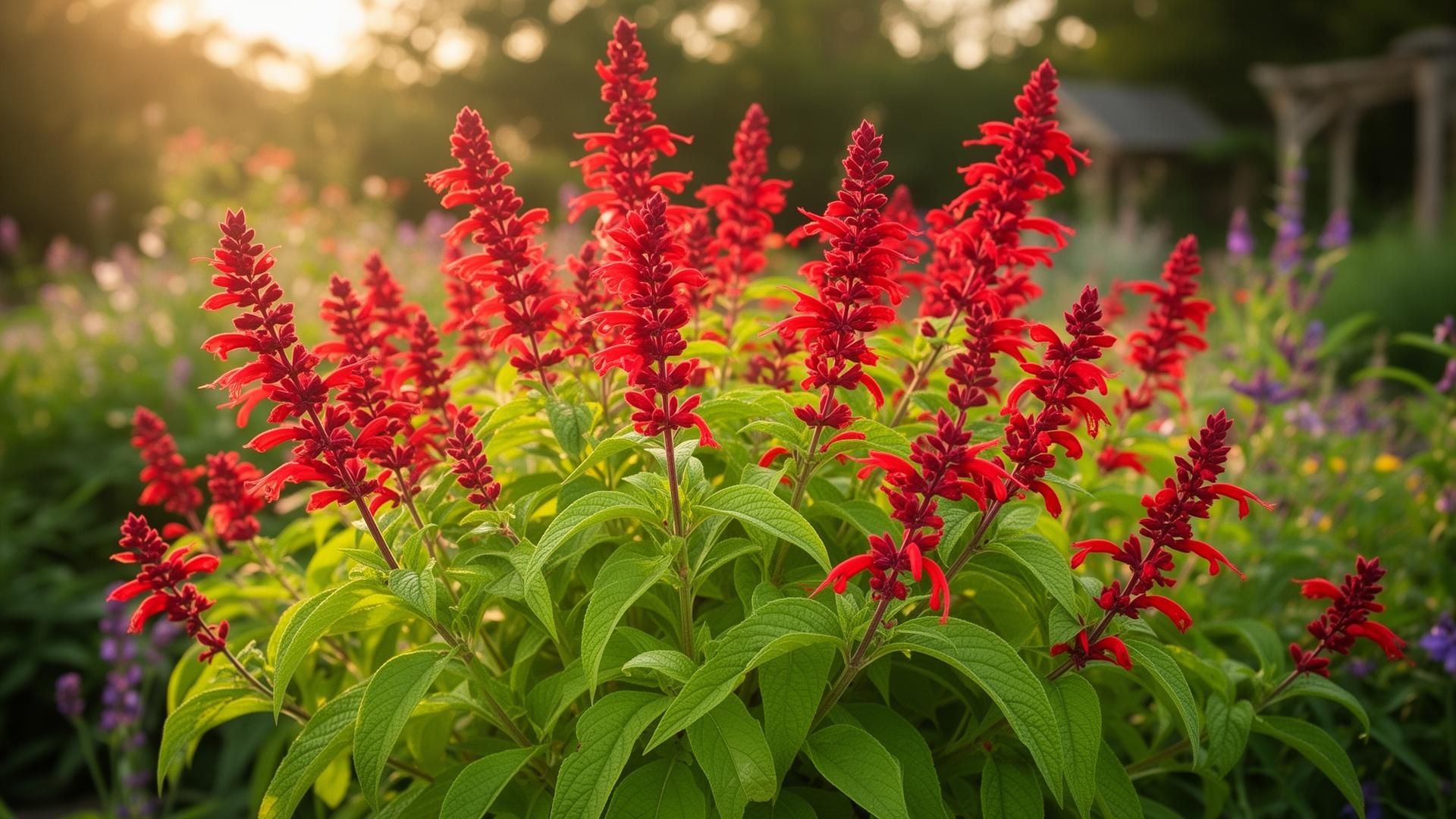
    When to plant: Plant bare roots or potted plants in spring after the last frost, or sow seeds in late fall to stratify over winter.
    Where to plant (sun/shade): Site in full sun, receiving at least 6 hours of direct sunlight daily for robust flowering and healthy growth.
    Soil & drainage: Requires well-drained soil, tolerating sand, clay, or loam; avoid boggy conditions that can lead to root rot.
    Watering: Water regularly until established; mature plants are drought-tolerant and seldom need supplemental water in the Northeast.
    Spacing & planting depth: Plant crowns 1-2 inches deep and space plants 12-18 inches apart to allow for mature spread.
    Fertilizer & mulch: Generally, no fertilization is needed; apply 2-3 inches of organic mulch in fall for winter protection and moisture retention.
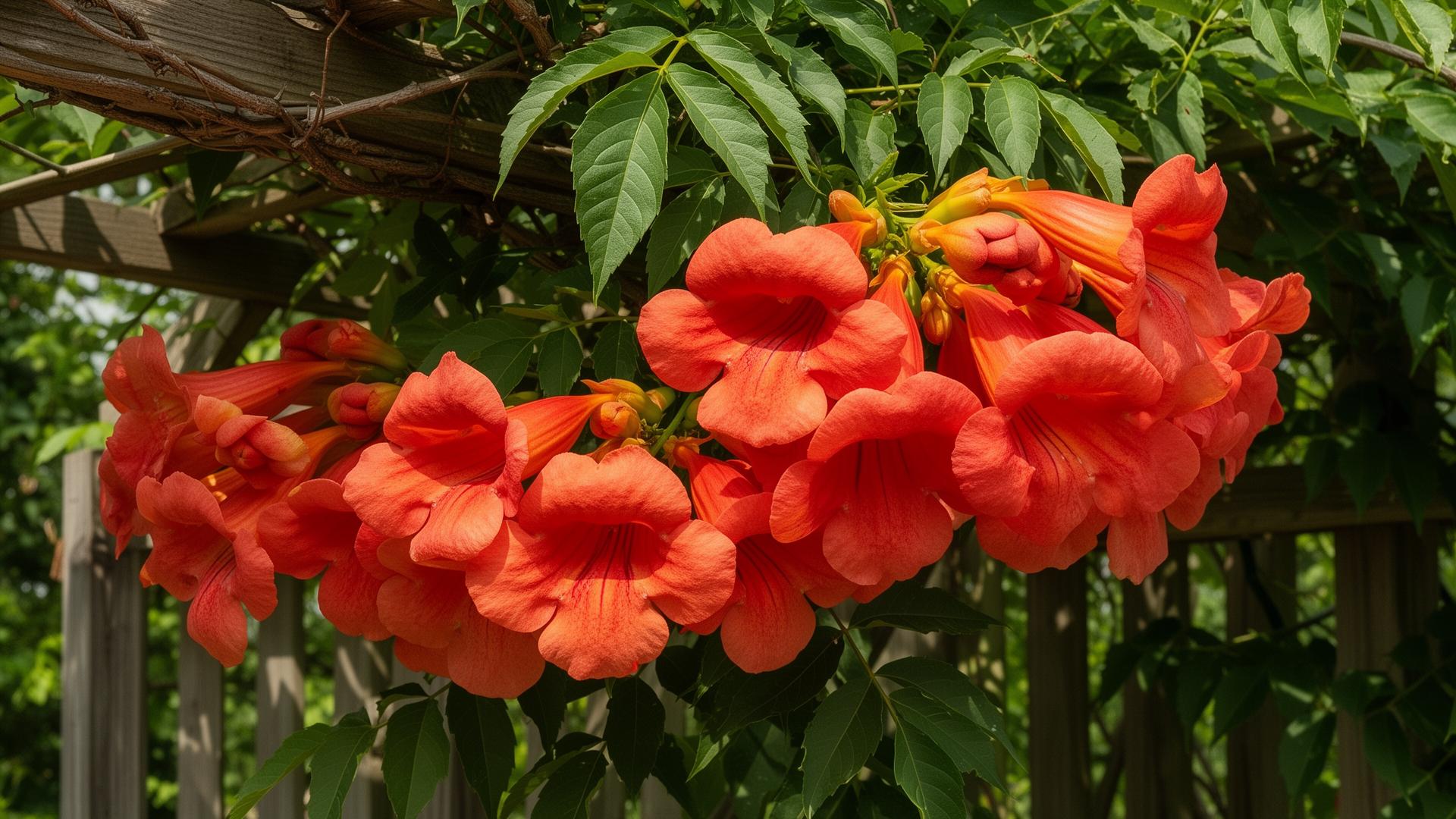
    Pruning & seasonal care: Deadhead spent flower stalks to encourage neatness, or leave seeds for birds; cut back foliage to the ground in late winter or early spring.
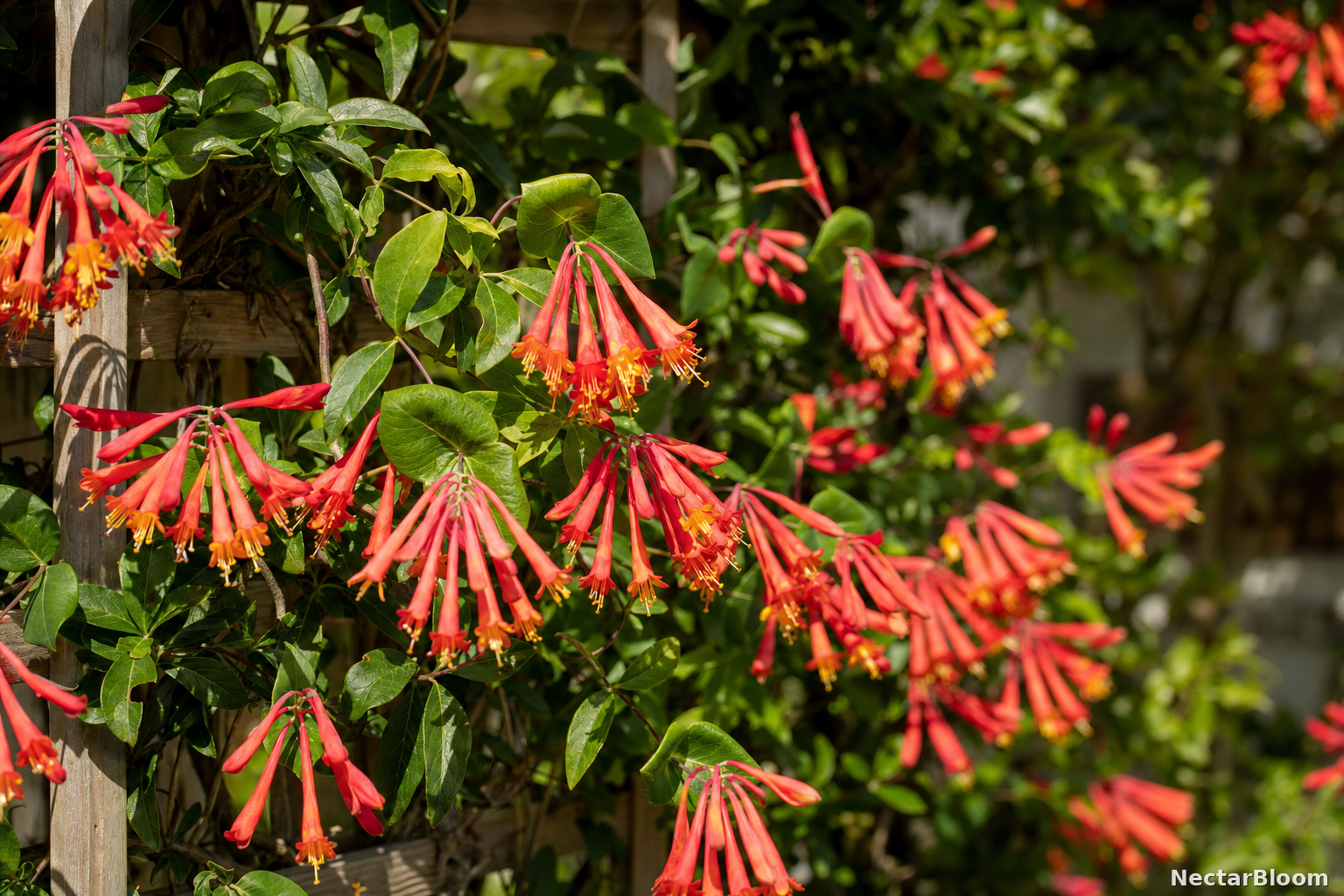
    Companion plants & design: Pair with other native sun-lovers like Switchgrass (Panicum virgatum), Common Milkweed (Asclepias syriaca), and Black-eyed Susan (Rudbeckia hirta).
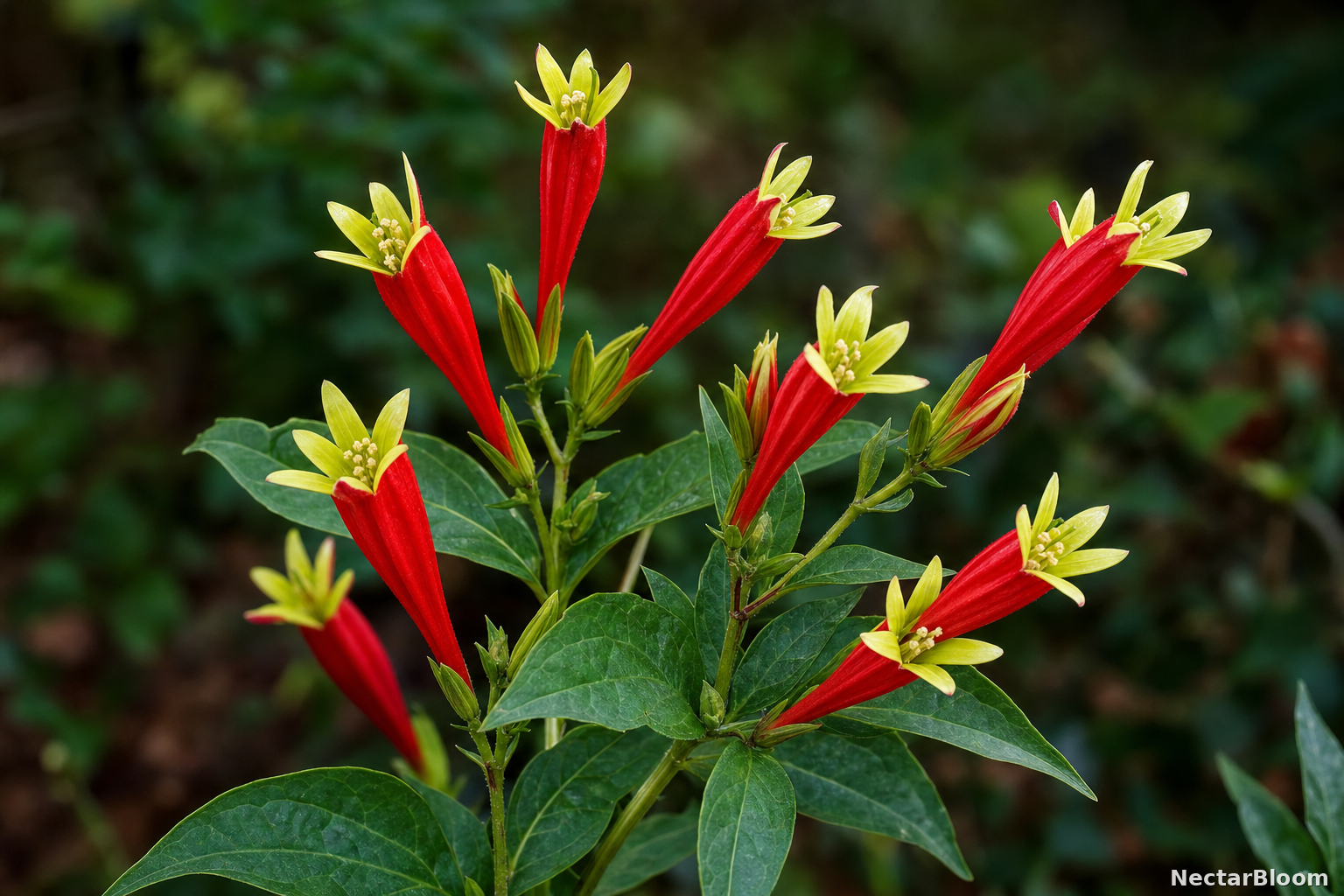
    Succession Planting Calendar for the Northeast
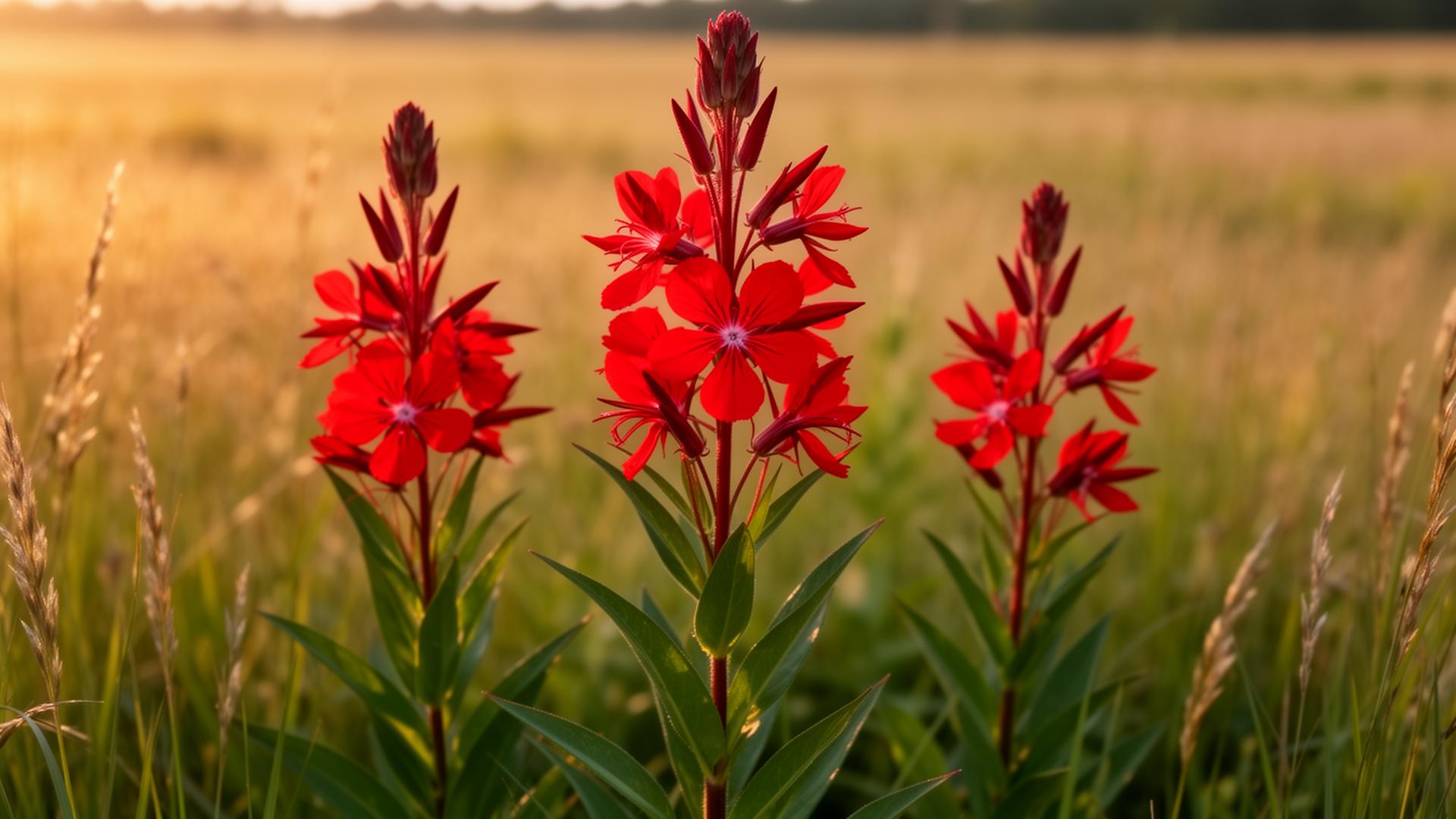
    Season / Timing Key Plants Active Hummingbirds Garden Notes
    Early Spring Mar–May Aquilegia canadensis (columbine) · Cercis canadensis (redbud) · Mertensia virginica (Virginia bluebells) Ruby-throated (arriving mid-May; males first) Columbine bloom and hummingbird first arrival are precisely synchronized in southern NY and PA
    Late Spring–Early Summer May–Jul Lonicera sempervirens (coral honeysuckle) · Monarda didyma · Phlox paniculata Ruby-throated (both sexes present; nesting begins late May–June) Peak territorial activity as males defend feeding zones; multiple hummingbirds visible in well-planted gardens
    Mid-Summer Jul–Aug Monarda didyma · Monarda fistulosa · Liatris spp. · Physostegia virginiana Ruby-throated (fledglings appearing July; multiple individuals active) Maximum hummingbird activity; fledglings join adults at nectar sources — exciting garden period
    Late Summer–Fall Aug–Oct Lobelia cardinalis (cardinal flower) · Impatiens capensis (jewelweed) · Physostegia virginiana Ruby-throated (building fat for migration; departing Sept–Oct) Cardinal flower and jewelweed are critical migration fuel; maintain nectar through first frost

    Which Hummingbirds Will Visit Your Northeast Garden?

    The Northeast is exclusively Ruby-throated Hummingbird (Archilochus colubris) territory — no other hummingbird species breeds here, and other species are only very rare late-fall vagrants. The Ruby-throated is a remarkable bird: males arrive in mid-May, having navigated 500+ miles across the Gulf of Mexico from their Mexican and Central American wintering grounds in a single non-stop flight. Cornell Lab of Ornithology reports that fall migration is 'nearly synchronous with peak flowering of Impatiens capensis' — suggesting the entire timing of hummingbird migration may be ecologically linked to native plant bloom. Males begin departing by late August; females and juveniles continue through September and October. The final individuals depart with the last frost. Rare vagrant hummingbirds occasionally appear in late fall: Rufous, Black-chinned, and Calliope Hummingbirds have all been documented in the Northeast, usually appearing at feeders in October–November.

    🐦 Ruby-throated (sole breeding species)🐦 Arrives mid-May🐦 Peak activity July–August🐦 Departs September–October🐦 Rare vagrant: Rufous (late fall)🐦 Rare vagrant: Calliope (late fall)

    Plants to Avoid in Your Northeast Garden

    • Japanese Honeysuckle (Lonicera japonica) — Invasive throughout the Northeast; smothers native understory plants. Use Coral Honeysuckle (L. sempervirens) instead — superior hummingbird value, non-invasive.
    • Tartarian Honeysuckle (Lonicera tatarica) — Invasive shrub across the Northeast and Midwest; displaces native understory plants. Remove existing plants; replace with native viburnums or elderberry.
    • Butterfly Bush (Buddleja davidii) — Invasive in parts of the Northeast; does not provide caterpillar host plant value. Use native Buttonbush (Cephalanthus occidentalis) or American Elderberry instead.
    • Double-flowered cultivars of any native plant — Double petals replace nectar-producing structures. Always choose straight native species over ornamental cultivars with doubled flowers. This applies to columbine, beebalm, lobelia, and phlox cultivars.
    • Cultivated impatiens (Impatiens walleriana) — Brooklyn Botanic Garden notes these 'have little value to hummingbirds' — bred for flower size and color, not nectar. Use native Jewelweed (I. capensis) instead.

    Plants That Don't Attract Hummingbirds (And What to Plant Instead)

    Not every plant marketed as a "hummingbird plant" delivers on the promise. The following plants are either ineffective at attracting hummingbirds, invasive in parts of the US, or both. Verified native alternatives are listed for each.

    ⚠ The Cultivar Warning

    Many modern cultivated varieties of otherwise excellent hummingbird plants have been bred for larger, showier, or double flowers at the expense of nectar production. Brooklyn Botanic Garden states: "Cultivated varieties of impatiens and rhododendrons may look promising, but have little value to hummingbirds." In all regions, prefer straight native species over named cultivars whenever possible, or verify that specific cultivars have not significantly altered flower structure or nectar production.

    Invasive Plants to Avoid

    Plant to Avoid Problem Native Alternative
    Japanese Honeysuckle
    Lonicera japonica
    Aggressive invasive vine; smothers native plants; grows 80–120 ft; spreads via berries eaten by birds; banned in some states. Does attract hummingbirds, but at significant ecological cost. Coral Honeysuckle (Lonicera sempervirens) — superior hummingbird value, non-invasive
    Butterfly Bush
    Buddleja davidii
    Invasive in Pacific Northwest (banned in WA and OR) and spreading along East Coast; crowds out native caterpillar host plants essential for hummingbird protein (hummingbirds eat ~50% insects). Provides nectar but no larval host value. Buttonbush, American Elderberry, Desert Willow, Summersweet — provide nectar AND caterpillar habitat
    Tartarian Honeysuckle
    Lonicera tatarica
    Invasive shrub across Northeast and Midwest; displaces native understory plants that support caterpillar communities. Native viburnums (Viburnum spp.) or American Elderberry (Sambucus canadensis)
    Tree Tobacco
    Nicotiana glauca
    Used by Anna's Hummingbirds in CA in winter, but highly invasive in California and Southwestern states — displaces native plants. Toxic to livestock and humans. California Fuchsia (Epilobium canum) or Manzanita (Arctostaphylos spp.)

    Plants That Do Not Effectively Feed Hummingbirds

    Plant Why It Underperforms Better Alternative
    Double-flowered roses
    Rosa cultivars
    Bred for dense petals, which replace nectar-producing structures. Hummingbirds quickly learn to avoid them. Brooklyn Botanic Garden: "may attract initial attention but offer little nectar." Any tubular native plant appropriate for your region
    Marigolds
    Tagetes spp.
    Clustered petals incompatible with hovering hummingbird feeding; low nectar sugar content; designed for bee pollination via scent. Salvia coccinea (Scarlet Sage) or Scarlet Beebalm
    Daisies / Black-eyed Susan
    Rudbeckia spp.
    Flat, open faces designed for bees; minimal nectar accessible to hovering hummingbirds. Hummingbirds rarely linger at these. Cardinal Flower or Blazing Star for similar garden height
    Peonies
    Paeonia spp.
    Dense petals make nectar difficult to reach even if present; hummingbirds rarely visit. Scarlet Beebalm or Indian Pink for late spring bloom
    Gardenias
    Gardenia jasminoides
    Designed for insect pollination via scent; invested in fragrance rather than nectar. Minimal accessible nectar for hummingbirds. Coral Honeysuckle or Firebush for Southeast gardens
    Cultivated Impatiens
    Impatiens walleriana
    Brooklyn Botanic Garden: "may look promising but have little value to hummingbirds; selected for flower size, color, and shape but are not good nectar producers." Do not confuse with native Jewelweed (I. capensis). Native Jewelweed (I. capensis) in moist shade — tracked by Ruby-throated migration
    Snapdragons
    Antirrhinum spp.
    Closed flowers require bumblebee "buzz pollination" to open; hummingbirds rarely access nectar efficiently. Not adapted for hovering hummingbirds. Penstemons — similar vertical form, vastly superior hummingbird attraction

    ⚠ Special Warning: Trumpet Creeper

    Campsis radicans is an outstanding hummingbird plant but is also extremely aggressive via suckers and seeds. It is not recommended for small gardens, and should never be planted near buildings as aerial roots damage siding and foundations. Outside its native Southeast range, it can escape and naturalize. If you plant it, commit to aggressive annual pruning and sucker removal, or choose Crossvine (Bignonia capreolata) as a better-behaved alternative.

    Sources & Scientific References

    All plant information on this page has been cross-referenced against the following authoritative sources. Scientific names verified against the USDA PLANTS Database and current botanical literature.

    Fresh nectar in a minute.

    Buy on Amazon