Shop & Support the Mission

    Fresh nectar in a minute.

    Every bag of NectarBloom™ funds the guides, the Hummingbird Trail, the lab testing, and the free care resources on this site. When you buy our nectar, you help us keep hummingbird education open, honest, and growing — for every bird lover, everywhere.

    NectarBloom 2 lb bag — pure cane sugar hummingbird nectar

    NectarBloom™ — 2 lb Bag

    Fresh nectar in a minute.

    No boiling, no dye. The same sugar hummingbird flowers make. One ingredient, nothing else. Makes up to 160 oz of fresh feeder nectar per bag.

    • Fresh nectar in a minute: measure, stir until clear, and pour
    • No boiling, no dye
    • The same sugar hummingbird flowers make
    • One ingredient, nothing else: 100% pure cane sugar
    • Lab tested. Resealable 2 lb bag, sourced and packed in the USA

    1 Bag · 2 lb

    $21.99

    Free shipping included

    Best Value

    2 Bags · Season Supply

    $39.88

    Free shipping included

    Direct orders are temporarily sold out. NectarBloom™ is still available on Amazon.

    Buy on Amazon

    Ships fast via Amazon Prime

    See full product details

    Direct orders temporarily unavailable

    “Your purchase isn’t just nectar — it’s how we keep this hummingbird care library free, accurate, and growing.”

    Thank you for flying with us

    Overview

    Arkansas is a strong natural-landscape state for Ruby-throated Hummingbirds, especially where mountains, forests, rivers, wildflowers, and public parks create rich edge habitat. Rather than relying only on formal gardens, Arkansas shines through state parks, national park landscapes, native flowering corridors, and highland habitats where hummingbirds can feed during migration and the breeding season. Ruby-throated Hummingbirds are the primary species, usually present from spring through early fall. The best viewing window is April through October, with late summer and early fall often bringing noticeable activity around feeders, wildflowers, and park gardens.

    Audubon chapters and reader sightings in Arkansas

    Filter gardens
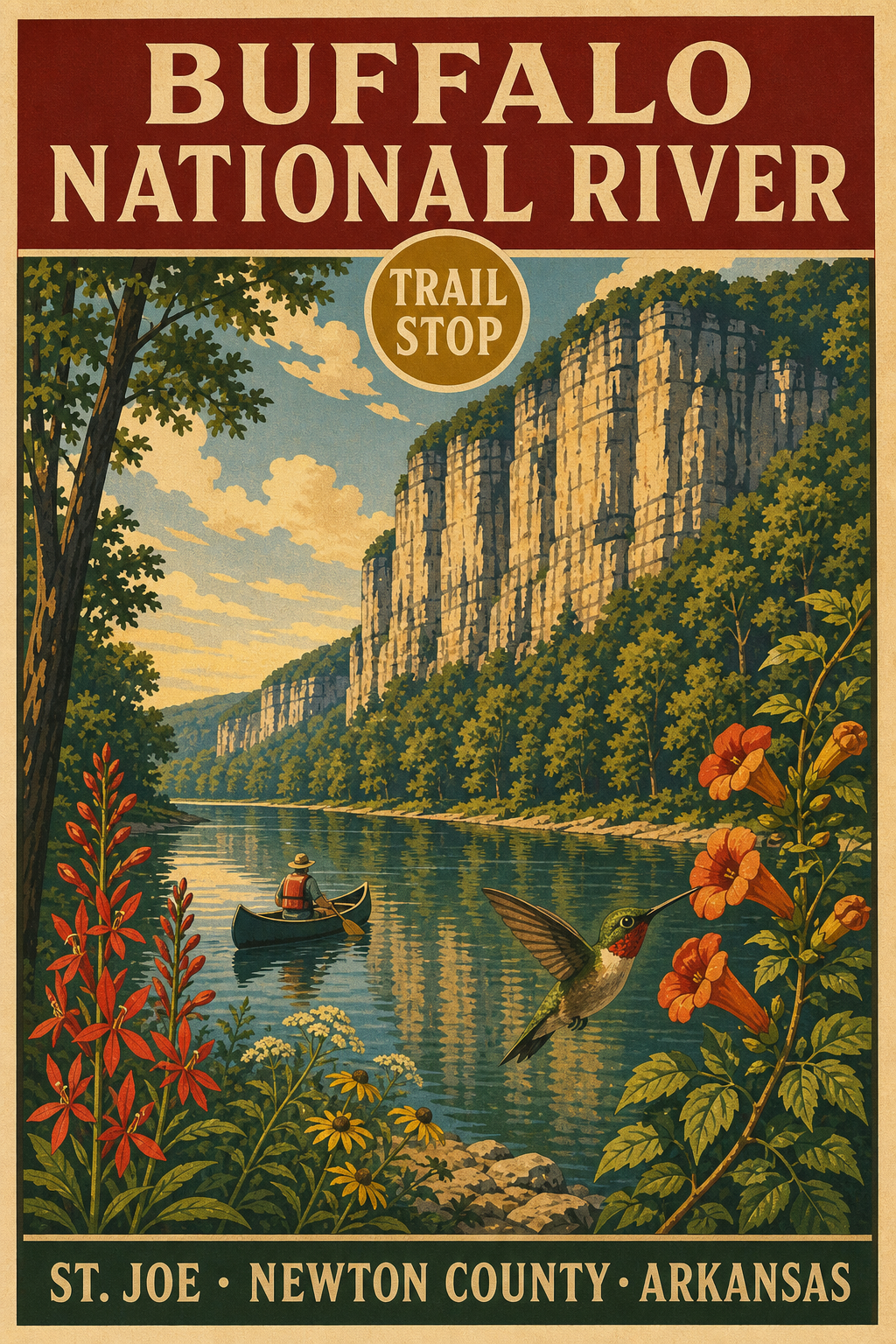
    View Buffalo National River in St. Joe, ArkansasHummingbirds at Buffalo National River in St. Joe, Arkansas
    Map

    Newton County

    Buffalo National River

    St. Joe

    Buffalo National River is a wild, scenic Arkansas listing that expands the Hummingbird Trail beyond gardens into river corridors, bluffs, forest edges, and native wildflower habitat. Ruby-throated Hummingbirds are most likely from spring through early fall where nectar flowers, openings, campgrounds, visitor areas, and riparian edges create feeding opportunities. The Buffalo is not a single garden stop; it is a landscape-scale destination where visitors can hike, paddle, photograph wildflowers, and watch for birds across multiple access points. That makes it valuable for Nectarbloom's broader storytelling: hummingbirds depend on connected habitat, not isolated flowers alone. For travelers exploring the Ozarks, Buffalo National River offers a memorable mix of scenery, movement, and seasonal bird life.

    National River and Wildflower HabitatRuby-throated Hummingbird

    View garden →

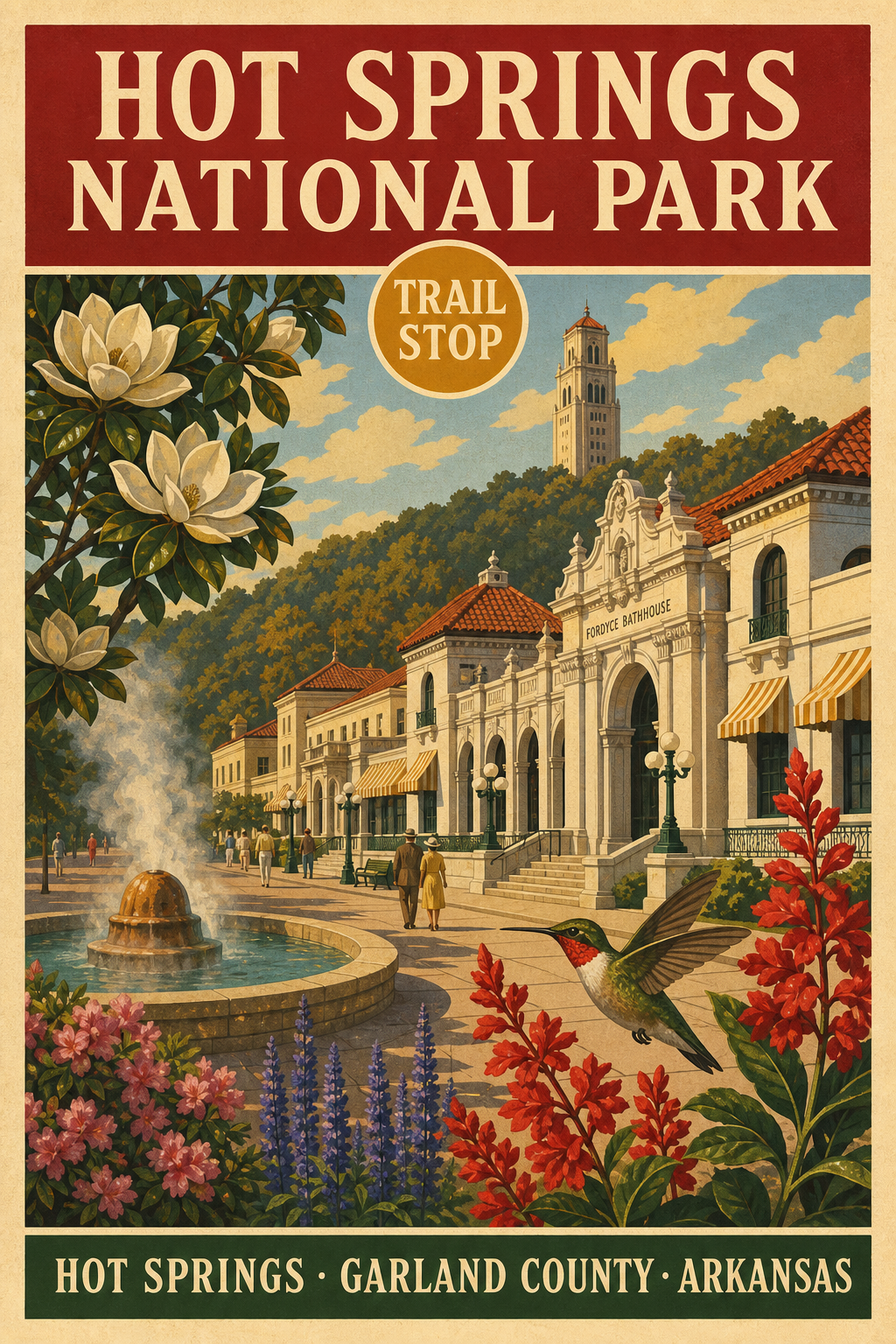
    View Hot Springs National Park in Hot Springs, ArkansasHummingbirds at Hot Springs National Park in Hot Springs, Arkansas
    Map

    Garland County

    Hot Springs National Park

    Hot Springs

    Hot Springs National Park gives the Hummingbird Trail a distinctive Arkansas listing where historic townscape, mountain forest, and public garden spaces meet. Ruby-throated Hummingbirds may be seen during the warm months around flowering shrubs, native wildflowers, urban park plantings, and forest edges along the park's trails. The setting is unusual for a hummingbird stop because visitors can pair birdwatching with the historic Bathhouse Row, scenic drives, overlooks, and accessible urban nature walks. For travelers, it is one of the easiest Arkansas destinations to include in a broader itinerary. For Nectarbloom, Hot Springs adds a high-recognition national park page that can attract search traffic while still fitting the Trail's focus on nectar, habitat, and seasonal movement.

    National Park and Urban Nature LandscapeRuby-throated Hummingbird

    View garden →

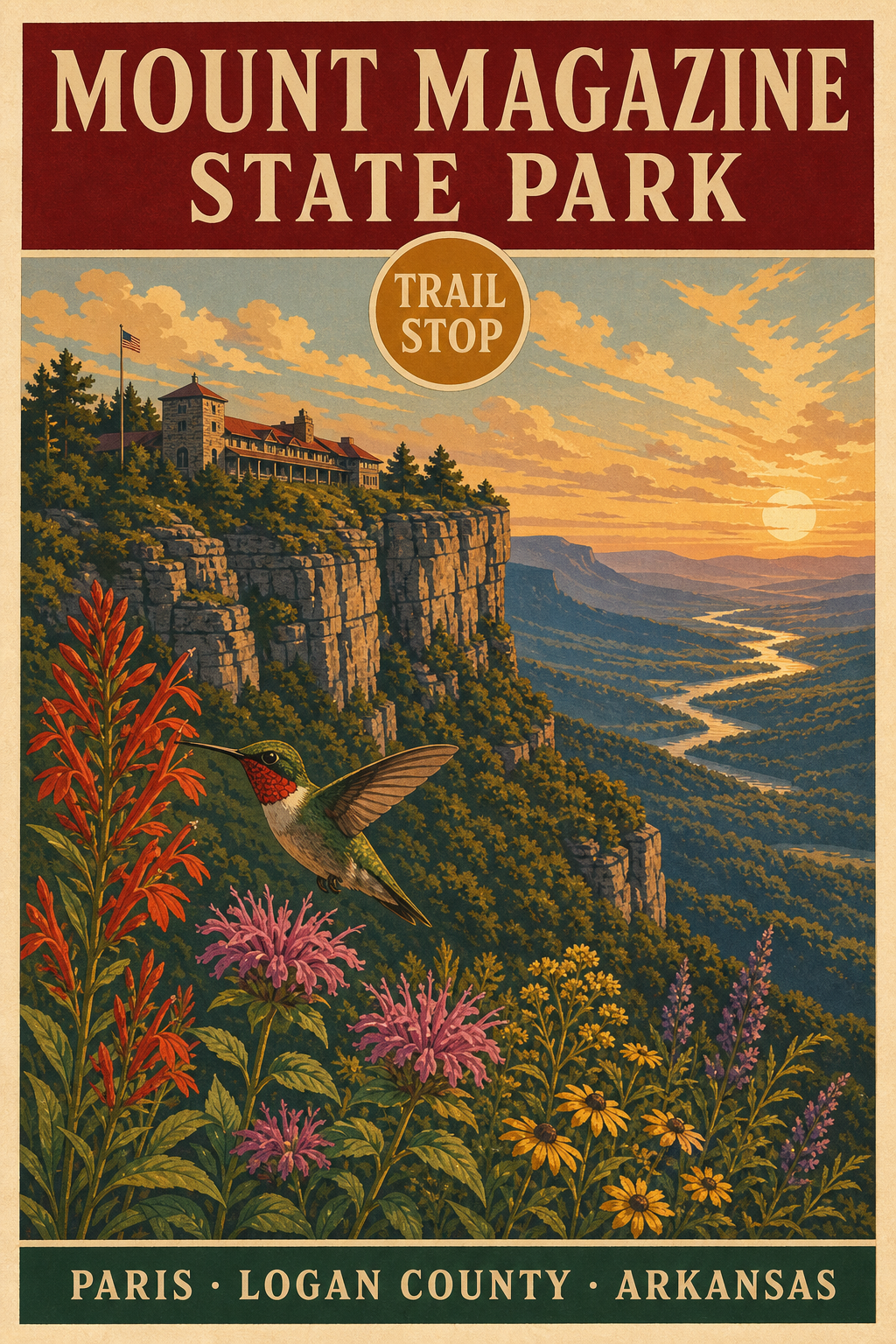
    View Mount Magazine State Park in Paris, ArkansasHummingbirds at Mount Magazine State Park in Paris, Arkansas
    Map

    Logan County

    Mount Magazine State Park

    Paris

    Mount Magazine State Park is one of Arkansas's most scenic hummingbird possibilities, rising above the surrounding landscape with forests, meadows, overlooks, lodge gardens, and native flowering edges. Ruby-throated Hummingbirds are most likely during the warm months and can be especially noticeable in late summer and early fall as migration builds and nectar sources become important fuel stops. The park's elevation, open edges, and wildflower habitat give it a different feel from a formal garden, making it ideal for travelers who want hummingbird watching paired with hiking, photography, and big views. For Nectarbloom, Mount Magazine helps show that hummingbird habitat is not limited to backyard feeders or botanical collections. In Arkansas, the Trail belongs in the mountains too.

    State Park and Mountain HabitatRuby-throated Hummingbird

    View garden →

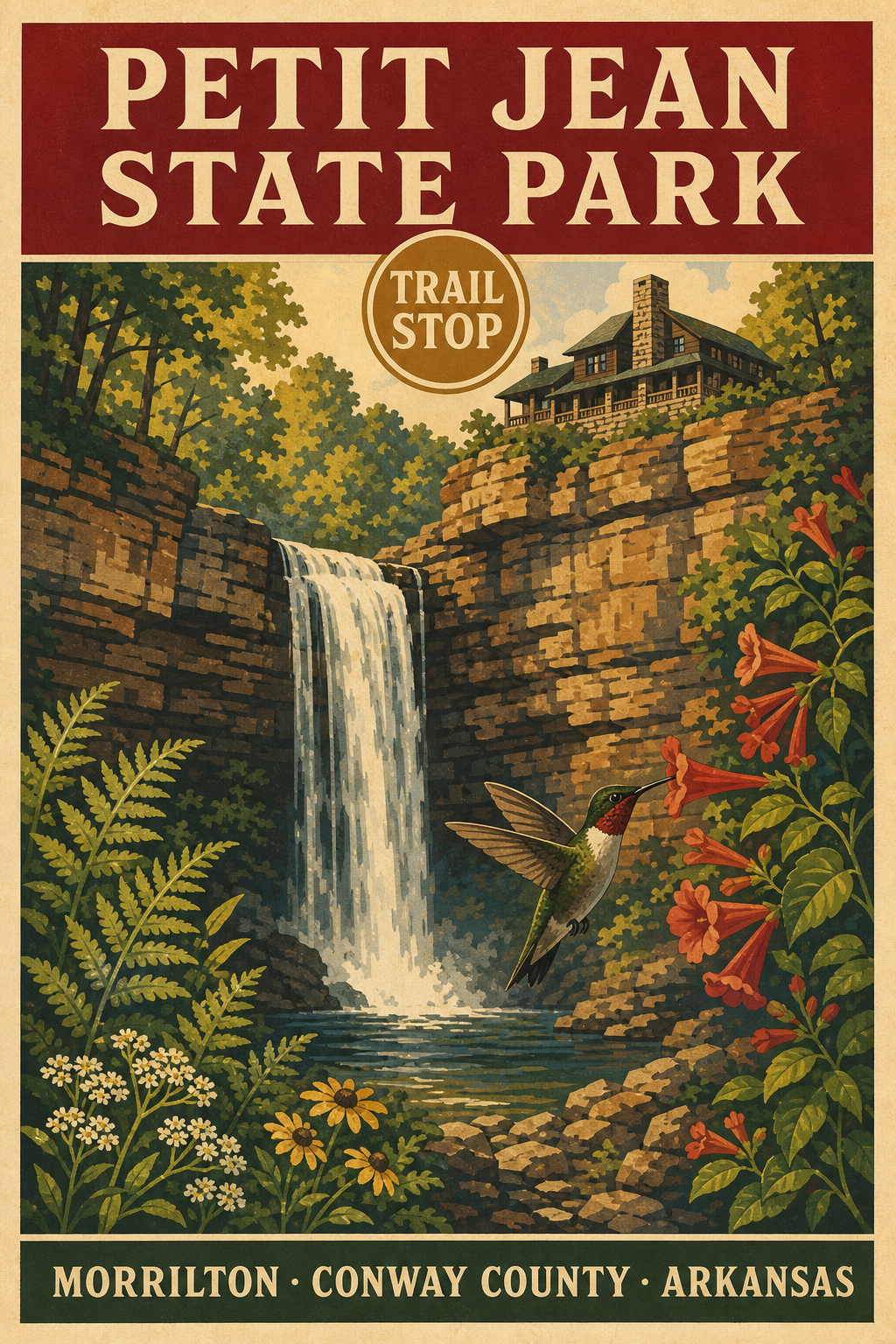
    View Petit Jean State Park in Morrilton, ArkansasHummingbirds at Petit Jean State Park in Morrilton, Arkansas
    Map

    Conway County

    Petit Jean State Park

    Morrilton

    Petit Jean State Park is one of Arkansas's most beloved natural destinations and a strong Hummingbird Trail listing for visitors who prefer wild landscapes over formal gardens. The park's mountain setting includes forest edges, bluffs, creeks, waterfall corridors, native wildflowers, cabins, lodge areas, and open spaces where Ruby-throated Hummingbirds may appear from spring through fall. Its value lies in the full experience: visitors can hike, photograph wildflowers, explore overlooks, and watch for hummingbirds in the same trip. The park's historic character and well-developed visitor infrastructure make it approachable for families while still feeling deeply connected to the Arkansas landscape. For Nectarbloom, Petit Jean demonstrates how hummingbird travel can fit naturally into state park exploration.

    State Park and Natural AreaRuby-throated Hummingbird

    View garden →

    Best Time to See Hummingbirds in Arkansas

    Peak hummingbird activity in Arkansas typically runs April, May, June, July, August, September, October. Spring migration brings the highest diversity, with early morning and late afternoon being the best viewing hours.

    Typical arrival
    Mid-March – early April
    Typical departure
    Early October
    Hang your feeder
    Early March

    Ruby-throated Hummingbirds arrive first, males ahead of females. See the full state-by-state feeder timing guide.

    Map of Hummingbird Locations in Arkansas

    Switch the view above to to see featured locations plotted geographically.

    Common Hummingbird Species in Arkansas

    • Ruby-throated Hummingbird
    • Rufous Hummingbird (winter visitor)

    Hummingbird Questions About Arkansas

    When do hummingbirds arrive in Arkansas?

    Hummingbirds typically arrive in Arkansas in Mid-March – early April and leave again by Early October. Ruby-throated Hummingbirds arrive first, males ahead of females.

    When should you put out hummingbird feeders in Arkansas?

    Hang feeders in Arkansas by Early March — about one to two weeks before the first birds arrive in Mid-March – early April — so early migrants find your feeder immediately.

    What kinds of hummingbirds live in Arkansas?

    The hummingbird species regularly recorded in Arkansas are: Ruby-throated Hummingbird, Rufous Hummingbird (winter visitor).

    Share Your Visit

    Saw hummingbirds in Arkansas? Help fellow flock-watchers by sharing a photo, rating, and note from your visit.

    Fresh nectar in a minute.

    Buy on Amazon