Shop & Support the Mission

    Fresh nectar in a minute.

    Every bag of NectarBloom™ funds the guides, the Hummingbird Trail, the lab testing, and the free care resources on this site. When you buy our nectar, you help us keep hummingbird education open, honest, and growing — for every bird lover, everywhere.

    NectarBloom 2 lb bag — pure cane sugar hummingbird nectar

    NectarBloom™ — 2 lb Bag

    Fresh nectar in a minute.

    No boiling, no dye. The same sugar hummingbird flowers make. One ingredient, nothing else. Makes up to 160 oz of fresh feeder nectar per bag.

    • Fresh nectar in a minute: measure, stir until clear, and pour
    • No boiling, no dye
    • The same sugar hummingbird flowers make
    • One ingredient, nothing else: 100% pure cane sugar
    • Lab tested. Resealable 2 lb bag, sourced and packed in the USA

    1 Bag · 2 lb

    $21.99

    Free shipping included

    Best Value

    2 Bags · Season Supply

    $39.88

    Free shipping included

    Direct orders are temporarily sold out. NectarBloom™ is still available on Amazon.

    Buy on Amazon

    Ships fast via Amazon Prime

    See full product details

    Direct orders temporarily unavailable

    “Your purchase isn’t just nectar — it’s how we keep this hummingbird care library free, accurate, and growing.”

    Thank you for flying with us

    Overview

    Connecticut's Litchfield Hills and coastal gardens host Ruby-throated Hummingbirds from late May through September, with the Connecticut River Valley serving as a major migration corridor south. The state's historic formal gardens and sprawling nature sanctuaries offer intimate hummingbird encounters throughout the summer season.

    Audubon chapters and reader sightings in Connecticut

    Filter gardens
    View Bellamy-Ferriday House & Garden in Bethlehem, ConnecticutHummingbirds at Bellamy-Ferriday House & Garden in Bethlehem, Connecticut
    Map

    Litchfield County

    Bellamy-Ferriday House & Garden

    Bethlehem

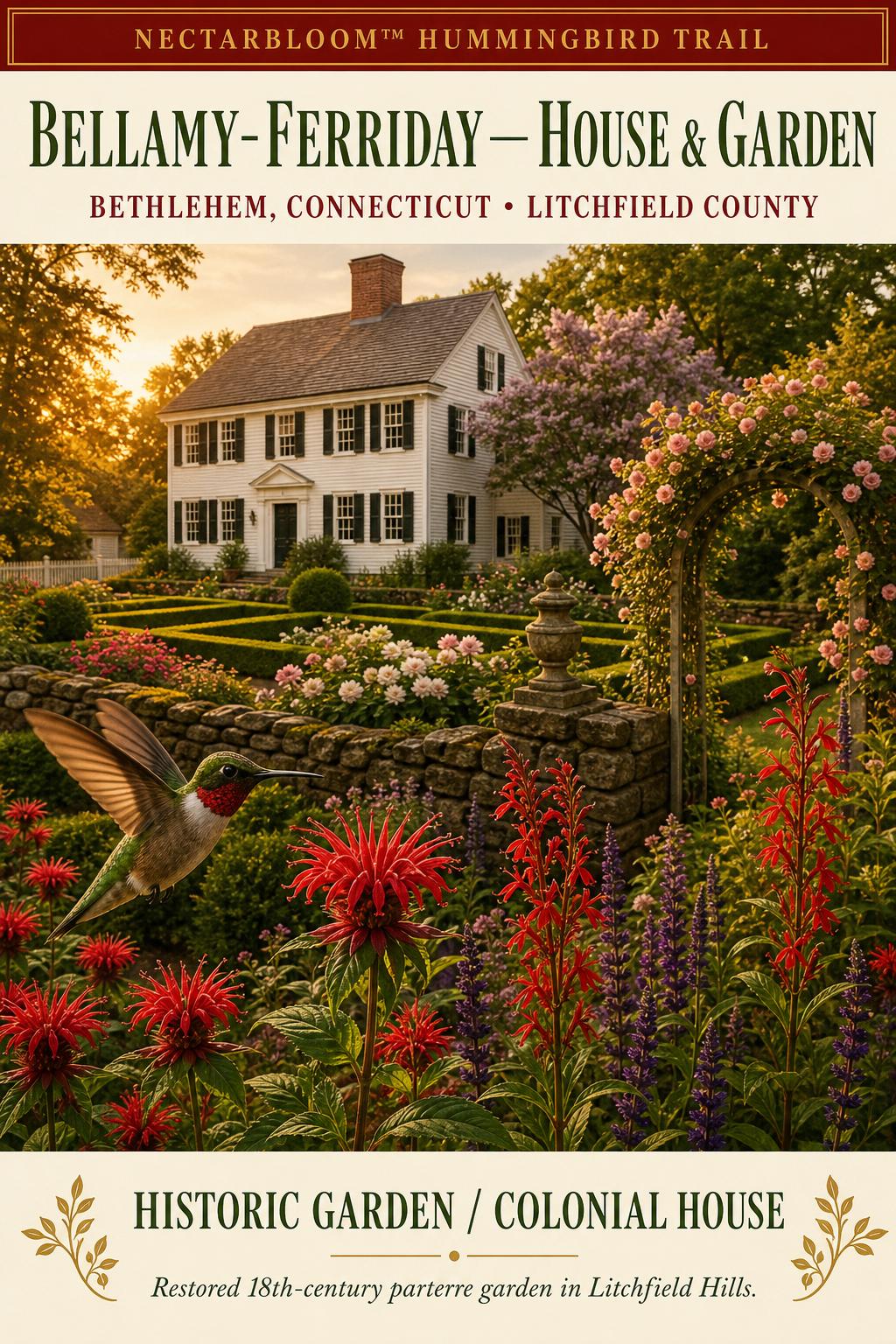
    The Bellamy-Ferriday House & Garden is a historic house museum set in the Litchfield Hills of western Connecticut, managed by Connecticut Landmarks. The formal parterre garden was designed by Eliza Ferriday and her daughter Caroline in the early 20th century and features historic-style roses, peonies, lilacs, and fragrant flowering trees and shrubs. Ruby-throated Hummingbirds are common summer visitors throughout Litchfield County from late May through early September, drawn to the dense perennial borders.

    Historic GardenRuby-throated

    View garden →
    View Connecticut's Beardsley Zoo in Bridgeport, ConnecticutHummingbirds at Connecticut's Beardsley Zoo in Bridgeport, Connecticut
    Map

    Fairfield County

    Connecticut's Beardsley Zoo

    Bridgeport

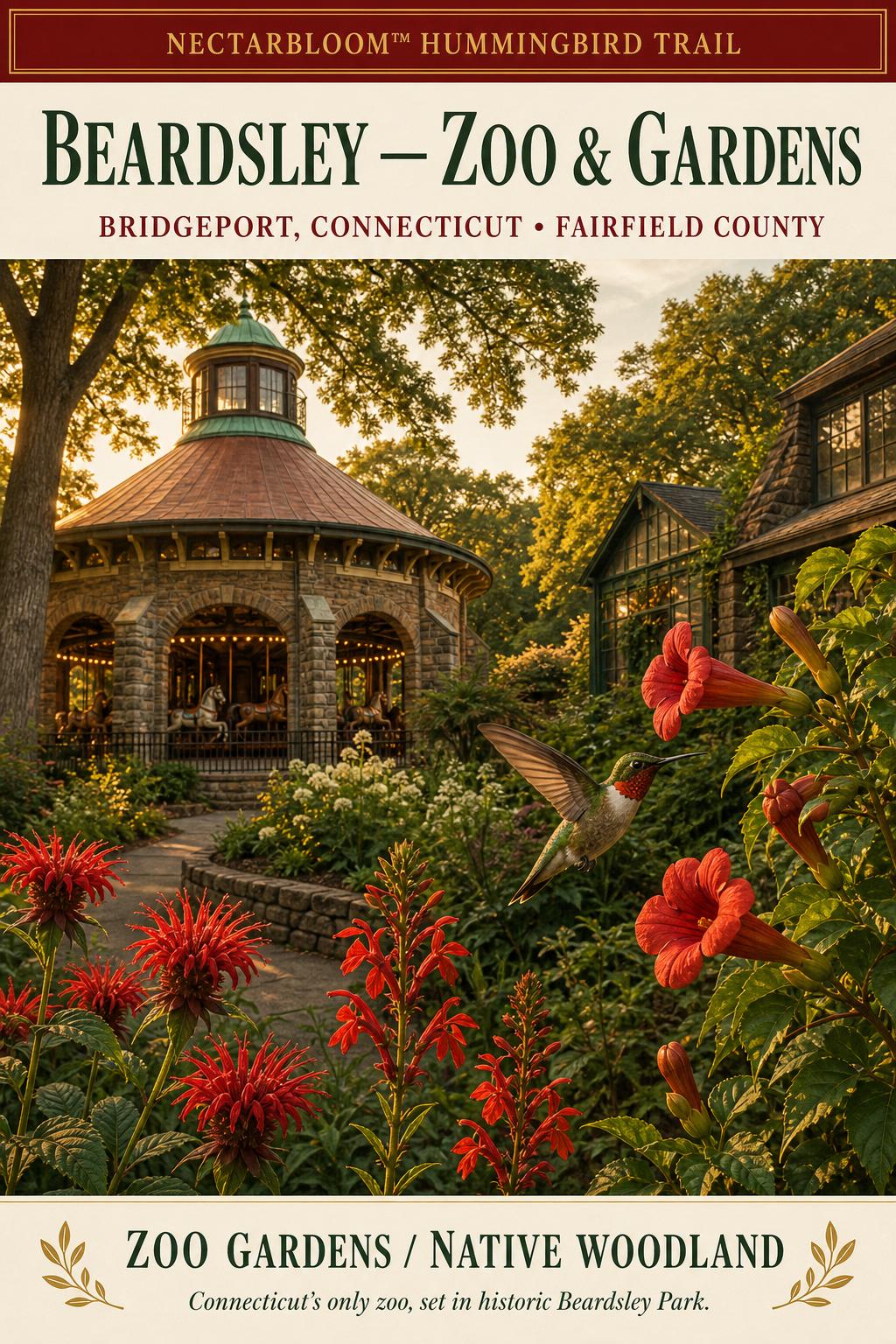
    Connecticut's only zoo, Beardsley Zoo has been formally designated as part of the Pollinator Pathway network and operates seven butterfly and pollinator gardens throughout its grounds. The zoo has made a concerted commitment to native plant gardening, with plantings of milkweed, bee balm, cardinal flower, coneflower, and other natives that support butterflies, bees, and Ruby-throated Hummingbirds. A 2023 M&T Bank grant funded additional pollinator gardens in the surrounding Bridgeport community.

    Zoo & Pollinator GardenRuby-throated

    View garden →

    View The Glebe House Museum & Gertrude Jekyll Garden in Woodbury, ConnecticutHummingbirds at The Glebe House Museum & Gertrude Jekyll Garden in Woodbury, Connecticut
    Map

    Litchfield County

    The Glebe House Museum & Gertrude Jekyll Garden

    Woodbury

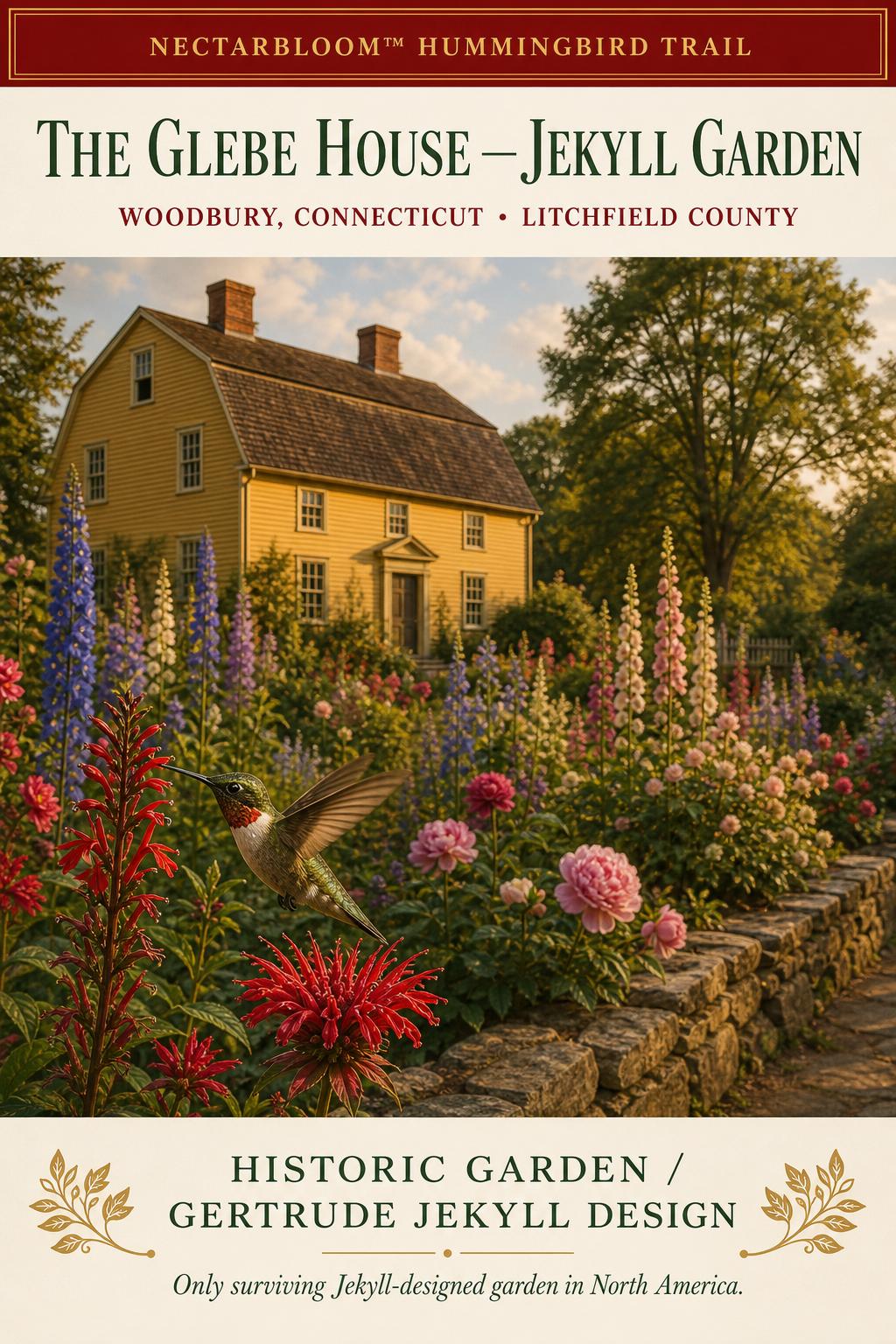
    The Glebe House Museum is one of the most historically significant house museums in New England — an 18th-century parsonage with the only surviving Gertrude Jekyll garden design fully realized in North America. Jekyll, the legendary English plantswoman, designed the garden in 1926, and it was painstakingly restored according to her original hand-drawn plans starting in the 1980s. The garden features long herbaceous perennial borders in classic Jekyll style, open year-round for self-guided visits. Ruby-throated Hummingbirds visit the perennial borders from June through September.

    Historic GardenRuby-throated

    View garden →
    View White Memorial Conservation Center in Litchfield, ConnecticutHummingbirds at White Memorial Conservation Center in Litchfield, Connecticut
    Map

    Litchfield County

    White Memorial Conservation Center

    Litchfield

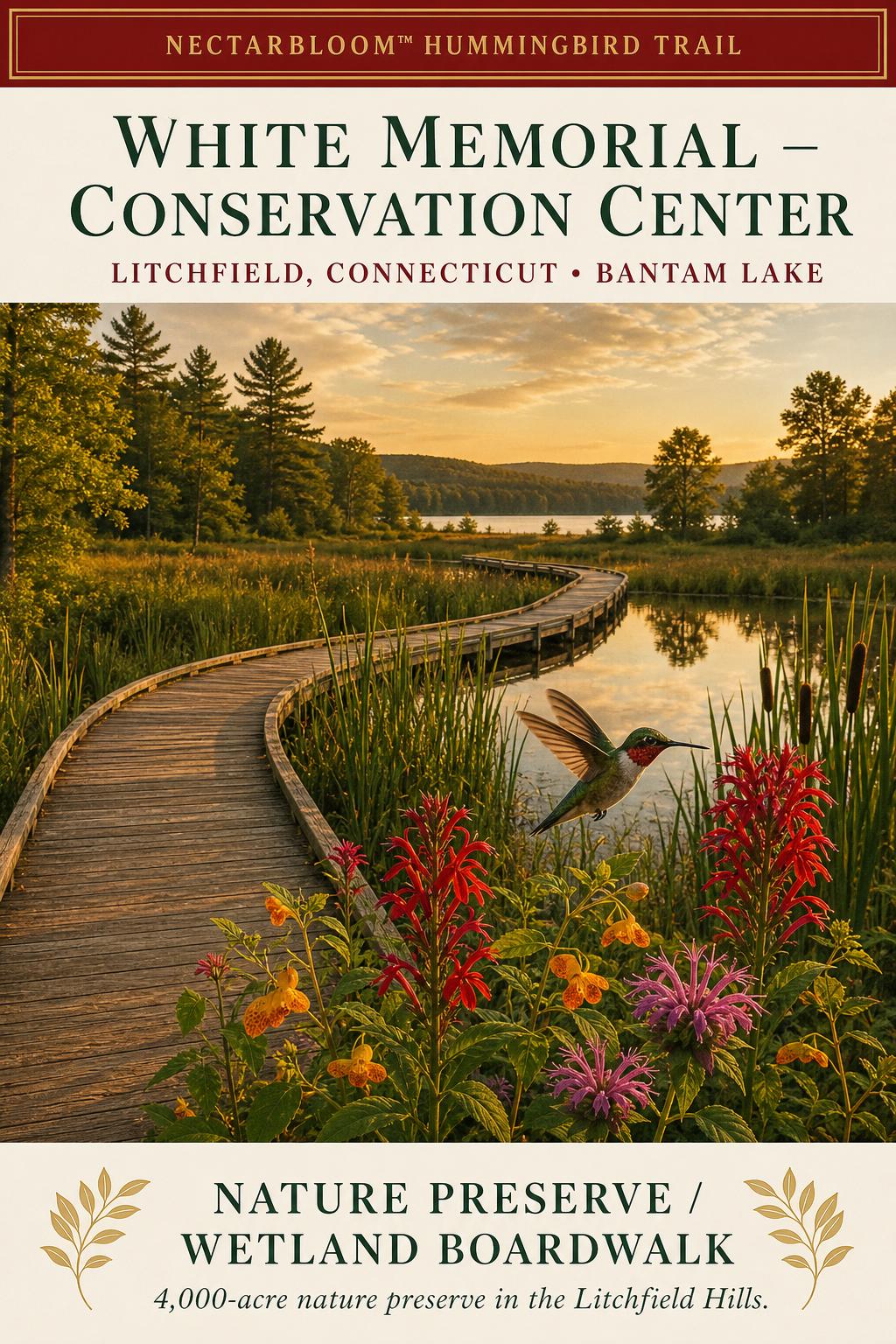
    The White Memorial Conservation Center sits at the heart of the 4,000-acre White Memorial Foundation — the largest nature center and wildlife sanctuary in Connecticut, created in 1913. The Center encompasses forest, fields, wetlands, and 40 miles of trails. The diverse habitats — meadows, wetlands, and the boardwalk trail around Ongley Pond — attract a wide variety of breeding and migrating birds, including Ruby-throated Hummingbirds that breed in forest edges and meadows throughout the property from late May through September.

    Nature Center & Wildlife SanctuaryRuby-throated

    View garden →

    Best Time to See Hummingbirds in Connecticut

    Peak hummingbird activity in Connecticut typically runs June, July, August, September. Spring migration brings the highest diversity, with early morning and late afternoon being the best viewing hours.

    Typical arrival
    Late April – mid May
    Typical departure
    Mid September
    Hang your feeder
    Mid-April

    A short but intense season — birds nest quickly after arrival. See the full state-by-state feeder timing guide.

    Most Common Hummingbird in Connecticut

    The most common hummingbird across Connecticut is the Ruby-throated.

    Map of Hummingbird Locations in Connecticut

    Switch the view above to to see featured locations plotted geographically.

    Common Hummingbird Species in Connecticut

    • Ruby-throated

    Counties on the Hummingbird Trail

    Hummingbird Questions About Connecticut

    When do hummingbirds arrive in Connecticut?

    Hummingbirds typically arrive in Connecticut in Late April – mid May and leave again by Mid September. A short but intense season — birds nest quickly after arrival.

    When should you put out hummingbird feeders in Connecticut?

    Hang feeders in Connecticut by Mid-April — about one to two weeks before the first birds arrive in Late April – mid May — so early migrants find your feeder immediately.

    What kinds of hummingbirds live in Connecticut?

    The hummingbird species regularly recorded in Connecticut are: Ruby-throated.

    Share Your Visit

    Saw hummingbirds in Connecticut? Help fellow flock-watchers by sharing a photo, rating, and note from your visit.

    Fresh nectar in a minute.

    Buy on Amazon