Lurie Garden Hummingbird Guide

    Chicago, Cook CountyPublic GardenAdmission: Free

    Shop & Support the Mission

    Fresh nectar in a minute.

    Every bag of NectarBloom™ funds the guides, the Hummingbird Trail, the lab testing, and the free care resources on this site. When you buy our nectar, you help us keep hummingbird education open, honest, and growing — for every bird lover, everywhere.

    NectarBloom 2 lb bag — pure cane sugar hummingbird nectar

    NectarBloom™ — 2 lb Bag

    Fresh nectar in a minute.

    No boiling, no dye. The same sugar hummingbird flowers make. One ingredient, nothing else. Makes up to 160 oz of fresh feeder nectar per bag.

    • Fresh nectar in a minute: measure, stir until clear, and pour
    • No boiling, no dye
    • The same sugar hummingbird flowers make
    • One ingredient, nothing else: 100% pure cane sugar
    • Lab tested. Resealable 2 lb bag, sourced and packed in the USA

    1 Bag · 2 lb

    $21.99

    Free shipping included

    Best Value

    2 Bags · Season Supply

    $39.88

    Free shipping included

    Direct orders are temporarily sold out. NectarBloom™ is still available on Amazon.

    Buy on Amazon

    Ships fast via Amazon Prime

    See full product details

    Direct orders temporarily unavailable

    “Your purchase isn’t just nectar — it’s how we keep this hummingbird care library free, accurate, and growing.”

    Thank you for flying with us

    Overview

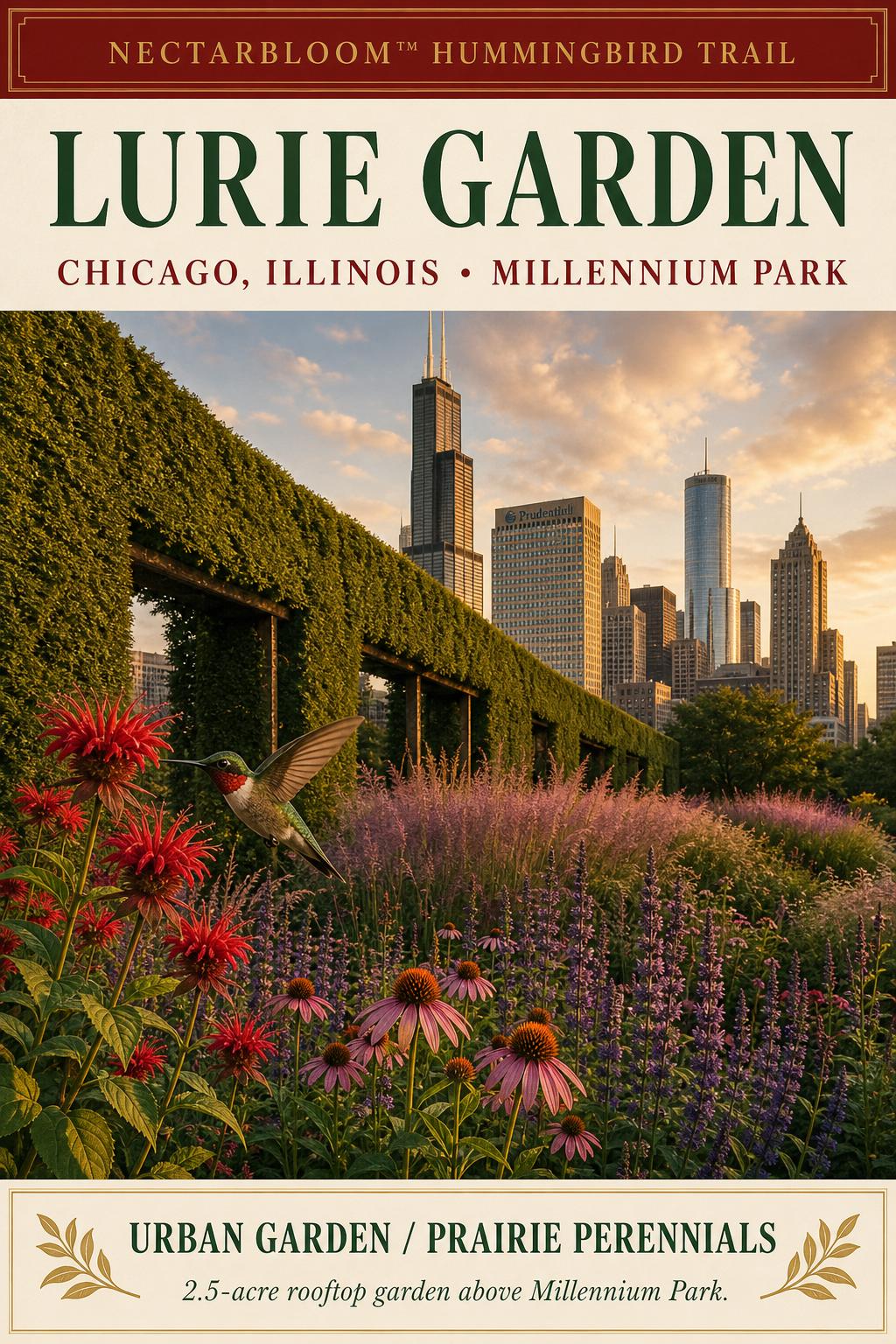
    Designed by Dutch landscape architect Piet Oudolf and opened in 2004, Lurie Garden is a 2.5-acre naturalistic perennial garden in the heart of Millennium Park, celebrated as one of the world's finest urban gardens. The garden contains approximately 350 types of plants — 193 perennial herbaceous species — with a strong emphasis on Midwest prairie and woodland natives. Eastern bee balm is documented as "a magnet for hummingbirds and butterflies" by the garden's own staff, making this an unexpectedly productive hummingbird stop in the urban core during fall migration.

    Hummingbirds to Watch For

    • • Ruby-throated

    Most Common Hummingbird

    The most commonly sighted hummingbird at Lurie Garden is the Ruby-throated.

    Best Time to Visit

    Plan your visit during August, September for the highest chance of hummingbird sightings. Early morning and late afternoon are typically the most active feeding times.

    Plants and Habitat

    • • Eastern bee balm (*Monarda didyma*) — explicitly documented as a hummingbird magnet
    • • Anise hyssop (*Agastache foeniculum*) — major signature plant
    • • Salvia yangii (Russian sage) — signature plant of the garden
    • • Meadow sage (*Salvia nemorosa* cultivars) — spring and summer
    • • Mountain mint (*Pycnanthemum* spp.) — widest pollinator variety in the garden
    • • Pale coneflower (*Echinacea pallida*) — native prairie species

    NectarBloom Tip

    Lurie Garden stays open until 11 p.m., making it uniquely accessible for dusk hummingbird watching during migration — ruby-throated hummingbirds feed actively in the final hour before dark to fuel up. The Shoulder Hedge (the tall dark perennial wall facing Michigan Avenue) contains many of the densest nectar plantings. Free guided walks every Thursday, Friday, and Sunday from May through September — the Sunday walk in September is perfectly timed for migration activity.

    Visitor Notes

    Free and open daily year-round. Garden hours: 6 a.m.–11 p.m. Fully ADA accessible. Located within Millennium Park, Chicago.

    Map

    Ruby-throated near Eastern bee balm (*Monarda didyma*) — explicitly documented as a hummingbird magnet at Lurie Garden in Illinois

    Open in Google Maps

    Reviews and Sightings

    Visited Lurie Garden? Share what you saw — your photos, ratings, and notes help fellow flock-watchers know what to expect.

    Share a Visit

    Sources

    Nearby gardens in Illinois

    View Chicago Botanic Garden in Glencoe, IllinoisHummingbirds at Chicago Botanic Garden in Glencoe, Illinois
    Map

    Cook County

    Chicago Botanic Garden

    Glencoe

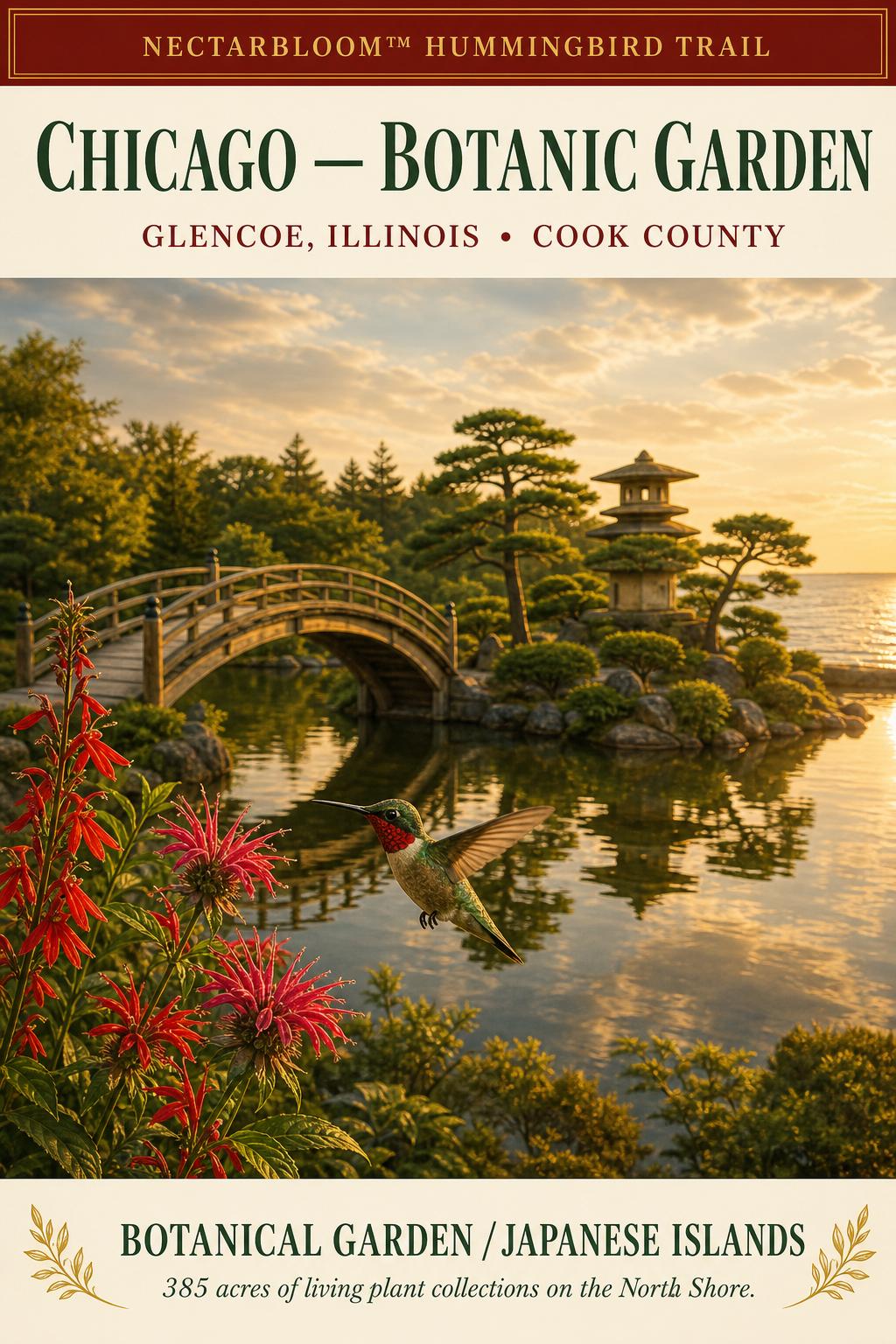
    One of the world's great living museums, the Chicago Botanic Garden features 28 gardens and four natural areas across 385 acres on and around nine islands, with six miles of lake shoreline on the North Shore of Chicago. The garden hosts a robust native plant program and is a documented breeding site for ruby-throated hummingbirds in the woodland areas adjacent to the garden. Garden wildlife staff note that ruby-throated hummingbirds "travel through the Chicago area in great numbers during September and October" as migrants arrive from Canada, making September an exceptional month to visit.

    Botanical GardenRuby-throated

    View garden →

    Visited Lurie Garden?

    Share your visit — a photo, a rating, and a quick note help fellow flock-watchers know what to expect. No account required.

    Share a Visit

    Fresh nectar in a minute.

    Buy on Amazon