Shop & Support the Mission

    Fresh nectar in a minute.

    Every bag of NectarBloom™ funds the guides, the Hummingbird Trail, the lab testing, and the free care resources on this site. When you buy our nectar, you help us keep hummingbird education open, honest, and growing — for every bird lover, everywhere.

    NectarBloom 2 lb bag — pure cane sugar hummingbird nectar

    NectarBloom™ — 2 lb Bag

    Fresh nectar in a minute.

    No boiling, no dye. The same sugar hummingbird flowers make. One ingredient, nothing else. Makes up to 160 oz of fresh feeder nectar per bag.

    • Fresh nectar in a minute: measure, stir until clear, and pour
    • No boiling, no dye
    • The same sugar hummingbird flowers make
    • One ingredient, nothing else: 100% pure cane sugar
    • Lab tested. Resealable 2 lb bag, sourced and packed in the USA

    1 Bag · 2 lb

    $21.99

    Free shipping included

    Best Value

    2 Bags · Season Supply

    $39.88

    Free shipping included

    Direct orders are temporarily sold out. NectarBloom™ is still available on Amazon.

    Buy on Amazon

    Ships fast via Amazon Prime

    See full product details

    Direct orders temporarily unavailable

    “Your purchase isn’t just nectar — it’s how we keep this hummingbird care library free, accurate, and growing.”

    Thank you for flying with us

    Overview

    Michigan's hummingbird season belongs to the Ruby-throated Hummingbird, the small green jewel that returns to Great Lakes gardens, forests, native plant beds, and pollinator landscapes each spring. The state offers a strong mix of dedicated hummingbird gardens, university botanical collections, bird sanctuaries, and conservation demonstration gardens. From Kalamazoo Nature Center's Hummingbird-Butterfly Garden to Matthaei Botanical Gardens' Gateway Garden, MSU's Kellogg Bird Sanctuary, and Otsego Conservation District's public Hummingbird Garden, this trail highlights Michigan places where hummingbirds, native plants, visitor education, and conservation come together.

    Audubon chapters and reader sightings in Michigan

    Filter gardens
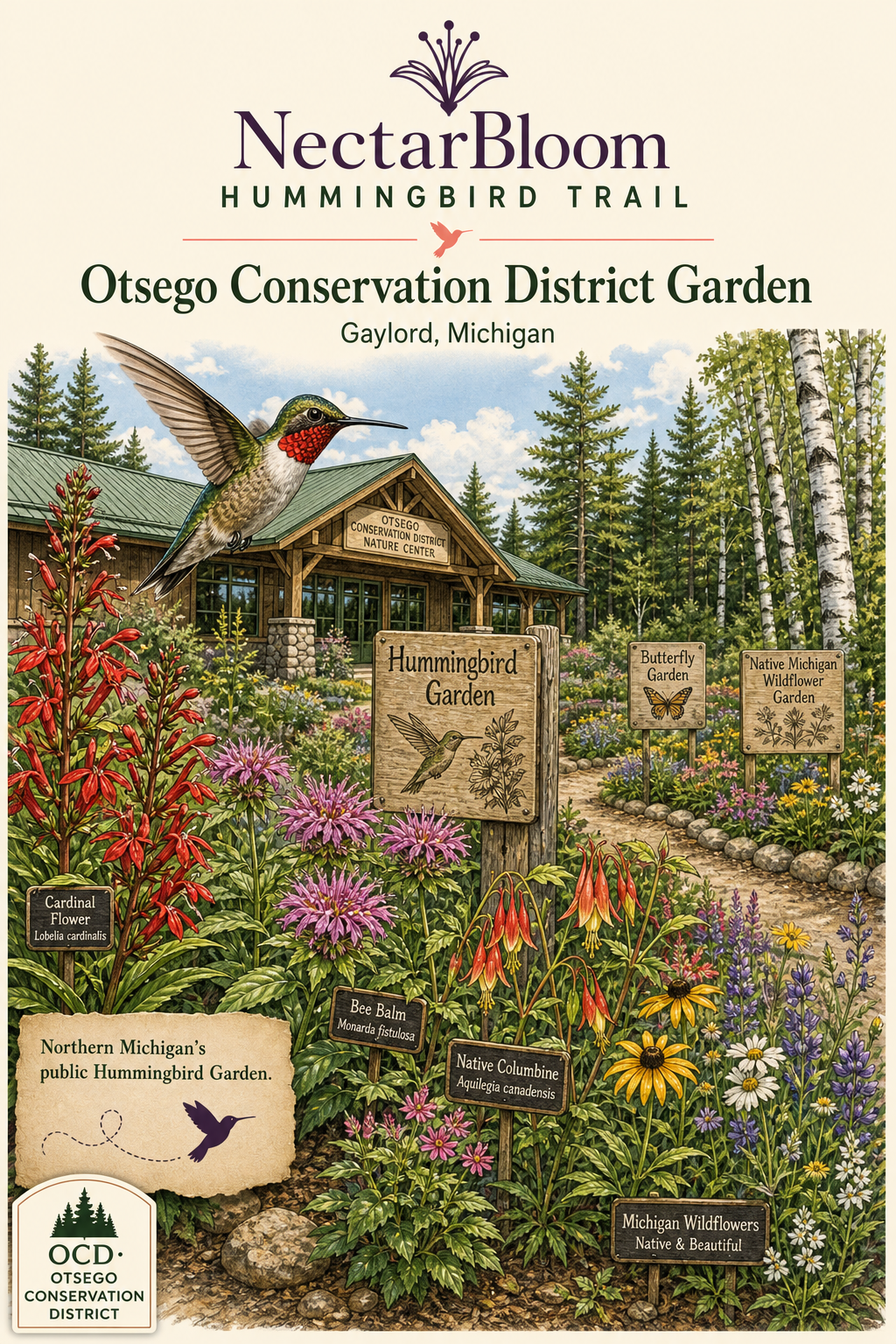
    View Otsego Conservation District Demonstration Garden & Nature Center in Gaylord, MichiganHummingbirds at Otsego Conservation District Demonstration Garden & Nature Center in Gaylord, Michigan
    Map

    Otsego Conservation District Demonstration Garden & Nature Center

    Gaylord

    Otsego Conservation District Demonstration Garden & Nature Center is a valuable northern Michigan hummingbird stop because it includes an explicitly named Hummingbird Garden as part of a broader public conservation landscape. The site also includes a Butterfly Garden, Songbird Garden, Native Michigan Wildflower Garden, and other educational garden areas designed to teach visitors about native plants, habitat, and natural resource conservation. Its location in Gaylord helps the Hummingbird Trail reach northern Lower Michigan, while the demonstration format gives homeowners practical inspiration for creating hummingbird-friendly spaces of their own.

    Conservation Demonstration Garden / Hummingbird GardenRuby-throated Hummingbird

    View garden →
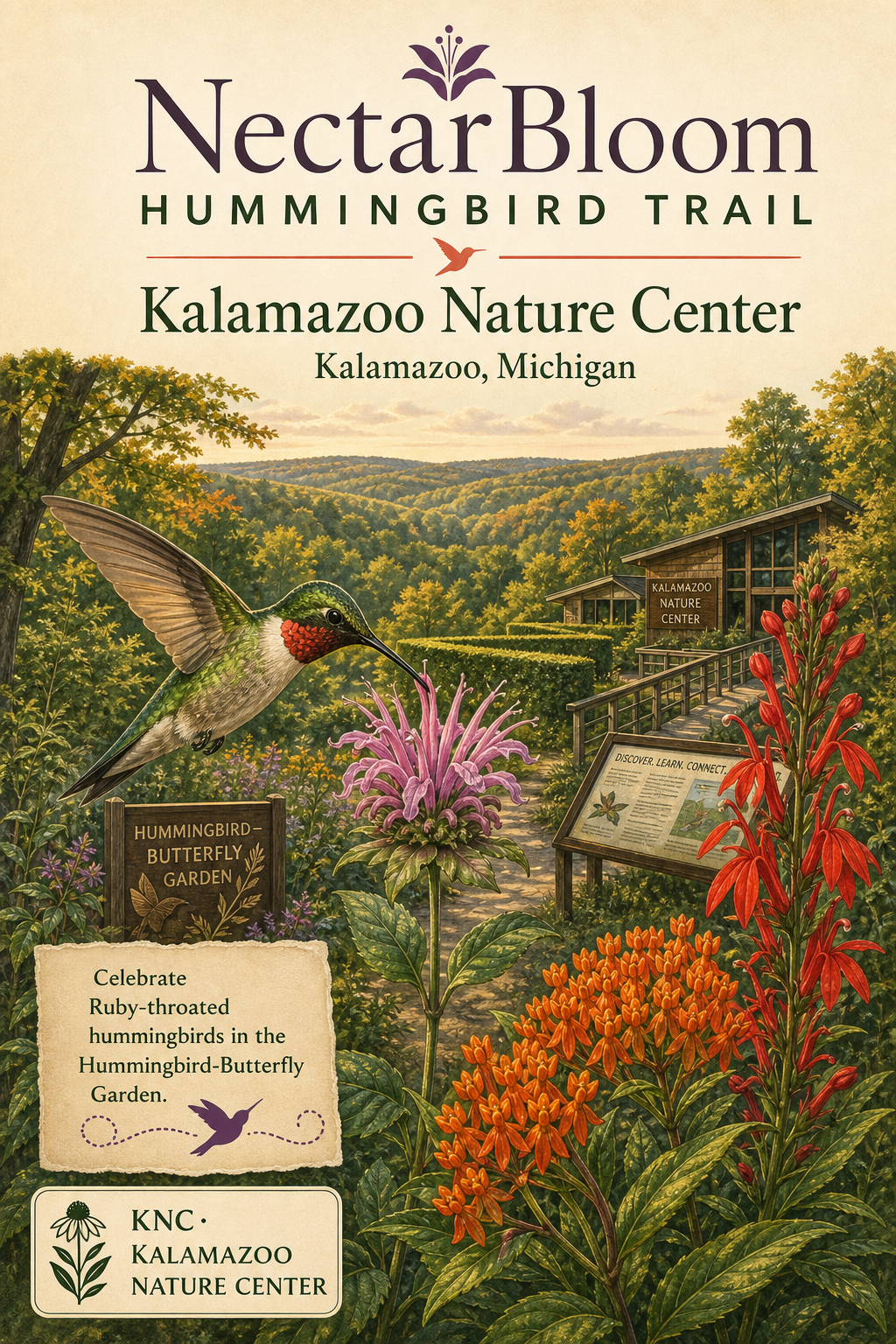
    View Kalamazoo Nature Center in Kalamazoo, MichiganHummingbirds at Kalamazoo Nature Center in Kalamazoo, Michigan
    Map

    Kalamazoo Nature Center

    Kalamazoo

    Kalamazoo Nature Center is one of Michigan's clearest hummingbird trail anchors because it has an explicitly designed Hummingbird-Butterfly Garden within the Monica A. Evans Arboretum. The garden is planted to support butterflies and hummingbirds with flowers, sheltering shrubs, and a changing summer-to-fall bloom sequence. Beyond the garden, the broader nature center includes more than 1,100 acres of forest, wetlands, streams, open fields, restored prairie, and visitor trails, giving Ruby-throated Hummingbirds a rich habitat mosaic rather than a single feeder stop. For visitors looking for a true garden-plus-nature-center experience, Kalamazoo Nature Center is one of the best Michigan entries for the Hummingbird Trail.

    Nature Center / Arboretum / Hummingbird-Butterfly GardenRuby-throated Hummingbird

    View garden →
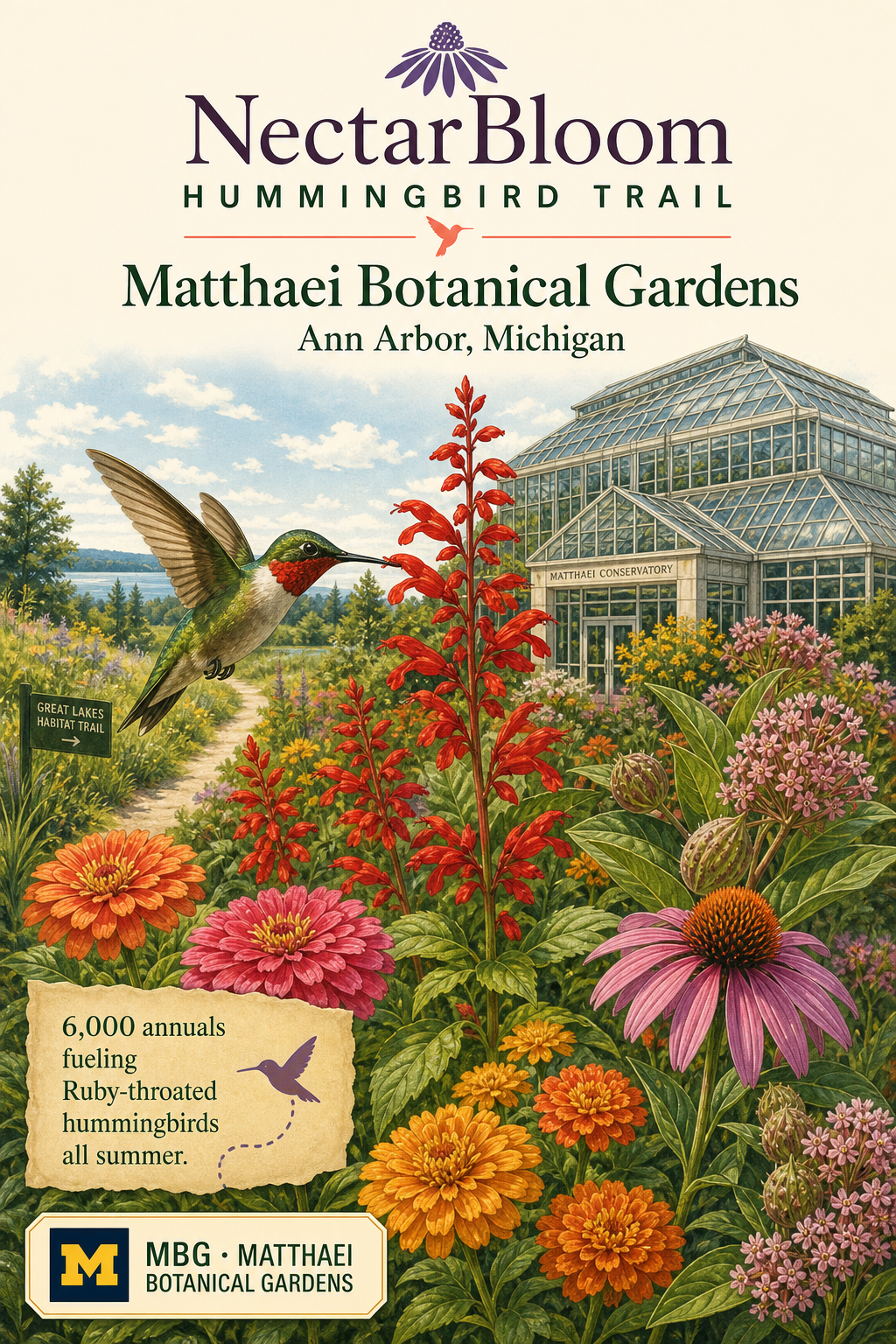
    View Matthaei Botanical Gardens in Ann Arbor, MichiganHummingbirds at Matthaei Botanical Gardens in Ann Arbor, Michigan
    Map

    Matthaei Botanical Gardens

    Ann Arbor

    Matthaei Botanical Gardens is a strong Michigan hummingbird stop because it combines university-level plant collections with seasonal garden spaces that explicitly attract hummingbirds and butterflies. The Gateway Garden peaks from mid-July through early September, using thousands of annuals and nectar-rich blooms such as zinnias, coneflowers, milkweed, and salvia. The broader University of Michigan botanical garden also includes native plant areas, outdoor gardens, trails, a conservatory, and Great Lakes habitat themes, giving visitors a deep ecological context for hummingbird-friendly planting. For the Ann Arbor region, Matthaei is one of the best places to connect hummingbirds with native plants, garden design, and public education.

    University Botanical Garden / Native and Pollinator GardenRuby-throated Hummingbird

    View garden →
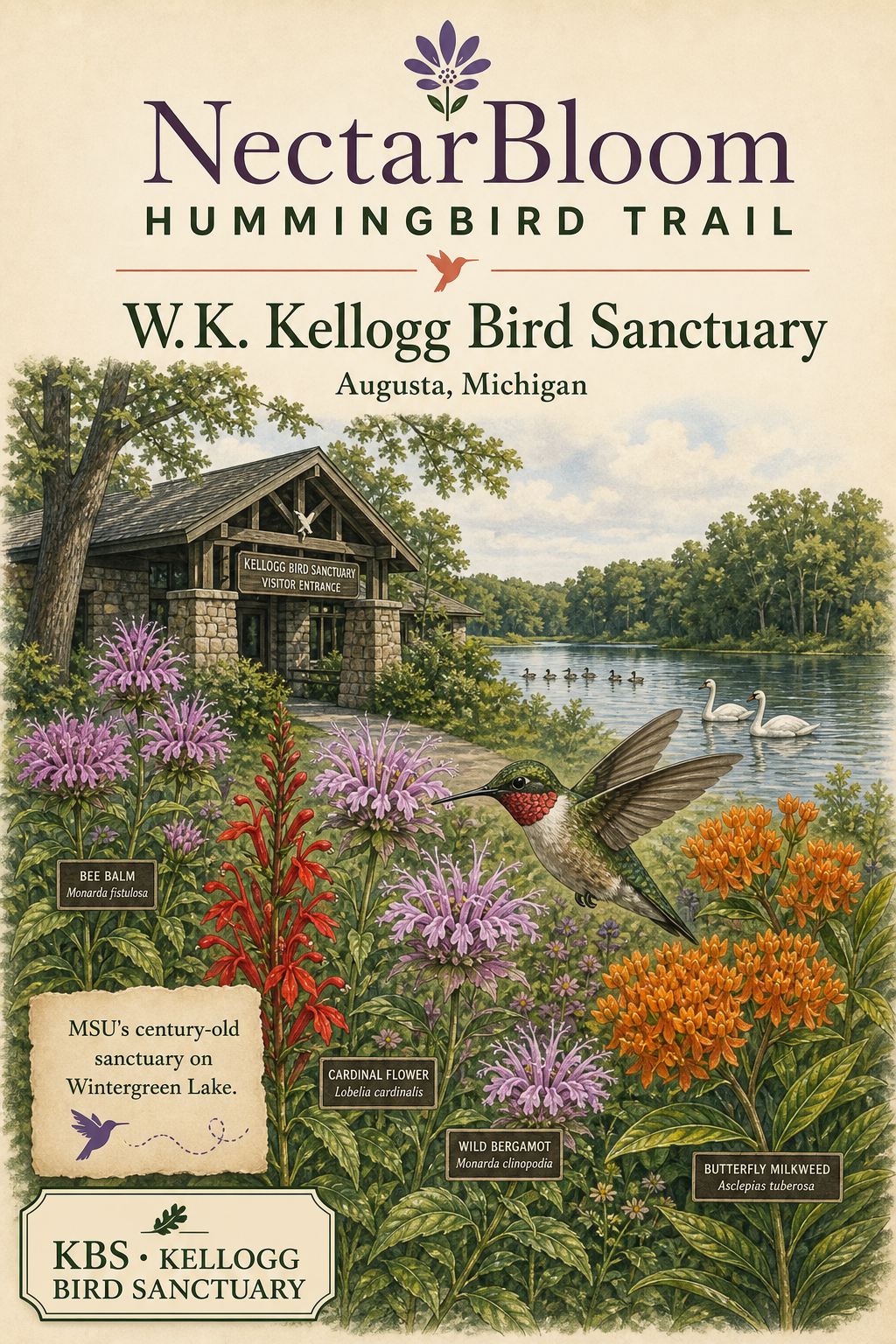
    View W.K. Kellogg Bird Sanctuary in Augusta, MichiganHummingbirds at W.K. Kellogg Bird Sanctuary in Augusta, Michigan
    Map

    W.K. Kellogg Bird Sanctuary

    Augusta

    W.K. Kellogg Bird Sanctuary adds a strong bird-focused and university-backed conservation stop to the Michigan Hummingbird Trail. The sanctuary includes a native plant pollinator garden designed to attract hummingbirds and butterflies, making it a practical place to connect Ruby-throated Hummingbirds with habitat education. Visitors can also explore an accessible trail to Wintergreen Lake, conservation programming, waterfowl habitat, and bird-focused exhibits. While many Michigan gardens are built around plants first, Kellogg Bird Sanctuary brings the bird education story forward, making it a useful stop for families, new birders, and anyone interested in how native plants support hummingbirds and other wildlife.

    University Bird Sanctuary / Pollinator GardenRuby-throated Hummingbird

    View garden →

    Best Time to See Hummingbirds in Michigan

    Peak hummingbird activity in Michigan typically runs May, June, July, August, September. Spring migration brings the highest diversity, with early morning and late afternoon being the best viewing hours.

    Typical arrival
    Mid-April – early May
    Typical departure
    Mid – late September
    Hang your feeder
    Early April

    Arrival tracks the 55°F isotherm as it moves north. See the full state-by-state feeder timing guide.

    Most Common Hummingbird in Michigan

    The most common hummingbird across Michigan is the Ruby-throated Hummingbird.

    Special Guest Hummingbird to Watch For

    Keep an eye out for the Rufous Hummingbird. Michigan's expected hummingbird is the Ruby-throated Hummingbird, but Rufous Hummingbirds can rarely appear as western vagrants, especially during migration or outside the normal summer season.

    Map of Hummingbird Locations in Michigan

    Switch the view above to to see featured locations plotted geographically.

    Common Hummingbird Species in Michigan

    • Ruby-throated Hummingbird

    Hummingbird Questions About Michigan

    When do hummingbirds arrive in Michigan?

    Hummingbirds typically arrive in Michigan in Mid-April – early May and leave again by Mid – late September. Arrival tracks the 55°F isotherm as it moves north.

    When should you put out hummingbird feeders in Michigan?

    Hang feeders in Michigan by Early April — about one to two weeks before the first birds arrive in Mid-April – early May — so early migrants find your feeder immediately.

    What kinds of hummingbirds live in Michigan?

    The hummingbird species regularly recorded in Michigan are: Ruby-throated Hummingbird.

    Share Your Visit

    Saw hummingbirds in Michigan? Help fellow flock-watchers by sharing a photo, rating, and note from your visit.

    Fresh nectar in a minute.

    Buy on Amazon