Shop & Support the Mission

    Fresh nectar in a minute.

    Every bag of NectarBloom™ funds the guides, the Hummingbird Trail, the lab testing, and the free care resources on this site. When you buy our nectar, you help us keep hummingbird education open, honest, and growing — for every bird lover, everywhere.

    NectarBloom 2 lb bag — pure cane sugar hummingbird nectar

    NectarBloom™ — 2 lb Bag

    Fresh nectar in a minute.

    No boiling, no dye. The same sugar hummingbird flowers make. One ingredient, nothing else. Makes up to 160 oz of fresh feeder nectar per bag.

    • Fresh nectar in a minute: measure, stir until clear, and pour
    • No boiling, no dye
    • The same sugar hummingbird flowers make
    • One ingredient, nothing else: 100% pure cane sugar
    • Lab tested. Resealable 2 lb bag, sourced and packed in the USA

    1 Bag · 2 lb

    $21.99

    Free shipping included

    Best Value

    2 Bags · Season Supply

    $39.88

    Free shipping included

    Direct orders are temporarily sold out. NectarBloom™ is still available on Amazon.

    Buy on Amazon

    Ships fast via Amazon Prime

    See full product details

    Direct orders temporarily unavailable

    “Your purchase isn’t just nectar — it’s how we keep this hummingbird care library free, accurate, and growing.”

    Thank you for flying with us

    Overview

    Missouri is an important central-state stop for Ruby-throated Hummingbirds, especially from late spring through early fall. The state's mix of prairie plantings, woodland edges, native wildflowers, botanical gardens, and backyard feeder culture creates strong opportunities for hummingbird watching across both urban and rural landscapes. For Nectarbloom, Missouri is especially meaningful because it connects the Hummingbird Trail to the Kansas City and St. Louis regions while showcasing how Midwestern gardens can support hummingbirds with native nectar plants, water, shelter, and consistent seasonal bloom. Best viewing generally runs from May through September, with late summer often bringing peak feeder and flower activity.

    Audubon chapters and reader sightings in Missouri

    Filter gardens
    View Missouri Botanical Garden in St. Louis, MissouriHummingbirds at Missouri Botanical Garden in St. Louis, Missouri
    Map

    St. Louis City

    Missouri Botanical Garden

    St. Louis

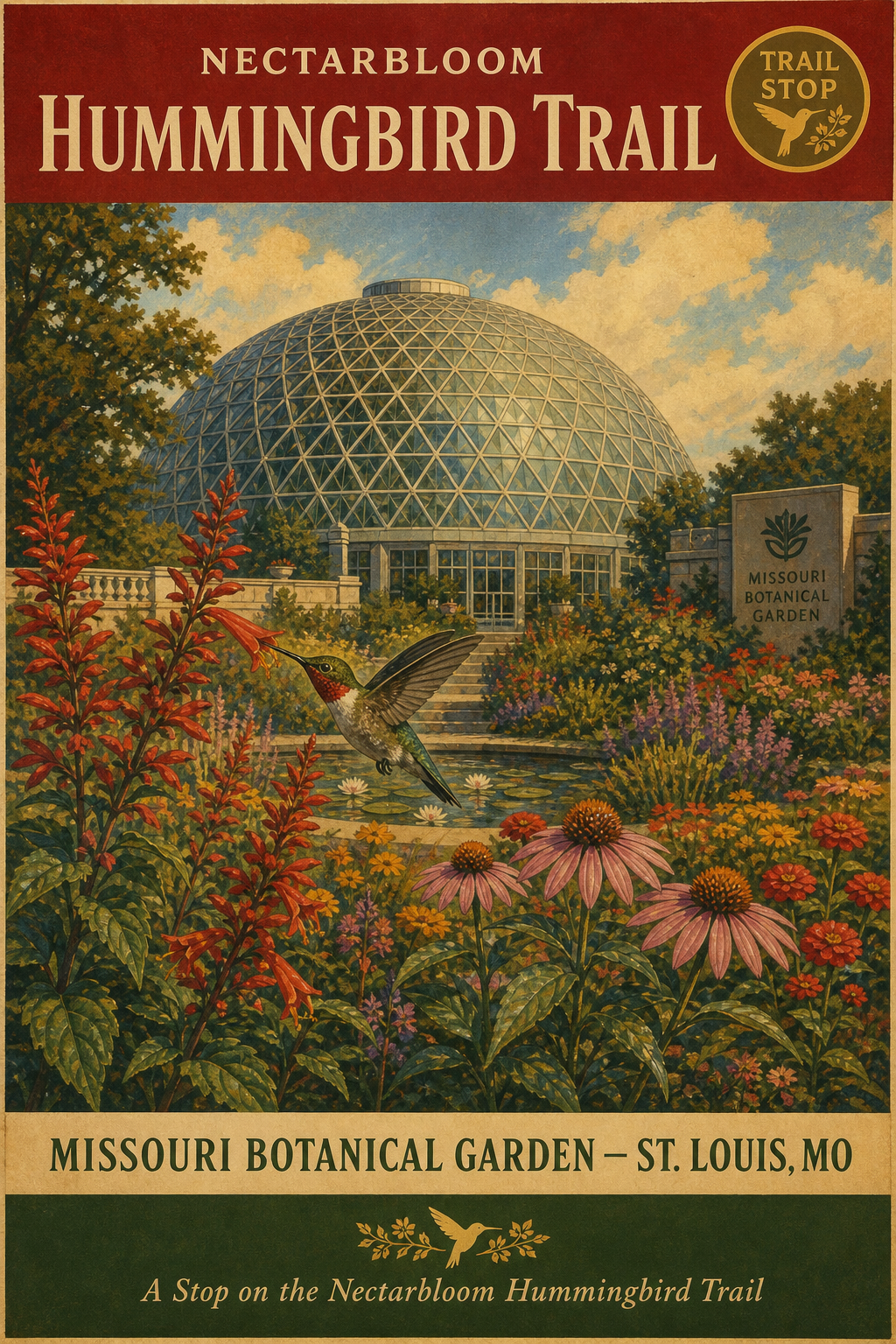
    Missouri Botanical Garden in St. Louis is one of the most important public gardens in the United States and a natural anchor for the Hummingbird Trail in the Midwest. Founded in 1859, the garden combines historic landscapes, native plant areas, seasonal display beds, pollinator-friendly plantings, and world-class horticultural collections across a polished visitor campus. Ruby-throated Hummingbirds may be seen during the warm months wherever nectar-rich blooms, shrubs, and garden edges create feeding opportunities. The garden's value for Nectarbloom is its authority: this is a place where visitors can connect hummingbird watching with serious plant science, conservation, and garden design. For Missouri travelers, it is the essential St. Louis stop and a strong example of how major public gardens can support small, fast-moving pollinators.

    World-Class Botanical GardenRuby-throated Hummingbird

    View garden →

    View Powell Gardens in Kingsville, MissouriHummingbirds at Powell Gardens in Kingsville, Missouri
    Map

    Henry County

    Powell Gardens

    Kingsville

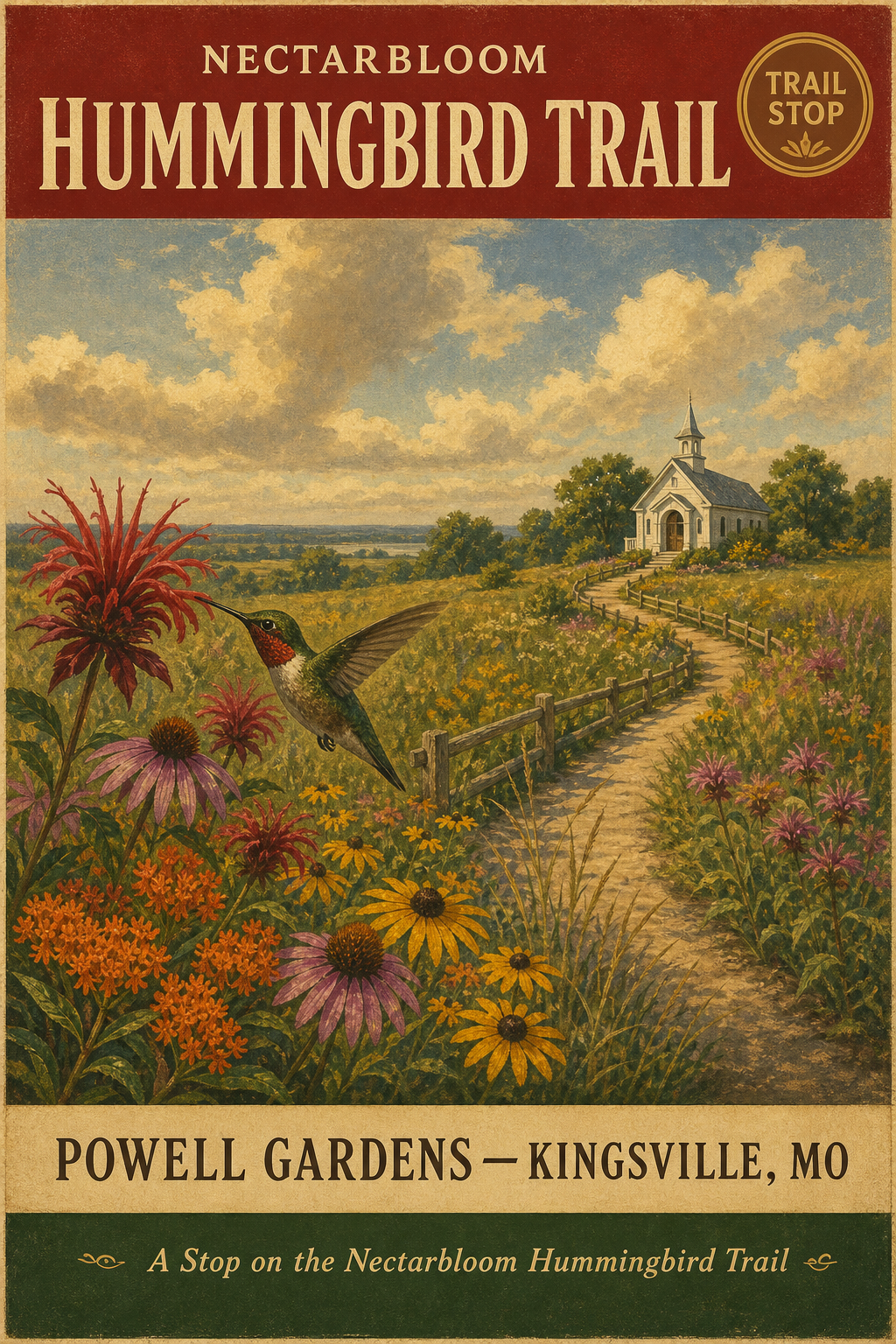
    Powell Gardens is the Kansas City region's signature botanical garden and one of the most important Missouri stops for the Hummingbird Trail. Set in a broad landscape east of the metro, the garden combines native prairie inspiration, formal display areas, woodland edges, pollinator plantings, and seasonal flowers that create excellent habitat for Ruby-throated Hummingbirds during the warm months. Its regional relevance makes it especially valuable for Nectarbloom: this is a place where local customers, garden travelers, and hummingbird enthusiasts can connect the brand's home market with real-world habitat. Powell Gardens is also large enough to support repeat visits as blooms change through the season. For visitors, it offers a peaceful, plant-rich setting where hummingbird watching feels natural and unhurried.

    Botanical Garden and Native Landscape DestinationRuby-throated Hummingbird

    View garden →

    Best Time to See Hummingbirds in Missouri

    Peak hummingbird activity in Missouri typically runs May, June, July, August, September. Spring migration brings the highest diversity, with early morning and late afternoon being the best viewing hours.

    Typical arrival
    Mid-April – early May
    Typical departure
    Mid – late September
    Hang your feeder
    Early April

    Arrival tracks the 55°F isotherm as it moves north. See the full state-by-state feeder timing guide.

    Map of Hummingbird Locations in Missouri

    Switch the view above to to see featured locations plotted geographically.

    Common Hummingbird Species in Missouri

    • Ruby-throated Hummingbird
    • Rufous Hummingbird (winter visitor)

    Counties on the Hummingbird Trail

    Hummingbird Questions About Missouri

    When do hummingbirds arrive in Missouri?

    Hummingbirds typically arrive in Missouri in Mid-April – early May and leave again by Mid – late September. Arrival tracks the 55°F isotherm as it moves north.

    When should you put out hummingbird feeders in Missouri?

    Hang feeders in Missouri by Early April — about one to two weeks before the first birds arrive in Mid-April – early May — so early migrants find your feeder immediately.

    What kinds of hummingbirds live in Missouri?

    The hummingbird species regularly recorded in Missouri are: Ruby-throated Hummingbird, Rufous Hummingbird (winter visitor).

    Share Your Visit

    Saw hummingbirds in Missouri? Help fellow flock-watchers by sharing a photo, rating, and note from your visit.

    Fresh nectar in a minute.

    Buy on Amazon