Shop & Support the Mission

    Fresh nectar in a minute.

    Every bag of NectarBloom™ funds the guides, the Hummingbird Trail, the lab testing, and the free care resources on this site. When you buy our nectar, you help us keep hummingbird education open, honest, and growing — for every bird lover, everywhere.

    NectarBloom 2 lb bag — pure cane sugar hummingbird nectar

    NectarBloom™ — 2 lb Bag

    Fresh nectar in a minute.

    No boiling, no dye. The same sugar hummingbird flowers make. One ingredient, nothing else. Makes up to 160 oz of fresh feeder nectar per bag.

    • Fresh nectar in a minute: measure, stir until clear, and pour
    • No boiling, no dye
    • The same sugar hummingbird flowers make
    • One ingredient, nothing else: 100% pure cane sugar
    • Lab tested. Resealable 2 lb bag, sourced and packed in the USA

    1 Bag · 2 lb

    $21.99

    Free shipping included

    Best Value

    2 Bags · Season Supply

    $39.88

    Free shipping included

    Direct orders are temporarily sold out. NectarBloom™ is still available on Amazon.

    Buy on Amazon

    Ships fast via Amazon Prime

    See full product details

    Direct orders temporarily unavailable

    “Your purchase isn’t just nectar — it’s how we keep this hummingbird care library free, accurate, and growing.”

    Thank you for flying with us

    Overview

    Montana's hummingbird watching is defined by mountains, wildflowers, and northern migration. Rufous Hummingbirds are the most familiar summer species, while Calliope and Black-chinned Hummingbirds occur in suitable western and mountain habitats. Glacier National Park and surrounding landscapes give Montana one of the most visually dramatic hummingbird settings in the country, pairing tiny birds with alpine meadows, forest edges, and sweeping mountain scenery. Montana is not a high-density garden state like Arizona or California, but it offers a uniquely wild northern hummingbird experience. The best season is May through August.

    Audubon chapters and reader sightings in Montana

    Filter gardens
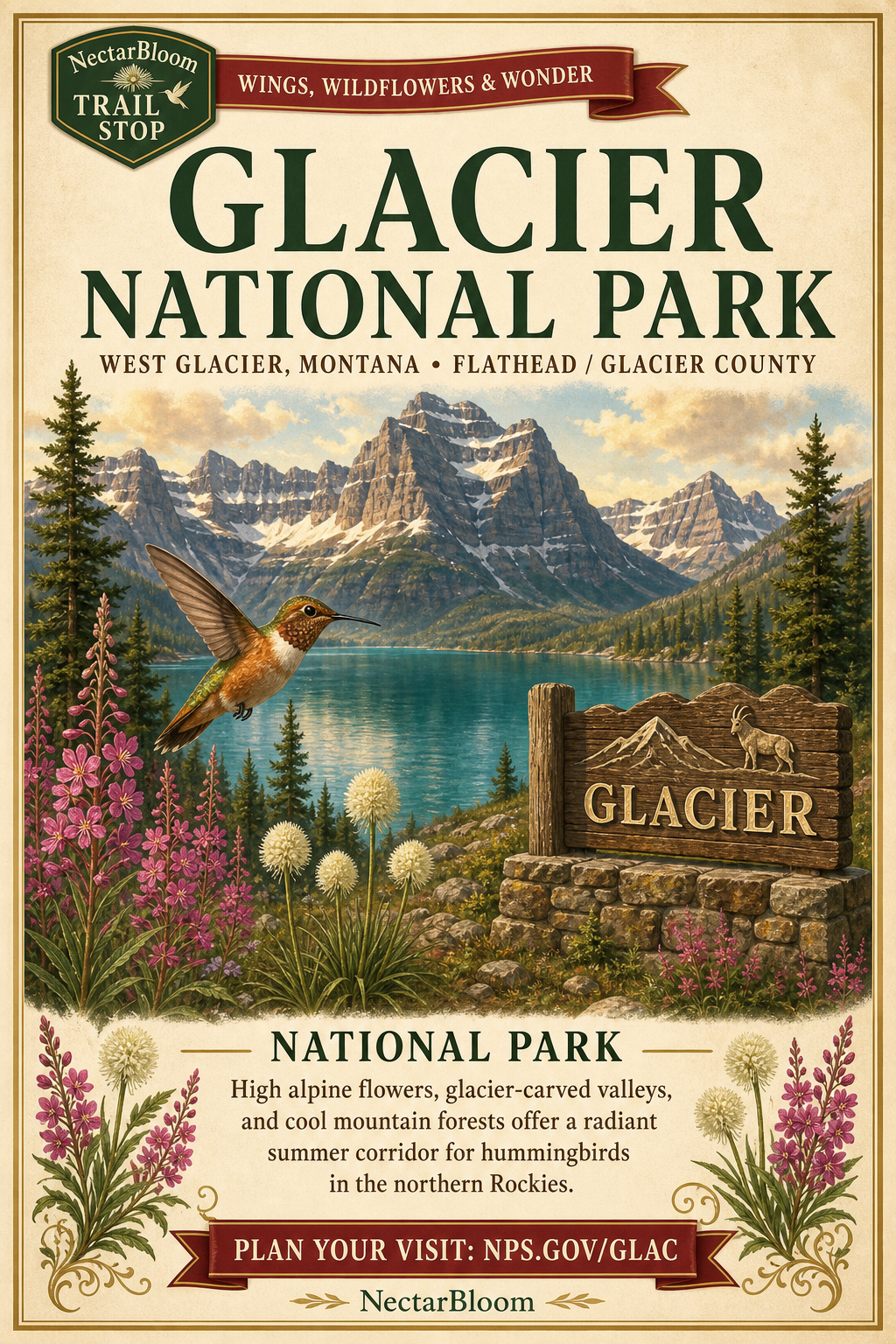
    View Glacier National Park in West Glacier, MontanaHummingbirds at Glacier National Park in West Glacier, Montana
    Map

    Flathead / Glacier County

    Glacier National Park

    West Glacier

    Glacier National Park — one of the crown jewels of the U.S. National Park System — encompasses more than a million acres of pristine Rocky Mountain wilderness where both Rufous and Calliope Hummingbirds breed in the subalpine meadows and forest edges. Video footage from the park's Going-to-the-Sun Road birding surveys has documented these vivid little birds hovering at Indian paintbrush and lupine against some of the most dramatic mountain backdrops on the continent. The Glacier Institute offers expert-led birding hikes that specifically target the park's varied habitats — burned forests, McDonald Creek cascades, avalanche slopes, and subalpine meadows — providing professional context for every hummingbird encounter. Both breeding species here (Rufous and Calliope) are federally designated Birds of Conservation Concern.

    National ParkRufousCalliope+2 more

    View garden →

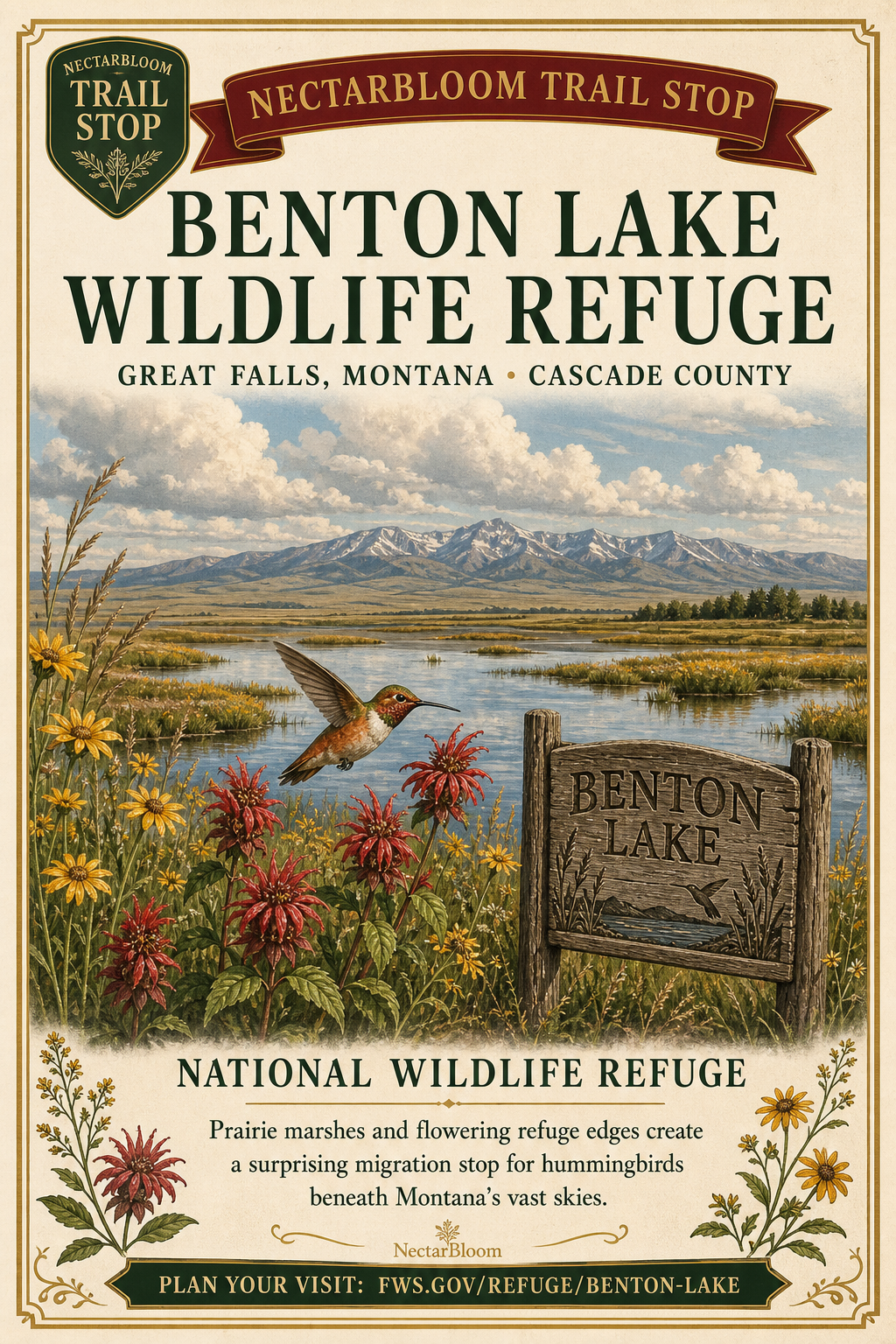
    View Benton Lake National Wildlife Refuge in Great Falls, MontanaHummingbirds at Benton Lake National Wildlife Refuge in Great Falls, Montana
    Map

    Cascade County

    Benton Lake National Wildlife Refuge

    Great Falls

    On the windswept prairie east of the Rocky Mountain Front, Benton Lake National Wildlife Refuge is a landscape of continental scale — 12,383 acres of marsh, prairie, and shelterbelt habitat that has earned dual recognition as a Globally Important Bird Area and Western Hemisphere Shorebird Reserve Network site. The U.S. Fish & Wildlife Service explicitly names Benton Lake as key habitat for the Calliope Hummingbird, the smallest long-distance avian migrant in the world. Though the refuge is primarily famous for its grassland and wetland bird diversity, the shelterbelt plantings and riparian shrub zones along the auto tour route provide hummingbird habitat from May through August. This is prairie birding at its most immersive — vast, wild, and scientifically significant.

    National Wildlife Refuge / Globally Important Bird AreaCalliopeRufous

    View garden →

    Best Time to See Hummingbirds in Montana

    Peak hummingbird activity in Montana typically runs May, June, July, August. Spring migration brings the highest diversity, with early morning and late afternoon being the best viewing hours.

    Typical arrival
    Late March (south) – May (north)
    Typical departure
    Early September
    Hang your feeder
    Two weeks before local thaw

    Multiple species; Broad-tailed Hummingbirds are usually first in. See the full state-by-state feeder timing guide.

    Map of Hummingbird Locations in Montana

    Switch the view above to to see featured locations plotted geographically.

    Common Hummingbird Species in Montana

    • Rufous Hummingbird
    • Calliope Hummingbird
    • Black-chinned Hummingbird
    • Ruby-throated Hummingbird (special eastern visitor)

    Counties on the Hummingbird Trail

    Hummingbird Questions About Montana

    When do hummingbirds arrive in Montana?

    Hummingbirds typically arrive in Montana in Late March (south) – May (north) and leave again by Early September. Multiple species; Broad-tailed Hummingbirds are usually first in.

    When should you put out hummingbird feeders in Montana?

    Hang feeders in Montana by Two weeks before local thaw — about one to two weeks before the first birds arrive in Late March (south) – May (north) — so early migrants find your feeder immediately.

    What kinds of hummingbirds live in Montana?

    The hummingbird species regularly recorded in Montana are: Rufous Hummingbird, Calliope Hummingbird, Black-chinned Hummingbird, Ruby-throated Hummingbird (special eastern visitor).

    Share Your Visit

    Saw hummingbirds in Montana? Help fellow flock-watchers by sharing a photo, rating, and note from your visit.

    Fresh nectar in a minute.

    Buy on Amazon