Shop & Support the Mission

    Fresh nectar in a minute.

    Every bag of NectarBloom™ funds the guides, the Hummingbird Trail, the lab testing, and the free care resources on this site. When you buy our nectar, you help us keep hummingbird education open, honest, and growing — for every bird lover, everywhere.

    NectarBloom 2 lb bag — pure cane sugar hummingbird nectar

    NectarBloom™ — 2 lb Bag

    Fresh nectar in a minute.

    No boiling, no dye. The same sugar hummingbird flowers make. One ingredient, nothing else. Makes up to 160 oz of fresh feeder nectar per bag.

    • Fresh nectar in a minute: measure, stir until clear, and pour
    • No boiling, no dye
    • The same sugar hummingbird flowers make
    • One ingredient, nothing else: 100% pure cane sugar
    • Lab tested. Resealable 2 lb bag, sourced and packed in the USA

    1 Bag · 2 lb

    $21.99

    Free shipping included

    Best Value

    2 Bags · Season Supply

    $39.88

    Free shipping included

    Direct orders are temporarily sold out. NectarBloom™ is still available on Amazon.

    Buy on Amazon

    Ships fast via Amazon Prime

    See full product details

    Direct orders temporarily unavailable

    “Your purchase isn’t just nectar — it’s how we keep this hummingbird care library free, accurate, and growing.”

    Thank you for flying with us

    Overview

    New Hampshire's forested hills and seacoast garden estates host Ruby-throated Hummingbirds throughout the summer season, from late May arrivals to September departures. The state's combination of intimate historic seaside gardens and Audubon wildlife sanctuaries make it an exceptional destination for native plant enthusiasts and hummingbird watchers.

    Audubon chapters and reader sightings in New Hampshire

    Filter gardens
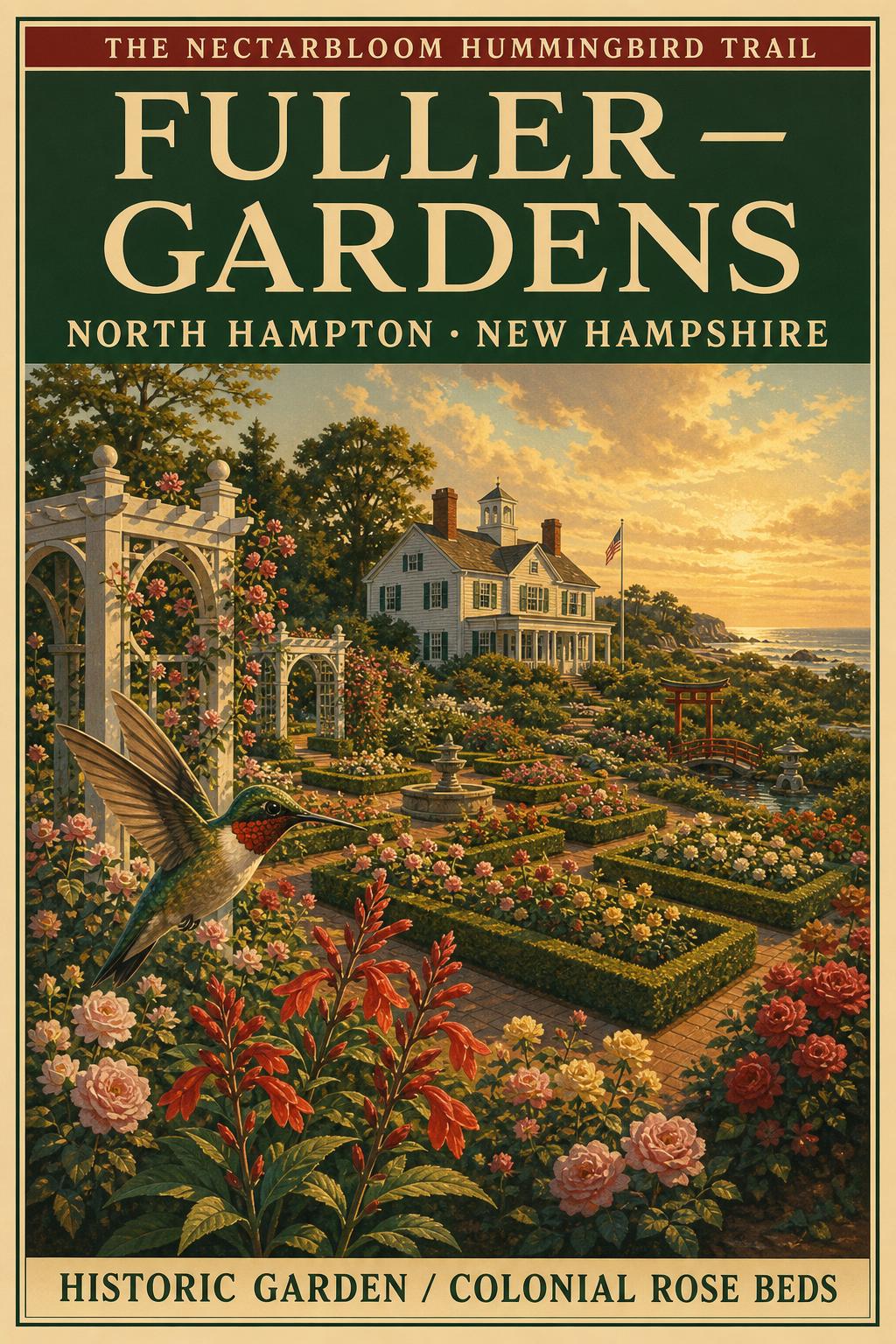
    View Fuller Gardens in North Hampton, New HampshireHummingbirds at Fuller Gardens in North Hampton, New Hampshire
    Map

    Rockingham County

    Fuller Gardens

    North Hampton

    A historic seaside botanical garden perched within sight of the Atlantic Ocean at Little Boars Head, Fuller Gardens was commissioned in the late 1920s by Massachusetts Governor Alvan T. Fuller and designed by the Olmsted Firm. The 3-acre garden features over 1,700 rose bushes, English perennial borders, a Japanese Garden, a Hosta Garden, a Dahlia display, and a tropical conservatory. The perennial borders provide continuous bloom from spring through fall, with Ruby-throated Hummingbirds visiting the bee balm and phlox in the English perennial borders from June through early September.

    Historic GardenRuby-throated

    View garden →
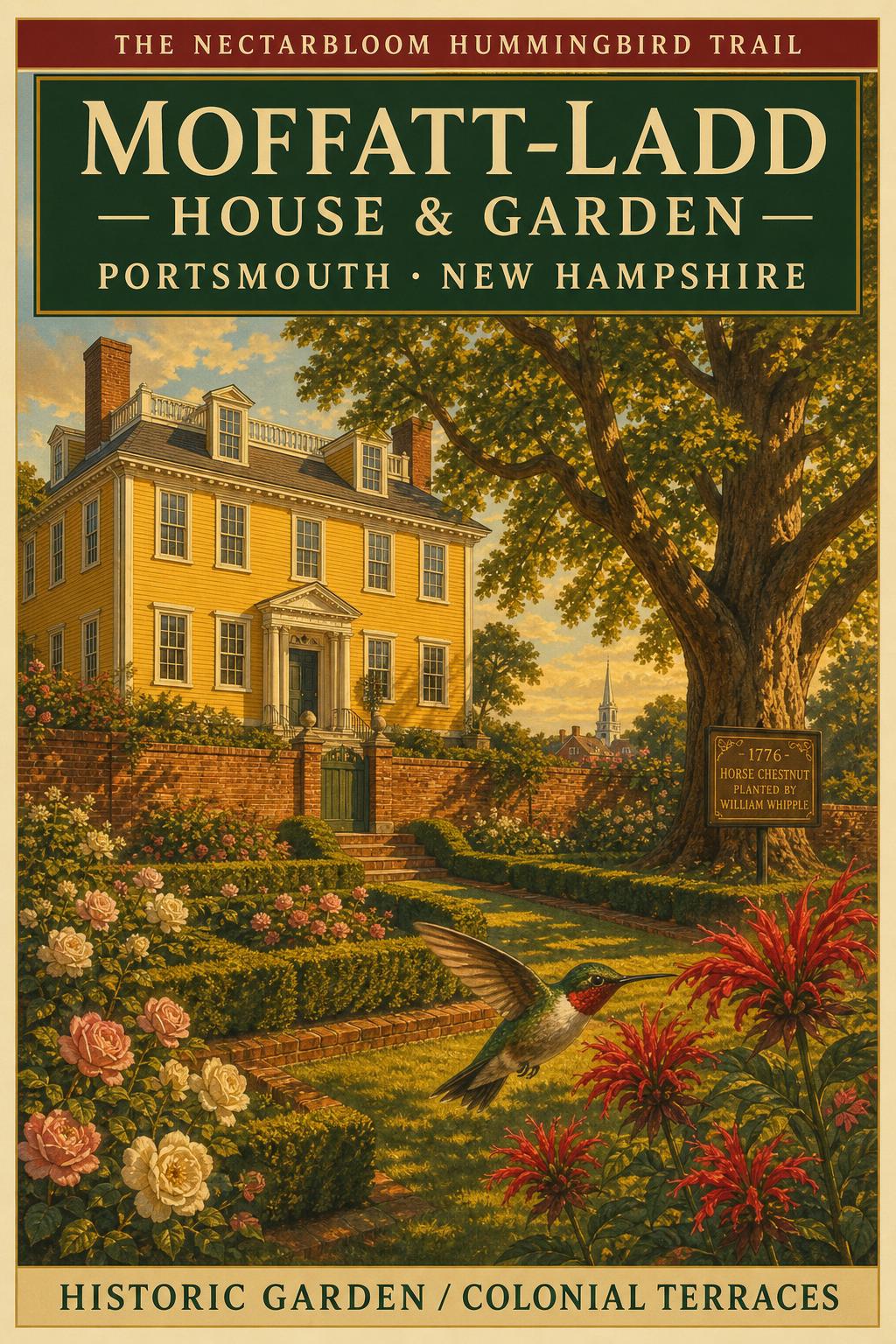
    View Moffatt-Ladd House & Garden Museum in Portsmouth, New HampshireHummingbirds at Moffatt-Ladd House & Garden Museum in Portsmouth, New Hampshire
    Map

    Rockingham County

    Moffatt-Ladd House & Garden Museum

    Portsmouth

    The Moffatt-Ladd House is a National Historic Landmark open as a historic house museum since 1912 — one of the finest Georgian houses in colonial New England, built by merchant John Moffatt in 1763. The terraced garden behind the house incorporates a Colonial Revival-style design with period-appropriate plantings, climbing roses, old-fashioned perennials, and fragrant herbs. Located in the heart of downtown Portsmouth, it provides a surprising oasis of bloom. Ruby-throated Hummingbirds visit the flowering perennial borders from June through early September.

    Historic GardenRuby-throated

    View garden →
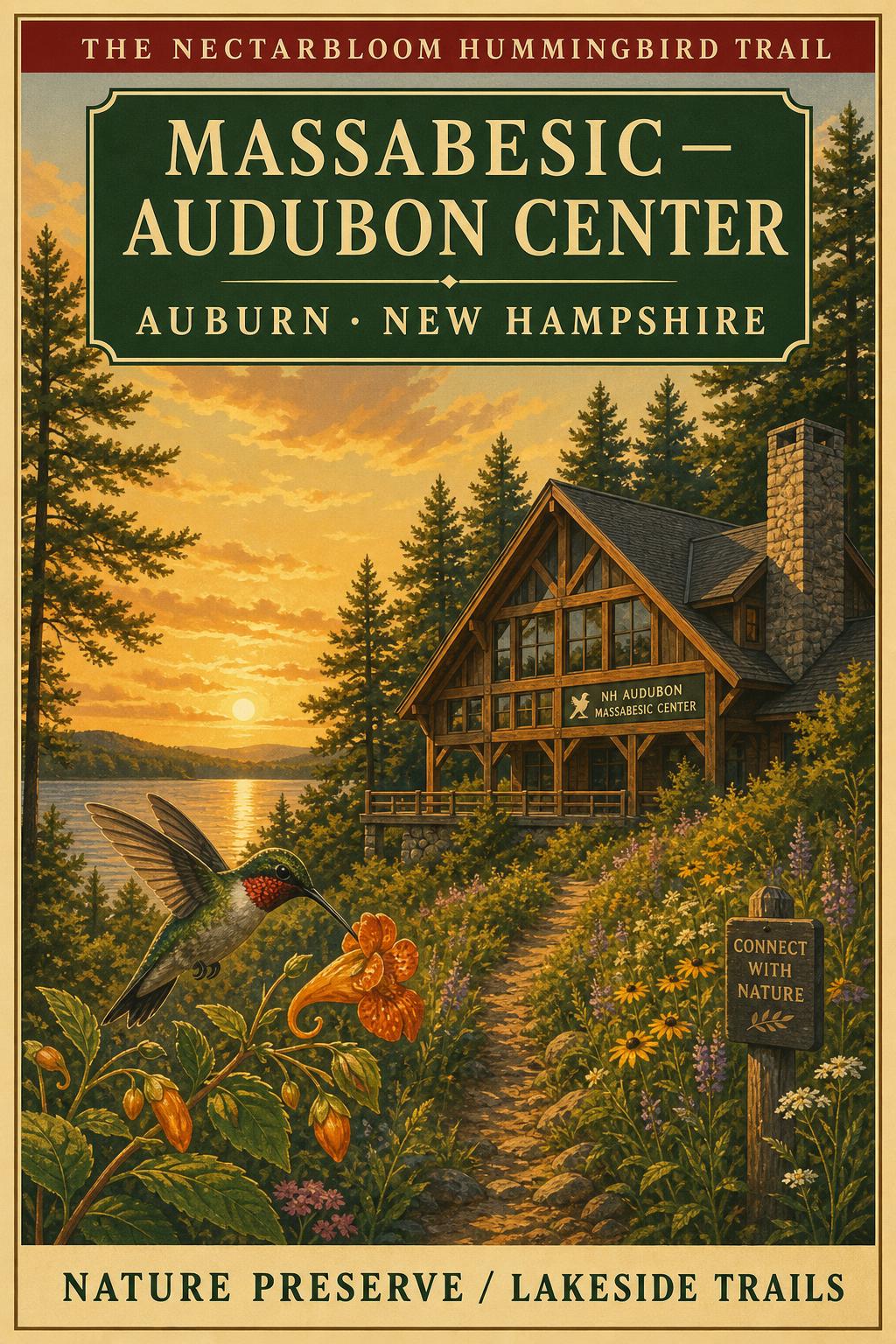
    View NH Audubon Massabesic Center in Auburn, New HampshireHummingbirds at NH Audubon Massabesic Center in Auburn, New Hampshire
    Map

    Rockingham County

    NH Audubon Massabesic Center

    Auburn

    The Massabesic Audubon Center is a 130-acre wildlife sanctuary in Auburn with more than five miles of trails through rolling fields, mature deciduous forest, woodland wetlands, a pond, and marshes adjacent to Lake Massabesic. The center features native pollinator gardens open daily dawn to dusk, live animal exhibits, and an All Persons Trail through grasslands, wetland areas, and native plant gardens. NH Audubon hosts an annual Pollinator Fest and Native Plant Sale — Ruby-throated Hummingbirds nest on the sanctuary grounds.

    Wildlife SanctuaryRuby-throated

    View garden →

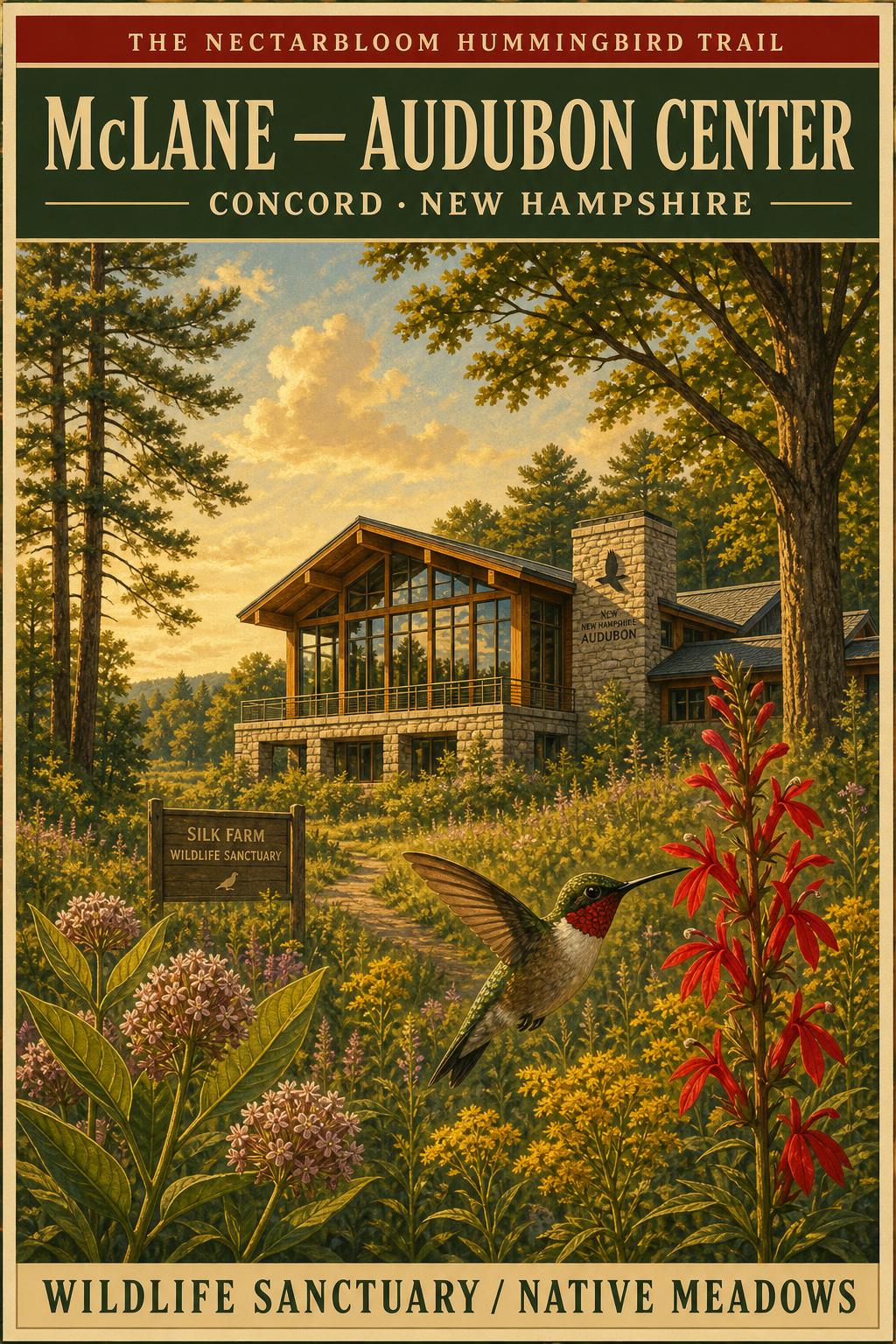
    View McLane Center, New Hampshire Audubon Society Headquarters in Concord, New HampshireHummingbirds at McLane Center, New Hampshire Audubon Society Headquarters in Concord, New Hampshire
    Map

    Merrimack County

    McLane Center, New Hampshire Audubon Society Headquarters

    Concord

    The McLane Center serves as the headquarters of New Hampshire Audubon and features native plant demonstration gardens maintained as living examples of hummingbird- and wildlife-friendly landscaping. The property includes meadow habitats and educational pollinator garden plantings that showcase native Northeast plants including wild columbine, bee balm, and cardinal flower. NH Audubon actively promotes native plant gardening for hummingbirds through educational programming and annual plant sales held at this location.

    Audubon Headquarters GardenRuby-throated

    View garden →

    Best Time to See Hummingbirds in New Hampshire

    Peak hummingbird activity in New Hampshire typically runs May, June, July, August, September, October. Spring migration brings the highest diversity, with early morning and late afternoon being the best viewing hours.

    Typical arrival
    Late April – mid May
    Typical departure
    Mid September
    Hang your feeder
    Mid-April

    A short but intense season — birds nest quickly after arrival. See the full state-by-state feeder timing guide.

    Most Common Hummingbird in New Hampshire

    The most common hummingbird across New Hampshire is the Ruby-throated.

    Map of Hummingbird Locations in New Hampshire

    Switch the view above to to see featured locations plotted geographically.

    Common Hummingbird Species in New Hampshire

    • Ruby-throated

    Counties on the Hummingbird Trail

    Hummingbird Questions About New Hampshire

    When do hummingbirds arrive in New Hampshire?

    Hummingbirds typically arrive in New Hampshire in Late April – mid May and leave again by Mid September. A short but intense season — birds nest quickly after arrival.

    When should you put out hummingbird feeders in New Hampshire?

    Hang feeders in New Hampshire by Mid-April — about one to two weeks before the first birds arrive in Late April – mid May — so early migrants find your feeder immediately.

    What kinds of hummingbirds live in New Hampshire?

    The hummingbird species regularly recorded in New Hampshire are: Ruby-throated.

    Share Your Visit

    Saw hummingbirds in New Hampshire? Help fellow flock-watchers by sharing a photo, rating, and note from your visit.

    Fresh nectar in a minute.

    Buy on Amazon