Shop & Support the Mission

    Fresh nectar in a minute.

    Every bag of NectarBloom™ funds the guides, the Hummingbird Trail, the lab testing, and the free care resources on this site. When you buy our nectar, you help us keep hummingbird education open, honest, and growing — for every bird lover, everywhere.

    NectarBloom 2 lb bag — pure cane sugar hummingbird nectar

    NectarBloom™ — 2 lb Bag

    Fresh nectar in a minute.

    No boiling, no dye. The same sugar hummingbird flowers make. One ingredient, nothing else. Makes up to 160 oz of fresh feeder nectar per bag.

    • Fresh nectar in a minute: measure, stir until clear, and pour
    • No boiling, no dye
    • The same sugar hummingbird flowers make
    • One ingredient, nothing else: 100% pure cane sugar
    • Lab tested. Resealable 2 lb bag, sourced and packed in the USA

    1 Bag · 2 lb

    $21.99

    Free shipping included

    Best Value

    2 Bags · Season Supply

    $39.88

    Free shipping included

    Direct orders are temporarily sold out. NectarBloom™ is still available on Amazon.

    Buy on Amazon

    Ships fast via Amazon Prime

    See full product details

    Direct orders temporarily unavailable

    “Your purchase isn’t just nectar — it’s how we keep this hummingbird care library free, accurate, and growing.”

    Thank you for flying with us

    Overview

    Ruby-throated Hummingbirds migrate through New Jersey in remarkable concentrations — Cape May is one of the most documented fall migration concentration points for the species on the East Coast. New Jersey's combination of migration hotspots, university gardens, and legendary herb farms creates an outstanding hummingbird garden circuit.

    Audubon chapters and reader sightings in New Jersey

    Filter gardens
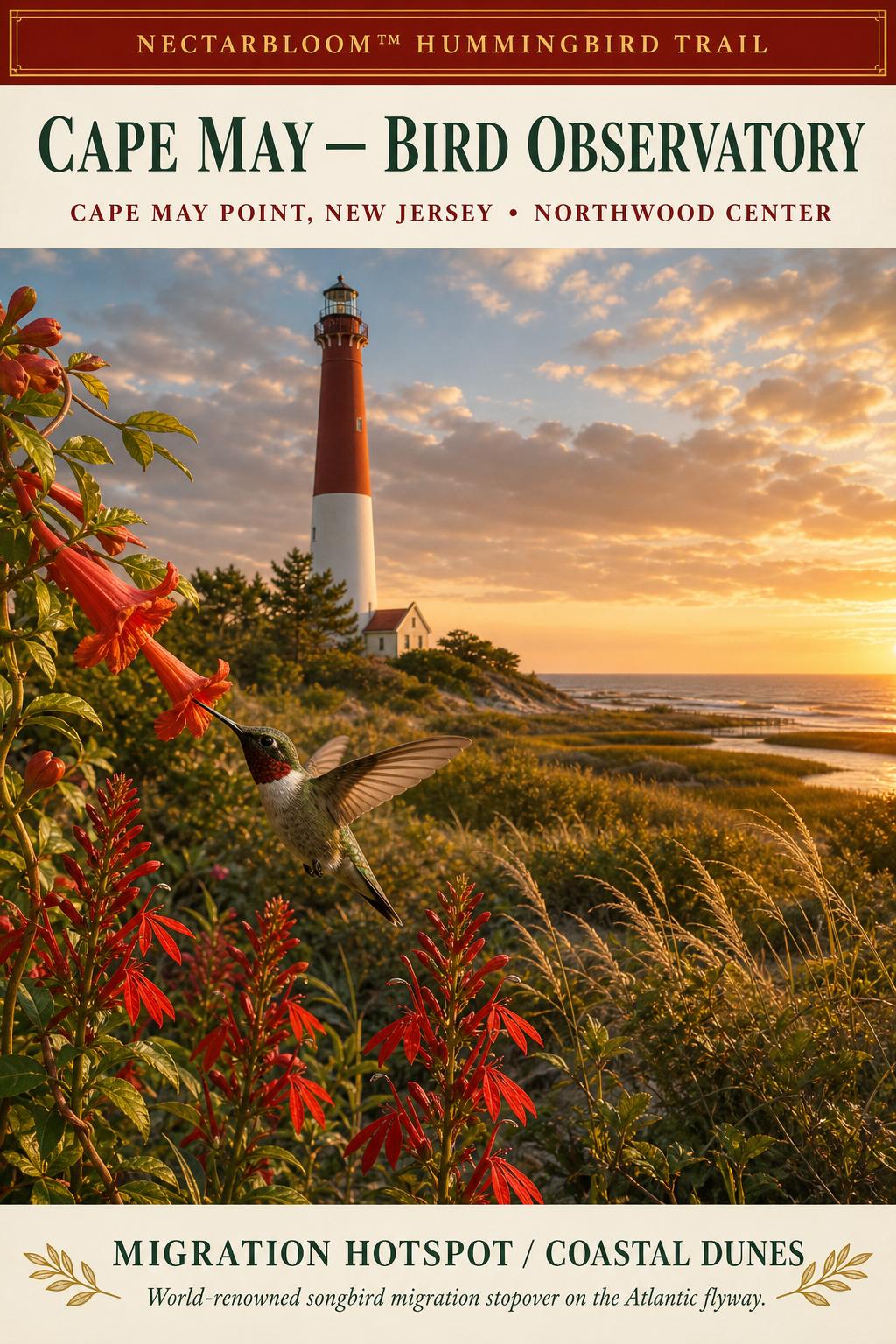
    View Cape May Bird Observatory — Northwood Center in Cape May Point, New JerseyHummingbirds at Cape May Bird Observatory — Northwood Center in Cape May Point, New Jersey
    Map

    Cape May County

    Cape May Bird Observatory — Northwood Center

    Cape May Point

    Founded in 1976 by New Jersey Audubon, the Cape May Bird Observatory (CMBO) is one of the premier bird observation and conservation institutions in North America, stationed at one of the world's most celebrated migratory junctions. National Geographic has listed Cape May as one of the world's best birding destinations. The narrow Cape May peninsula acts as a natural funnel, concentrating millions of migrating hawks, songbirds, shorebirds, and hummingbirds each autumn. August and September bring the highest densities of southbound ruby-throated hummingbirds anywhere in New Jersey.

    Wildlife SanctuaryRuby-throated

    View garden →
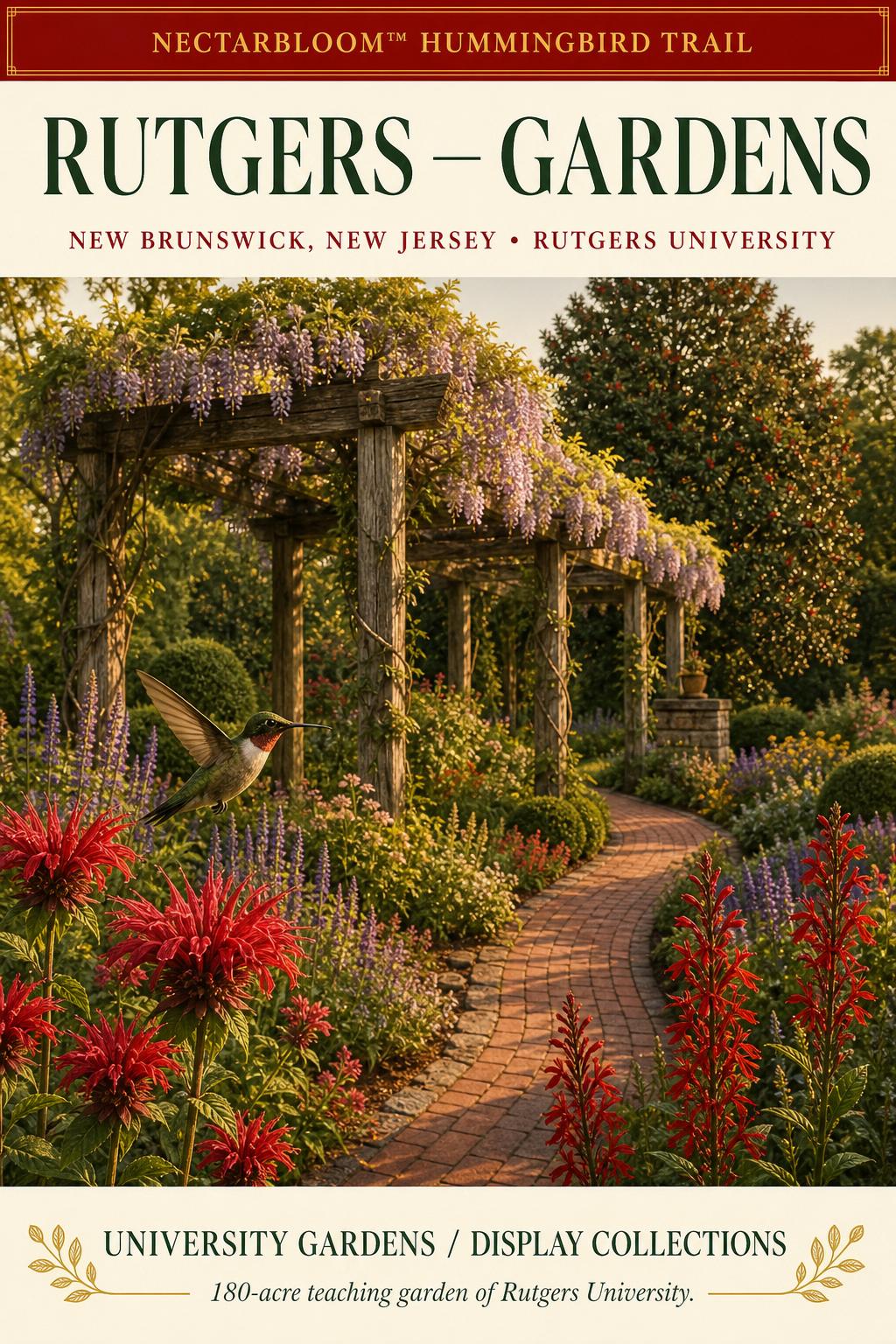
    View Rutgers Gardens in New Brunswick, New JerseyHummingbirds at Rutgers Gardens in New Brunswick, New Jersey
    Map

    Middlesex County

    Rutgers Gardens

    New Brunswick

    The official botanical garden of Rutgers University, Rutgers Gardens covers 180 acres in New Brunswick and serves as both a public garden and a living laboratory for horticultural research. The garden features extensive All-America Selections display gardens evaluated for pollinator performance, a bamboo forest, and woodland trail areas. As a university research garden, it regularly evaluates native and ornamental plants for pollinator value, and Rutgers Cooperative Extension actively promotes ruby-throated hummingbird plantings throughout New Jersey.

    University GardenRuby-throated

    View garden →

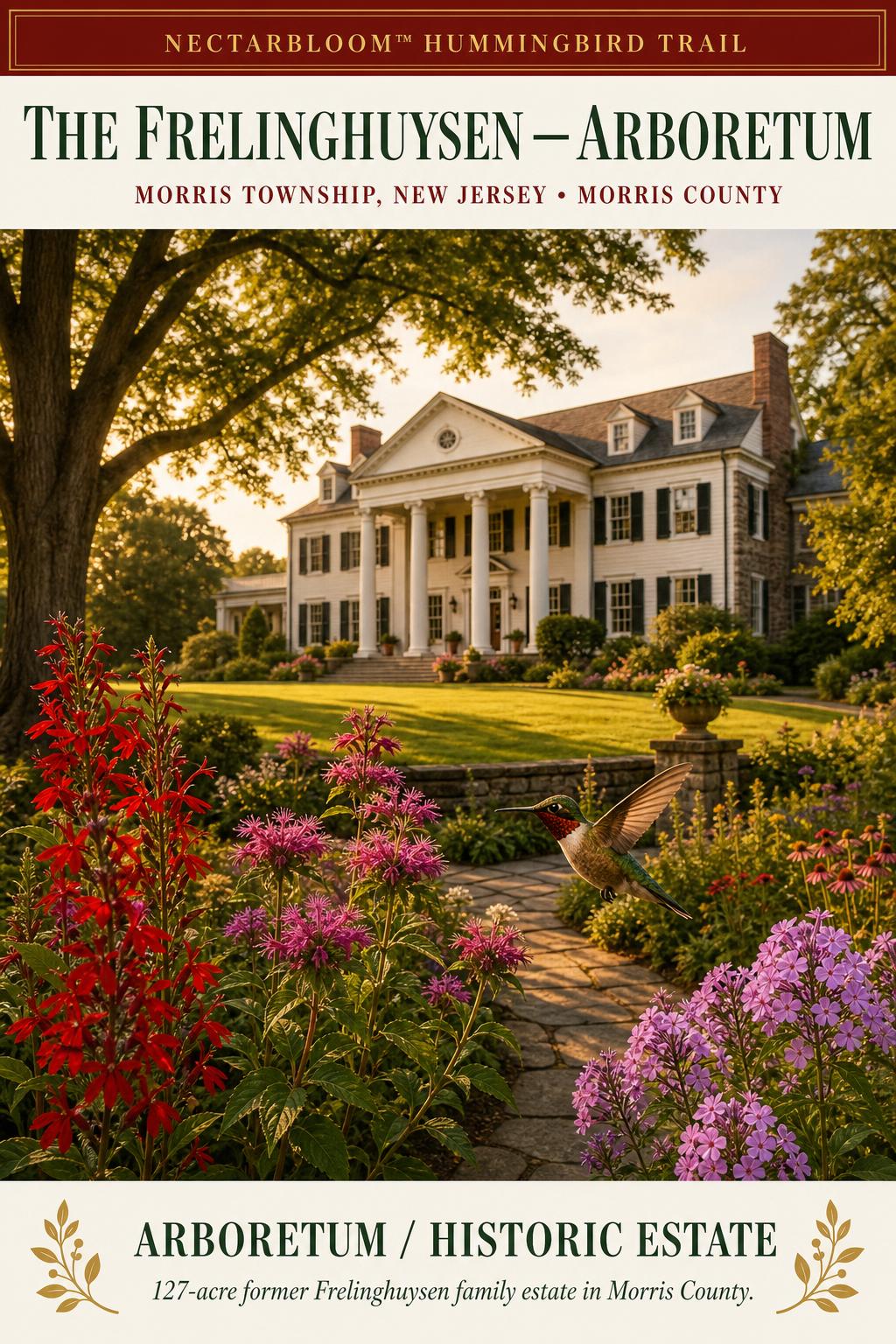
    View The Frelinghuysen Arboretum in Morris Township, New JerseyHummingbirds at The Frelinghuysen Arboretum in Morris Township, New Jersey
    Map

    Morris County

    The Frelinghuysen Arboretum

    Morris Township

    A beautifully maintained 127-acre public arboretum managed by the Morris County Park Commission, the Frelinghuysen Arboretum surrounds a historic Colonial Revival mansion built in 1891. The grounds feature nearly 2,000 specimen trees and plantings arranged in formal gardens, a rose garden, woodland trails, meadows, and display perennial borders. Free and open daily from 8 a.m. to sunset, the arboretum's blend of formal plantings and naturalistic woodland habitats creates layered habitat for ruby-throated hummingbirds throughout the New Jersey growing season.

    ArboretumRuby-throated

    View garden →

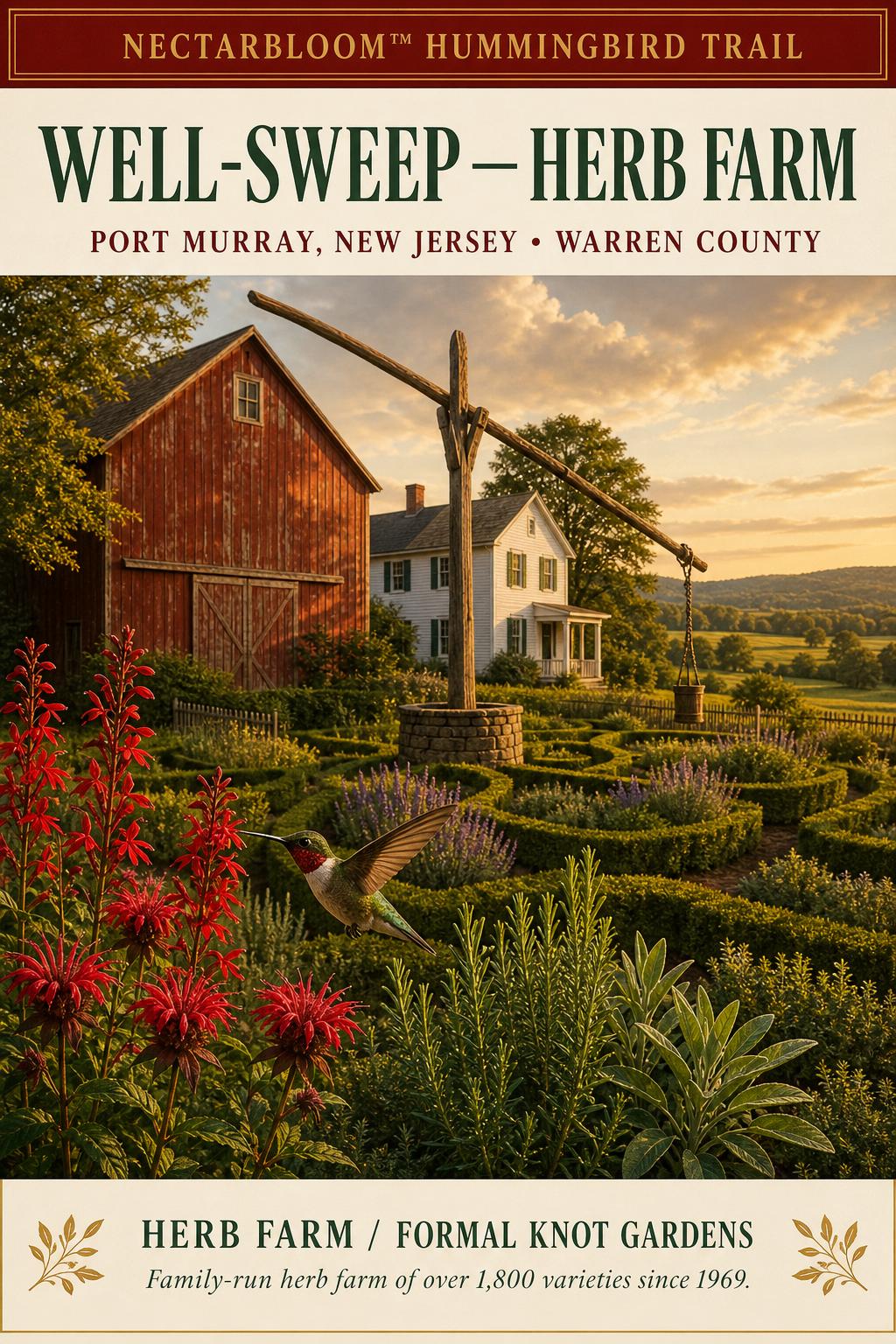
    View Well-Sweep Herb Farm in Port Murray, New JerseyHummingbirds at Well-Sweep Herb Farm in Port Murray, New Jersey
    Map

    Warren County

    Well-Sweep Herb Farm

    Port Murray

    Founded in 1969 and now run by the third generation of the Hyde family, Well-Sweep Herb Farm is a legendary destination nursery in Warren County — home to one of the largest herb and perennial collections in the United States. Over 6 acres of themed display gardens showcase more than 2,000 varieties, including an exceptional collection of 80+ varieties of scented geraniums and one of the finest salvia collections anywhere in the Northeast. The extraordinary density of tubular, nectar-rich herbs and salvias makes it a genuine hummingbird hotspot throughout summer and migration.

    Herb Garden & NurseryRuby-throated

    View garden →

    Best Time to See Hummingbirds in New Jersey

    Peak hummingbird activity in New Jersey typically runs May, June, July, August, September. Spring migration brings the highest diversity, with early morning and late afternoon being the best viewing hours.

    Typical arrival
    Early – mid April
    Typical departure
    Late September
    Hang your feeder
    Late March

    Peak arrival lands in mid-April across most of the region. See the full state-by-state feeder timing guide.

    Most Common Hummingbird in New Jersey

    The most common hummingbird across New Jersey is the Ruby-throated.

    Map of Hummingbird Locations in New Jersey

    Switch the view above to to see featured locations plotted geographically.

    Common Hummingbird Species in New Jersey

    • Ruby-throated

    Hummingbird Questions About New Jersey

    When do hummingbirds arrive in New Jersey?

    Hummingbirds typically arrive in New Jersey in Early – mid April and leave again by Late September. Peak arrival lands in mid-April across most of the region.

    When should you put out hummingbird feeders in New Jersey?

    Hang feeders in New Jersey by Late March — about one to two weeks before the first birds arrive in Early – mid April — so early migrants find your feeder immediately.

    What kinds of hummingbirds live in New Jersey?

    The hummingbird species regularly recorded in New Jersey are: Ruby-throated.

    Share Your Visit

    Saw hummingbirds in New Jersey? Help fellow flock-watchers by sharing a photo, rating, and note from your visit.

    Fresh nectar in a minute.

    Buy on Amazon