Shop & Support the Mission

    Fresh nectar in a minute.

    Every bag of NectarBloom™ funds the guides, the Hummingbird Trail, the lab testing, and the free care resources on this site. When you buy our nectar, you help us keep hummingbird education open, honest, and growing — for every bird lover, everywhere.

    NectarBloom 2 lb bag — pure cane sugar hummingbird nectar

    NectarBloom™ — 2 lb Bag

    Fresh nectar in a minute.

    No boiling, no dye. The same sugar hummingbird flowers make. One ingredient, nothing else. Makes up to 160 oz of fresh feeder nectar per bag.

    • Fresh nectar in a minute: measure, stir until clear, and pour
    • No boiling, no dye
    • The same sugar hummingbird flowers make
    • One ingredient, nothing else: 100% pure cane sugar
    • Lab tested. Resealable 2 lb bag, sourced and packed in the USA

    1 Bag · 2 lb

    $21.99

    Free shipping included

    Best Value

    2 Bags · Season Supply

    $39.88

    Free shipping included

    Direct orders are temporarily sold out. NectarBloom™ is still available on Amazon.

    Buy on Amazon

    Ships fast via Amazon Prime

    See full product details

    Direct orders temporarily unavailable

    “Your purchase isn’t just nectar — it’s how we keep this hummingbird care library free, accurate, and growing.”

    Thank you for flying with us

    Overview

    Ruby-throated Hummingbirds reach the northern edge of their range in North Dakota, where summer visitors follow the Missouri and Red River Valley corridors. The International Peace Garden, Theodore Roosevelt National Park's wildflower meadows, and river-corridor parks offer unique hummingbird experiences at the edge of the species' range.

    Audubon chapters and reader sightings in North Dakota

    Filter gardens
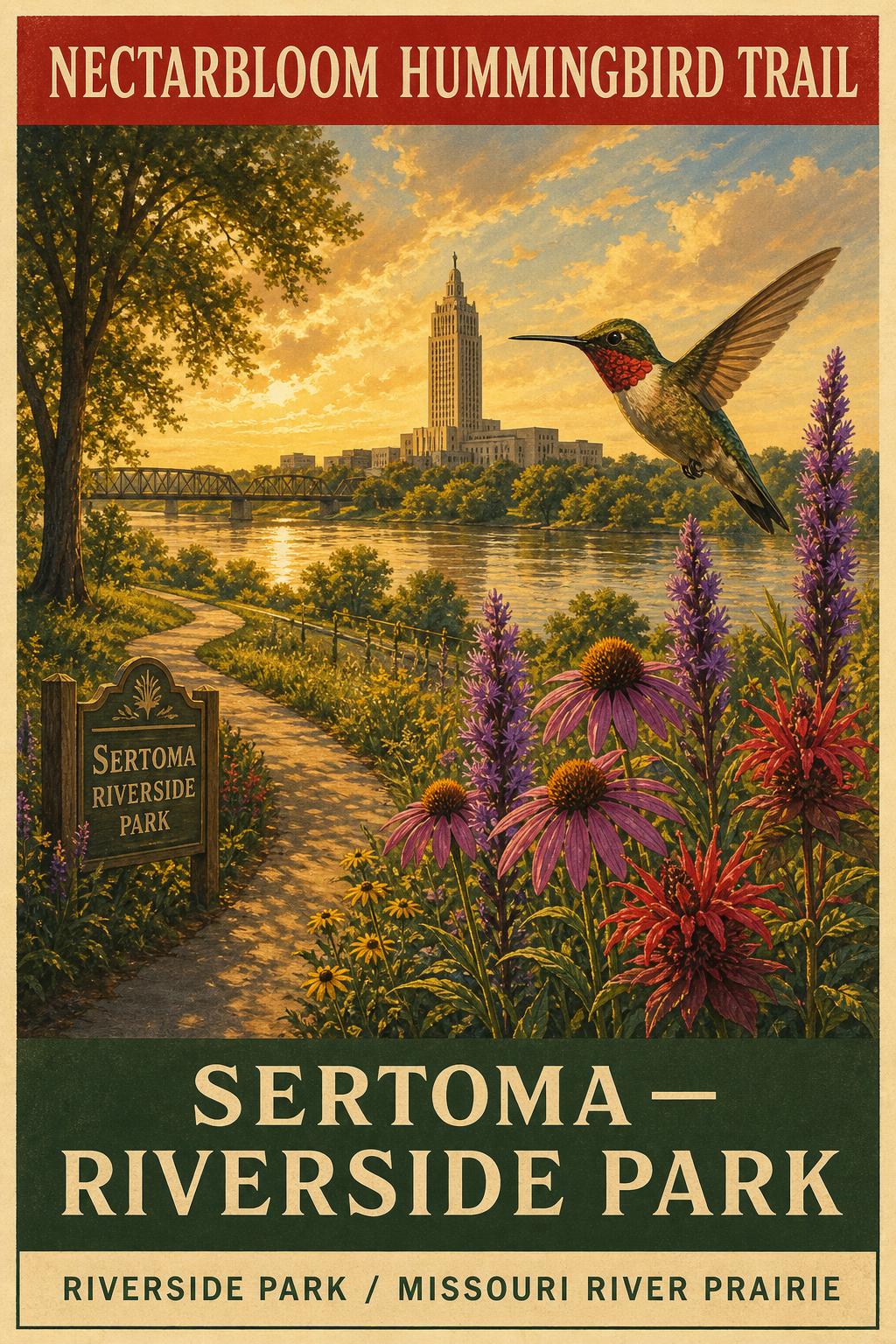
    View Sertoma Riverside Park in Bismarck, North DakotaHummingbirds at Sertoma Riverside Park in Bismarck, North Dakota
    Map

    Burleigh County

    Sertoma Riverside Park

    Bismarck

    Sertoma Park is one of Bismarck's most-used public parks, stretching three miles along the Missouri River with over four miles of paved riverside trails. Within the park is the Dakota Zoo, home to 125 animal species. The park and zoo grounds feature flower beds, ornamental plantings, and access to Missouri River riparian habitat with native wildflowers in the floodplain areas. The combination of formal plantings and adjacent native riparian corridor makes Sertoma a viable summer hummingbird location — the Missouri River corridor is a key migration route for Ruby-throated Hummingbirds.

    City Park & Nature TrailRuby-throated

    View garden →
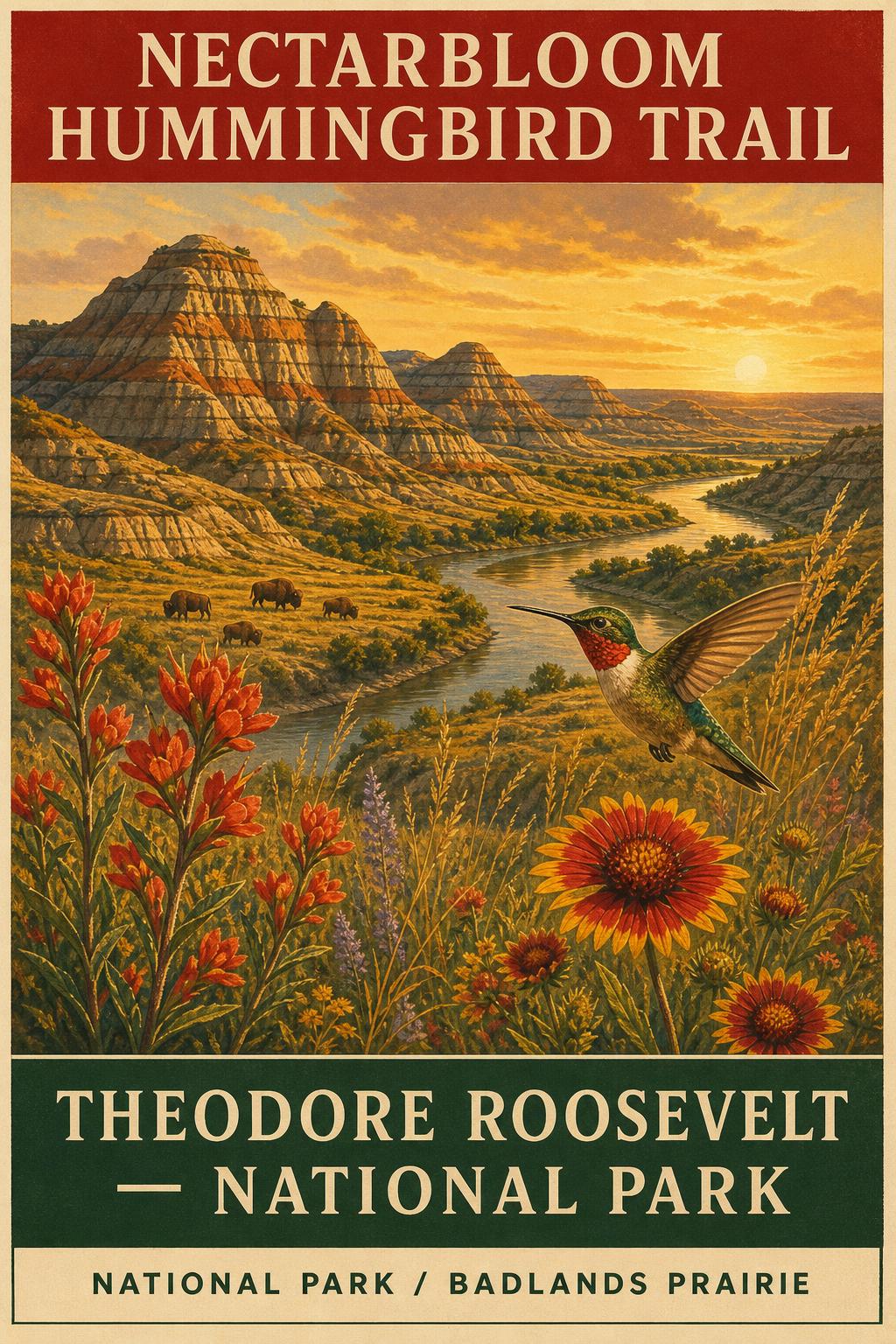
    View Theodore Roosevelt National Park in Medora, North DakotaHummingbirds at Theodore Roosevelt National Park in Medora, North Dakota
    Map

    Billings County

    Theodore Roosevelt National Park

    Medora

    Theodore Roosevelt National Park protects 70,000+ acres of striking badlands landscape in southwestern North Dakota, divided into a South Unit near Medora and a North Unit. The park shelters over 400 plant species, sustaining diverse wildlife including bison, pronghorn, elk, and wild horses. Prairie wildflowers including penstemons, wild bergamot, scarlet globemallow, and wood lilies bloom in abundance in June–July, attracting Ruby-throated Hummingbirds at the western fringe of their range. The park is a designated Important Bird Area.

    National ParkRuby-throated

    View garden →

    View International Peace Garden in Dunseith, North DakotaHummingbirds at International Peace Garden in Dunseith, North Dakota
    Map

    Rolette County

    International Peace Garden

    Dunseith

    Founded in 1932 on the North Dakota/Manitoba border and listed as a Distinctive Destination by the National Trust for Historic Preservation, the International Peace Garden spans nearly 2,400 acres of prairie, forest, and breathtaking formal floral displays. The garden is world-famous for planting 70,000–100,000 annual flowers each season in elaborate themed designs. The formal beds — including masses of salvia, petunias, snapdragons, and tubular annuals — combined with surrounding prairie wildflowers make the garden a significant summer nectar resource for Ruby-throated Hummingbirds near the northern edge of their range.

    International Botanical GardenRuby-throated

    View garden →

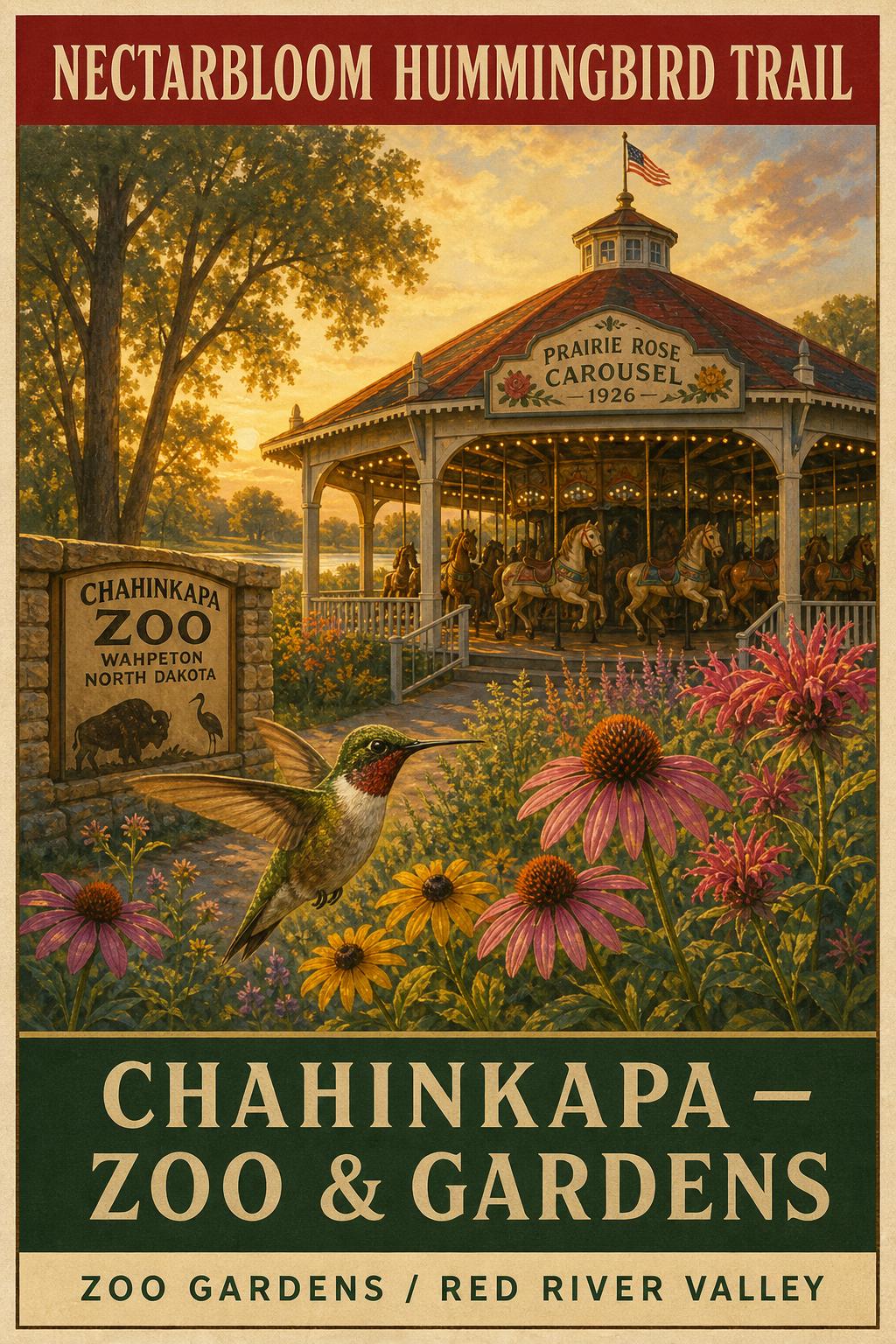
    View Chahinkapa Zoo in Wahpeton, North DakotaHummingbirds at Chahinkapa Zoo in Wahpeton, North Dakota
    Map

    Richland County

    Chahinkapa Zoo

    Wahpeton

    North Dakota's first zoo, open since 1933, Chahinkapa Zoo is a 29-acre wildlife and nature destination in Wahpeton's Chahinkapa Park along the Bois de Sioux River. The zoo is home to 70+ animal species and is surrounded by native prairie grassland habitat. The park's setting among North Dakota's native prairie ecosystem makes it an authentic stopover point for Ruby-throated Hummingbirds migrating through the Red River Valley corridor, and native plants in and around the zoo grounds provide critical refueling resources.

    Zoo & Nature ParkRuby-throated

    View garden →

    Best Time to See Hummingbirds in North Dakota

    Peak hummingbird activity in North Dakota typically runs April, June, July, August, September. Spring migration brings the highest diversity, with early morning and late afternoon being the best viewing hours.

    Typical arrival
    Mid – late May
    Typical departure
    Late August – early September
    Hang your feeder
    Early May

    The northernmost breeding range; the window is only a few months. See the full state-by-state feeder timing guide.

    Most Common Hummingbird in North Dakota

    The most common hummingbird across North Dakota is the Ruby-throated.

    Map of Hummingbird Locations in North Dakota

    Switch the view above to to see featured locations plotted geographically.

    Common Hummingbird Species in North Dakota

    • Ruby-throated

    Hummingbird Questions About North Dakota

    When do hummingbirds arrive in North Dakota?

    Hummingbirds typically arrive in North Dakota in Mid – late May and leave again by Late August – early September. The northernmost breeding range; the window is only a few months.

    When should you put out hummingbird feeders in North Dakota?

    Hang feeders in North Dakota by Early May — about one to two weeks before the first birds arrive in Mid – late May — so early migrants find your feeder immediately.

    What kinds of hummingbirds live in North Dakota?

    The hummingbird species regularly recorded in North Dakota are: Ruby-throated.

    Share Your Visit

    Saw hummingbirds in North Dakota? Help fellow flock-watchers by sharing a photo, rating, and note from your visit.

    Fresh nectar in a minute.

    Buy on Amazon