Shop & Support the Mission

    Fresh nectar in a minute.

    Every bag of NectarBloom™ funds the guides, the Hummingbird Trail, the lab testing, and the free care resources on this site. When you buy our nectar, you help us keep hummingbird education open, honest, and growing — for every bird lover, everywhere.

    NectarBloom 2 lb bag — pure cane sugar hummingbird nectar

    NectarBloom™ — 2 lb Bag

    Fresh nectar in a minute.

    No boiling, no dye. The same sugar hummingbird flowers make. One ingredient, nothing else. Makes up to 160 oz of fresh feeder nectar per bag.

    • Fresh nectar in a minute: measure, stir until clear, and pour
    • No boiling, no dye
    • The same sugar hummingbird flowers make
    • One ingredient, nothing else: 100% pure cane sugar
    • Lab tested. Resealable 2 lb bag, sourced and packed in the USA

    1 Bag · 2 lb

    $21.99

    Free shipping included

    Best Value

    2 Bags · Season Supply

    $39.88

    Free shipping included

    Direct orders are temporarily sold out. NectarBloom™ is still available on Amazon.

    Buy on Amazon

    Ships fast via Amazon Prime

    See full product details

    Direct orders temporarily unavailable

    “Your purchase isn’t just nectar — it’s how we keep this hummingbird care library free, accurate, and growing.”

    Thank you for flying with us

    Overview

    Oklahoma sits at a fascinating hummingbird crossroads. Ruby-throated Hummingbirds dominate the eastern two-thirds of the state, while Black-chinned Hummingbirds are more associated with the western and southwestern regions. Rufous Hummingbirds move through during fall migration, and rare western species can appear in the panhandle. This makes Oklahoma one of the more interesting transition states on the Hummingbird Trail, blending eastern woodland habitat, prairie edges, urban gardens, spring-fed riparian corridors, and high-desert landscapes. Best viewing generally runs from mid-April through late September, with August and September bringing peak migration excitement. Key nectar plants include trumpet creeper, coral honeysuckle, cardinal flower, bee balm, red buckeye, Turk's cap, and salvia.

    Audubon chapters and reader sightings in Oklahoma

    Filter gardens
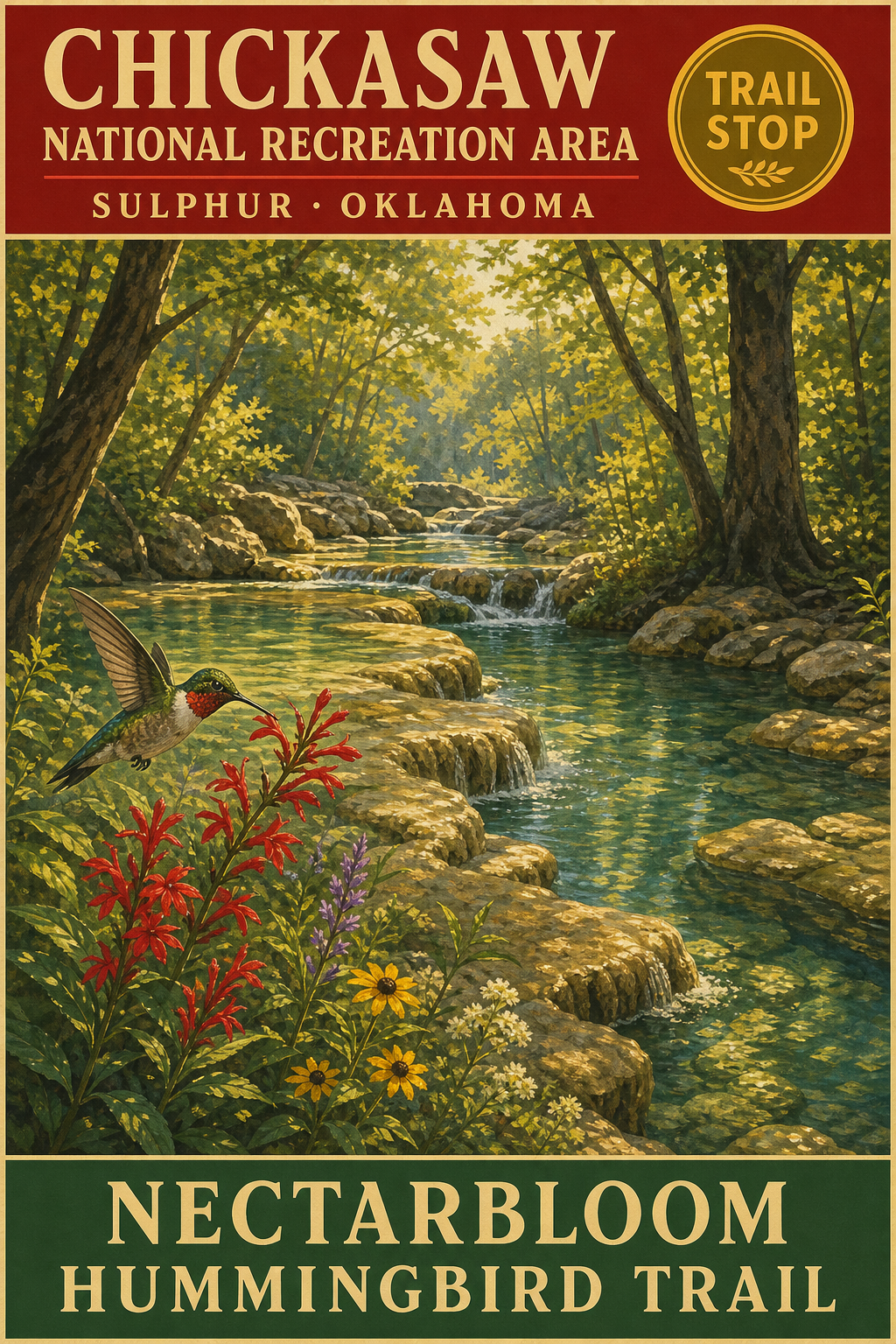
    View Chickasaw National Recreation Area in Sulphur, OklahomaHummingbirds at Chickasaw National Recreation Area in Sulphur, Oklahoma
    Map

    Murray County

    Chickasaw National Recreation Area

    Sulphur

    Chickasaw National Recreation Area wraps spring-fed streams, hardwood forest, and restored prairie around the town of Sulphur, creating surprisingly rich hummingbird habitat. Ruby-throated Hummingbirds are the most likely species along wooded creek corridors, where natural springs help maintain flowering plants even during the heat of late summer. The area's combination of mineral springs, forest edge, meadow openings, and dense insect life creates the layered habitat hummingbirds need for both nectar and protein. Its special guest possibility is the Black-chinned Hummingbird, more typical of western Oklahoma but possible in transitional areas. Early morning walks during July and August are especially promising.

    Nature PreserveRuby-throated HummingbirdBlack-chinned Hummingbird (possible)

    View garden →

    View Black Mesa State Park & Nature Preserve in Kenton, OklahomaHummingbirds at Black Mesa State Park & Nature Preserve in Kenton, Oklahoma
    Map

    Cimarron County

    Black Mesa State Park & Nature Preserve

    Kenton

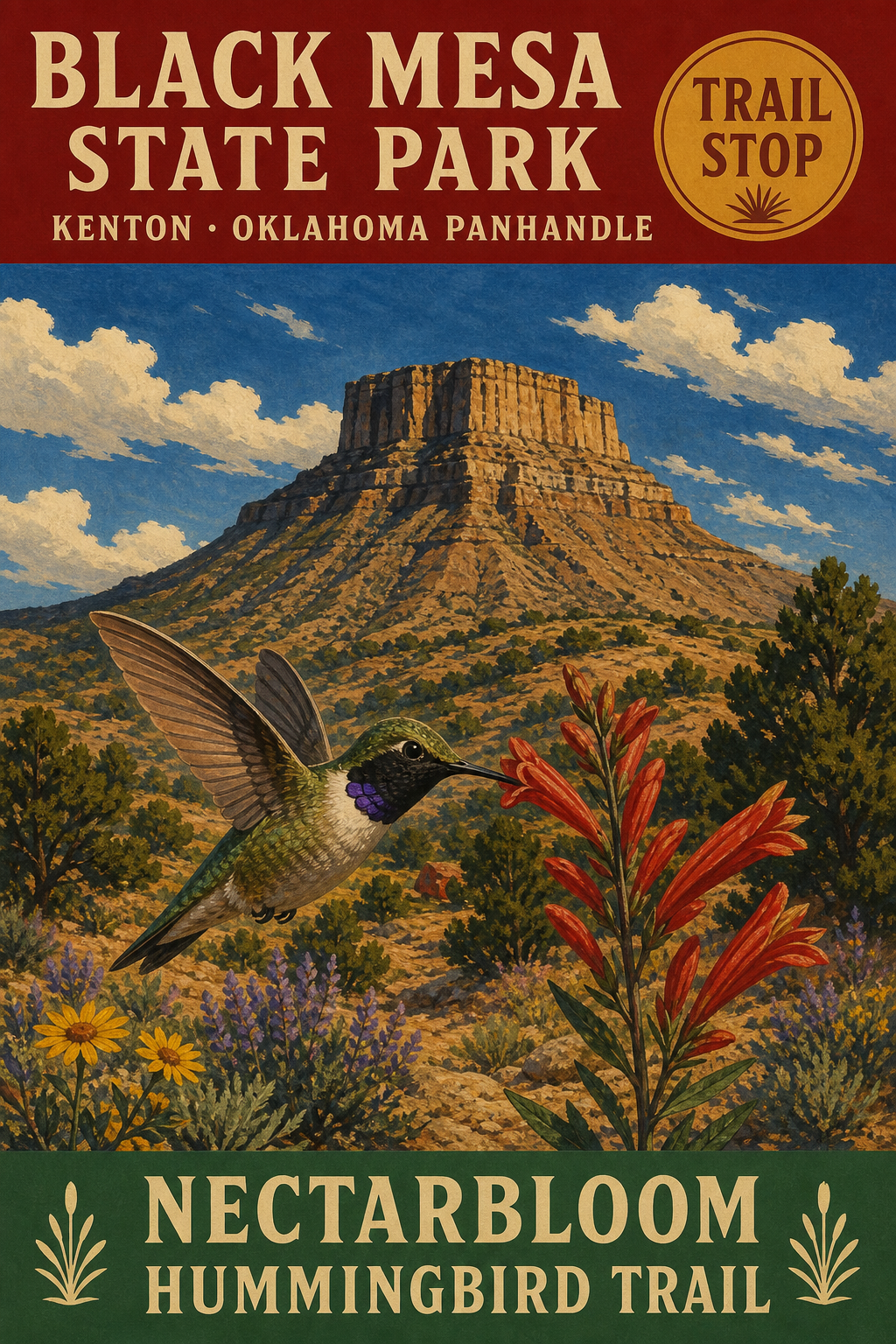
    At the far western tip of the Oklahoma panhandle, Black Mesa rises into a landscape that feels far removed from the tallgrass prairies to the east. This is where Oklahoma touches the Mountain West, and the hummingbird possibilities shift accordingly. Black-chinned Hummingbirds are the most likely species here in summer, Rufous Hummingbirds can pass through in fall, and the special guest to watch for is Broad-tailed Hummingbird, a rare western visitor. Pinyon-juniper scrubland, high-desert wildflowers, and wide-open mesa views make Black Mesa one of Oklahoma's most distinctive birding environments. For serious hummingbird watchers and nature photographers, it is a remote, quiet, visually dramatic destination.

    Nature PreserveBlack-chinned HummingbirdRufous Hummingbird (fall migration)+1 more

    View garden →

    View Myriad Botanical Gardens in Oklahoma City, OklahomaHummingbirds at Myriad Botanical Gardens in Oklahoma City, Oklahoma
    Map

    Oklahoma County

    Myriad Botanical Gardens

    Oklahoma City

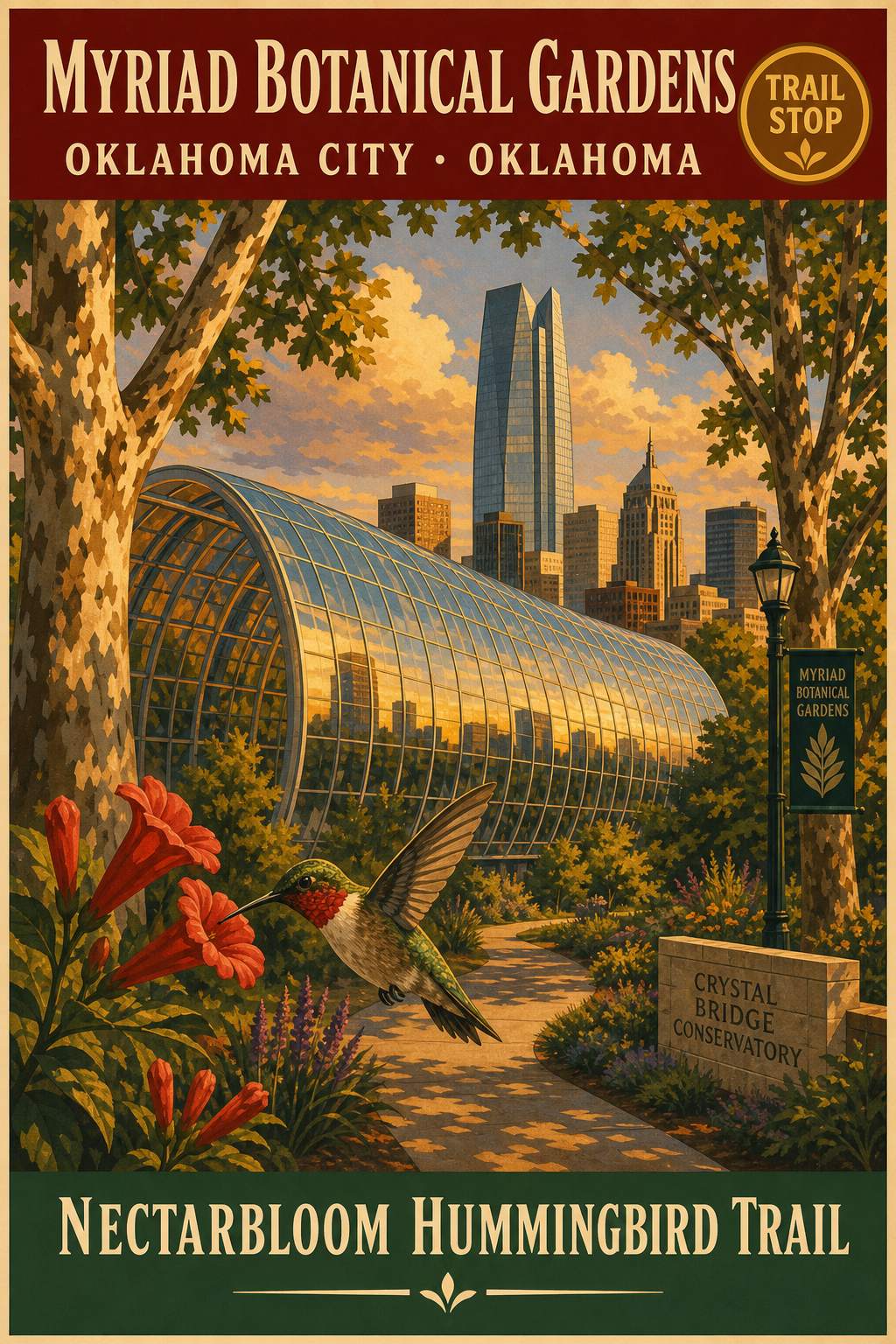
    Right in the heart of Oklahoma City, Myriad Botanical Gardens delivers a 15-acre urban sanctuary that surprises even seasoned birders. During summer, Ruby-throated Hummingbirds move between ornamental plantings and shaded feeding stations, with the Meinders Gardens corner offering a rich blend of mature trees, flowing brush, and water features. Migration windows in late August and September can bring extra activity as hummingbirds refuel alongside other southbound birds. Visitors are most likely to see Ruby-throated Hummingbirds here, but an alert fall observer may get lucky with a passing Rufous Hummingbird. The garden's warm urban microclimate helps extend the nectar season, giving early arrivals and late stragglers an important food source in the middle of the city.

    Botanical GardenRuby-throated HummingbirdBlack-chinned Hummingbird (occasional migrant)+1 more

    View garden →

    View Oxley Nature Center in Tulsa, OklahomaHummingbirds at Oxley Nature Center in Tulsa, Oklahoma
    Map

    Tulsa County

    Oxley Nature Center

    Tulsa

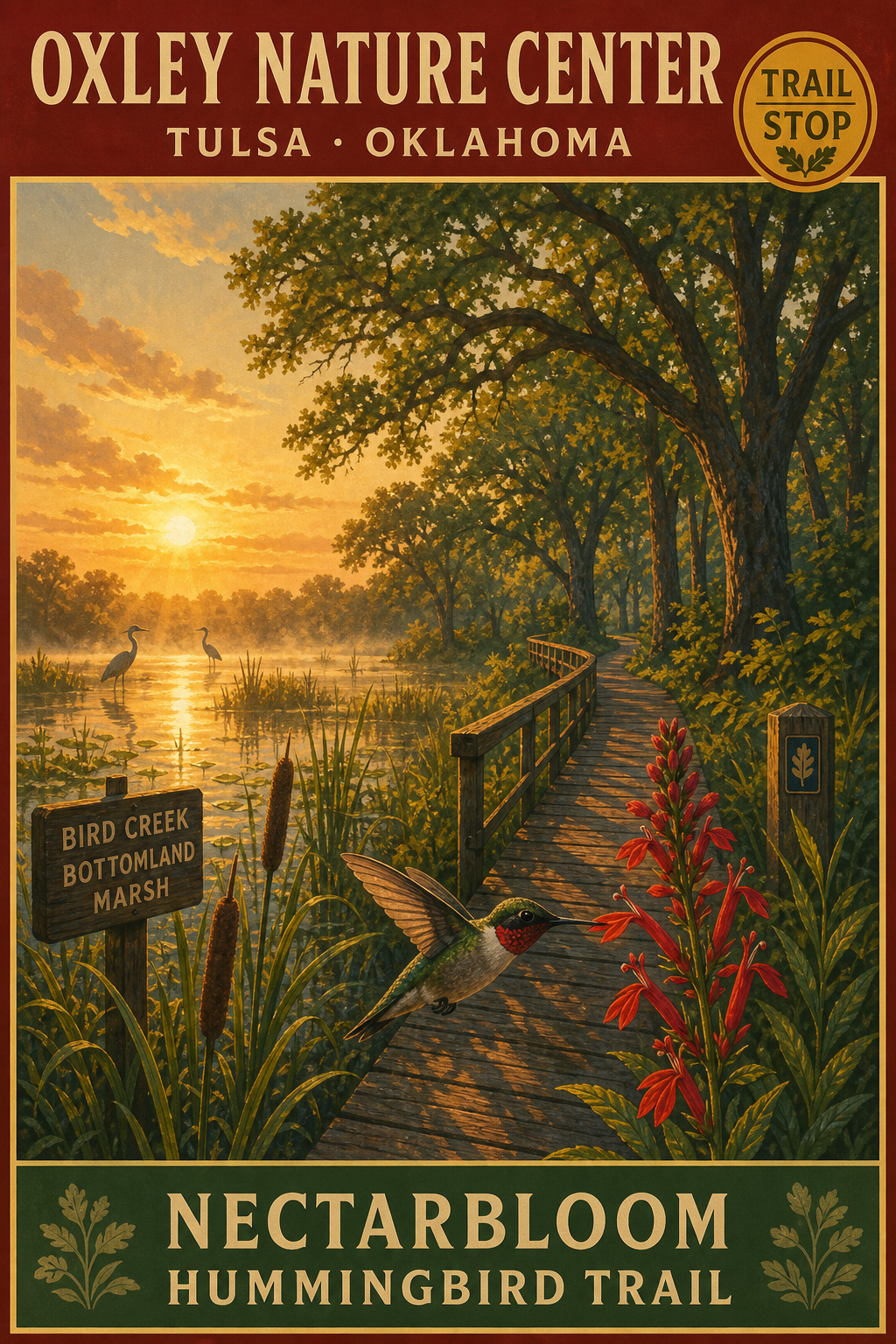
    Tucked into Mohawk Park at Tulsa's northern edge, Oxley Nature Center is one of Oklahoma's most species-rich public birding reserves. Its 800 acres combine freshwater marsh, Bird Creek bottomlands, oak woodland, open prairie, boardwalk trails, and wildlife viewing blinds. Ruby-throated Hummingbirds are the expected summer species, using the native plant corridors around marshes and woodland edges during nesting season. Fall adds a little extra suspense, when a rare Rufous Hummingbird may pass through Oklahoma during migration. The center's mix of open water, woody cover, and native flowering perennials makes a single morning visit rewarding for patient observers.

    Nature PreserveRuby-throated Hummingbird

    View garden →

    View Tulsa Botanic Garden in Tulsa, OklahomaHummingbirds at Tulsa Botanic Garden in Tulsa, Oklahoma
    Map

    Osage County

    Tulsa Botanic Garden

    Tulsa

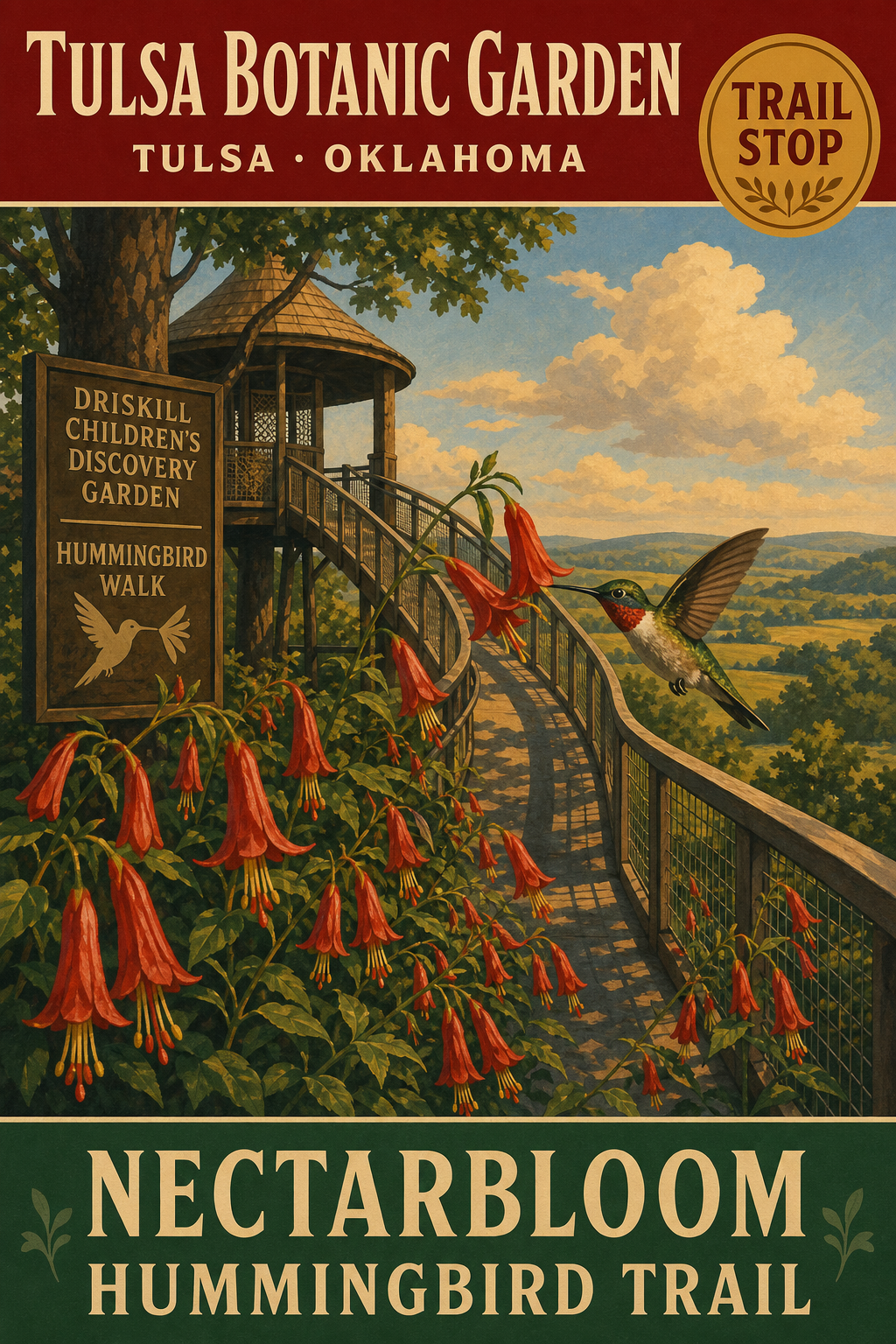
    Tulsa Botanic Garden has made hummingbird hospitality a genuine institutional priority. The Driskill Children's Discovery Garden includes a dedicated Hummingbird Walk planted with a thoughtful mix of perennial and annual nectar plants chosen for Oklahoma's climate and summer heat. Late summer visits along the ramped path toward the Tree Fort can reveal bright-red Turk's cap blooms, one of the most reliable Ruby-throated Hummingbird draws in the region. During fall migration, visitors can also watch for the special guest possibility: a Rufous Hummingbird passing through. This garden's transparent commitment to hummingbird-friendly planting makes it one of Oklahoma's most educational and brand-aligned Trail stops.

    Botanical GardenRuby-throated Hummingbird

    View garden →

    Best Time to See Hummingbirds in Oklahoma

    Peak hummingbird activity in Oklahoma typically runs April, May, June, July, August, September. Spring migration brings the highest diversity, with early morning and late afternoon being the best viewing hours.

    Typical arrival
    Mid-March – early April
    Typical departure
    Early October
    Hang your feeder
    Early March

    Ruby-throated Hummingbirds arrive first, males ahead of females. See the full state-by-state feeder timing guide.

    Most Common Hummingbird in Oklahoma

    The most common hummingbird across Oklahoma is the Ruby-throated Hummingbird in eastern and central Oklahoma; Black-chinned Hummingbird in the far west and southwest.

    Special Guest Hummingbird to Watch For

    Keep an eye out for the Rufous Hummingbird. Watch for Rufous Hummingbirds during fall migration, especially from August through October. In the far western panhandle, rare Broad-tailed Hummingbirds may also appear.

    Map of Hummingbird Locations in Oklahoma

    Switch the view above to to see featured locations plotted geographically.

    Common Hummingbird Species in Oklahoma

    • Ruby-throated Hummingbird
    • Black-chinned Hummingbird
    • Rufous Hummingbird (fall migration)

    Hummingbird Questions About Oklahoma

    When do hummingbirds arrive in Oklahoma?

    Hummingbirds typically arrive in Oklahoma in Mid-March – early April and leave again by Early October. Ruby-throated Hummingbirds arrive first, males ahead of females.

    When should you put out hummingbird feeders in Oklahoma?

    Hang feeders in Oklahoma by Early March — about one to two weeks before the first birds arrive in Mid-March – early April — so early migrants find your feeder immediately.

    What kinds of hummingbirds live in Oklahoma?

    The hummingbird species regularly recorded in Oklahoma are: Ruby-throated Hummingbird, Black-chinned Hummingbird, Rufous Hummingbird (fall migration).

    Share Your Visit

    Saw hummingbirds in Oklahoma? Help fellow flock-watchers by sharing a photo, rating, and note from your visit.

    Fresh nectar in a minute.

    Buy on Amazon