Norman Bird Sanctuary Hummingbird Guide

    Middletown, Newport CountyWildlife SanctuaryAdmission: Paid

    Shop & Support the Mission

    Fresh nectar in a minute.

    Every bag of NectarBloom™ funds the guides, the Hummingbird Trail, the lab testing, and the free care resources on this site. When you buy our nectar, you help us keep hummingbird education open, honest, and growing — for every bird lover, everywhere.

    NectarBloom 2 lb bag — pure cane sugar hummingbird nectar

    NectarBloom™ — 2 lb Bag

    Fresh nectar in a minute.

    No boiling, no dye. The same sugar hummingbird flowers make. One ingredient, nothing else. Makes up to 160 oz of fresh feeder nectar per bag.

    • Fresh nectar in a minute: measure, stir until clear, and pour
    • No boiling, no dye
    • The same sugar hummingbird flowers make
    • One ingredient, nothing else: 100% pure cane sugar
    • Lab tested. Resealable 2 lb bag, sourced and packed in the USA

    1 Bag · 2 lb

    $21.99

    Free shipping included

    Best Value

    2 Bags · Season Supply

    $39.88

    Free shipping included

    Direct orders are temporarily sold out. NectarBloom™ is still available on Amazon.

    Buy on Amazon

    Ships fast via Amazon Prime

    See full product details

    Direct orders temporarily unavailable

    “Your purchase isn’t just nectar — it’s how we keep this hummingbird care library free, accurate, and growing.”

    Thank you for flying with us

    Overview

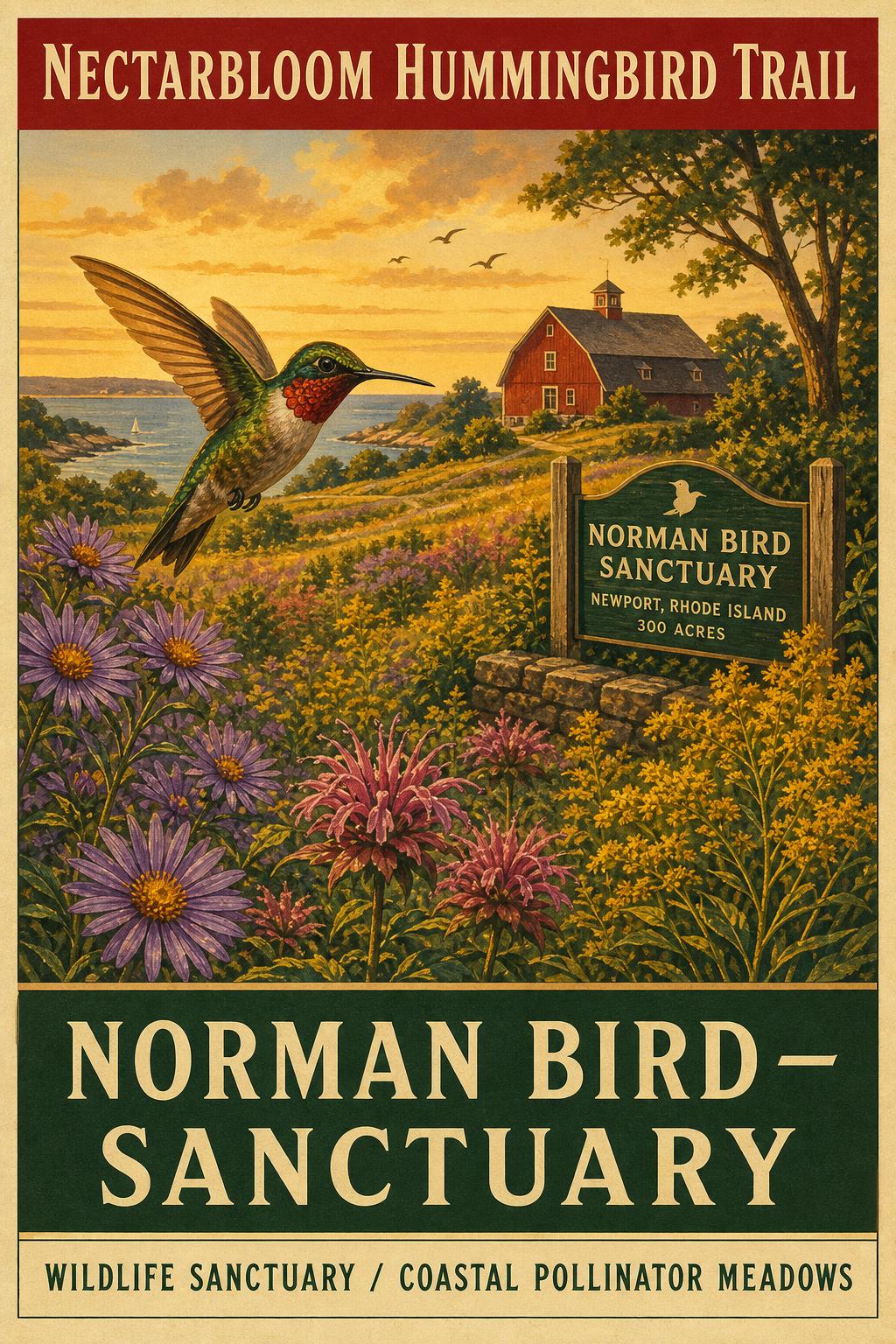
    Norman Bird Sanctuary is a 300-acre nonprofit wildlife sanctuary and environmental education center in Middletown, Rhode Island, just 4 miles from Newport. Set in the heart of historic Paradise Valley between Second and Third Beaches, the sanctuary offers 6 miles of hiking trails through diverse coastal habitats. The sanctuary is actively creating what will be the largest pollinator meadow habitat in Rhode Island by seeding the Coastal Field with New England aster, bee balm, goldenrod, Rudbeckia, and more. Ruby-throated Hummingbirds are documented in the pollinator meadow restoration and noted by staff as a key target pollinator.

    Hummingbirds to Watch For

    • • Ruby-throated

    Most Common Hummingbird

    The most commonly sighted hummingbird at Norman Bird Sanctuary is the Ruby-throated.

    Best Time to Visit

    Plan your visit during June, July, August, September for the highest chance of hummingbird sightings. Early morning and late afternoon are typically the most active feeding times.

    Plants and Habitat

    • • Bee balm (*Monarda didyma* and *M. fistulosa*) — confirmed in the Coastal Field seed mix
    • • New England aster (*Symphyotrichum novae-angliae*)
    • • Wild bergamot (*Monarda fistulosa*)
    • • Cardinal flower (*Lobelia cardinalis*) — Good Gardens native plantings
    • • Joe Pye weed (*Eutrochium maculatum*)
    • • Native goldenrod (*Solidago* spp.)

    NectarBloom Tip

    The sanctuary trails are open daily from dawn to dusk. For hummingbirds, focus on the Good Gardens and the Coastal Field restoration — bee balm in July and cardinal flower in August are the peak hummingbird plants. The sanctuary's educational team can advise on current pollinator garden status as the Coastal Field restoration progresses.

    Visitor Notes

    Admission required for visitor center and programs; trails accessible with day pass. Open daily dawn to dusk. ADA accessible on main trail near entrance.

    Map

    Ruby-throated near Bee balm (*Monarda didyma* and *M. fistulosa*) — confirmed in the Coastal Field seed mix at Norman Bird Sanctuary in Rhode Island

    Open in Google Maps

    Reviews and Sightings

    Visited Norman Bird Sanctuary? Share what you saw — your photos, ratings, and notes help fellow flock-watchers know what to expect.

    Share a Visit

    Sources

    Nearby gardens in Rhode Island

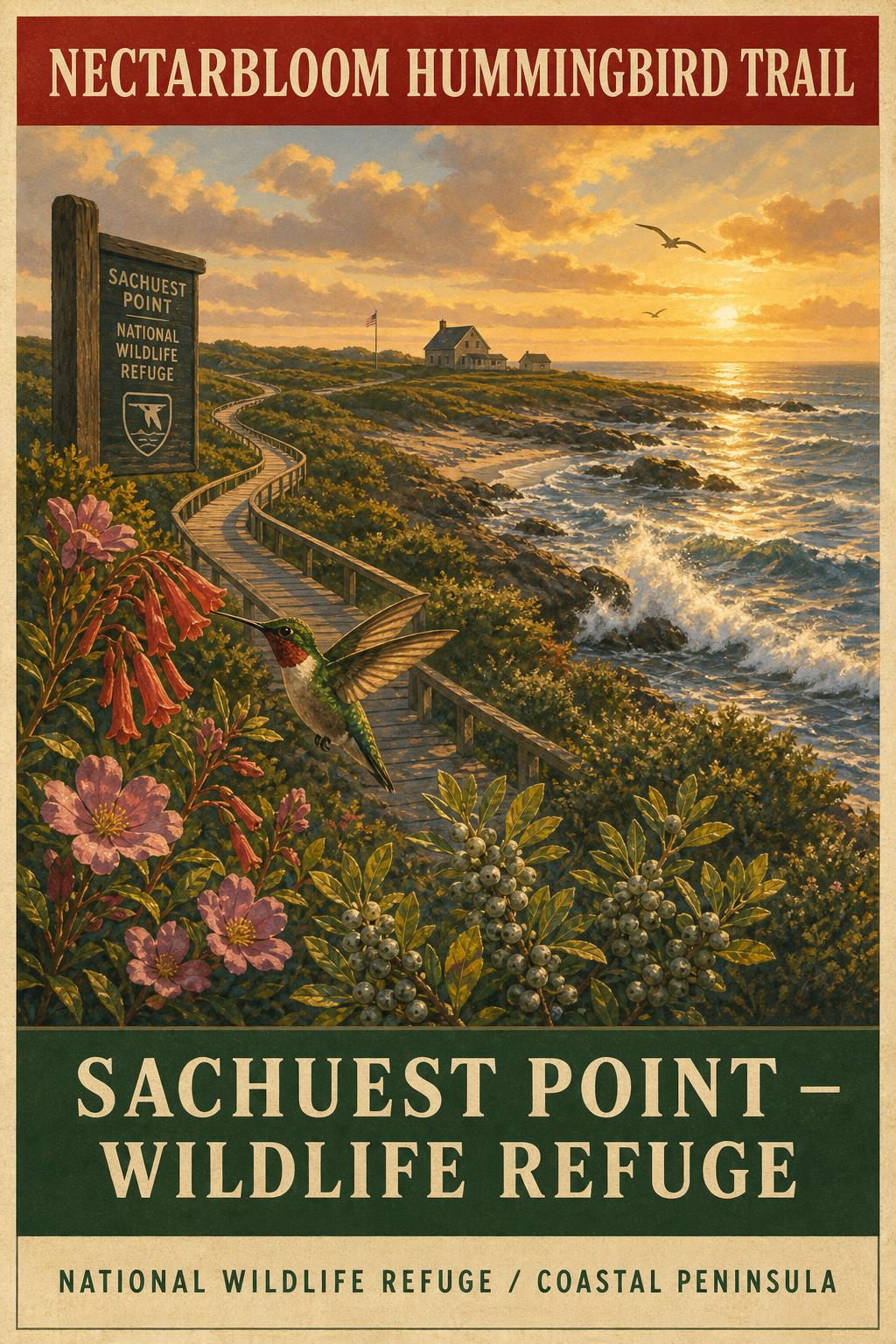
    View Sachuest Point National Wildlife Refuge in Middletown, Rhode IslandHummingbirds at Sachuest Point National Wildlife Refuge in Middletown, Rhode Island
    Map

    Newport County

    Sachuest Point National Wildlife Refuge

    Middletown

    Sachuest Point National Wildlife Refuge is a 242-acre coastal peninsula refuge managed by the U.S. Fish & Wildlife Service, located between Second Beach and Third Beach in Middletown. The refuge features a 3-mile loop trail through coastal shrub thicket, grasslands, and rocky shoreline that provides exceptional habitat for migrating and breeding birds. The coastal shrub thickets create a concentration point for southbound Ruby-throated Hummingbirds staging along the coast before crossing open water — one of the best fall migration sites in Rhode Island.

    National Wildlife RefugeRuby-throated

    View garden →

    Visited Norman Bird Sanctuary?

    Share your visit — a photo, a rating, and a quick note help fellow flock-watchers know what to expect. No account required.

    Share a Visit

    Fresh nectar in a minute.

    Buy on Amazon