Shop & Support the Mission

    Fresh nectar in a minute.

    Every bag of NectarBloom™ funds the guides, the Hummingbird Trail, the lab testing, and the free care resources on this site. When you buy our nectar, you help us keep hummingbird education open, honest, and growing — for every bird lover, everywhere.

    NectarBloom 2 lb bag — pure cane sugar hummingbird nectar

    NectarBloom™ — 2 lb Bag

    Fresh nectar in a minute.

    No boiling, no dye. The same sugar hummingbird flowers make. One ingredient, nothing else. Makes up to 160 oz of fresh feeder nectar per bag.

    • Fresh nectar in a minute: measure, stir until clear, and pour
    • No boiling, no dye
    • The same sugar hummingbird flowers make
    • One ingredient, nothing else: 100% pure cane sugar
    • Lab tested. Resealable 2 lb bag, sourced and packed in the USA

    1 Bag · 2 lb

    $21.99

    Free shipping included

    Best Value

    2 Bags · Season Supply

    $39.88

    Free shipping included

    Direct orders are temporarily sold out. NectarBloom™ is still available on Amazon.

    Buy on Amazon

    Ships fast via Amazon Prime

    See full product details

    Direct orders temporarily unavailable

    “Your purchase isn’t just nectar — it’s how we keep this hummingbird care library free, accurate, and growing.”

    Thank you for flying with us

    Overview

    Tennessee sits along an important eastern hummingbird corridor, with Ruby-throated Hummingbirds arriving in spring, nesting through summer, and moving south again in late summer and fall. The state's best hummingbird experiences often happen where gardens, woodland edges, native wildflowers, and public nature centers overlap. Middle Tennessee is especially valuable because of long-running hummingbird education and banding activity, while Chattanooga and the Cumberland Plateau add rich forest and native plant settings. Best viewing usually runs from April through October, with August through September especially active as migration builds.

    Audubon chapters and reader sightings in Tennessee

    Filter gardens
    View Cheekwood Estate & Gardens in Nashville, TennesseeHummingbirds at Cheekwood Estate & Gardens in Nashville, Tennessee
    Map

    Davidson County

    Cheekwood Estate & Gardens

    Nashville

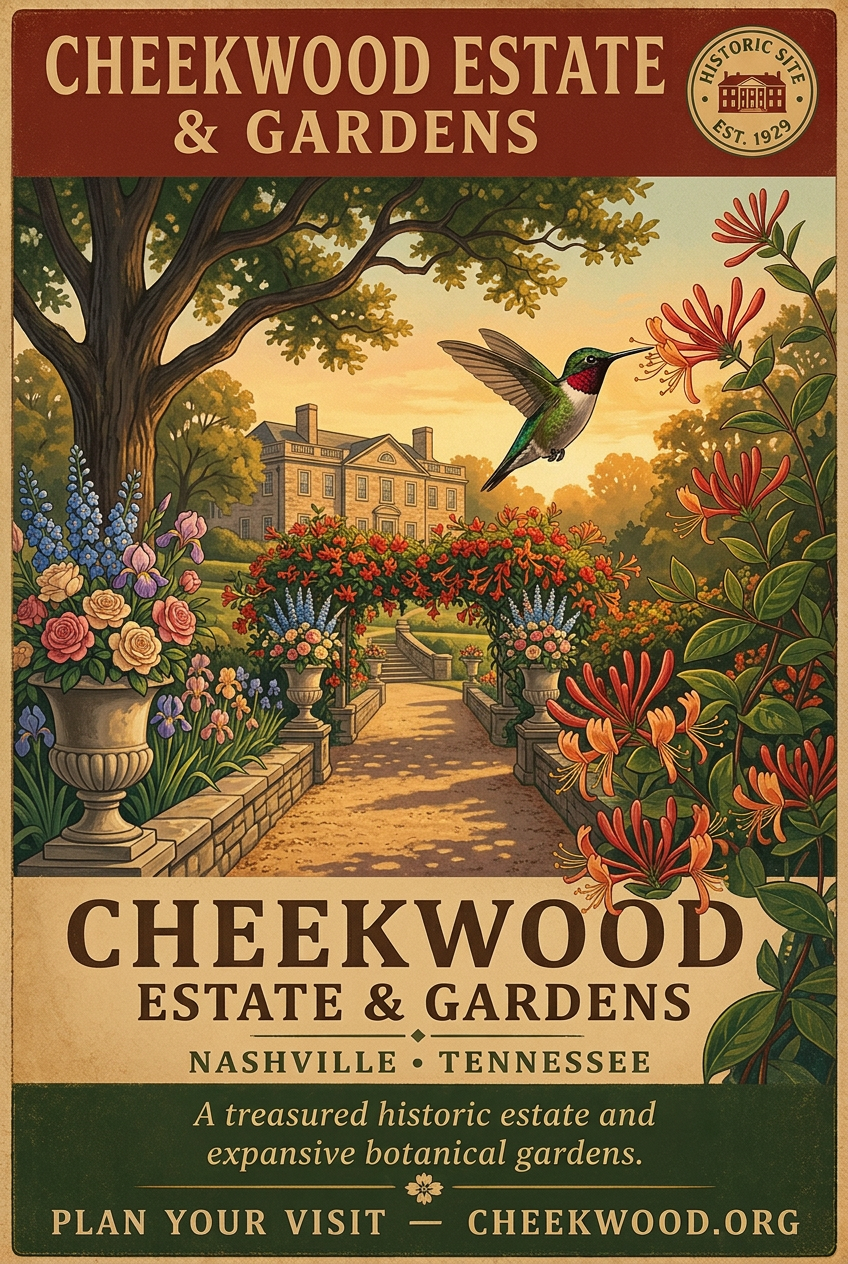
    Cheekwood Estate & Gardens brings hummingbird watching into one of Nashville's most beautiful cultural landscapes. The historic estate grounds combine formal gardens, woodland edges, seasonal bloom displays, art installations, and carefully maintained plant collections that can support Ruby-throated Hummingbirds from spring through fall. While Cheekwood is not a hummingbird-only site, its visitor experience is exceptional: garden paths, flowering borders, mature trees, and estate architecture create a refined setting for slow observation and photography. The garden is especially useful for Hummingbird Trail visitors who want a destination that blends beauty, horticulture, and travel appeal. For Nectarbloom, Cheekwood represents the "garden lifestyle" side of hummingbird watching, showing how nectar-rich plantings can be part of a larger designed landscape.

    Historic Estate Garden and Botanical GardenRuby-throated Hummingbird

    View garden →

    View Reflection Riding Arboretum & Nature Center in Chattanooga, TennesseeHummingbirds at Reflection Riding Arboretum & Nature Center in Chattanooga, Tennessee
    Map

    Hamilton County

    Reflection Riding Arboretum & Nature Center

    Chattanooga

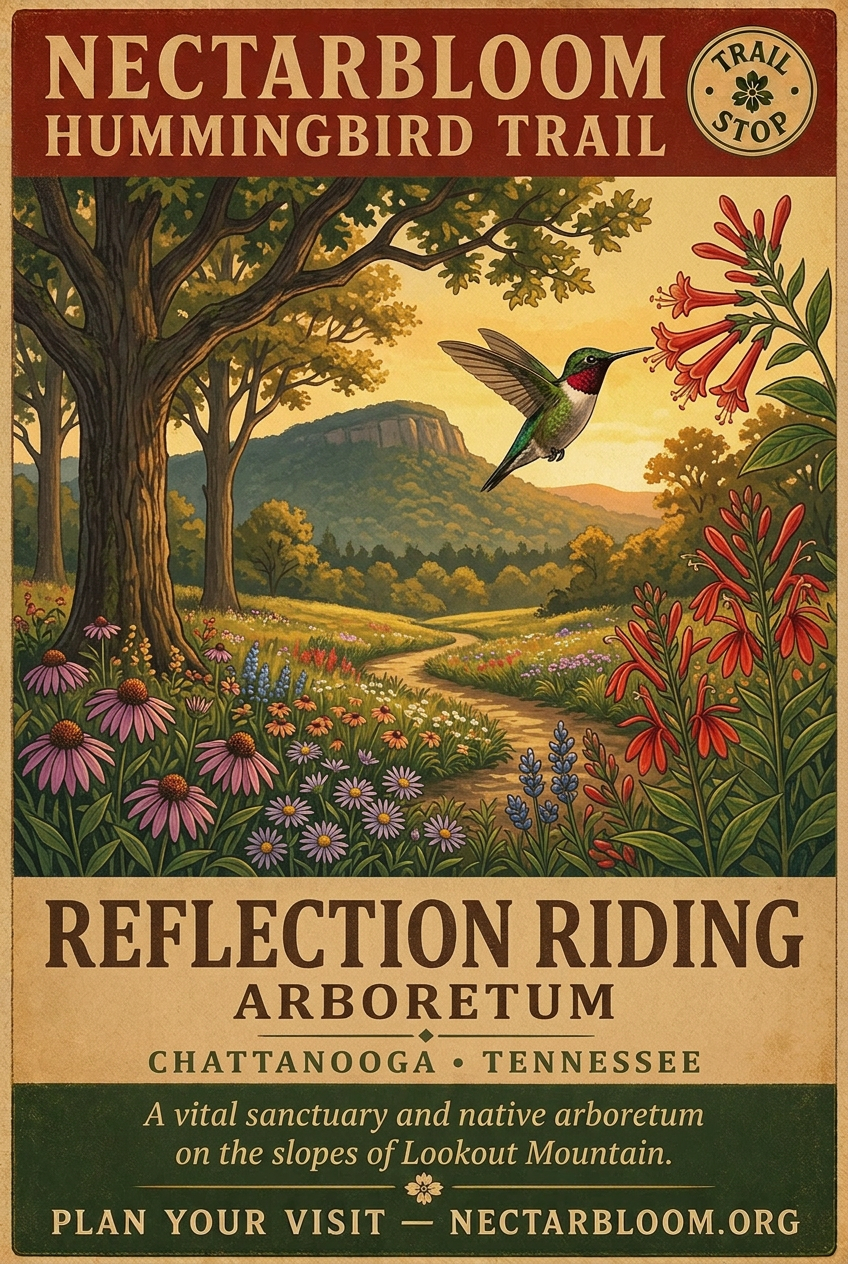
    Reflection Riding Arboretum & Nature Center in Chattanooga is a habitat-rich Tennessee destination where hummingbird watching connects naturally with native plant education. The property includes arboretum collections, native plant nursery work, forest edges, meadow habitat, and trails near Lookout Mountain, giving Ruby-throated Hummingbirds the kind of varied nectar and cover they use throughout the warm season. This is a strong Hummingbird Trail listing because it emphasizes ecological gardening rather than only ornamental display. Visitors can learn how southeastern native plants support birds, pollinators, and broader wildlife communities while enjoying a setting that feels wilder than a formal garden. For Nectarbloom, Reflection Riding helps reinforce the message that attracting hummingbirds begins with habitat.

    Arboretum and Nature CenterRuby-throated Hummingbird

    View garden →

    View Warner Park Nature Center in Nashville, TennesseeHummingbirds at Warner Park Nature Center in Nashville, Tennessee
    Map

    Davidson County

    Warner Park Nature Center

    Nashville

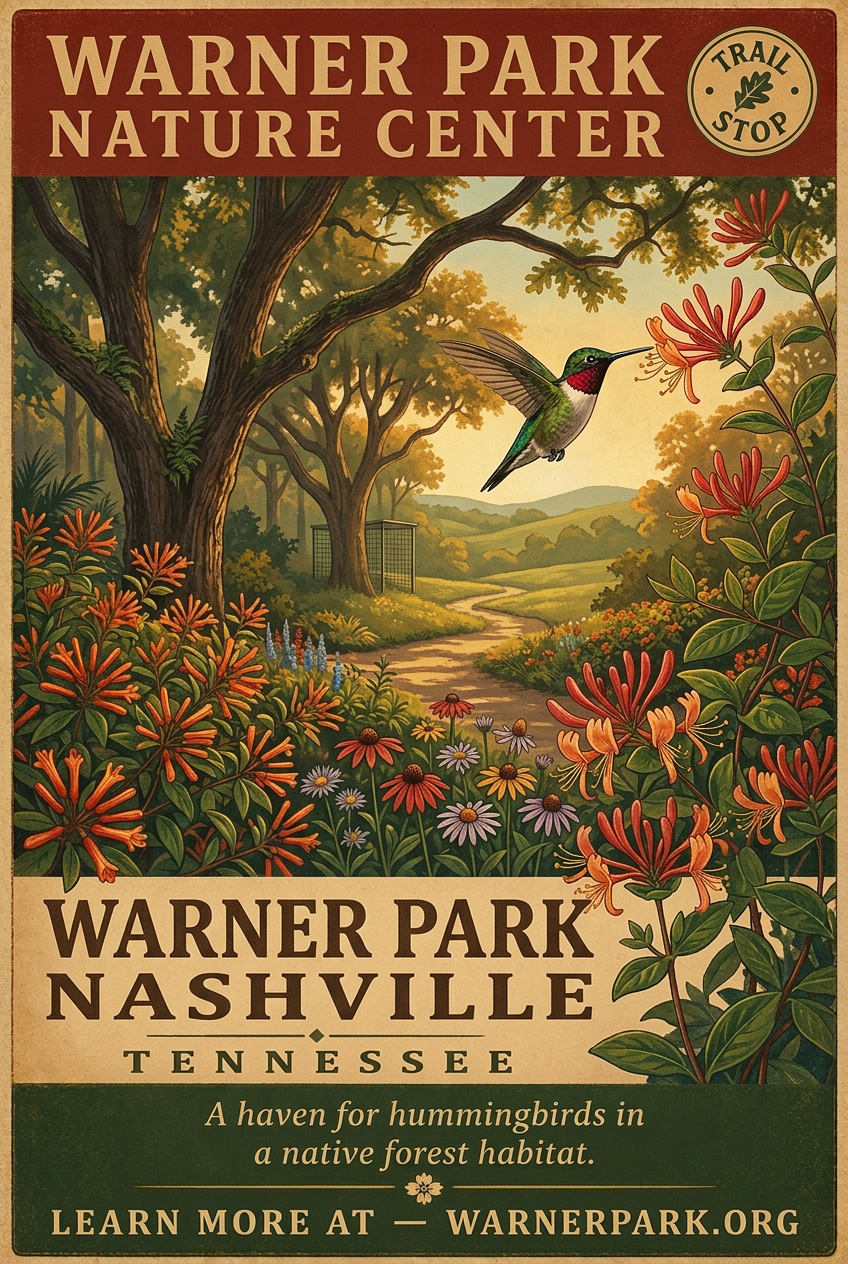
    Warner Park Nature Center in Nashville is one of the strongest Tennessee listings for the Hummingbird Trail because it combines public access, habitat, and direct hummingbird education. The surrounding Warner Parks landscape includes meadows, forest edges, trails, and native plant areas that support Ruby-throated Hummingbirds through the warm season and migration. The site is especially notable for its long-running hummingbird banding work and public Hummingbird Celebration, which help visitors understand migration, conservation, and the remarkable endurance of these tiny birds. Late summer and early fall are the most exciting times to visit, when Ruby-throated activity builds and the possibility of unusual western visitors adds intrigue. For Nectarbloom, Warner Park is a model community-science destination.

    Nature Center and Public ParkRuby-throated HummingbirdRufous Hummingbird (occasional)

    View garden →

    Best Time to See Hummingbirds in Tennessee

    Peak hummingbird activity in Tennessee typically runs April, May, June, July, August, September, October. Spring migration brings the highest diversity, with early morning and late afternoon being the best viewing hours.

    Typical arrival
    Mid-March – early April
    Typical departure
    Early October
    Hang your feeder
    Early March

    Ruby-throated Hummingbirds arrive first, males ahead of females. See the full state-by-state feeder timing guide.

    Map of Hummingbird Locations in Tennessee

    Switch the view above to to see featured locations plotted geographically.

    Common Hummingbird Species in Tennessee

    • Ruby-throated Hummingbird
    • Rufous Hummingbird (special fall/winter visitor)

    Counties on the Hummingbird Trail

    Hummingbird Questions About Tennessee

    When do hummingbirds arrive in Tennessee?

    Hummingbirds typically arrive in Tennessee in Mid-March – early April and leave again by Early October. Ruby-throated Hummingbirds arrive first, males ahead of females.

    When should you put out hummingbird feeders in Tennessee?

    Hang feeders in Tennessee by Early March — about one to two weeks before the first birds arrive in Mid-March – early April — so early migrants find your feeder immediately.

    What kinds of hummingbirds live in Tennessee?

    The hummingbird species regularly recorded in Tennessee are: Ruby-throated Hummingbird, Rufous Hummingbird (special fall/winter visitor).

    Share Your Visit

    Saw hummingbirds in Tennessee? Help fellow flock-watchers by sharing a photo, rating, and note from your visit.

    Fresh nectar in a minute.

    Buy on Amazon