Green Mountain Audubon Center Hummingbird Guide

    Huntington, Chittenden CountyAudubon Wildlife SanctuaryAdmission: Free

    Shop & Support the Mission

    Fresh nectar in a minute.

    Every bag of NectarBloom™ funds the guides, the Hummingbird Trail, the lab testing, and the free care resources on this site. When you buy our nectar, you help us keep hummingbird education open, honest, and growing — for every bird lover, everywhere.

    NectarBloom 2 lb bag — pure cane sugar hummingbird nectar

    NectarBloom™ — 2 lb Bag

    Fresh nectar in a minute.

    No boiling, no dye. The same sugar hummingbird flowers make. One ingredient, nothing else. Makes up to 160 oz of fresh feeder nectar per bag.

    • Fresh nectar in a minute: measure, stir until clear, and pour
    • No boiling, no dye
    • The same sugar hummingbird flowers make
    • One ingredient, nothing else: 100% pure cane sugar
    • Lab tested. Resealable 2 lb bag, sourced and packed in the USA

    1 Bag · 2 lb

    $21.99

    Free shipping included

    Best Value

    2 Bags · Season Supply

    $39.88

    Free shipping included

    Direct orders are temporarily sold out. NectarBloom™ is still available on Amazon.

    Buy on Amazon

    Ships fast via Amazon Prime

    See full product details

    Direct orders temporarily unavailable

    “Your purchase isn’t just nectar — it’s how we keep this hummingbird care library free, accurate, and growing.”

    Thank you for flying with us

    Overview

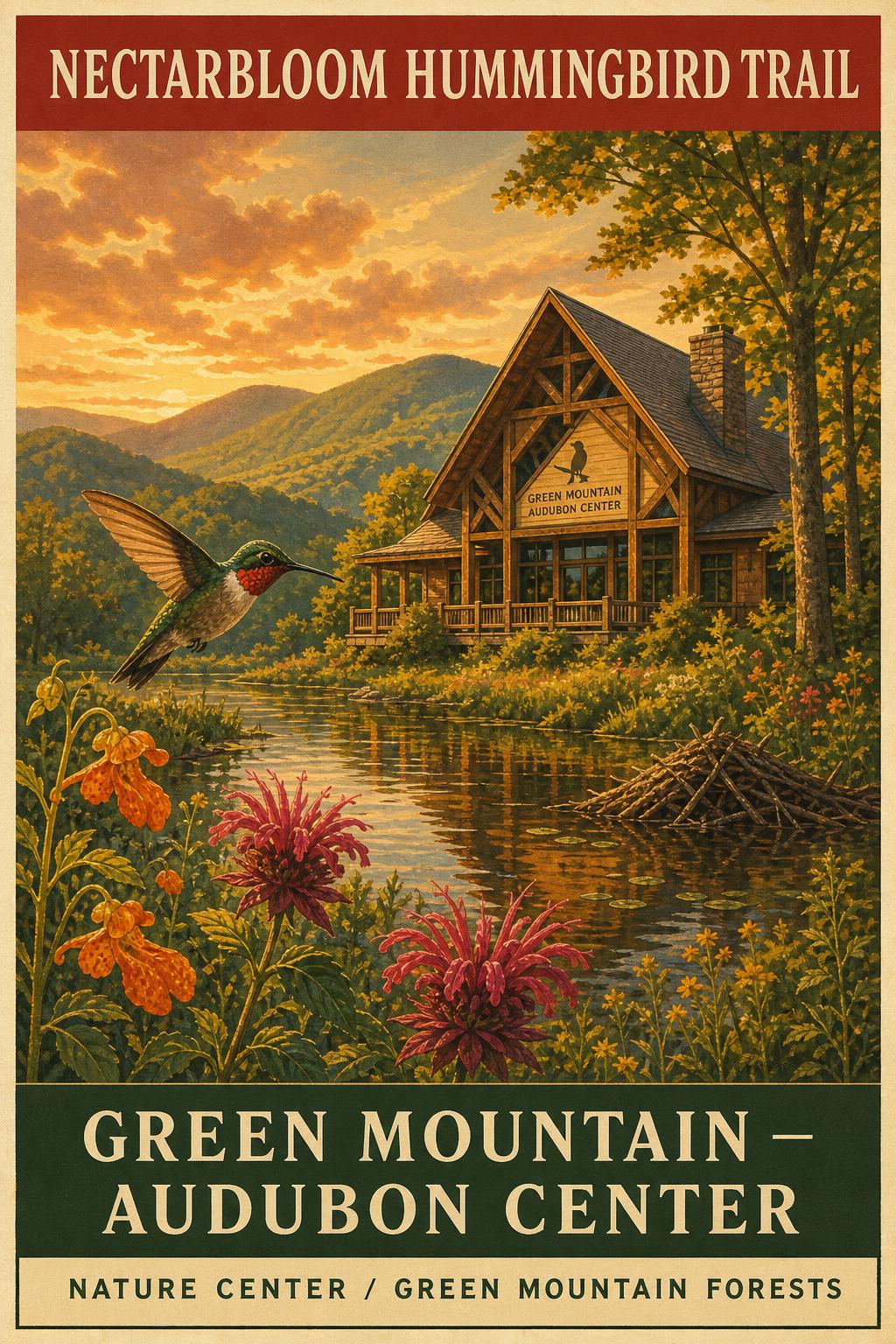
    The Green Mountain Audubon Center is a 255-acre wildlife sanctuary and environmental education hub in the foothills of the Green Mountains near Burlington, operated by Audubon Vermont since 1964 and recognized as an Important Bird Area. Five miles of public trails wind through northern hardwood forest, hemlock swamp, meadows, and the Bird-Friendly Sugarbush. The property hosts more than 100 species of breeding and wintering birds, and Ruby-throated Hummingbirds are confirmed breeding residents — forest-edge meadow habitat is ideal for nesting and foraging from late May through early September.

    Hummingbirds to Watch For

    • • Ruby-throated

    Most Common Hummingbird

    The most commonly sighted hummingbird at Green Mountain Audubon Center is the Ruby-throated.

    Best Time to Visit

    Plan your visit during June, July, August, September for the highest chance of hummingbird sightings. Early morning and late afternoon are typically the most active feeding times.

    Plants and Habitat

    • • Wild columbine (*Aquilegia canadensis*) — forest edges and rocky outcrops in spring
    • • Bee balm (*Monarda didyma*) — meadow and field borders
    • • Cardinal flower (*Lobelia cardinalis*) — along the Huntington River
    • • Spotted jewelweed (*Impatiens capensis*) — streamside and wetland margins
    • • Trumpet honeysuckle (*Lonicera sempervirens*) — woodland edges
    • • Native serviceberry (*Amelanchier* spp.) — riparian buffer

    NectarBloom Tip

    The Audubon Center trails are free and open to the public daily. For the best hummingbird sightings, walk the River Trail in late July and early August when cardinal flower blooms along the Huntington River. Hummingbirds nesting in the adjacent hemlock swamp regularly forage along the river corridor. The sugarbush meadow edges at the top of the property are excellent in the morning hours when hummingbirds are most active.

    Visitor Notes

    Free; trails open dawn to dusk daily. Maps available at the trailhead. Some trails are rugged — wear appropriate footwear. ADA accessible on the main entrance path and some interpretive areas.

    Map

    Ruby-throated near Wild columbine (*Aquilegia canadensis*) — forest edges and rocky outcrops in spring at Green Mountain Audubon Center in Vermont

    Open in Google Maps

    Reviews and Sightings

    Visited Green Mountain Audubon Center? Share what you saw — your photos, ratings, and notes help fellow flock-watchers know what to expect.

    Share a Visit

    Sources

    Nearby gardens in Vermont

    View Shelburne Museum Gardens in Shelburne, VermontHummingbirds at Shelburne Museum Gardens in Shelburne, Vermont
    Map

    Chittenden County

    Shelburne Museum Gardens

    Shelburne

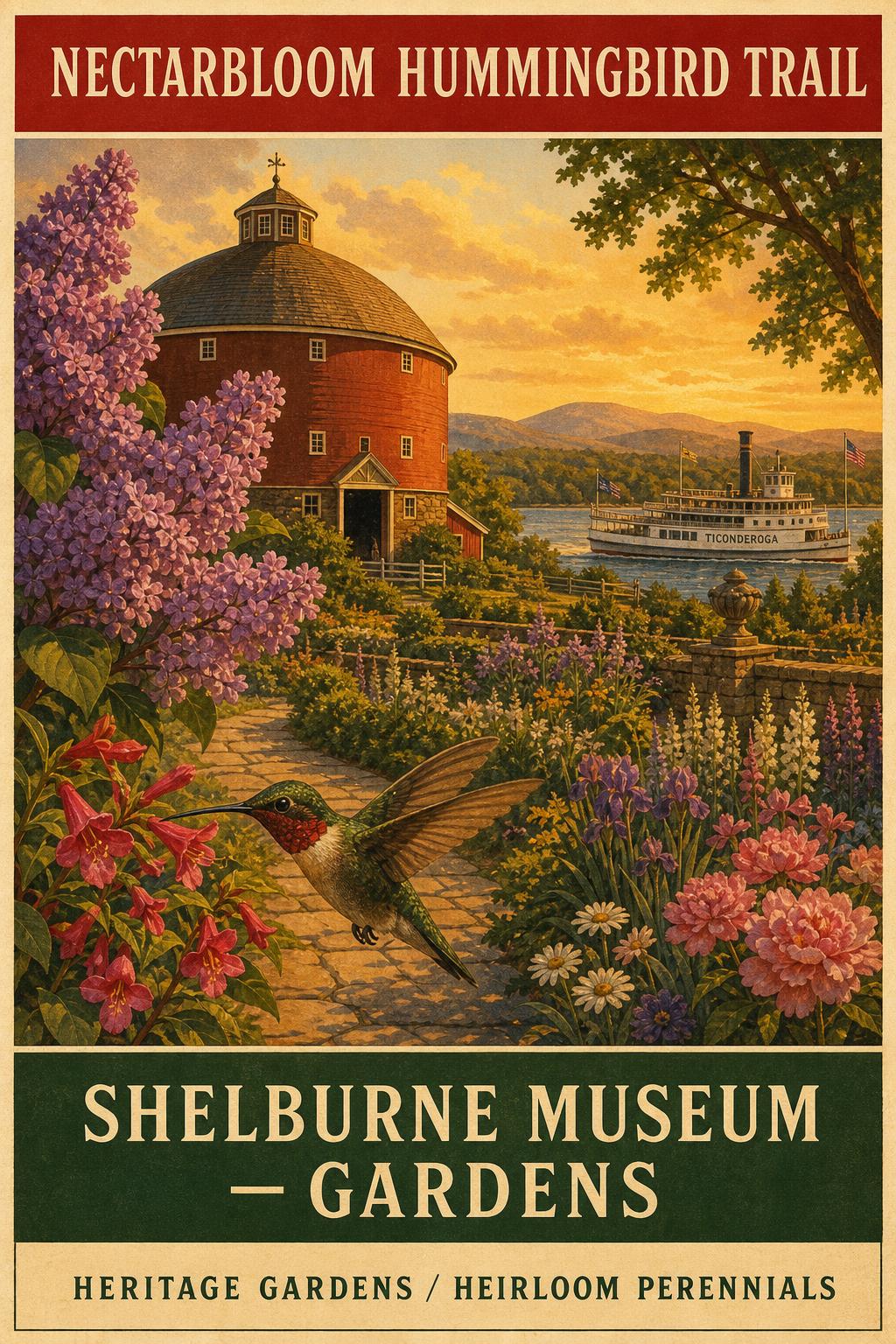
    Shelburne Museum is the largest art and history museum in northern New England, set on 45 acres with 39 historic buildings and more than 20 distinct gardens. Founded in 1947 by Electra Havemeyer Webb, the museum's extraordinary landscape features hundreds of lilacs and peonies in spring, 1,700-plus daylilies in summer, heirloom vegetable and herb gardens, perennial borders, an apothecary garden, and annual gardens bursting with zinnias and dahlias. The museum's extensive plantings across 20+ individual garden spaces create diverse and sustained hummingbird habitat throughout summer.

    Museum GardensRuby-throated

    View garden →
    View Shelburne Farms in Shelburne, VermontHummingbirds at Shelburne Farms in Shelburne, Vermont
    Map

    Chittenden County

    Shelburne Farms

    Shelburne

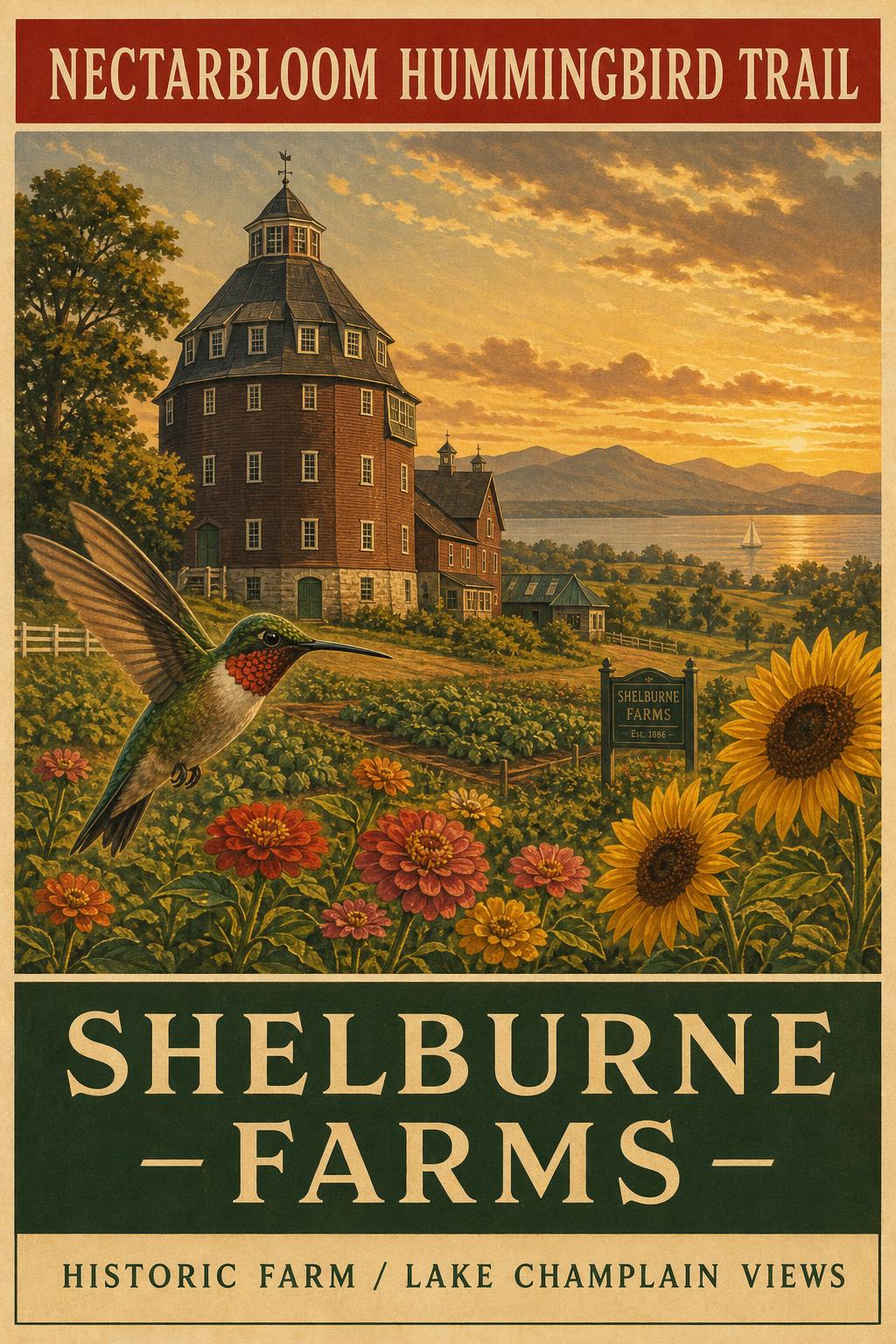
    Shelburne Farms is a 1,400-acre working farm, forest, and National Historic Landmark overlooking Lake Champlain, established in the late 1880s by William Seward Webb and Lila Vanderbilt Webb. Lila Webb's Flower Gardens — restored to their original grandeur — sit on a bluff above the lake and represent one of the finest surviving examples of American Country Place Era garden design, featuring terraced formal borders, perennial beds, and sweeping lawn vistas framed by Lake Champlain and the Adirondacks. Ruby-throated Hummingbirds are common summer breeders throughout the property.

    Working Farm & Historic GardenRuby-throated

    View garden →

    Visited Green Mountain Audubon Center?

    Share your visit — a photo, a rating, and a quick note help fellow flock-watchers know what to expect. No account required.

    Share a Visit

    Fresh nectar in a minute.

    Buy on Amazon