Shop & Support the Mission

    Fresh nectar in a minute.

    Every bag of NectarBloom™ funds the guides, the Hummingbird Trail, the lab testing, and the free care resources on this site. When you buy our nectar, you help us keep hummingbird education open, honest, and growing — for every bird lover, everywhere.

    NectarBloom 2 lb bag — pure cane sugar hummingbird nectar

    NectarBloom™ — 2 lb Bag

    Fresh nectar in a minute.

    No boiling, no dye. The same sugar hummingbird flowers make. One ingredient, nothing else. Makes up to 160 oz of fresh feeder nectar per bag.

    • Fresh nectar in a minute: measure, stir until clear, and pour
    • No boiling, no dye
    • The same sugar hummingbird flowers make
    • One ingredient, nothing else: 100% pure cane sugar
    • Lab tested. Resealable 2 lb bag, sourced and packed in the USA

    1 Bag · 2 lb

    $21.99

    Free shipping included

    Best Value

    2 Bags · Season Supply

    $39.88

    Free shipping included

    Direct orders are temporarily sold out. NectarBloom™ is still available on Amazon.

    Buy on Amazon

    Ships fast via Amazon Prime

    See full product details

    Direct orders temporarily unavailable

    “Your purchase isn’t just nectar — it’s how we keep this hummingbird care library free, accurate, and growing.”

    Thank you for flying with us

    Overview

    Virginia's geographic diversity makes it one of the Mid-Atlantic's most interesting hummingbird states. From the Chesapeake Bay coastal plain to the Blue Ridge and Appalachian ridges, the state offers gardens, meadows, forest edges, coastal migration funnels, and public birding sites where hummingbirds can appear through the warm months. Ruby-throated Hummingbird is the expected breeding and summer species statewide. The special guest story is strongest on the Eastern Shore, where rare Rufous, Allen's, and Black-chinned Hummingbirds have been documented during fall and winter. Best viewing is late April through September for Ruby-throated activity, with September through November especially exciting along the coast.

    Audubon chapters and reader sightings in Virginia

    Filter gardens
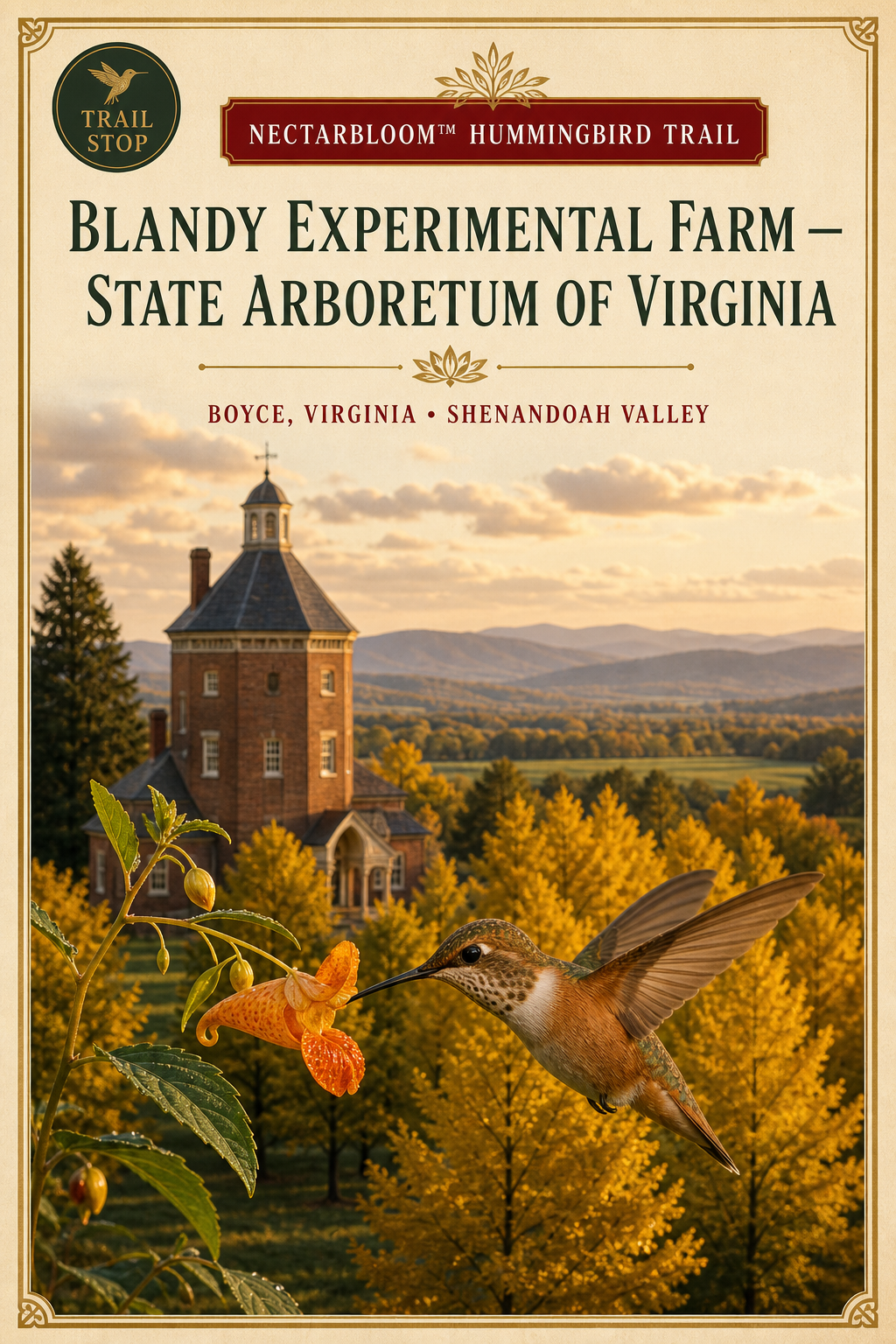
    View Blandy Experimental Farm / State Arboretum of Virginia in Boyce, VirginiaHummingbirds at Blandy Experimental Farm / State Arboretum of Virginia in Boyce, Virginia
    Map

    Blandy Experimental Farm / State Arboretum of Virginia

    Boyce

    Operated by the University of Virginia, Blandy Experimental Farm occupies more than 700 acres of Shenandoah Valley farmland, forest edge, and native meadow. Ruby-throated Hummingbirds are the most likely species here, using meadowlands and hedgerow corridors for nesting and fall migration refueling. The State Arboretum's curated plant collections add extra nectar resources, while the surrounding meadow mosaic supports the insects and flowering plants that hummingbirds need through the breeding season. This is a quieter, more research-driven stop than a formal urban garden, which gives it a special sense of place. The special guest to watch for is Rufous Hummingbird, rare but possible during late-season movement.

    University Research Farm and State ArboretumRuby-throated Hummingbird

    View garden →
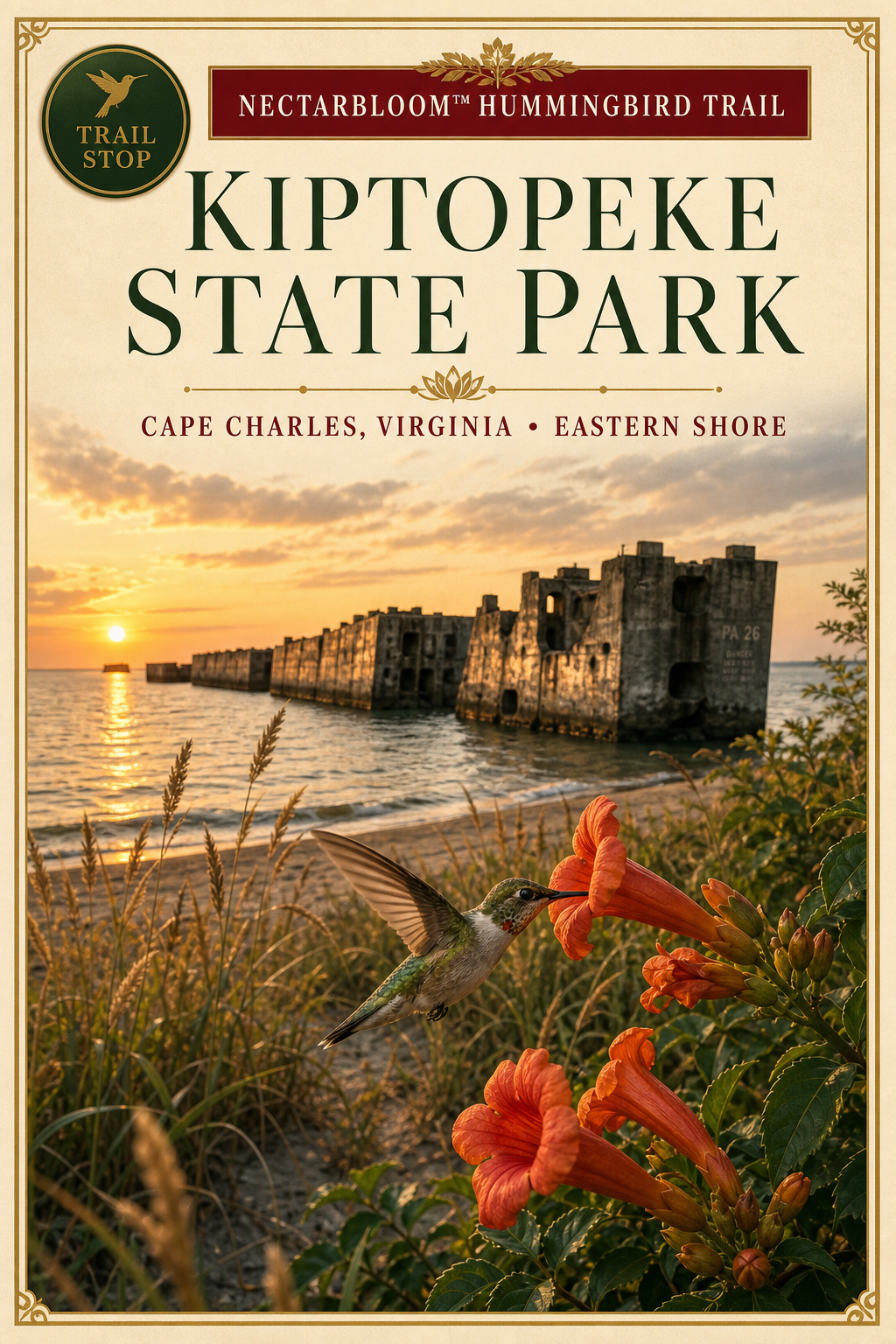
    View Kiptopeke State Park in Cape Charles, VirginiaHummingbirds at Kiptopeke State Park in Cape Charles, Virginia
    Map

    Kiptopeke State Park

    Cape Charles

    Kiptopeke State Park sits near the southern tip of the Delmarva Peninsula, where southbound migrants concentrate along a spectacular coastal corridor. Ruby-throated Hummingbirds are the most likely species during summer and early migration, using the park's native plant garden and butterfly garden at Taylor Pond as refueling habitat. What makes Kiptopeke special is the rare guest potential: Rufous, Allen's, and Black-chinned Hummingbirds have all been documented on the Eastern Shore in fall or winter. The park also has major birding credibility through its hawk watch, banding history, and Chesapeake Bay setting. For serious hummingbird enthusiasts, a September or October visit can feel transformative because migration is visible everywhere.

    State Park and Major Migration SiteRuby-throated HummingbirdRufous Hummingbird (rare)+2 more

    View garden →

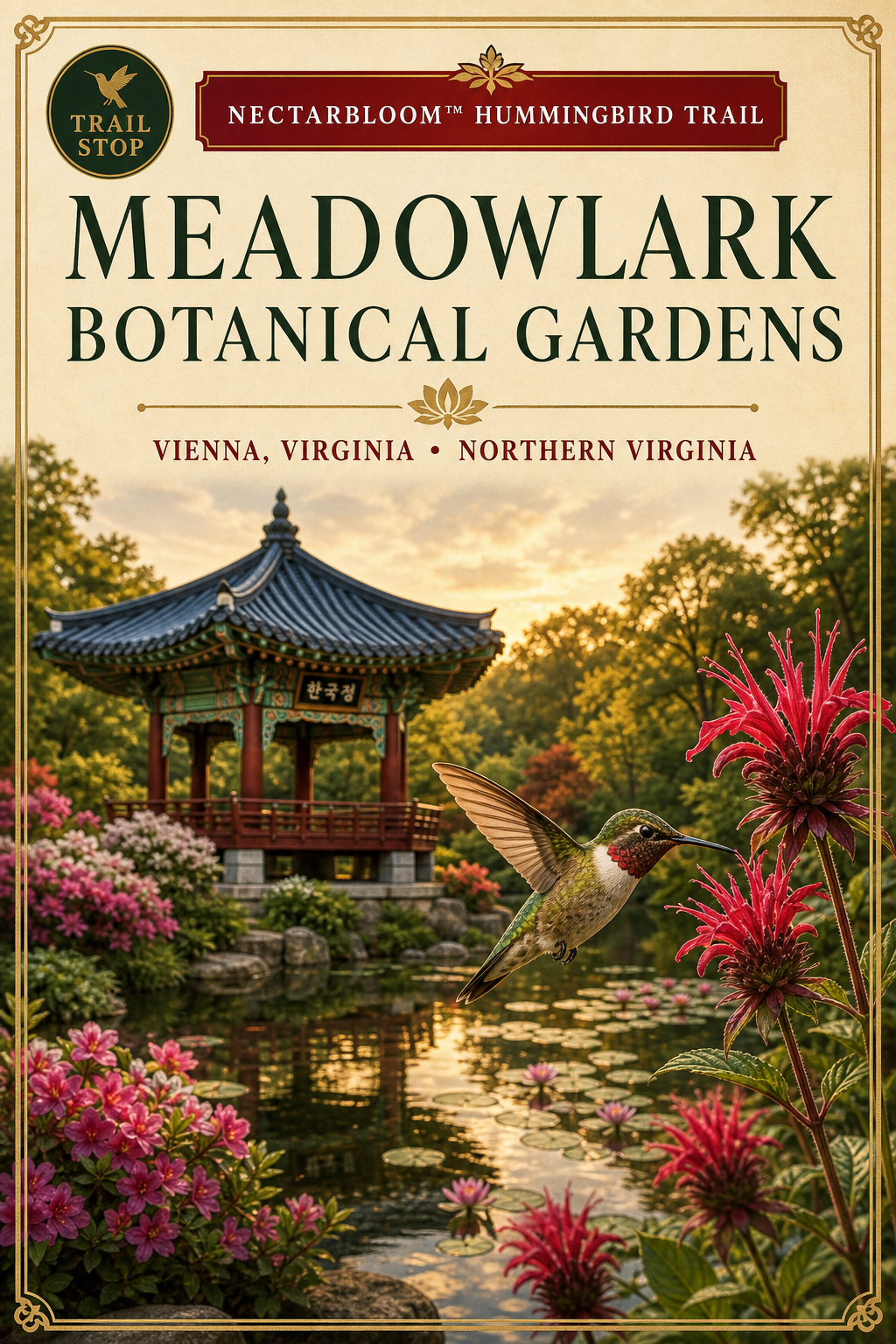
    View Meadowlark Botanical Gardens in Vienna, VirginiaHummingbirds at Meadowlark Botanical Gardens in Vienna, Virginia
    Map

    Meadowlark Botanical Gardens

    Vienna

    Meadowlark Botanical Gardens brings 95 acres of carefully tended horticultural artistry to Fairfax County, creating a polished wildlife refuge in one of Virginia's busiest regions. Ruby-throated Hummingbirds are the most likely species, returning in spring and feeding through summer among perennial borders, wildflower areas, and nectar-rich garden beds. The garden's ponds, paths, flowering displays, and Korean Bell Garden give visitors a beautiful setting for slow observation and photography. Its proximity to the Washington, D.C. metro area makes it one of the easiest Virginia hummingbird stops for families and casual nature travelers. The special guest to watch for is Rufous Hummingbird, a rare late-season surprise in the Mid-Atlantic.

    Regional Botanical GardenRuby-throated Hummingbird

    View garden →
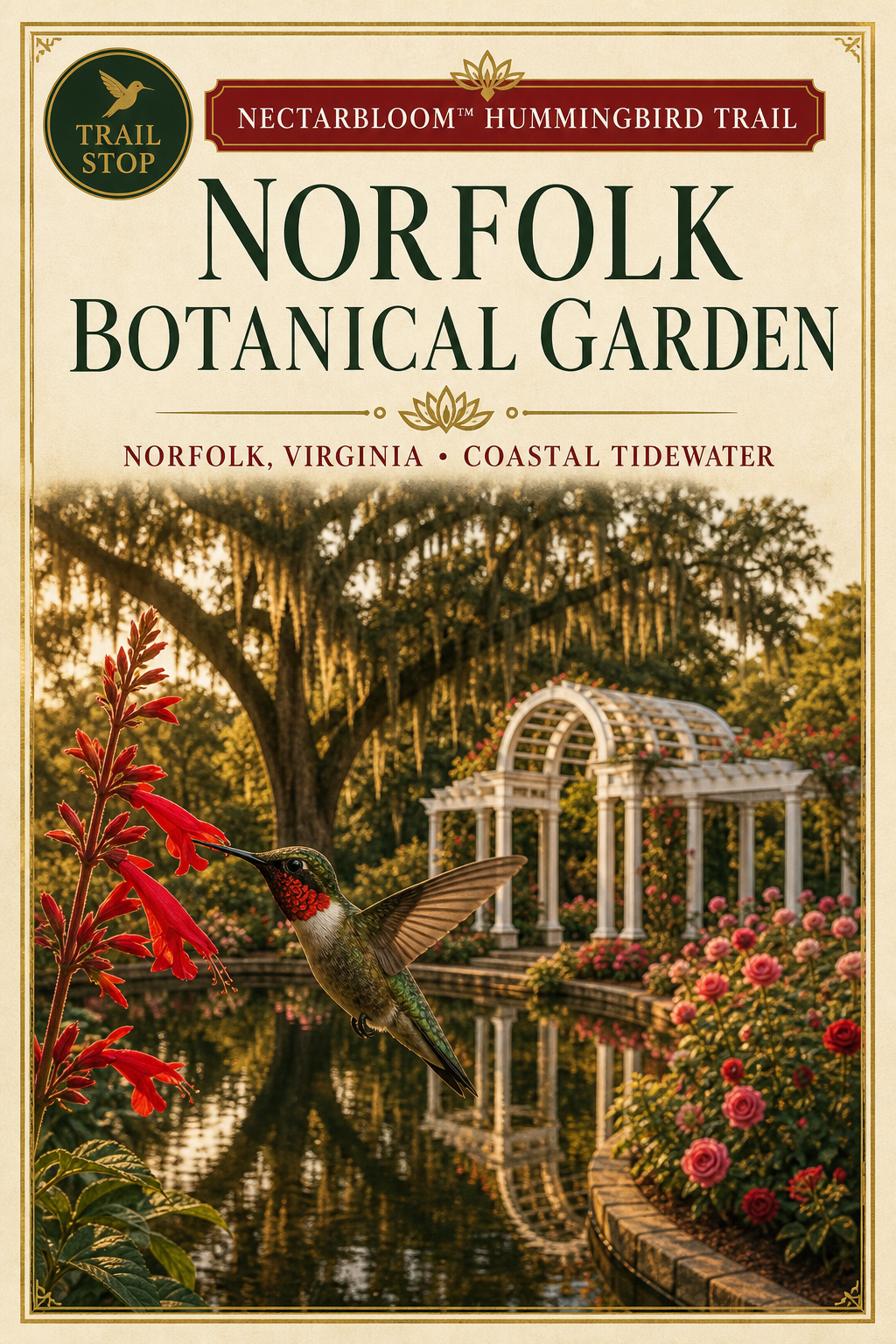
    View Norfolk Botanical Garden in Norfolk, VirginiaHummingbirds at Norfolk Botanical Garden in Norfolk, Virginia
    Map

    Norfolk Botanical Garden

    Norfolk

    Norfolk Botanical Garden earns its place among Virginia's finest hummingbird destinations through a rare combination of deliberate habitat design and sheer scale. The dedicated Hummingbird Garden, tucked behind the education building, is planted with annuals, perennials, shrubs, and trees chosen to attract and sustain Ruby-throated Hummingbirds through the warm season. Twelve miles of trails weave through 175 acres of curated gardens and natural forest areas, while the garden's water-rich setting creates cool microclimates that can extend flowering into fall. Visitors are most likely to see Ruby-throated Hummingbirds, but the special guest to watch for is Rufous Hummingbird during the colder months. Boat tours on the canals add a uniquely immersive way to explore woodland garden edges.

    Botanical GardenRuby-throated HummingbirdRufous Hummingbird (rare winter)

    View garden →

    Best Time to See Hummingbirds in Virginia

    Peak hummingbird activity in Virginia typically runs April, May, June, July, August, September, October, November. Spring migration brings the highest diversity, with early morning and late afternoon being the best viewing hours.

    Typical arrival
    Early – mid April
    Typical departure
    Late September
    Hang your feeder
    Late March

    Peak arrival lands in mid-April across most of the region. See the full state-by-state feeder timing guide.

    Most Common Hummingbird in Virginia

    The most common hummingbird across Virginia is the Ruby-throated Hummingbird.

    Special Guest Hummingbird to Watch For

    Keep an eye out for the Rufous Hummingbird. Rufous Hummingbird is a rare but documented fall and winter visitor in Virginia, especially on the Eastern Shore. Allen's and Black-chinned Hummingbirds are also rare special guests to watch for in coastal migration windows.

    Map of Hummingbird Locations in Virginia

    Switch the view above to to see featured locations plotted geographically.

    Common Hummingbird Species in Virginia

    • Ruby-throated Hummingbird

    Hummingbird Questions About Virginia

    When do hummingbirds arrive in Virginia?

    Hummingbirds typically arrive in Virginia in Early – mid April and leave again by Late September. Peak arrival lands in mid-April across most of the region.

    When should you put out hummingbird feeders in Virginia?

    Hang feeders in Virginia by Late March — about one to two weeks before the first birds arrive in Early – mid April — so early migrants find your feeder immediately.

    What kinds of hummingbirds live in Virginia?

    The hummingbird species regularly recorded in Virginia are: Ruby-throated Hummingbird.

    Share Your Visit

    Saw hummingbirds in Virginia? Help fellow flock-watchers by sharing a photo, rating, and note from your visit.

    Fresh nectar in a minute.

    Buy on Amazon