Shop & Support the Mission

    Fresh nectar in a minute.

    Every bag of NectarBloom™ funds the guides, the Hummingbird Trail, the lab testing, and the free care resources on this site. When you buy our nectar, you help us keep hummingbird education open, honest, and growing — for every bird lover, everywhere.

    NectarBloom 2 lb bag — pure cane sugar hummingbird nectar

    NectarBloom™ — 2 lb Bag

    Fresh nectar in a minute.

    No boiling, no dye. The same sugar hummingbird flowers make. One ingredient, nothing else. Makes up to 160 oz of fresh feeder nectar per bag.

    • Fresh nectar in a minute: measure, stir until clear, and pour
    • No boiling, no dye
    • The same sugar hummingbird flowers make
    • One ingredient, nothing else: 100% pure cane sugar
    • Lab tested. Resealable 2 lb bag, sourced and packed in the USA

    1 Bag · 2 lb

    $21.99

    Free shipping included

    Best Value

    2 Bags · Season Supply

    $39.88

    Free shipping included

    Direct orders are temporarily sold out. NectarBloom™ is still available on Amazon.

    Buy on Amazon

    Ships fast via Amazon Prime

    See full product details

    Direct orders temporarily unavailable

    “Your purchase isn’t just nectar — it’s how we keep this hummingbird care library free, accurate, and growing.”

    Thank you for flying with us

    Overview

    West Virginia offers a wild Appalachian hummingbird experience shaped by forested ridges, river gorges, highland meadows, native wildflowers, and community gardens. Ruby-throated Hummingbird is the state's expected summer resident, found from river valleys and towns to upland forests and mountain openings. The state's strongest hummingbird experiences are often tied to natural landscapes rather than formal gardens, especially around New River Gorge, Monongahela highlands, woodland edges, and native plantings. The special guest story is unusual: West Virginia has documented rare winter hummingbird surprises, including one of the most remarkable eastern records, a Bahama Woodstar. Best viewing for most visitors is May through September, with June through August strongest for summer activity.

    Audubon chapters and reader sightings in West Virginia

    Filter gardens
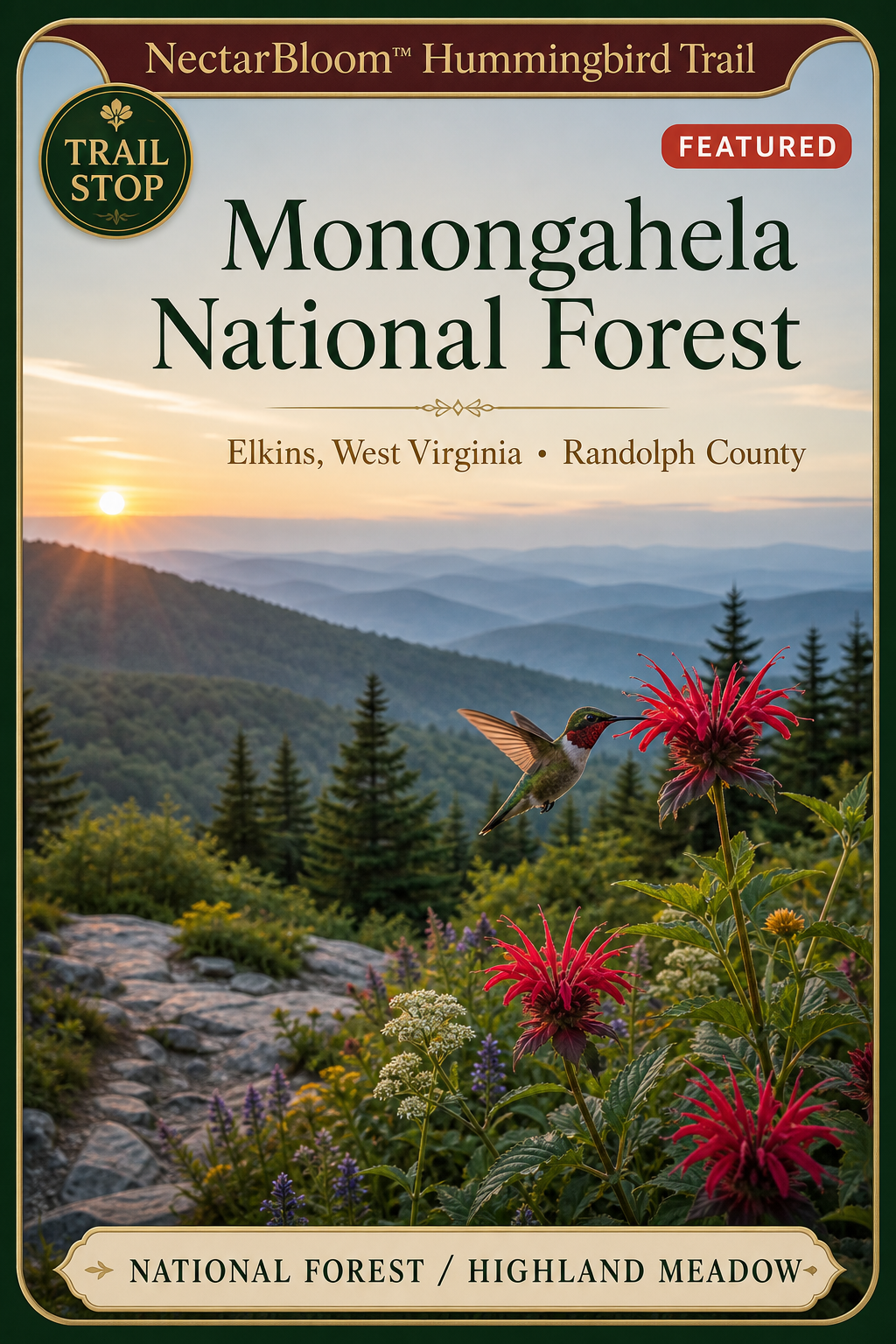
    View Monongahela National Forest in Elkins, West VirginiaHummingbirds at Monongahela National Forest in Elkins, West Virginia
    Map

    Monongahela National Forest

    Elkins

    Monongahela National Forest covers more than 900,000 acres of some of the most ecologically diverse terrain in the eastern United States. Ruby-throated Hummingbirds are the expected summer species, breeding through mid-elevation hardwood zones and feeding in highland meadows rich with native wildflowers. Cranberry Glades and other highland areas add a rare botanical dimension, with bogs, spruce-fir influence, and cool mountain habitats that feel unlike typical eastern forests. This is a broad landscape rather than a single garden, but that is exactly why it belongs on the Hummingbird Trail. The special guest to watch for is Rufous Hummingbird, a rare late-season possibility. For botanist-birders, Monongahela is West Virginia hummingbird habitat at its most expansive.

    National Forest and Appalachian HighlandRuby-throated Hummingbird

    View garden →

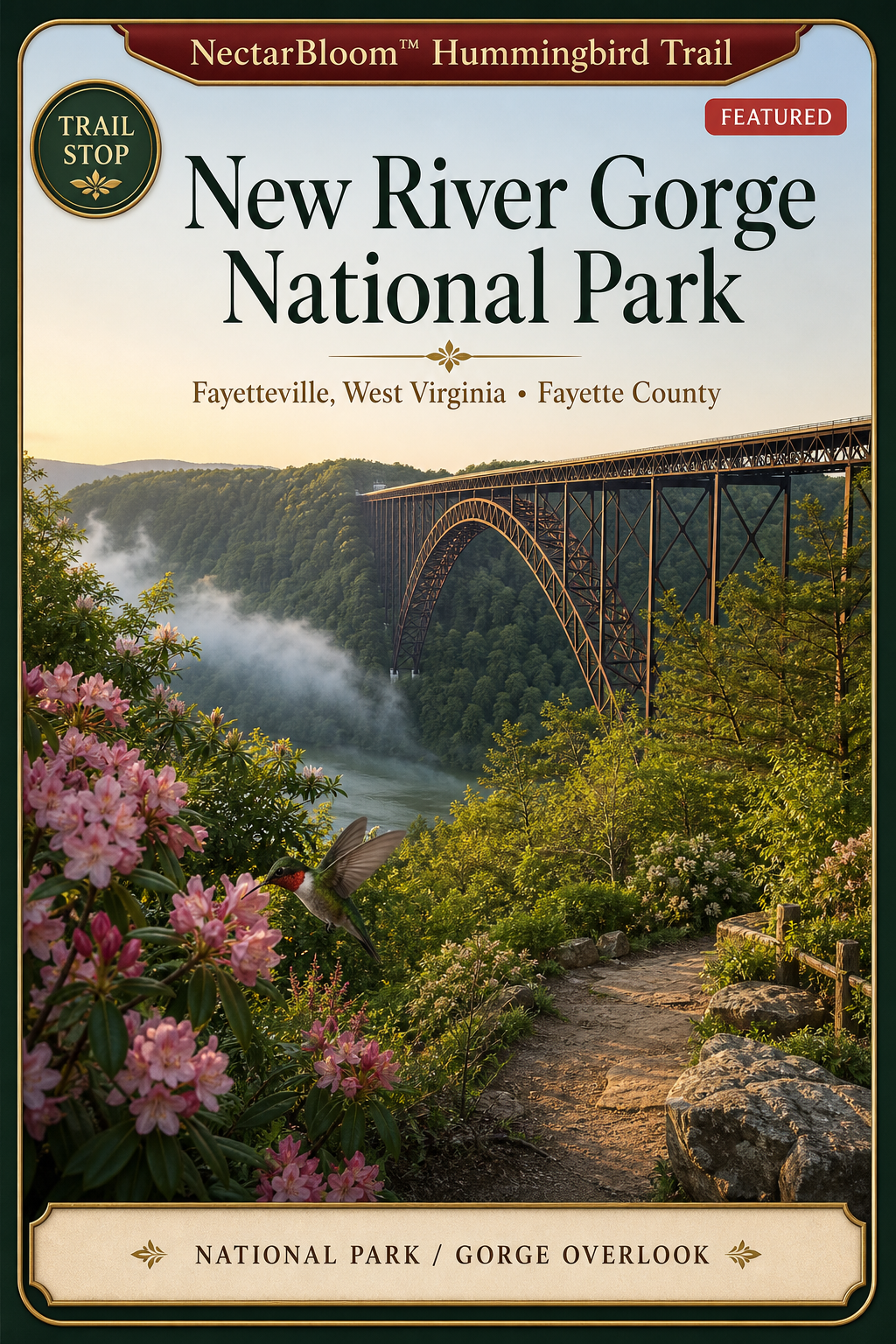
    View New River Gorge National Park & Preserve in Glen Jean, West VirginiaHummingbirds at New River Gorge National Park & Preserve in Glen Jean, West Virginia
    Map

    New River Gorge National Park & Preserve

    Glen Jean

    New River Gorge National Park & Preserve is West Virginia's crown-jewel Hummingbird Trail destination. Ruby-throated Hummingbirds breed throughout the gorge's hardwood forest edges and wildflower-rich slopes, where native plant diversity supports both nectar and insect life. The park's cliffs, forests, river views, and spring bloom create one of the most photogenic hummingbird landscapes in Appalachia. Visitors may pair hummingbird watching with hiking, overlooks, rafting, birding festivals, and the iconic New River Gorge Bridge. The special guest to watch for is Rufous Hummingbird, a rare late-season surprise in the region. For Nectarbloom, this listing shows hummingbirds as part of a larger Appalachian conservation story.

    National Park and PreserveRuby-throated Hummingbird

    View garden →

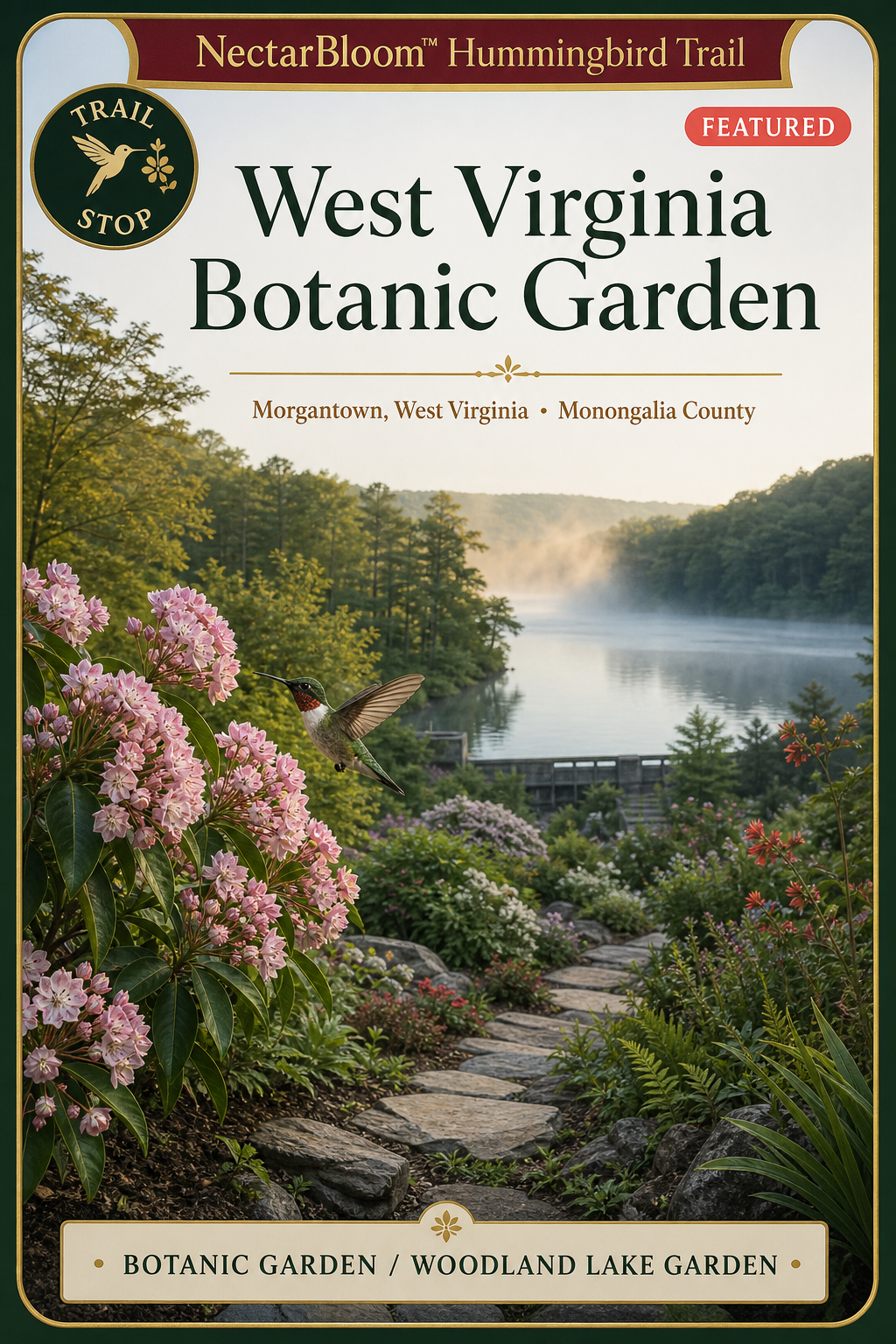
    View West Virginia Botanic Garden in Morgantown, West VirginiaHummingbirds at West Virginia Botanic Garden in Morgantown, West Virginia
    Map

    West Virginia Botanic Garden

    Morgantown

    West Virginia Botanic Garden near Morgantown is a community-built and volunteer-stewarded garden that has grown into a genuine regional wildlife haven. Ruby-throated Hummingbirds are the most likely species here during summer, using native wildflower plantings, the butterfly garden, wooded trails, and reservoir-edge habitat. The Reservoir Loop Trail rewards slow walkers with birds, shade, and the feeling of a landscape shaped by ecological care rather than commercial display. Its free admission and year-round access make it one of West Virginia's most welcoming nature spaces. The special guest to watch for is Rufous Hummingbird, rare but possible in late-season reports. For Nectarbloom, this garden connects hummingbird habitat with community stewardship and Appalachian plant life.

    Community Botanic GardenRuby-throated Hummingbird

    View garden →

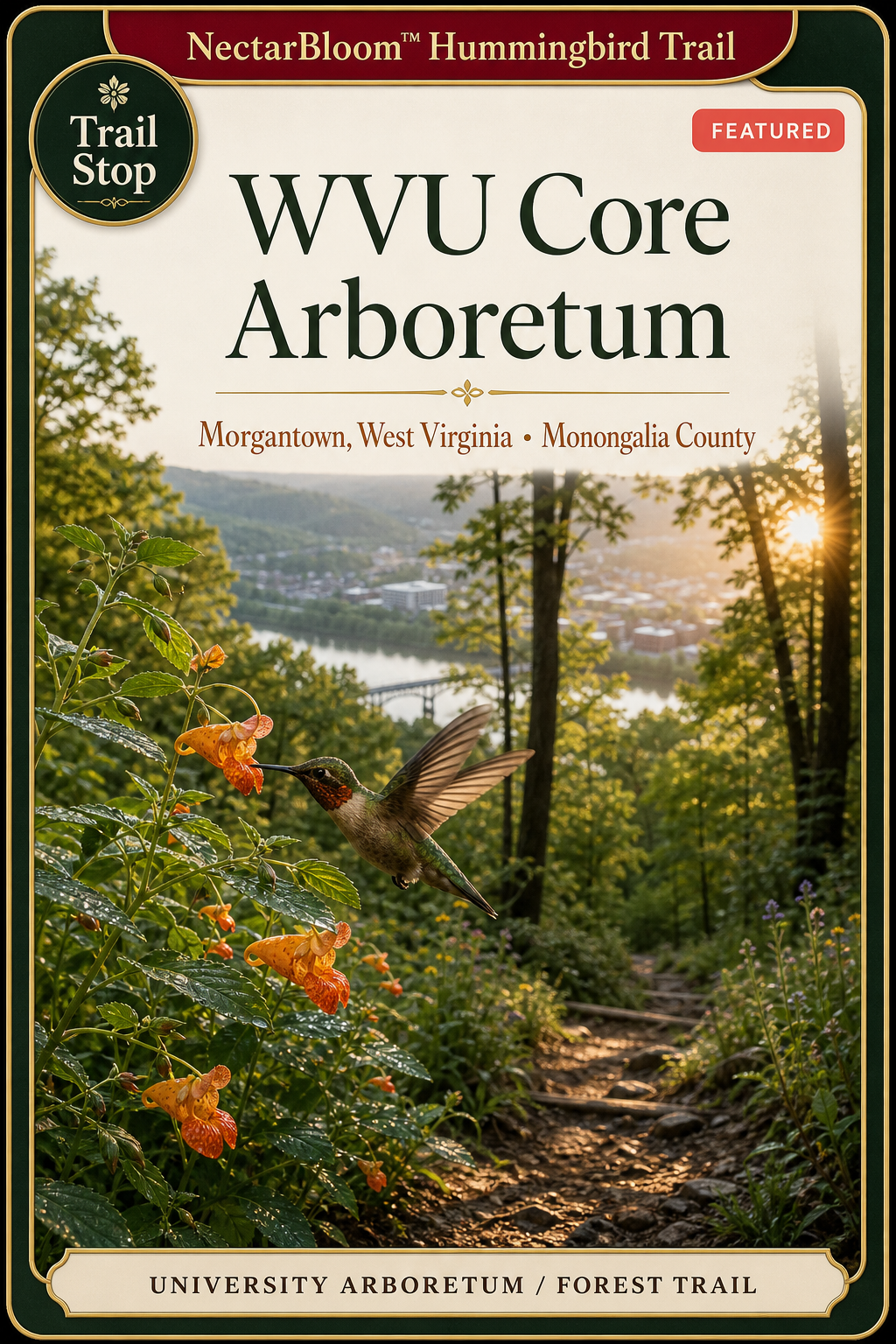
    View WVU Core Arboretum in Morgantown, West VirginiaHummingbirds at WVU Core Arboretum in Morgantown, West Virginia
    Map

    WVU Core Arboretum

    Morgantown

    West Virginia University's Core Arboretum protects 91 acres of Appalachian forest within Morgantown, creating a rare woodland corridor along the Monongahela River. Ruby-throated Hummingbirds are the expected summer species, using rich understory wildflowers and forest-edge habitat across the nesting season. The arboretum's old-growth and second-growth character gives it a depth that many urban nature sites lack, while Mountaineer Audubon spring bird walks add community credibility and learning opportunities. Free year-round access makes the site especially useful for students, residents, and visitors to WVU country. The special guest to watch for is Rufous Hummingbird, rare but possible outside the normal Ruby-throated season.

    University Arboretum and Natural AreaRuby-throated Hummingbird

    View garden →

    Best Time to See Hummingbirds in West Virginia

    Peak hummingbird activity in West Virginia typically runs May, June, July, August, September. Spring migration brings the highest diversity, with early morning and late afternoon being the best viewing hours.

    Typical arrival
    Early – mid April
    Typical departure
    Late September
    Hang your feeder
    Late March

    Peak arrival lands in mid-April across most of the region. See the full state-by-state feeder timing guide.

    Most Common Hummingbird in West Virginia

    The most common hummingbird across West Virginia is the Ruby-throated Hummingbird.

    Special Guest Hummingbird to Watch For

    Keep an eye out for the Rufous Hummingbird. Rufous Hummingbird is the more realistic rare special guest in West Virginia during fall or winter. The state has also recorded an extraordinary Bahama Woodstar, but that should be described as an exceptional rarity, not an expected visitor.

    Map of Hummingbird Locations in West Virginia

    Switch the view above to to see featured locations plotted geographically.

    Common Hummingbird Species in West Virginia

    • Ruby-throated Hummingbird

    Hummingbird Questions About West Virginia

    When do hummingbirds arrive in West Virginia?

    Hummingbirds typically arrive in West Virginia in Early – mid April and leave again by Late September. Peak arrival lands in mid-April across most of the region.

    When should you put out hummingbird feeders in West Virginia?

    Hang feeders in West Virginia by Late March — about one to two weeks before the first birds arrive in Early – mid April — so early migrants find your feeder immediately.

    What kinds of hummingbirds live in West Virginia?

    The hummingbird species regularly recorded in West Virginia are: Ruby-throated Hummingbird.

    Share Your Visit

    Saw hummingbirds in West Virginia? Help fellow flock-watchers by sharing a photo, rating, and note from your visit.

    Fresh nectar in a minute.

    Buy on Amazon