Shop & Support the Mission

    Fresh nectar in a minute.

    Every bag of NectarBloom™ funds the guides, the Hummingbird Trail, the lab testing, and the free care resources on this site. When you buy our nectar, you help us keep hummingbird education open, honest, and growing — for every bird lover, everywhere.

    NectarBloom 2 lb bag — pure cane sugar hummingbird nectar

    NectarBloom™ — 2 lb Bag

    Fresh nectar in a minute.

    No boiling, no dye. The same sugar hummingbird flowers make. One ingredient, nothing else. Makes up to 160 oz of fresh feeder nectar per bag.

    • Fresh nectar in a minute: measure, stir until clear, and pour
    • No boiling, no dye
    • The same sugar hummingbird flowers make
    • One ingredient, nothing else: 100% pure cane sugar
    • Lab tested. Resealable 2 lb bag, sourced and packed in the USA

    1 Bag · 2 lb

    $21.99

    Free shipping included

    Best Value

    2 Bags · Season Supply

    $39.88

    Free shipping included

    Direct orders are temporarily sold out. NectarBloom™ is still available on Amazon.

    Buy on Amazon

    Ships fast via Amazon Prime

    See full product details

    Direct orders temporarily unavailable

    “Your purchase isn’t just nectar — it’s how we keep this hummingbird care library free, accurate, and growing.”

    Thank you for flying with us

    Overview

    Kansas sits near the western edge of the Ruby-throated Hummingbird's regular breeding range, which makes it a fascinating Great Plains transition state. Ruby-throated Hummingbirds are the most likely species to see, especially in eastern and central Kansas, where gardens, woodland edges, prairie plantings, and river corridors provide summer nesting and migration habitat. Rare western or wandering hummingbirds have also been recorded in the state, making late summer and fall especially exciting for patient observers. The best viewing window is May through September, with peak activity often building from late July through September as young birds and migrants gather around nectar-rich flowers.

    Audubon chapters and reader sightings in Kansas

    Filter gardens
    View Dyck Arboretum of the Plains in Hesston, KansasHummingbirds at Dyck Arboretum of the Plains in Hesston, Kansas
    Map

    Harvey County

    Dyck Arboretum of the Plains

    Hesston

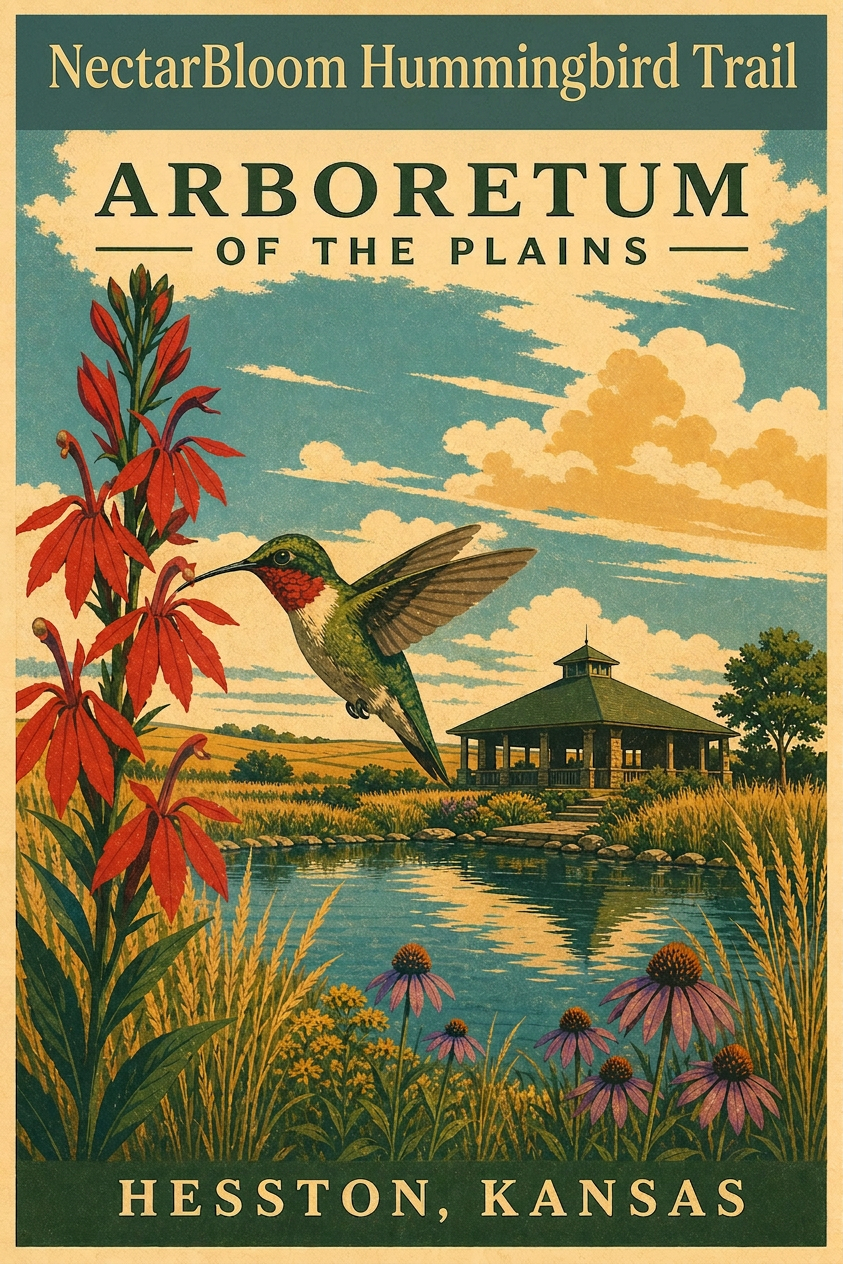
    Dyck Arboretum of the Plains is one of the Great Plains' most purposeful native garden destinations. Its plantings are rooted in ecological integrity, giving visitors a clear view of how Kansas-native flowers, grasses, shrubs, and water features can support birds and pollinators. Ruby-throated Hummingbirds are the most likely species here, especially around late-summer nectar sources such as cardinal flower and bee balm near the pond and garden edges. Because Kansas sits near the western edge of the species' regular breeding range, the arboretum feels especially meaningful as a transition-zone listing. The special guest to watch for is Rufous Hummingbird during fall migration. For Nectarbloom, Dyck Arboretum is a model of how native planting can turn a dryland garden into real hummingbird habitat.

    Native Plant ArboretumRuby-throated Hummingbird

    View garden →

    View Marais des Cygnes National Wildlife Refuge in Pleasanton, KansasHummingbirds at Marais des Cygnes National Wildlife Refuge in Pleasanton, Kansas
    Map

    Linn County

    Marais des Cygnes National Wildlife Refuge

    Pleasanton

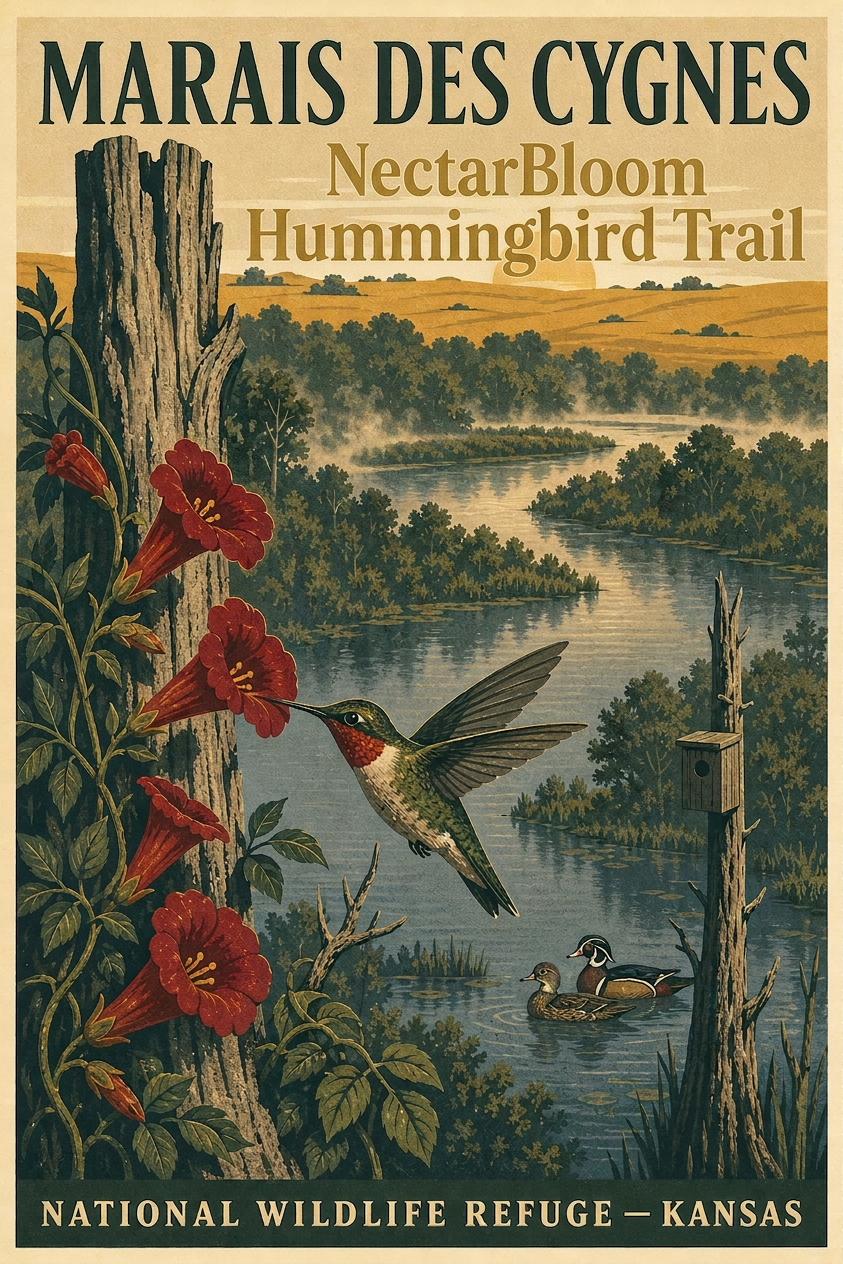
    Marais des Cygnes National Wildlife Refuge brings restored tallgrass prairie, bottomland forest, oxbow wetlands, and river-corridor habitat together in one of eastern Kansas's most productive wildlife landscapes. Ruby-throated Hummingbirds are the most likely species, using forest edges, native wildflower patches, and floodplain habitat during summer and migration. August and September are especially valuable as southbound birds move through the river corridor and refuel before continuing south. The special guest to watch for is Rufous Hummingbird, rare but possible during fall migration. This listing expands the Kansas page beyond gardens into authentic public habitat, showing that hummingbird support depends on connected landscapes as much as individual flowers.

    National Wildlife RefugeRuby-throated Hummingbird

    View garden →

    View Great Plains Nature Center in Wichita, KansasHummingbirds at Great Plains Nature Center in Wichita, Kansas
    Map

    Sedgwick County

    Great Plains Nature Center

    Wichita

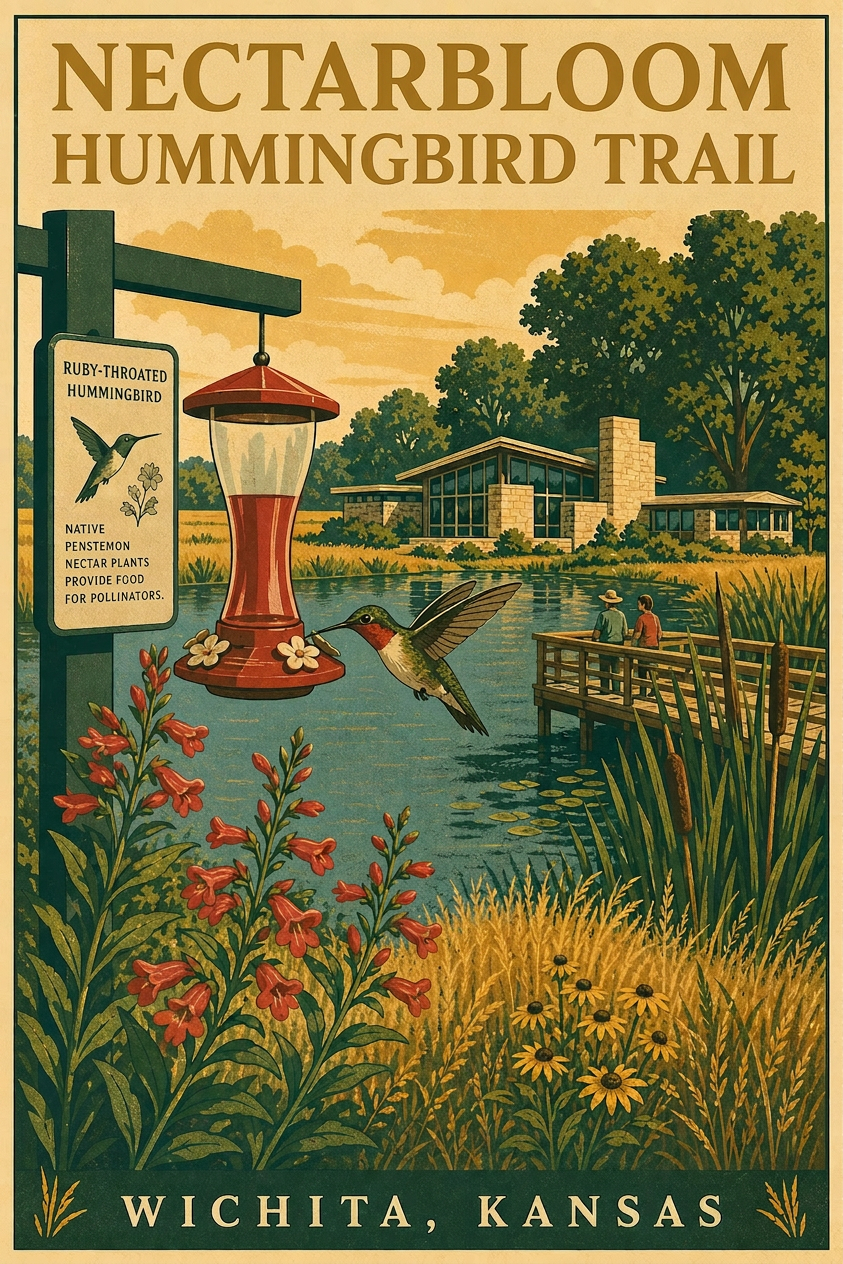
    Great Plains Nature Center is south-central Kansas's premier nature interpretation hub and a strong Wichita listing for the Hummingbird Trail. Located within Chisholm Creek Park, the center sits where prairie, wetland, riparian woodland, and native plantings come together in a visitor-friendly setting. Ruby-throated Hummingbirds are the most likely species during the warm months, drawn to native flowers, feeder areas, and the insect-rich edges that support nesting birds. The site is especially useful for beginners because interpretation, trails, and wildlife viewing are all built into the visitor experience. In late summer and fall, the special guest to watch for is Rufous Hummingbird, a rare migrant that rewards careful observation. For Nectarbloom, this is Kansas hummingbird education made approachable.

    Nature Center and Urban Wildlife HabitatRuby-throated Hummingbird

    View garden →

    View Overland Park Arboretum & Botanical Gardens in Overland Park, KansasHummingbirds at Overland Park Arboretum & Botanical Gardens in Overland Park, Kansas
    Map

    Johnson County

    Overland Park Arboretum & Botanical Gardens

    Overland Park

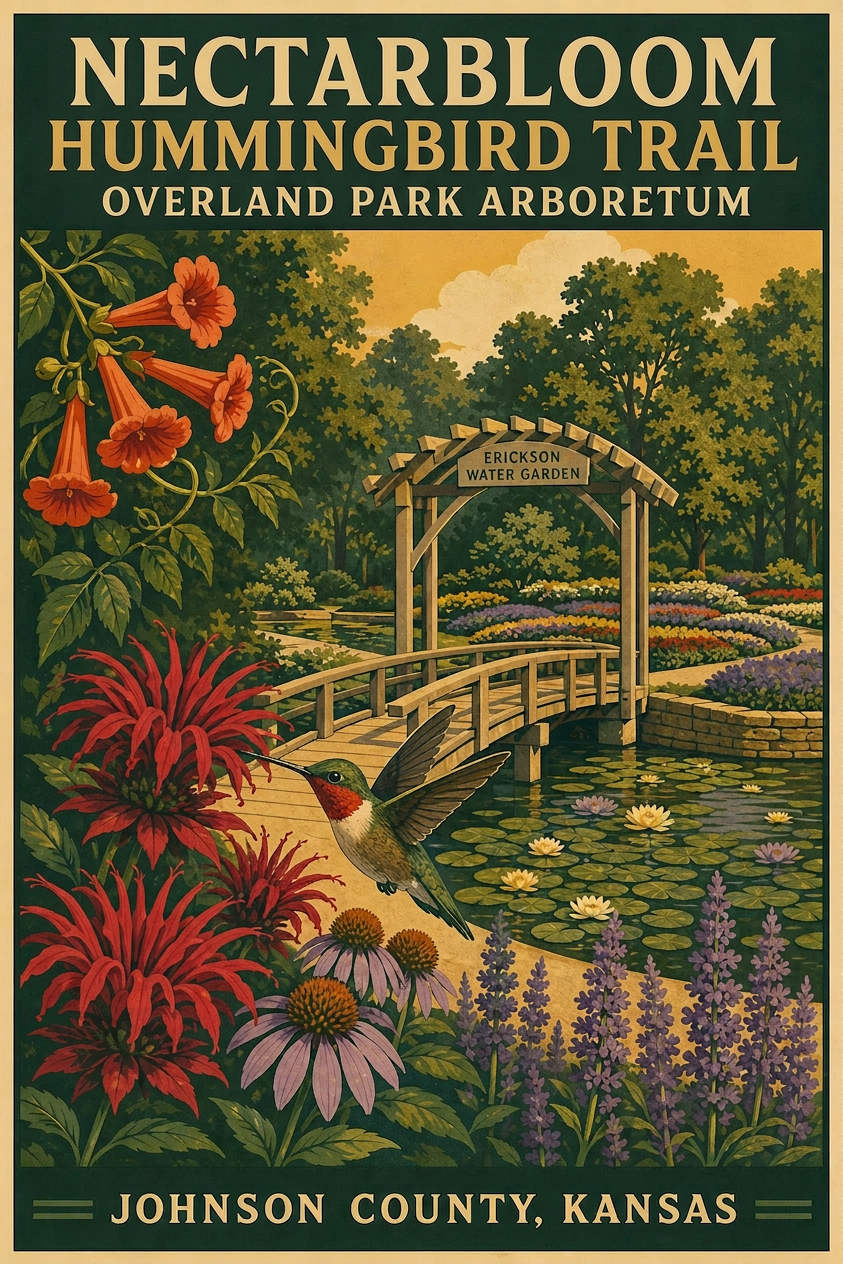
    Overland Park Arboretum & Botanical Gardens brings hummingbird watching into one of the Kansas City region's most accessible public green spaces. Its 300-acre landscape blends formal gardens, woodland trails, meadow plantings, wetlands, and pollinator-friendly beds, creating multiple zones where Ruby-throated Hummingbirds may feed through summer. The arboretum is especially valuable for families and first-time visitors because it is easy to reach, well maintained, and large enough to reward repeat trips. In late summer, flowering borders and wetland edges can become important fuel stops as migration builds. Ruby-throated Hummingbird is the expected species, while Rufous Hummingbird is the special guest to watch for during fall. For Nectarbloom, this is the practical Kansas metro gateway.

    Arboretum and Botanical GardenRuby-throated Hummingbird

    View garden →

    Best Time to See Hummingbirds in Kansas

    Peak hummingbird activity in Kansas typically runs May, June, July, August, September. Spring migration brings the highest diversity, with early morning and late afternoon being the best viewing hours.

    Typical arrival
    Mid-April – early May
    Typical departure
    Mid – late September
    Hang your feeder
    Early April

    Arrival tracks the 55°F isotherm as it moves north. See the full state-by-state feeder timing guide.

    Most Common Hummingbird in Kansas

    The most common hummingbird across Kansas is the Ruby-throated Hummingbird.

    Special Guest Hummingbird to Watch For

    Keep an eye out for the Rufous Hummingbird. Rufous Hummingbirds are rare but possible fall visitors in Kansas. Other western vagrants such as Black-chinned, Anna's, Calliope, Broad-tailed, Costa's, and Rivoli's have also been recorded, but Ruby-throated is by far the expected species.

    Map of Hummingbird Locations in Kansas

    Switch the view above to to see featured locations plotted geographically.

    Common Hummingbird Species in Kansas

    • Ruby-throated Hummingbird
    • Rufous Hummingbird (special fall visitor)

    Hummingbird Questions About Kansas

    When do hummingbirds arrive in Kansas?

    Hummingbirds typically arrive in Kansas in Mid-April – early May and leave again by Mid – late September. Arrival tracks the 55°F isotherm as it moves north.

    When should you put out hummingbird feeders in Kansas?

    Hang feeders in Kansas by Early April — about one to two weeks before the first birds arrive in Mid-April – early May — so early migrants find your feeder immediately.

    What kinds of hummingbirds live in Kansas?

    The hummingbird species regularly recorded in Kansas are: Ruby-throated Hummingbird, Rufous Hummingbird (special fall visitor).

    Share Your Visit

    Saw hummingbirds in Kansas? Help fellow flock-watchers by sharing a photo, rating, and note from your visit.

    Fresh nectar in a minute.

    Buy on Amazon