Dyck Arboretum of the Plains Hummingbird Guide
Shop & Support the Mission
Fresh nectar in a minute.
Every bag of NectarBloom™ funds the guides, the Hummingbird Trail, the lab testing, and the free care resources on this site. When you buy our nectar, you help us keep hummingbird education open, honest, and growing — for every bird lover, everywhere.

NectarBloom™ — 2 lb Bag
Fresh nectar in a minute.
No boiling, no dye. The same sugar hummingbird flowers make. One ingredient, nothing else. Makes up to 160 oz of fresh feeder nectar per bag.
- Fresh nectar in a minute: measure, stir until clear, and pour
- No boiling, no dye
- The same sugar hummingbird flowers make
- One ingredient, nothing else: 100% pure cane sugar
- Lab tested. Resealable 2 lb bag, sourced and packed in the USA
1 Bag · 2 lb
$21.99
Free shipping included
2 Bags · Season Supply
$39.88
Free shipping included
Direct orders are temporarily sold out. NectarBloom™ is still available on Amazon.
Buy on AmazonShips fast via Amazon Prime
“Your purchase isn’t just nectar — it’s how we keep this hummingbird care library free, accurate, and growing.”
Thank you for flying with us
Overview
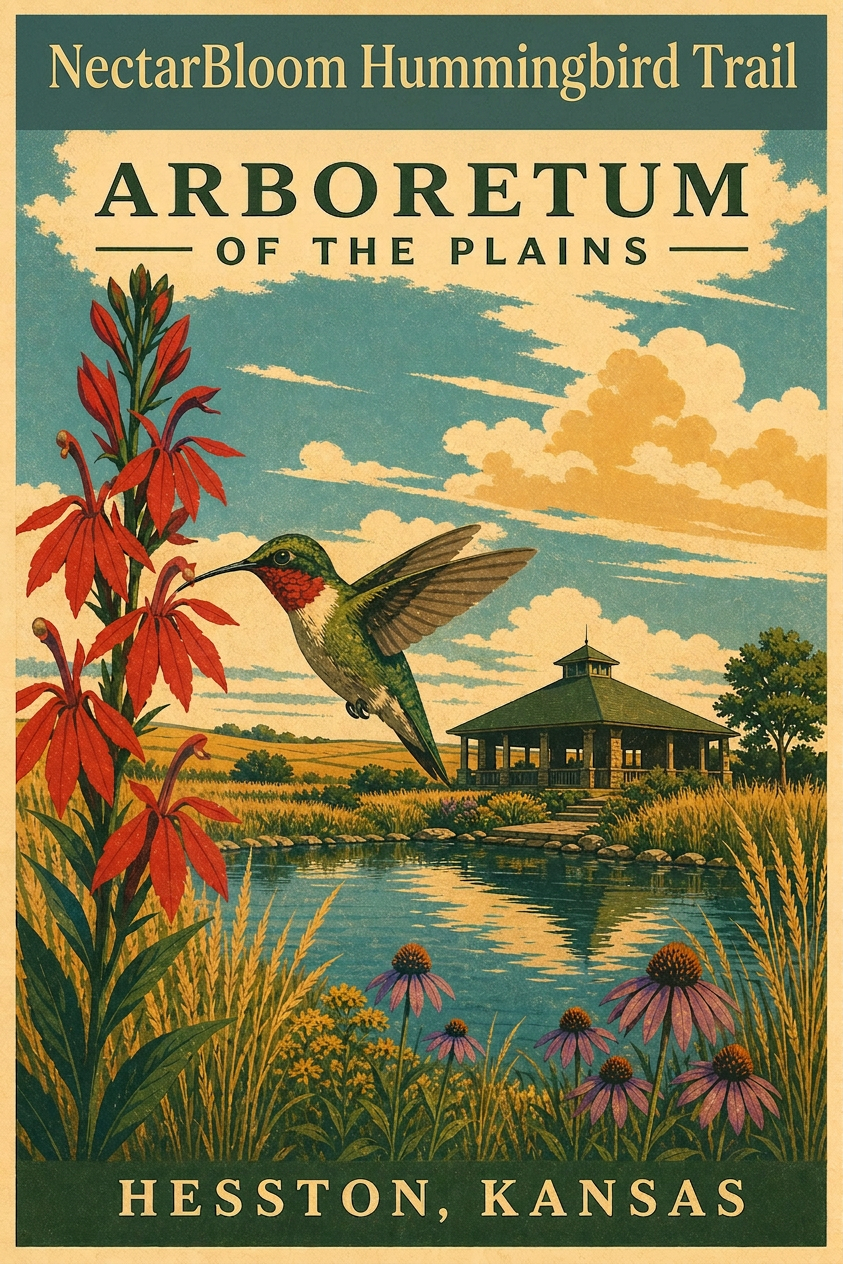
Dyck Arboretum of the Plains is one of the Great Plains' most purposeful native garden destinations. Its plantings are rooted in ecological integrity, giving visitors a clear view of how Kansas-native flowers, grasses, shrubs, and water features can support birds and pollinators. Ruby-throated Hummingbirds are the most likely species here, especially around late-summer nectar sources such as cardinal flower and bee balm near the pond and garden edges. Because Kansas sits near the western edge of the species' regular breeding range, the arboretum feels especially meaningful as a transition-zone listing. The special guest to watch for is Rufous Hummingbird during fall migration. For Nectarbloom, Dyck Arboretum is a model of how native planting can turn a dryland garden into real hummingbird habitat.
Hummingbirds to Watch For
- • Ruby-throated Hummingbird
Most Common Hummingbird
The most commonly sighted hummingbird at Dyck Arboretum of the Plains is the Ruby-throated Hummingbird.
Special Guest Hummingbird
Watch for the Rufous Hummingbird. Rufous Hummingbird is a rare fall visitor in Kansas. Late summer nectar plantings make this the kind of place where a lucky observer should stay alert.
Best Time to Visit
Plan your visit during May, June, July, August, September for the highest chance of hummingbird sightings. Early morning and late afternoon are typically the most active feeding times.
Plants and Habitat
- • Cardinal flower
- • Bee balm
- • Coral honeysuckle
- • Prairie wildflowers
- • Native Kansas plantings
- • Pond-edge habitat
NectarBloom Tip
Dyck Arboretum is one of Kansas's strongest native plant institutions and offers regionally appropriate nectar habitat at the western edge of Ruby-throated Hummingbird range.
Visitor Notes
Native plant-focused arboretum. Check official site for hours, admission, events, native plant sales, and seasonal bloom updates.
Reviews and Sightings
Visited Dyck Arboretum of the Plains? Share what you saw — your photos, ratings, and notes help fellow flock-watchers know what to expect.
Share a VisitVisited Dyck Arboretum of the Plains?
Share your visit — a photo, a rating, and a quick note help fellow flock-watchers know what to expect. No account required.
Share a VisitFresh nectar in a minute.
We use cookies for a better experience.
We use essential cookies to run the site and marketing cookies (like Meta Pixel) to measure how our ads perform. You can opt out of marketing cookies anytime.