Shop & Support the Mission

    Fresh nectar in a minute.

    Every bag of NectarBloom™ funds the guides, the Hummingbird Trail, the lab testing, and the free care resources on this site. When you buy our nectar, you help us keep hummingbird education open, honest, and growing — for every bird lover, everywhere.

    NectarBloom 2 lb bag — pure cane sugar hummingbird nectar

    NectarBloom™ — 2 lb Bag

    Fresh nectar in a minute.

    No boiling, no dye. The same sugar hummingbird flowers make. One ingredient, nothing else. Makes up to 160 oz of fresh feeder nectar per bag.

    • Fresh nectar in a minute: measure, stir until clear, and pour
    • No boiling, no dye
    • The same sugar hummingbird flowers make
    • One ingredient, nothing else: 100% pure cane sugar
    • Lab tested. Resealable 2 lb bag, sourced and packed in the USA

    1 Bag · 2 lb

    $21.99

    Free shipping included

    Best Value

    2 Bags · Season Supply

    $39.88

    Free shipping included

    Direct orders are temporarily sold out. NectarBloom™ is still available on Amazon.

    Buy on Amazon

    Ships fast via Amazon Prime

    See full product details

    Direct orders temporarily unavailable

    “Your purchase isn’t just nectar — it’s how we keep this hummingbird care library free, accurate, and growing.”

    Thank you for flying with us

    Overview

    New York's diverse landscapes — from the Bronx to the Catskills to the Finger Lakes — host Ruby-throated Hummingbirds throughout summer, with the Atlantic Flyway concentrating migrants in August and September. The New York Botanical Garden, Brooklyn Botanic Garden, Cornell Botanic Gardens, and Wave Hill are the state's premier hummingbird destinations.

    Audubon chapters and reader sightings in New York

    Filter gardens
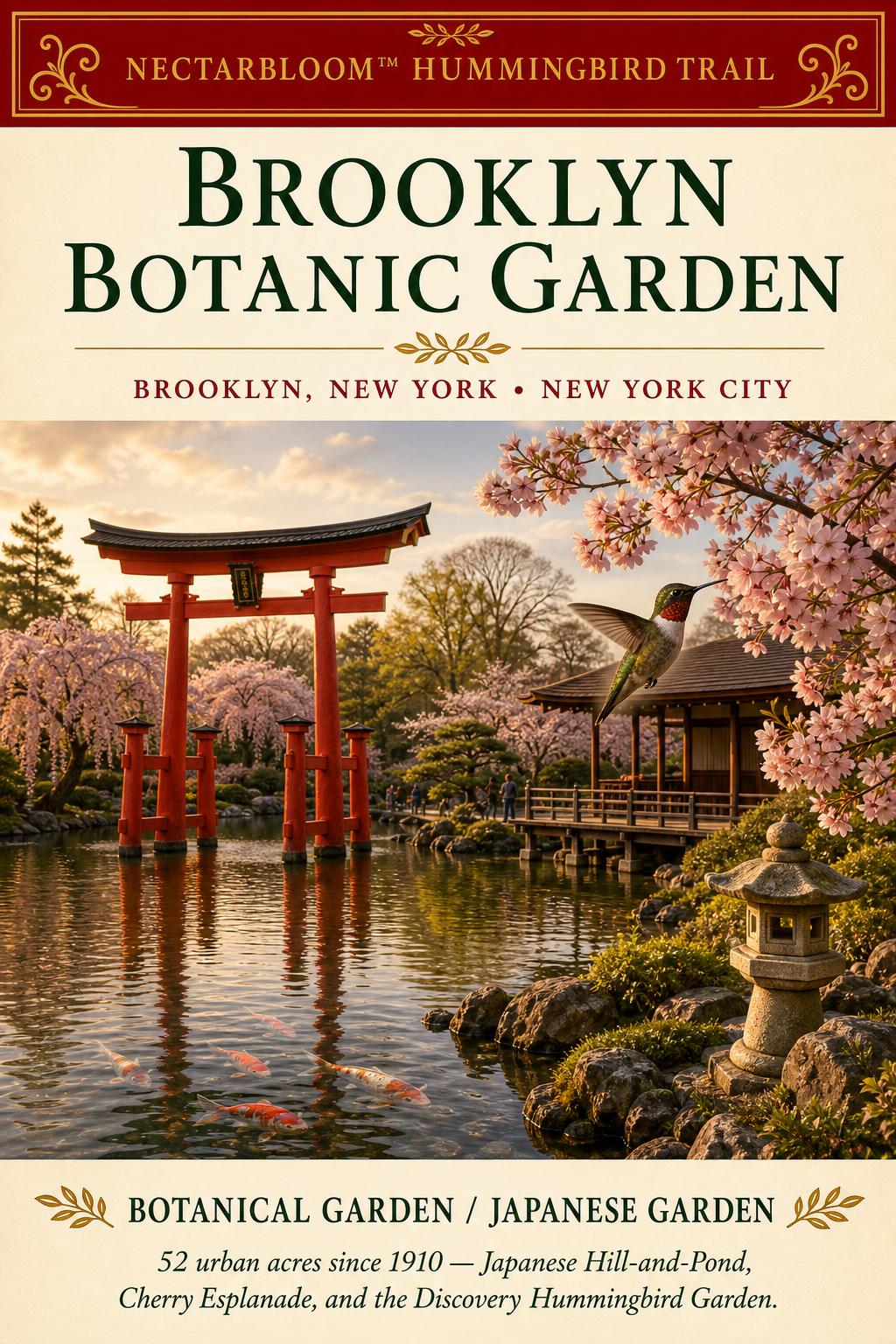
    View Brooklyn Botanic Garden in Brooklyn, New YorkHummingbirds at Brooklyn Botanic Garden in Brooklyn, New York
    Map

    Kings County

    Brooklyn Botanic Garden

    Brooklyn

    A beloved 52-acre urban oasis in the heart of Brooklyn, the Brooklyn Botanic Garden has cultivated one of the most diverse horticultural collections in New York City since 1910. The garden features over 12,000 plant varieties across themed gardens including the famous Japanese Hill-and-Pond Garden, Cherry Esplanade, a Native Flora Garden, and the Discovery Garden — which contains a dedicated Hummingbird Garden with container plantings specifically targeting ruby-throated hummingbirds. Females are frequently spotted feeding during fall migration.

    Botanical GardenRuby-throated

    View garden →
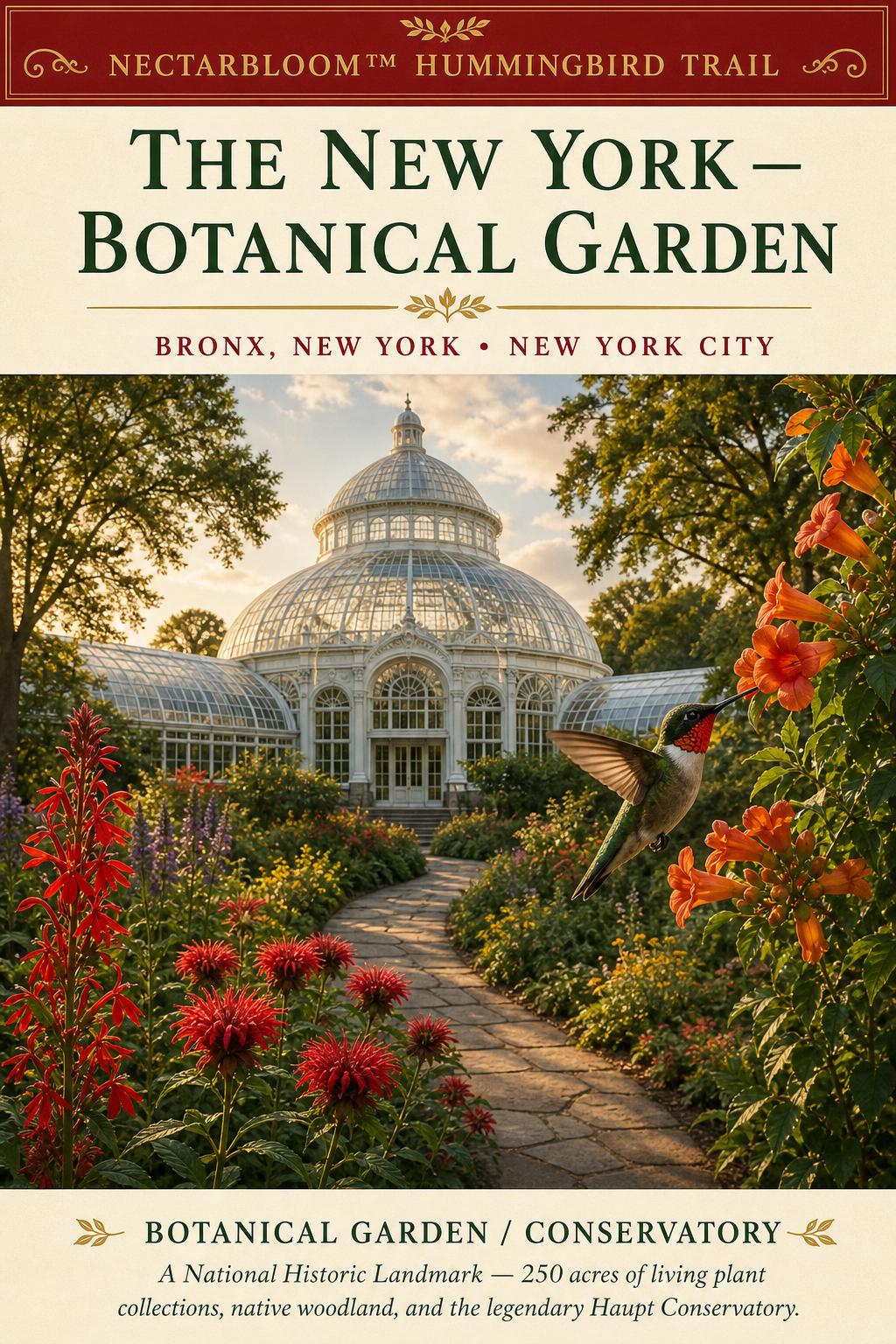
    View New York Botanical Garden (NYBG) in Bronx, New YorkHummingbirds at New York Botanical Garden (NYBG) in Bronx, New York
    Map

    Bronx County

    New York Botanical Garden (NYBG)

    Bronx

    Spanning 250 acres in the central Bronx, NYBG is one of the world's great living museums, comprising 28 specialty gardens, a 40-acre largely virgin old-growth forest, and a natural section of the Bronx River that feeds a waterfall, lakes, and wetlands. The landmarked Victorian Enid A. Haupt Conservatory anchors the grounds. With 229 documented bird species observed on site, the garden's combination of native plantings and freshwater habitat makes it an exceptional migratory stopover on the Atlantic Flyway. Ruby-throated Hummingbirds are confirmed nesting and breeding residents in summer, with additional migrants in late summer and fall.

    Botanical GardenRuby-throated

    View garden →
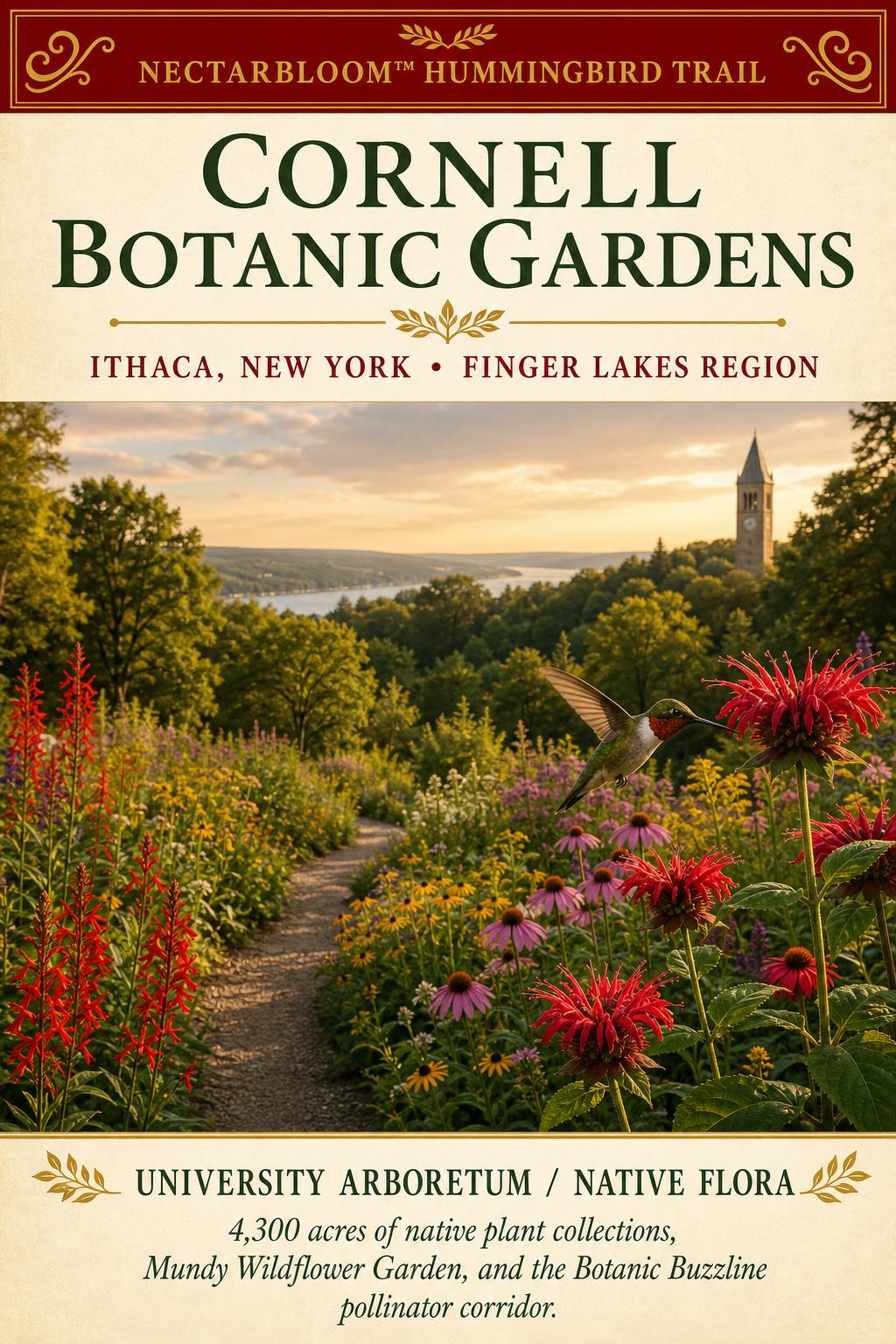
    View Cornell Botanic Gardens in Ithaca, New YorkHummingbirds at Cornell Botanic Gardens in Ithaca, New York
    Map

    Tompkins County

    Cornell Botanic Gardens

    Ithaca

    Encompassing over 4,300 acres of natural areas, gardens, and preserve lands on the Cornell University campus in Ithaca, Cornell Botanic Gardens is one of the largest university-affiliated botanical gardens in the country. The Mundy Wildflower Garden is a nationally recognized floodplain woodland showcase for native plants of the Cayuga Lake basin. The Botanic Buzzline — a 980-square-foot flowering pathway with 45+ native plant varieties — was specifically designed as a pollinator corridor. The gardens are managed with a strong native plant emphasis, making them exceptional Ruby-throated Hummingbird habitat throughout the breeding season.

    University ArboretumRuby-throated

    View garden →

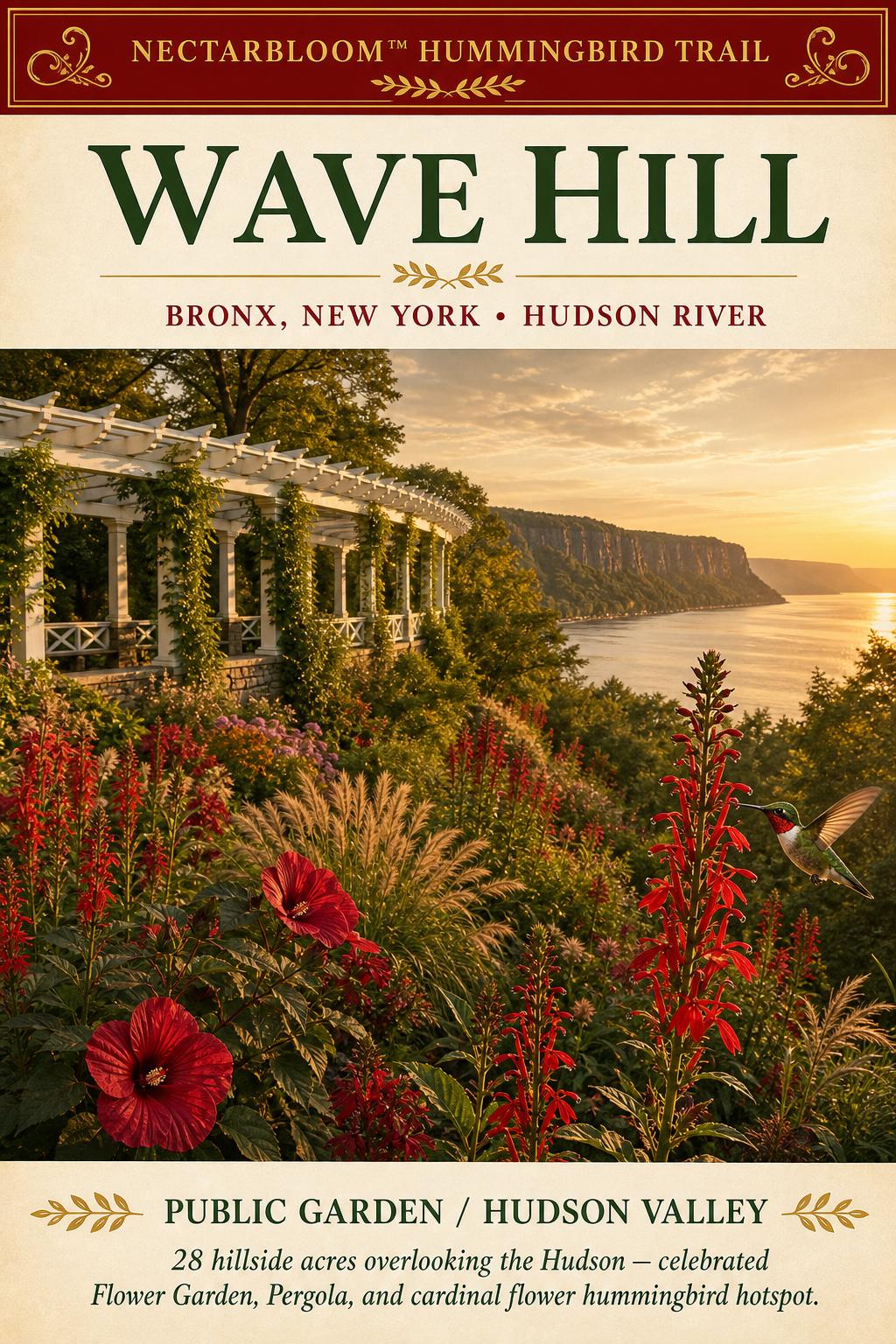
    View Wave Hill in Bronx, New YorkHummingbirds at Wave Hill in Bronx, New York
    Map

    Bronx County

    Wave Hill

    Bronx

    A 28-acre public garden and cultural center perched on a hillside in the Riverdale section of the Bronx, Wave Hill commands sweeping views of the Hudson River and Palisades. Known for exceptionally artful horticulture, Wave Hill's northeast corner of the Flower Garden is explicitly documented as a hotspot for ruby-throated hummingbirds, planted with deep-summer red flowers including cardinal flower and scarlet rosemallow. Wave Hill also offers fall programming on plants and habitat for migrating birds, timed precisely for peak hummingbird activity.

    Public GardenRuby-throated

    View garden →

    Best Time to See Hummingbirds in New York

    Peak hummingbird activity in New York typically runs May, June, July, August, September. Spring migration brings the highest diversity, with early morning and late afternoon being the best viewing hours.

    Typical arrival
    Early – mid April
    Typical departure
    Late September
    Hang your feeder
    Late March

    Peak arrival lands in mid-April across most of the region. See the full state-by-state feeder timing guide.

    Most Common Hummingbird in New York

    The most common hummingbird across New York is the Ruby-throated.

    Map of Hummingbird Locations in New York

    Switch the view above to to see featured locations plotted geographically.

    Common Hummingbird Species in New York

    • Ruby-throated

    Counties on the Hummingbird Trail

    Hummingbird Questions About New York

    When do hummingbirds arrive in New York?

    Hummingbirds typically arrive in New York in Early – mid April and leave again by Late September. Peak arrival lands in mid-April across most of the region.

    When should you put out hummingbird feeders in New York?

    Hang feeders in New York by Late March — about one to two weeks before the first birds arrive in Early – mid April — so early migrants find your feeder immediately.

    What kinds of hummingbirds live in New York?

    The hummingbird species regularly recorded in New York are: Ruby-throated.

    Share Your Visit

    Saw hummingbirds in New York? Help fellow flock-watchers by sharing a photo, rating, and note from your visit.

    Fresh nectar in a minute.

    Buy on Amazon