Cornell Botanic Gardens Hummingbird Guide
Shop & Support the Mission
Fresh nectar in a minute.
Every bag of NectarBloom™ funds the guides, the Hummingbird Trail, the lab testing, and the free care resources on this site. When you buy our nectar, you help us keep hummingbird education open, honest, and growing — for every bird lover, everywhere.

NectarBloom™ — 2 lb Bag
Fresh nectar in a minute.
No boiling, no dye. The same sugar hummingbird flowers make. One ingredient, nothing else. Makes up to 160 oz of fresh feeder nectar per bag.
- Fresh nectar in a minute: measure, stir until clear, and pour
- No boiling, no dye
- The same sugar hummingbird flowers make
- One ingredient, nothing else: 100% pure cane sugar
- Lab tested. Resealable 2 lb bag, sourced and packed in the USA
1 Bag · 2 lb
$21.99
Free shipping included
2 Bags · Season Supply
$39.88
Free shipping included
Direct orders are temporarily sold out. NectarBloom™ is still available on Amazon.
Buy on AmazonShips fast via Amazon Prime
“Your purchase isn’t just nectar — it’s how we keep this hummingbird care library free, accurate, and growing.”
Thank you for flying with us
Overview
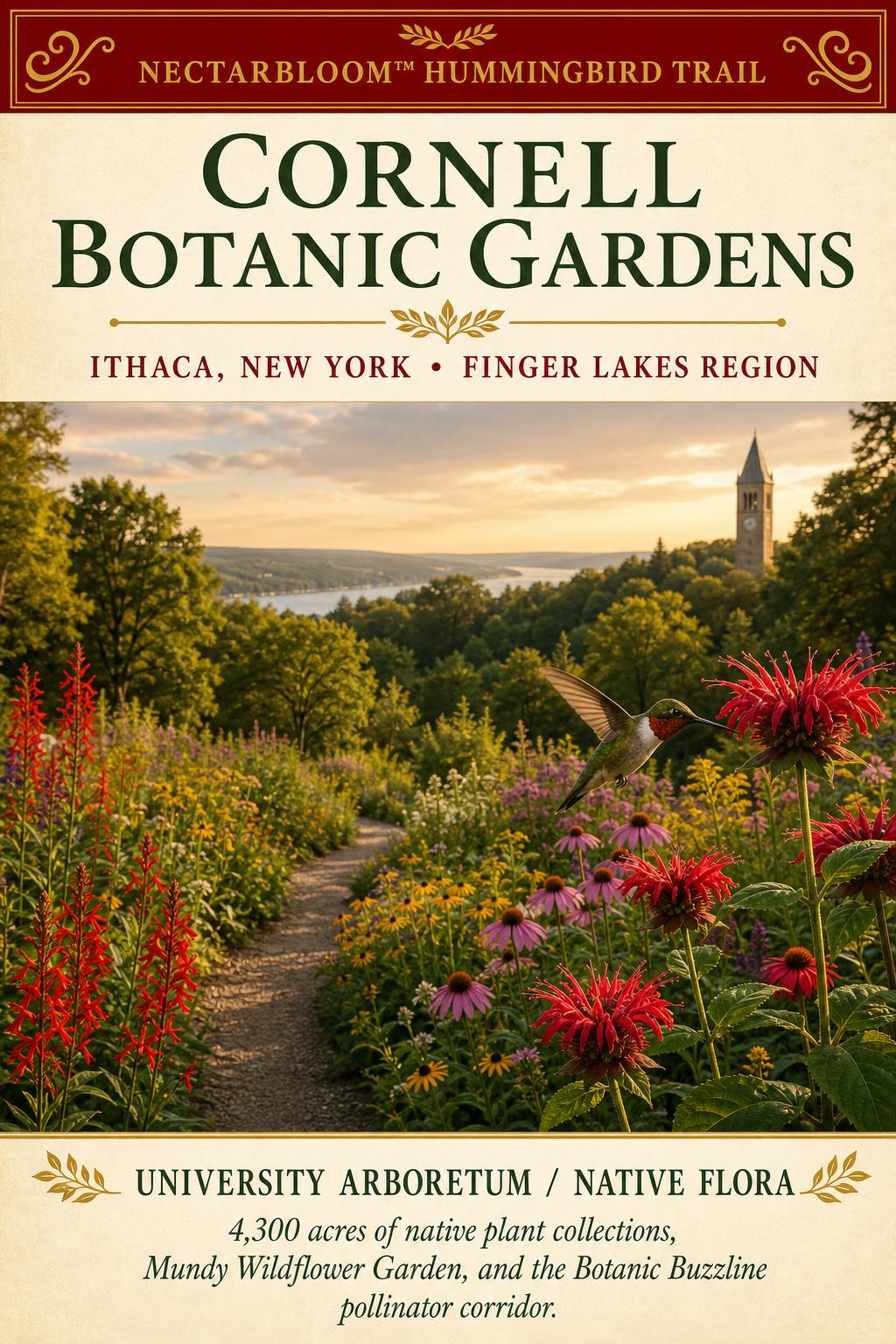
Encompassing over 4,300 acres of natural areas, gardens, and preserve lands on the Cornell University campus in Ithaca, Cornell Botanic Gardens is one of the largest university-affiliated botanical gardens in the country. The Mundy Wildflower Garden is a nationally recognized floodplain woodland showcase for native plants of the Cayuga Lake basin. The Botanic Buzzline — a 980-square-foot flowering pathway with 45+ native plant varieties — was specifically designed as a pollinator corridor. The gardens are managed with a strong native plant emphasis, making them exceptional Ruby-throated Hummingbird habitat throughout the breeding season.
Hummingbirds to Watch For
- • Ruby-throated
Most Common Hummingbird
The most commonly sighted hummingbird at Cornell Botanic Gardens is the Ruby-throated.
Best Time to Visit
Plan your visit during May, June, July, August, September for the highest chance of hummingbird sightings. Early morning and late afternoon are typically the most active feeding times.
Plants and Habitat
- • Wild columbine (*Aquilegia canadensis*) — abundant in Mundy Wildflower Garden
- • Cardinal flower (*Lobelia cardinalis*) — floodplain woodland areas
- • Scarlet bee balm (*Monarda didyma*) — pollinator plantings
- • Jewelweed (*Impatiens capensis*) — moist floodplain areas
- • Trumpet honeysuckle (*Lonicera sempervirens*) — Buzzline pollinator corridor
- • Wild bergamot (*Monarda fistulosa*) — Buzzline and cultivated native beds
NectarBloom Tip
The Mundy Wildflower Garden is your best starting point — enter from the Caldwell Road side where formal native plant beds showcase hummingbird-friendly species in dense plantings. In July and August, the cardinal flowers and bee balm along the inner paths near the stream are especially active. Cornell's proximity to the Cornell Lab of Ornithology (less than a mile away on Sapsucker Woods Road) makes this an ideal pairing: visit both in a single morning for a complete birding and botanizing experience.
Visitor Notes
Free and open year-round. Trails open dawn to dusk. Maps available at the F.R. Newman Arboretum kiosk. ADA-accessible paths throughout main gardens; natural area trails may be uneven.
Reviews and Sightings
Visited Cornell Botanic Gardens? Share what you saw — your photos, ratings, and notes help fellow flock-watchers know what to expect.
Share a VisitVisited Cornell Botanic Gardens?
Share your visit — a photo, a rating, and a quick note help fellow flock-watchers know what to expect. No account required.
Share a VisitFresh nectar in a minute.
We use cookies for a better experience.
We use essential cookies to run the site and marketing cookies (like Meta Pixel) to measure how our ads perform. You can opt out of marketing cookies anytime.